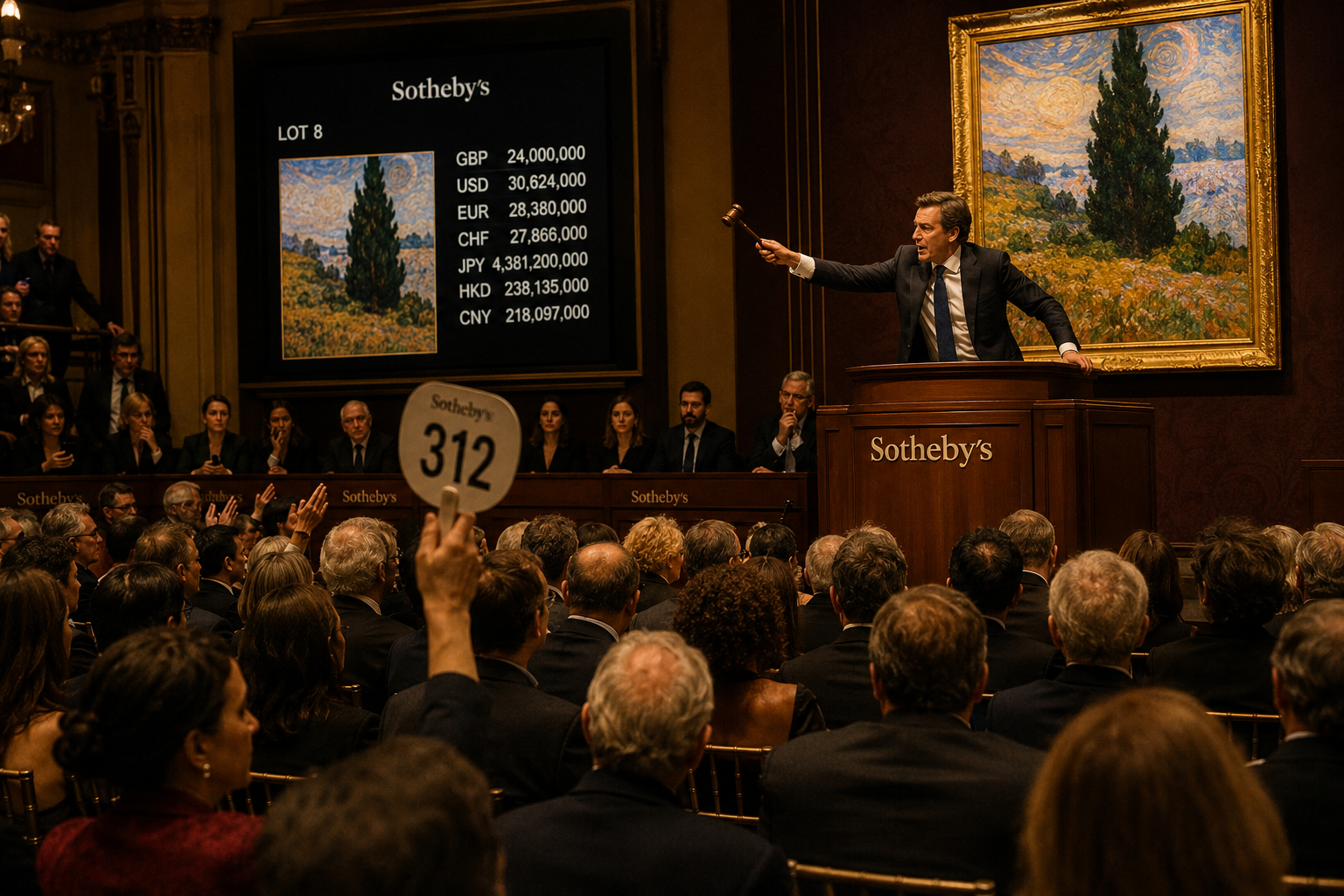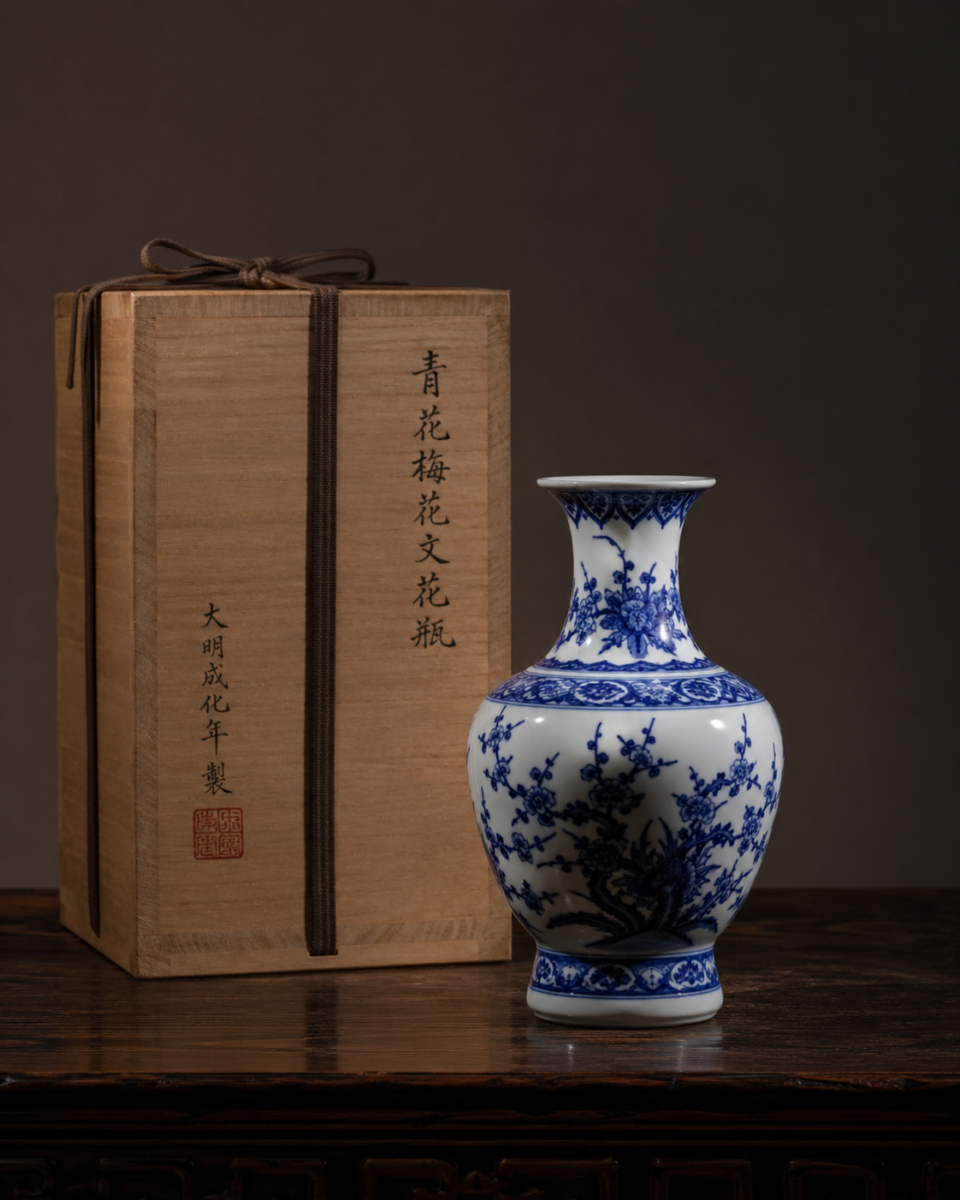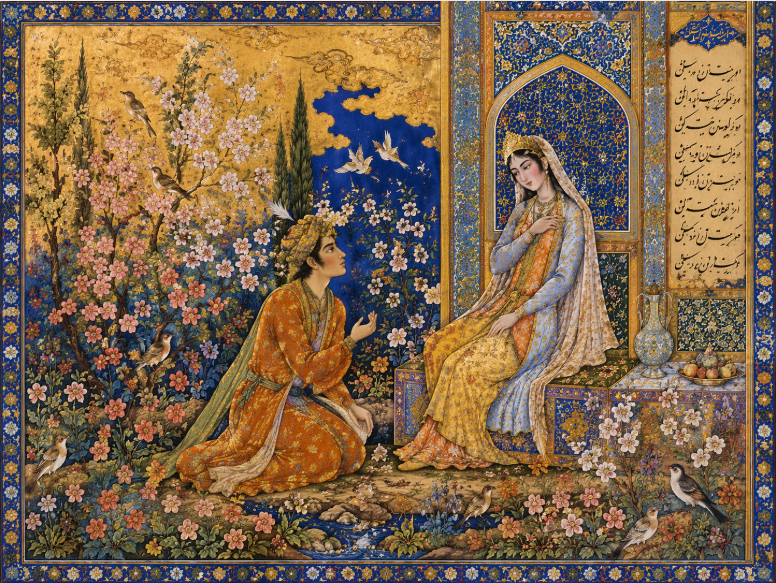
In recent years, those following the international auction market may have noticed an interesting phenomenon:…
Silent Epic: Gently Journeying Through Time and Space in Scroll Paintings
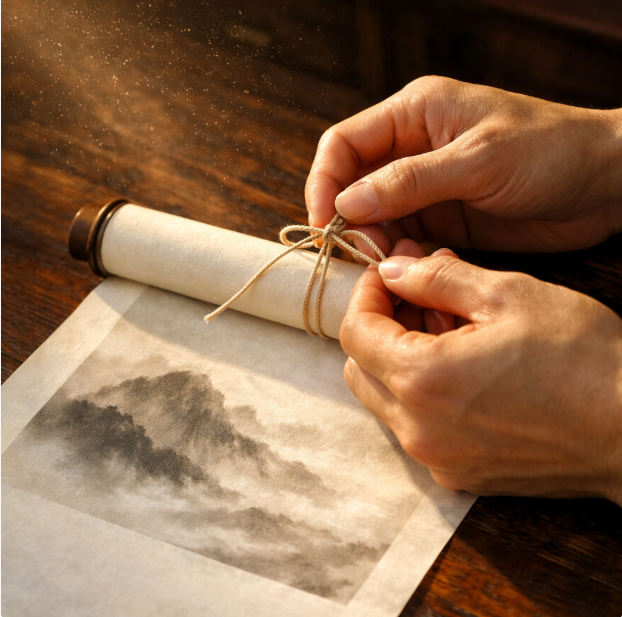
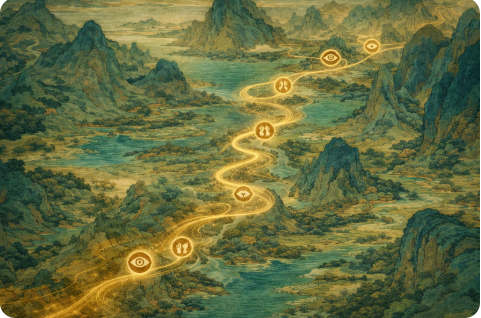
As the morning sun slanted into my study, I slowly unrolled a landscape scroll from the Song Dynasty. With a gentle stretch of my right hand, the world within the painting flowed quietly from right to left like a river of time—distant mountains drew near, a figure crossed a stream bridge, smoke rose from a thatched cottage, and finally, the inscription and signature brought it all to a close at the other end of the scroll. This simple gesture, it turns out, encapsulates the most unique Chinese understanding of time and space: time is not a point, but a reversible flow; space is not a frame, but a realm to wander through.
The scroll painting, a uniquely Chinese art form, is essentially a meticulously designed journey through time and space.
It rejects the Western notion of “freezing a moment in time” found in oil paintings and instead creates an entire visual grammar: scattered perspective allows the viewer to soar like a bird, overlooking vast landscapes; the elongated scroll format invites one to shift scenes step by step, experiencing the elasticity of time through the act of unrolling and rolling. Take, for example, Along the River During the Qingming Festival—from the rural outskirts to the Rainbow Bridge, and then into the bustling city streets—it feels as though one is walking in the spring breeze of Bianjing, able to hear the clamor of the marketplace and smell the aroma from the taverns. This experience is not a static act of “viewing,” but a dynamic process of “wandering”—a shared stroll through time and space with the painter.
The materials and mounting of a scroll are, in themselves, an aesthetic declaration. The suppleness of rice paper, the delicacy of silk, blend seamlessly with the moist richness of ink and the subtlety of colors. The upper rod, lower roller, decorative ribbons, and hanging strips—every detail conveys that this is not a sacred icon hung on a wall for worship, but a companion to be approached, touched, and engaged in intimate dialogue. When ancient scholars unfurled a long scroll during an elegant gathering, it was akin to commencing a ritual; while reading alone at night, a section illuminated by candlelight revealed another world entirely. The scroll painting is “alive”—its breath flows with each unrolling and rolling.
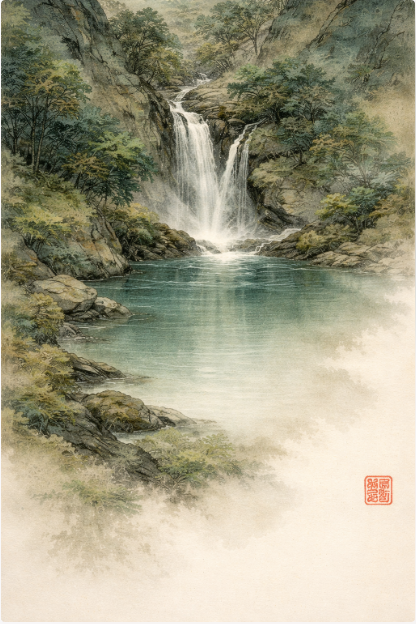
Even more captivating is the “aesthetics of blank space” in scroll painting. Those untouched areas of emptiness represent clouds, water, or mist, yet they are also breaths of pause, expanses where thoughts may wander. In Twelve Views of Water by Ma Yuan of the Southern Song Dynasty, the simplest lines outline twelve postures of water, while the blank spaces allow one to hear the roar of waves and sense the dampness. This wisdom of “treating white as black” lends the painting a musical rhythm and embodies the distinctive “ethereal quality” of Eastern philosophy—perceiving “being” within “non-being,” hearing the symphony of existence within silence.
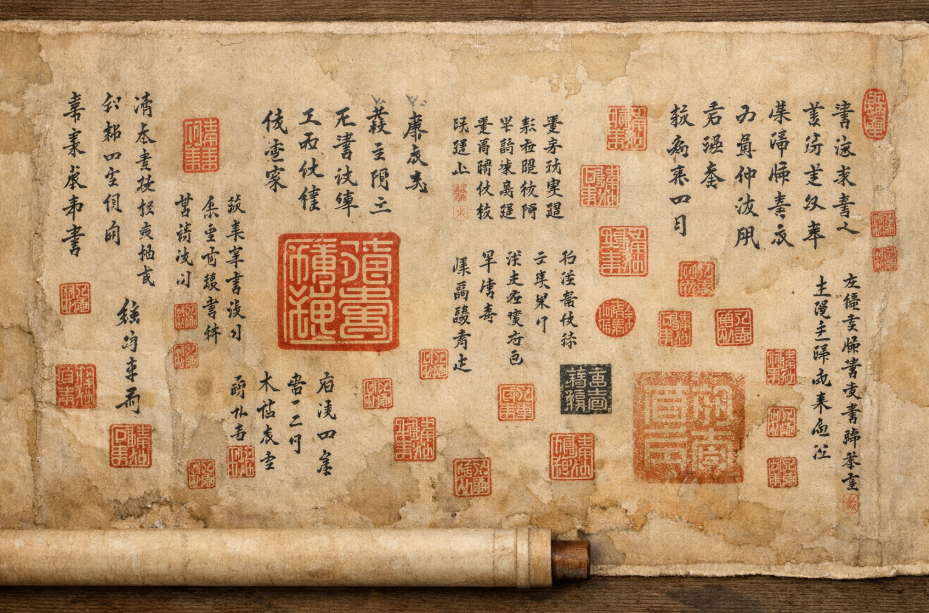
Every ancient scroll that survives to this day is an amber of time. Beyond the painted core, the colophons added across dynasties, seals of connoisseurs and collectors, and even traces of mending from wear and tear have all become integral parts of the work. Huang Gongwang’s Dwelling in the Fuchun Mountains was split in two by fire, yet that only deepened its legend. A scroll painting is not merely a work of art—it is a stratigraphic record of history, preserving the gaze of countless viewers, the gentle touch of countless hands, and the resonance of countless souls across time.
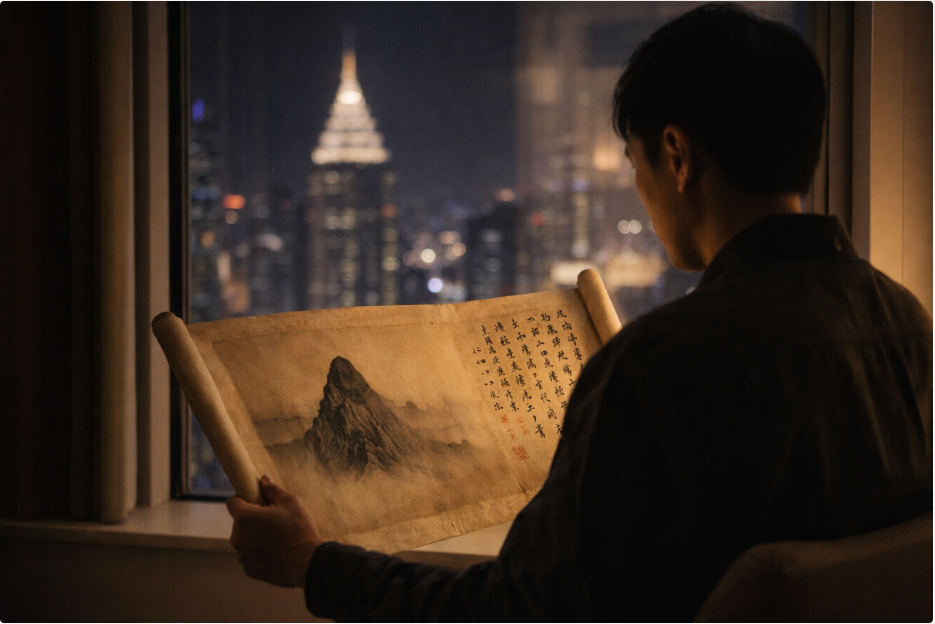
Perhaps the charm of the handscroll lies precisely in this—it does not claim to reveal the entire truth, but gently invites: Come, walk here. Use your gaze, your imagination, to complete this silent dialogue. In the unfurling and the rolling, we see not only the painting, but also how we see, how we exist.
The next time you pass by a museum display of handscrolls, linger a little longer. Within those quiet scrolls lies the breath of an entire universe, waiting for an unrolling, an encounter. In that moment, you are not a spectator, but a fellow traveler—moving gently alongside eternal landscapes and timeless moments, between ink and empty space.
Related Posts