In recent years, those following the international auction market may have noticed an interesting phenomenon:…
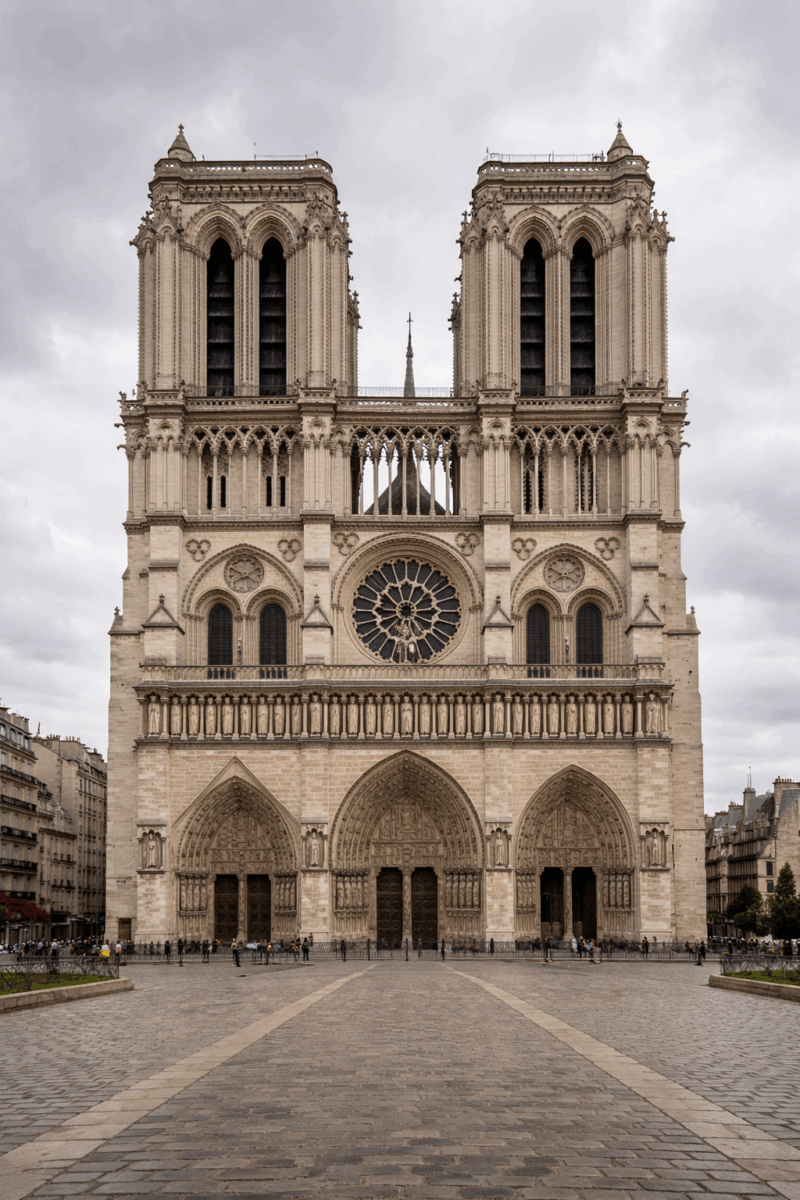
Notre-Dame de Paris: The Spiritual Heights of the Middle Ages
Notre-Dame de Paris: The Spiritual Heights of the Middle Ages
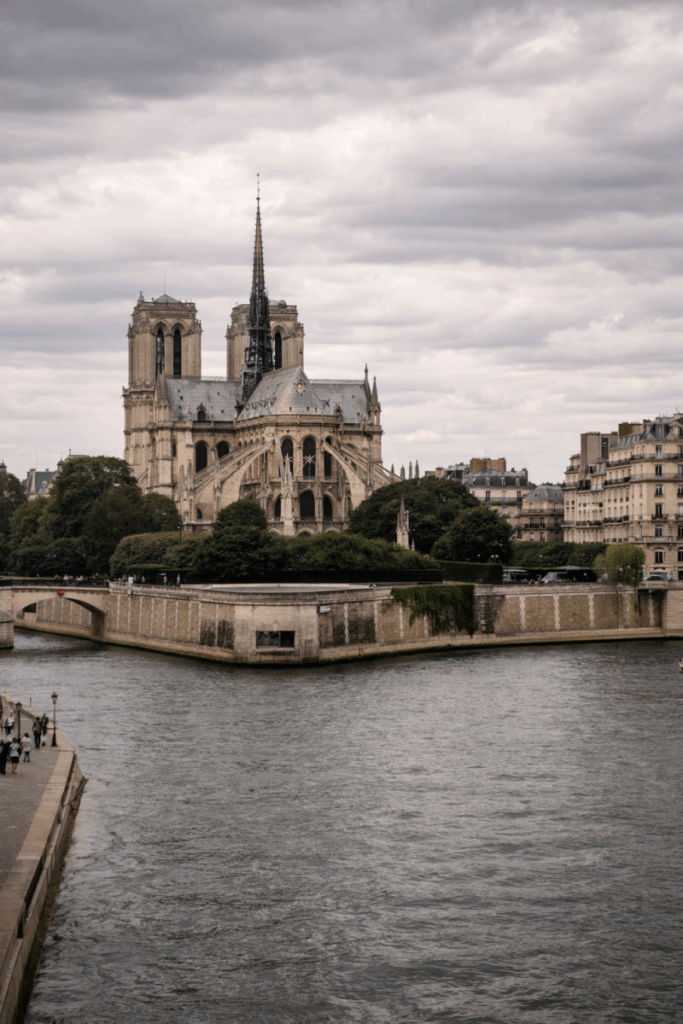
When people stand on the banks of the Seine and gaze up at Notre-Dame de Paris, few realize that what truly moves the soul is not the weight of its stone, but the spiritual height it carries.
In the Middle Ages, architecture was never merely a shelter from wind and rain. It was a declaration of how the world was ordered, how faith was understood, and where humanity stood within the universe. Notre-Dame de Paris is one of the most complete—and most symbolic—expressions of this idea.
I. Architecture That Reaches Upward: Geometry as a Path to Heaven
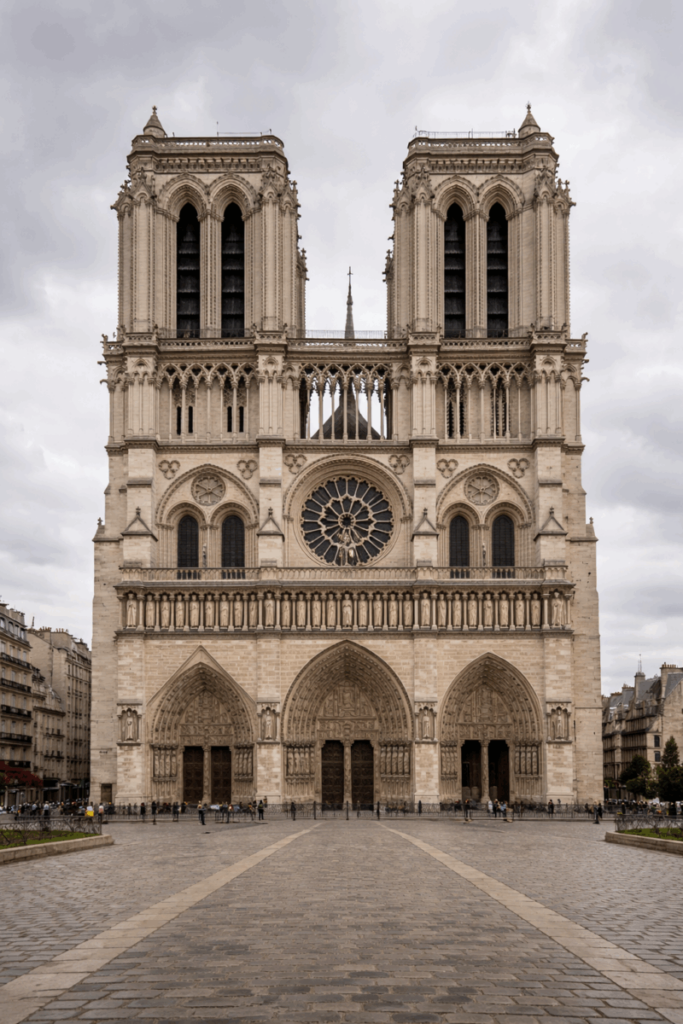
Notre-Dame de Paris is a quintessential example of Gothic architecture, yet “Gothic” is more than a stylistic label—it is an upward will.
Pointed arches, ribbed vaults, flying buttresses—these structures may appear purely technical, but they all serve a single purpose:
to help architecture overcome gravity and stretch as far toward the sky as possible.
Medieval people believed that God dwelled above.
Architecture, therefore, became a prayer written in stone.
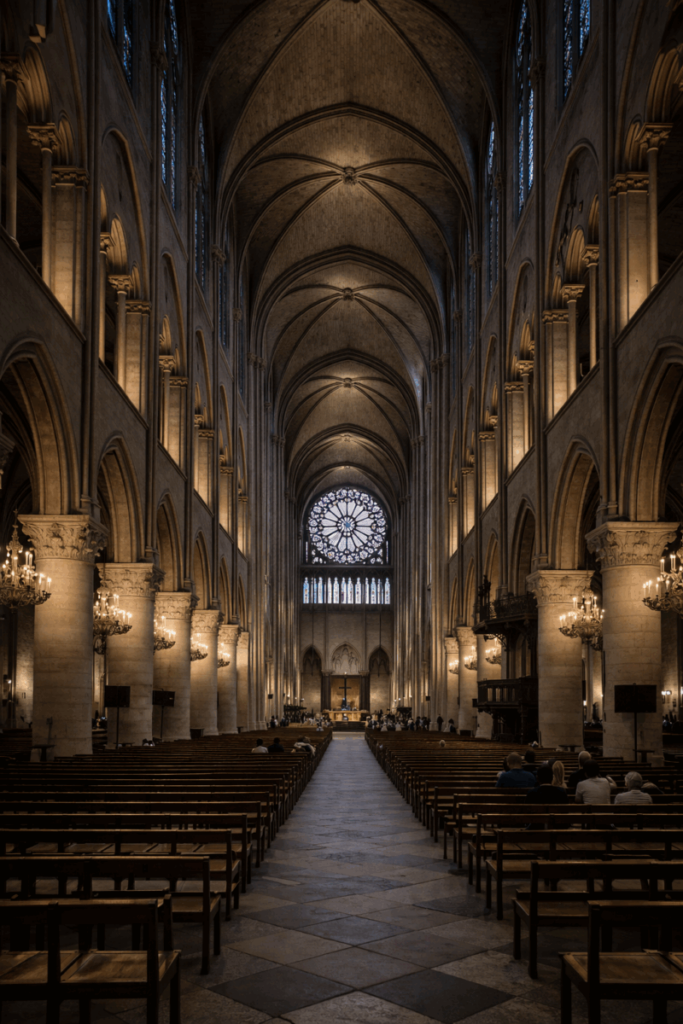
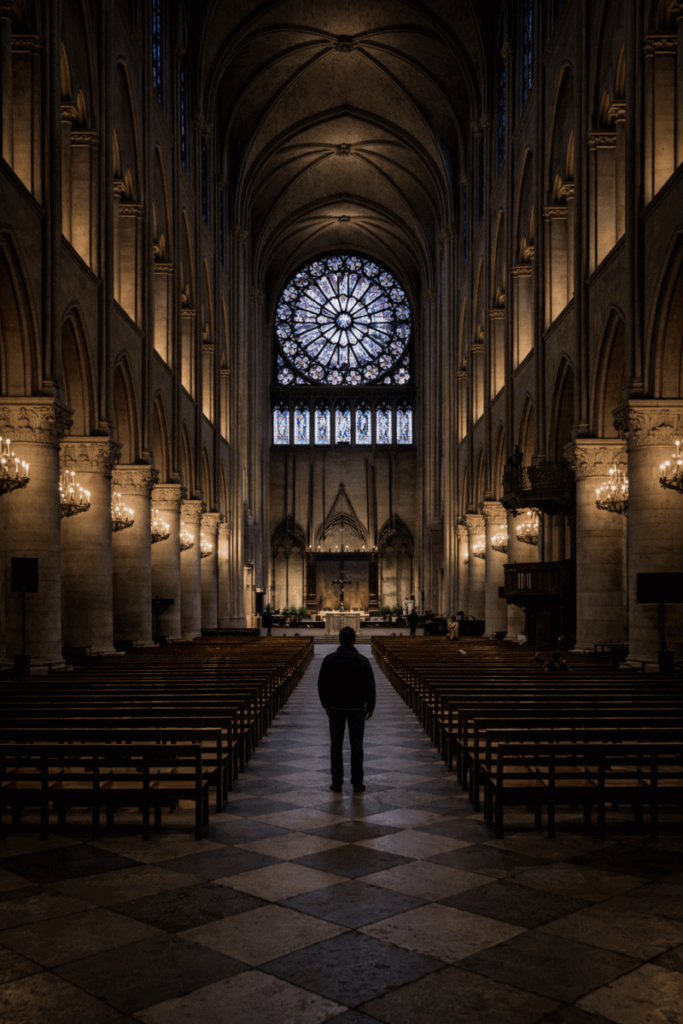
When you step inside Notre-Dame, your gaze is instinctively drawn upward. Columns are elongated, vaults are lifted high, and the space seems to have no visible end. This experience of being compelled to look up is one of the core psychological intentions of medieval religious architecture—
within it, humility arises naturally.
II. The Theology of Light: Faith Through Stained Glass
If structure forms the skeleton of Notre-Dame, then light is what gives it a soul.
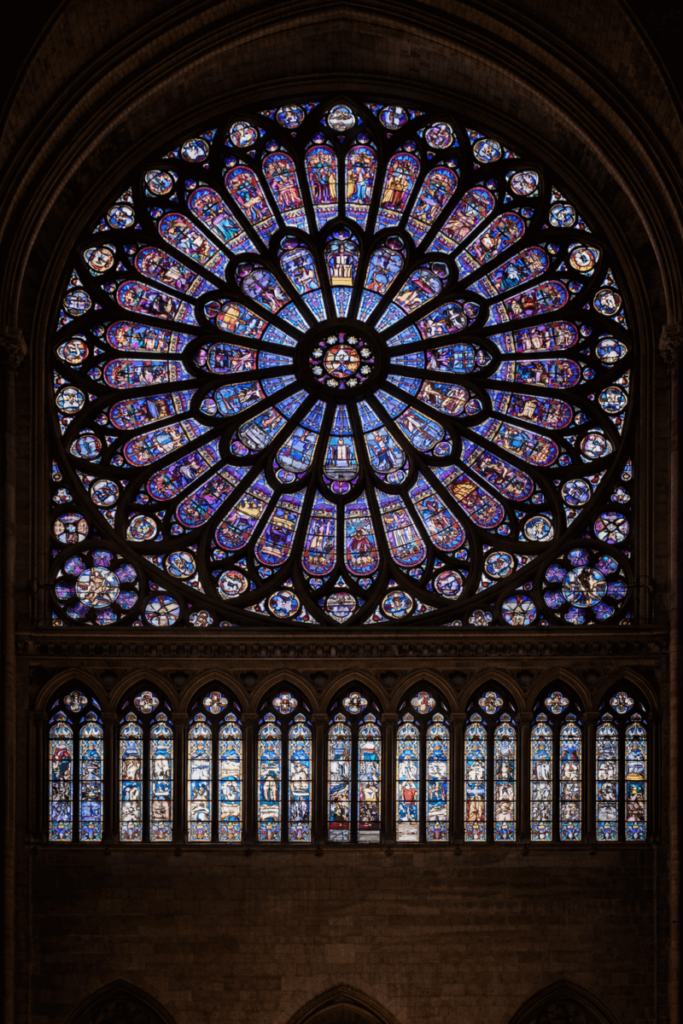
The rose windows are among the cathedral’s most iconic features. Light entering through stained glass is broken, colored, and softened, as if it no longer belongs to the earthly world, but has passed through a kind of divine filtration.
In the Middle Ages, when literacy rates were extremely low, stained glass was not merely decorative—it functioned as a visual Bible.
Biblical stories, saints, and the Last Judgment were read through light itself.
Here, light is more than illumination; it is a symbol.
God does not appear directly, but reveals Himself through light.
III. A World of Sculpture: Where Faith and the Secular Coexist
As you approach the façade and cornices of Notre-Dame, you encounter a world that is complex and full of tension.
Saints, angels, and kings appear solemn and dignified;
yet monsters, gargoyles, and satirical figures are exaggerated—sometimes even grotesque.
This is not arbitrary decoration, but a faithful reflection of the medieval worldview:
the sacred and the secular, order and chaos, reverence and fear all exist side by side.
Gargoyles are not merely ornamental. They symbolize the forces of disorder pushed to the margins of the church—
inside the cathedral lies order; outside it, the world.
IV. After the Fire: How Architecture Continues to Carry the Spirit
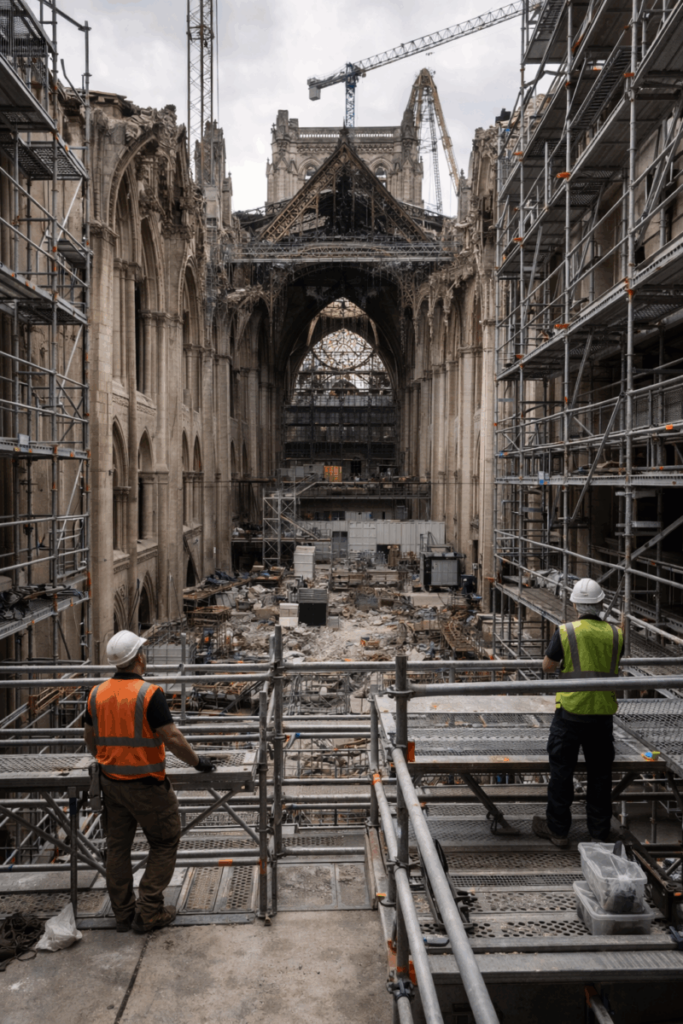
The fire of 2019 brought Notre-Dame into modern memory in a profoundly different way. As the spire collapsed and the roof was consumed by flames, people around the world realized something deeply unsettling:
this building was no longer merely a religious monument, but an emotional anchor of civilization itself.
The debates that followed—over whether the cathedral should be restored exactly as it was—only revealed how far Notre-Dame’s meaning extends beyond its physical materials.
It is a spiritual structure continuously inherited, not simply rebuilt.
V. Conclusion: The Height the Middle Ages Bequeathed to the Modern World
Notre-Dame does not belong to the Middle Ages; it was merely born of them.
What truly belongs to the medieval world is the willingness to spend centuries building a single structure—driven by the patience and ambition to give form to faith and order.
In an age obsessed with efficiency, speed, and immediate returns, this spiritual height feels increasingly distant—and increasingly precious.
When we step into Notre-Dame once again, what we may encounter is not God,
but a vision of how a civilization once understood time, belief, and humanity’s place within the world.
Related Posts