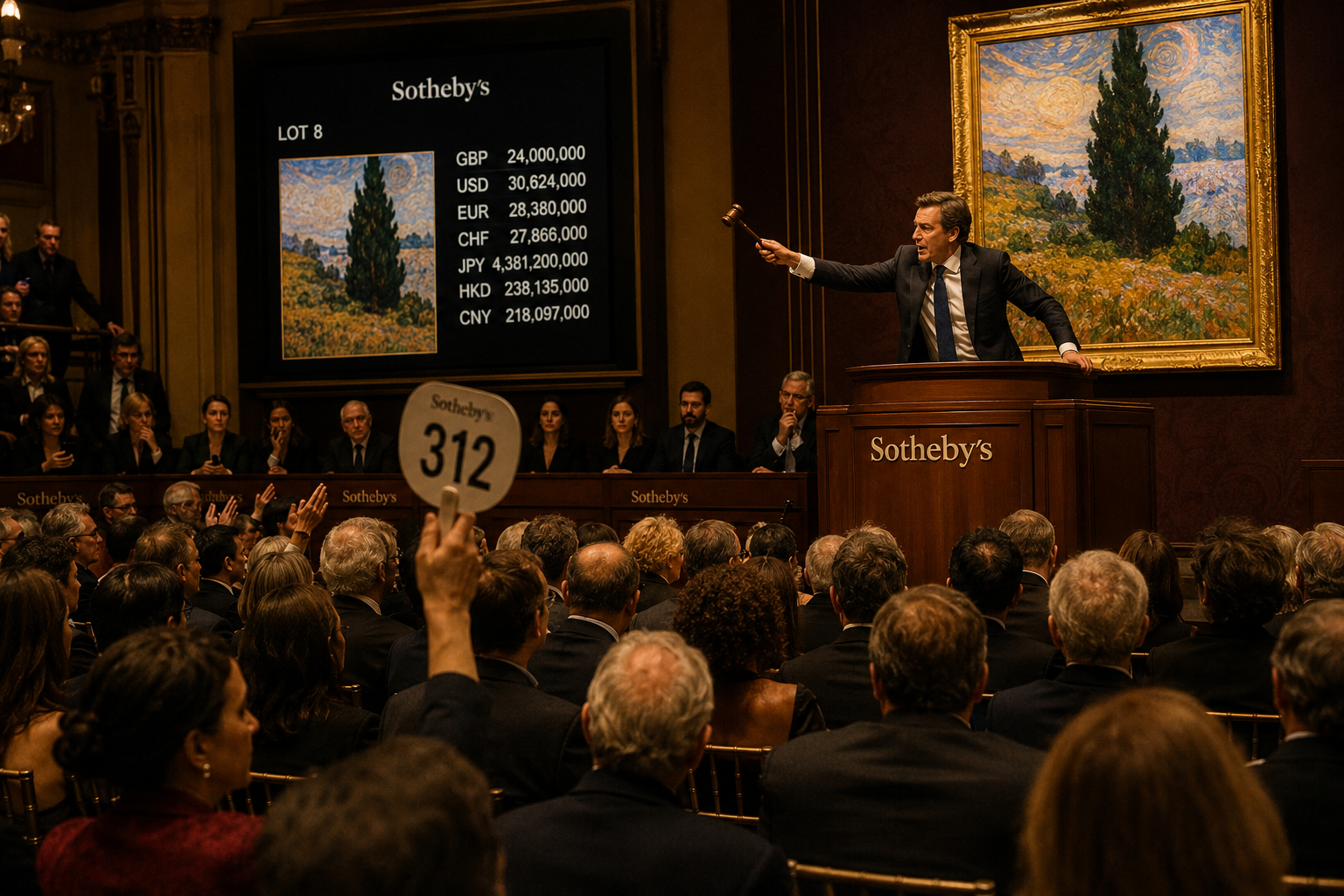
In recent years, those following the international auction market may have noticed an interesting phenomenon:…
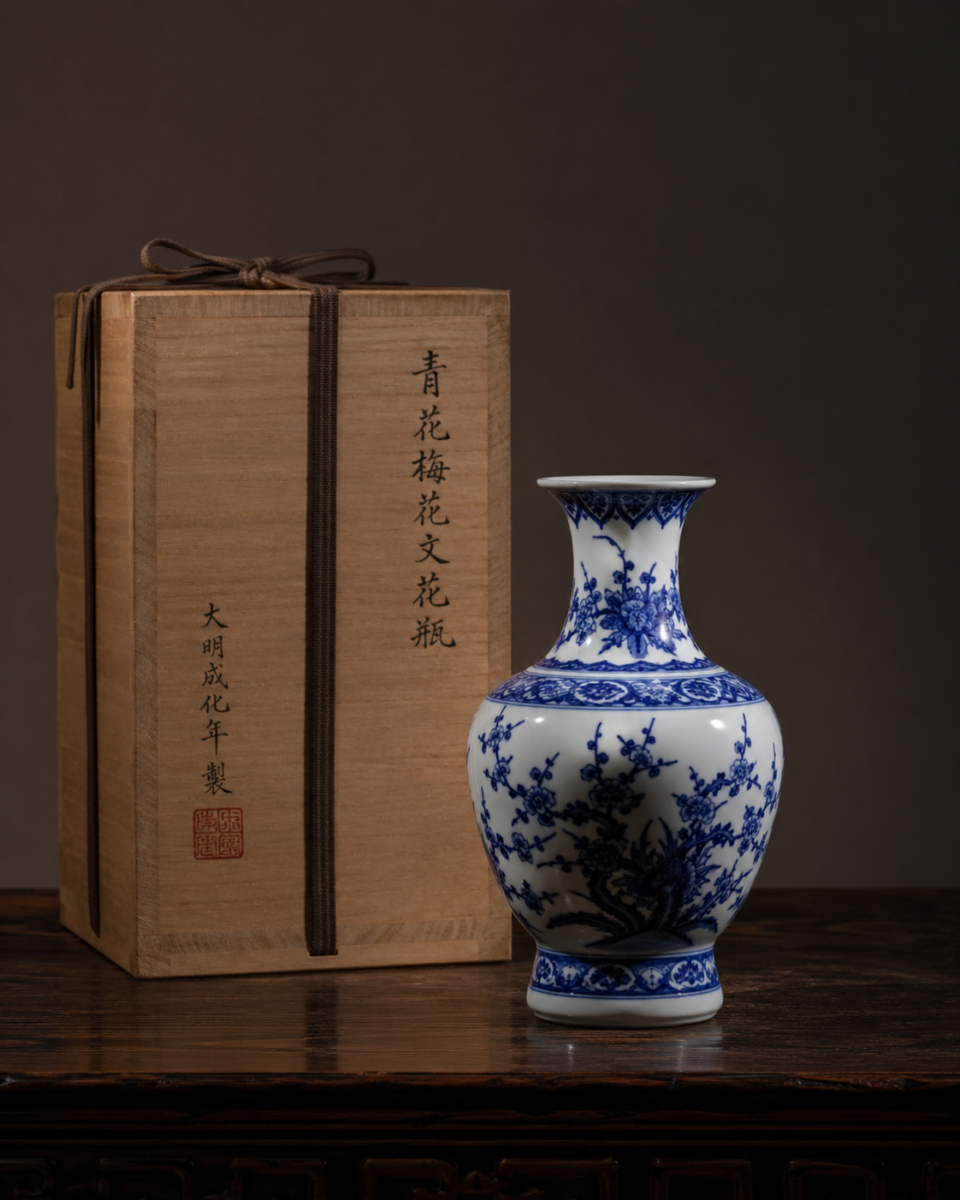
Why “Formerly Collected in Japan” Adds Value at Auction
In the world of art and antique auctions, the phrase “formerly collected in Japan” (or “Japanese old collection”) has become a frequent highlight in catalogues and lot titles. It often signals heightened interest and a price premium. This phenomenon is no accident; it results from a convergence of historical, aesthetic, and market factors.
I. What Does “Formerly Collected in Japan” Mean?
This term generally refers to an artwork or antique that was long kept by a Japanese private collector, family, institution, or kobijutsushō (antique dealer). Typical features include a clear provenance, such as:
Acquisition by Japanese collectors during the Meiji, Taishō, or Shōwa periods.
Former ownership by pre-war Japanese financiers or cultural figures.
Handling or publication by well-known Japanese antique dealers.
Thus, the label is more than a geographic marker; it serves as an endorsement of the item’s collecting history.
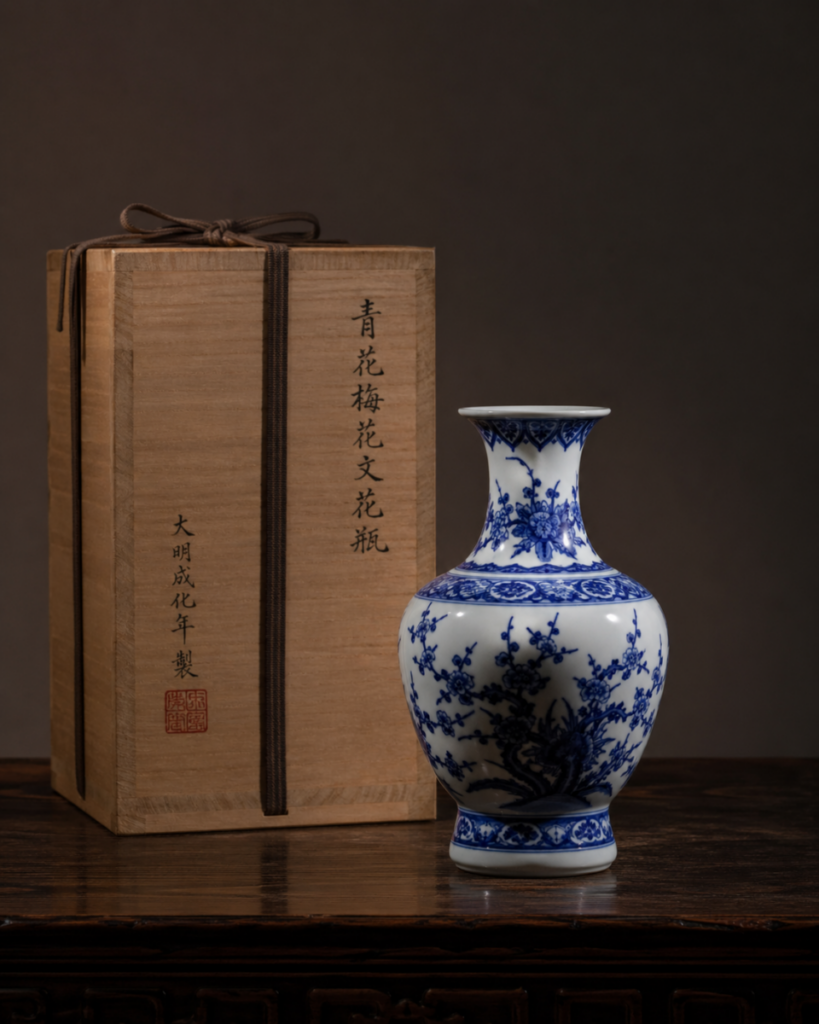
II.Historical Background: How Did So Many Chinese Artifacts Reach Japan?
Modern Window of Circulation: From the late 19th to the early 20th century, Japan modernized rapidly while developing a keen interest in traditional Chinese culture. Large numbers of Chinese paintings, ceramics, and Buddhist artworks entered Japan through trade, wartime dispersal, and other channels.
A Mature Japanese Collecting System: Compared to contemporaneous China—often marked by upheaval—Japan offered:
A more stable social environment.
A well-established art market.
Rigorous systems for collection and preservation.
Consequently, numerous artifacts were systematically preserved in Japan, sometimes escaping wartime destruction and political turmoil.
III. Why Does “Formerly Collected in Japan” Enhance Value?
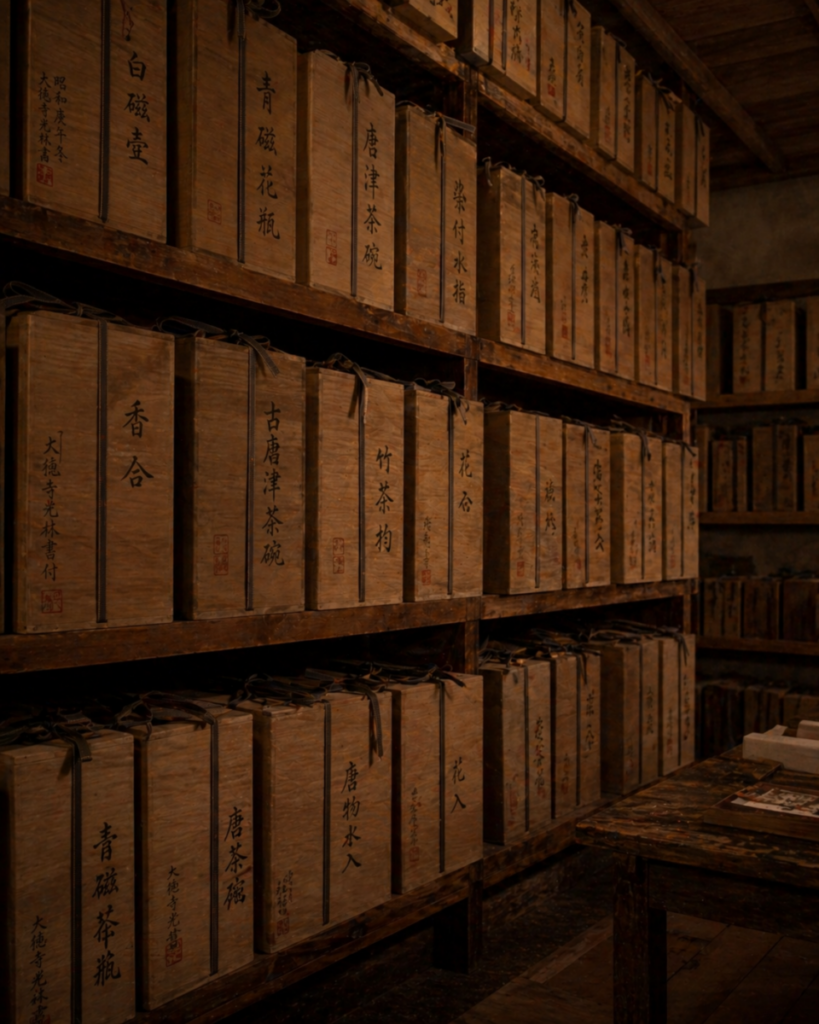
Clear Provenance Reduces Trust Costs: In the auction market, provenance is paramount. Japanese collectors typically kept meticulous records, often providing:
Original storage boxes (kiri or kyōbako).
Original labels or inscriptions.
Exhibition or publication references.
All these elements greatly increase buyer confidence.
Excellent Condition: Despite Japan’s humid climate, its conservation practices—using paulownia wood boxes, acid‑free paper, etc.—together with long‑term professional care, mean that many items retain:
Intact glazes (on ceramics).
Well‑preserved paper or silk (on paintings/calligraphy).
Natural, old patina (on objects).
Compared to excavated items or those that have circulated widely among the general public, these pieces tend to be in more stable condition.
Aesthetic Filtering – Pre‑selected Quality: The Japanese collecting world has traditionally maintained a high aesthetic bar. Works that entered Japanese collections had already passed a quality screen, which in turn raises the overall standard. This “secondary selection” process fosters a subconscious market perception:
👉 Japanese old collection ≈ relatively reliable quality.
Cultural Cachet and Psychological Premium: For many contemporary Chinese buyers, a “Japanese old collection” carries a unique cultural aura:
A sense of distance → increased perceived rarity.
Repatriation narrative → a “return home” story.
Shared East Asian aesthetic → easier to appreciate than Western provenance.
Such psychological factors often directly translate into price premiums.
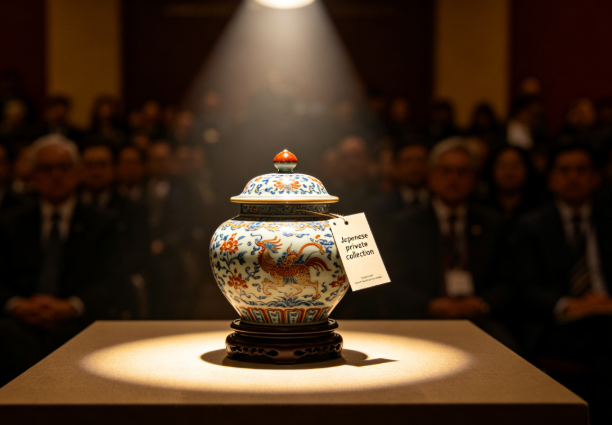
Auction House Narratives: Auction houses skillfully leverage the “Japanese old collection” label, for example:
“From a major Japanese collector’s estate.”
“A century of inheritance, now repatriated for the first time.”
“Comes with original box and inscriptions.”
These narratives enhance the object’s story and generate competitive bidding.

IV. Typical Categories and Their Strong Association with Japanese Old Collections
Chinese Ceramics: Imperial Ming and Qing porcelain was highly esteemed in Japan; the tea ceremony fostered refined selection; many pieces come with original boxes as important evidence.
Chinese Painting & Calligraphy: Japan particularly valued Song and Yuan works; conservation conditions are good, with few creases or damages; old mountings and collector seals are common.
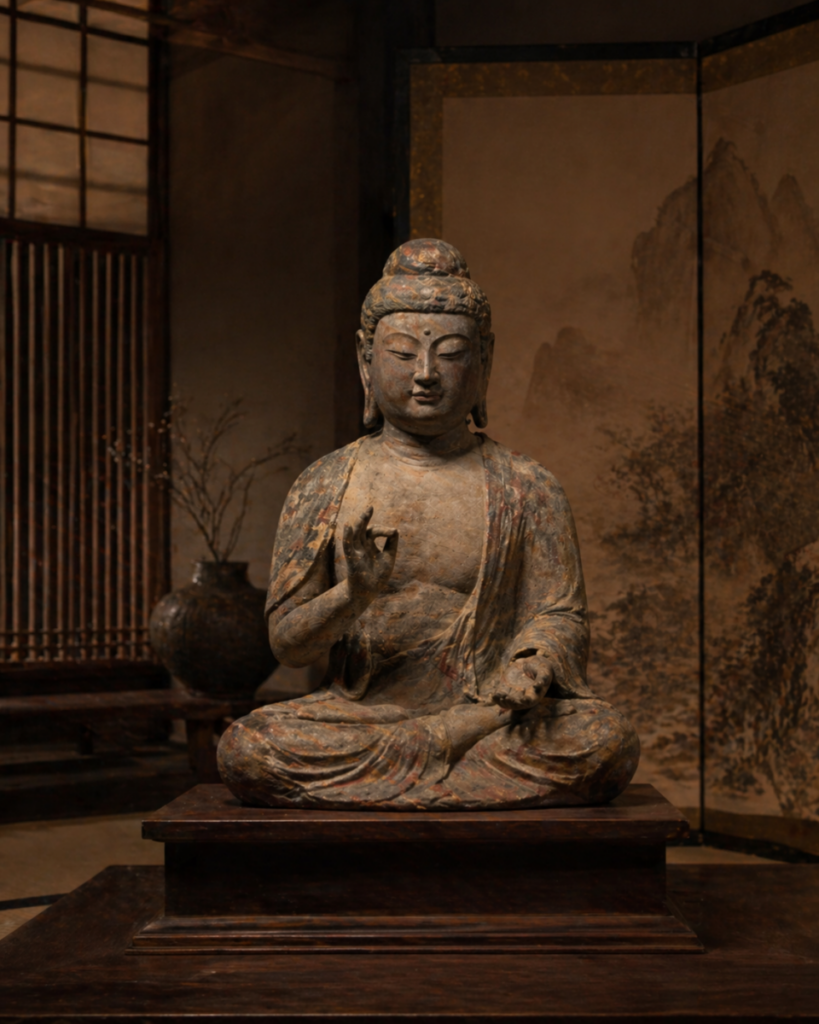
Buddhist Art: Large numbers of Tang and Song Buddhist sculptures entered Japan; they merged with local Buddhist culture; preservation systems are extremely meticulous.
Scholar’s Objects & Miscellaneous Items: The literati taste aligned with Japanese miyabi (elegant) culture; small, refined objects were more easily kept intact; complete storage and transmission systems.
Tea Ceremony Implements: The tea ceremony directly shaped collecting standards; the meibutsu (famous object) system gave items a cultural ranking.
V. Cautions and Misconceptions
The “Japanese old collection” label, while valuable, is not an absolute guarantee:
Not all such collections are of high quality.
The market has seen “fake Japanese provenance” packaging.
Some items may have entered Japan only in recent decades.
Therefore, overall assessment still requires:
The object’s intrinsic quality.
Academic publication records.
Expert opinions.
Auction house reputation.
VI. Conclusion: Beyond the Label, the Real Test is Expertise
“Formerly collected in Japan” essentially functions as a trust enhancer and value‑storytelling tool. Its premium stems not from “Japan” alone, but from what the label represents:
A mature collecting system.
A refined aesthetic tradition.
Superior preservation quality.
A clear transmission history.
For truly seasoned collectors, labels are useful references but no substitute for independent judgment. Ultimately, value is determined by the artistic and historical substance of the work itself.
Related Posts