In recent years, those following the international auction market may have noticed an interesting phenomenon:…

Theme: The Royal Exhibition Building, Melbourne — A Symphony of History, Architecture, and Culture
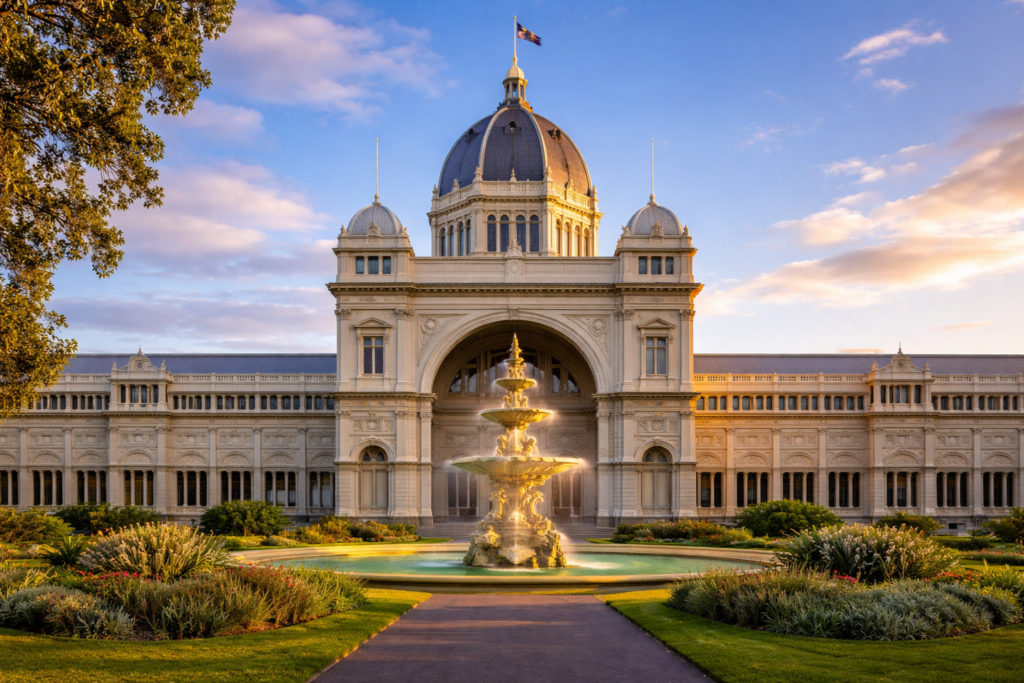
The Royal Exhibition Building in Melbourne is one of Australia’s most iconic landmarks. As part of a World Heritage site, it not only carries the history and culture of Melbourne, but also symbolizes the city’s past glory and ongoing development. From its construction in the 19th century to its role in contemporary cultural exhibitions, this historic building has continuously borne witness to Australia’s prosperity and transformation.
I. Historical Background of the Royal Exhibition Building
The origins of the Royal Exhibition Building date back to the late 19th century. Its creation was closely tied to Melbourne’s economic growth and social transformation. In 1870, in preparation for the upcoming Victorian Exhibition, Melbourne decided to construct a grand exhibition hall to showcase achievements in industry, technology, and the arts. This ambitious plan received enthusiastic support from the city government and the local elite.
Construction began in 1876 and was completed in 1880. Inspired by London’s Crystal Palace, architect Joseph Reed combined Victorian architectural principles with Australia’s local needs, creating a structure that was both monumental and distinctly regional. From that moment on, the Royal Exhibition Building became a key venue for exhibitions and cultural events, establishing itself as a central hub of cultural life in Melbourne and across Australia.
II. Architectural Style and Design
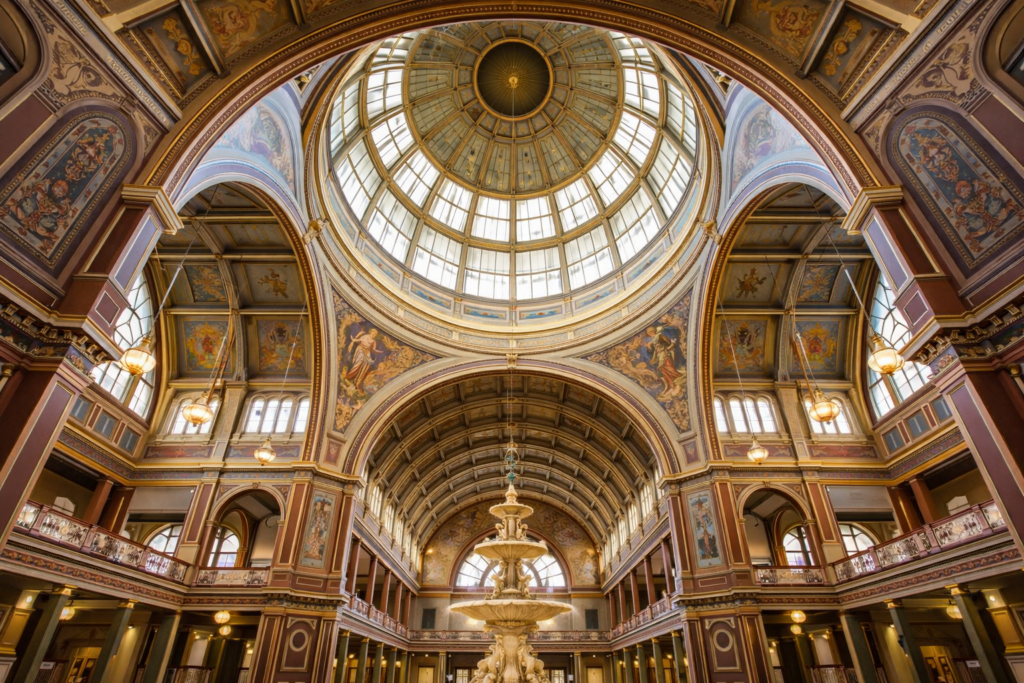
The architectural design of the Royal Exhibition Building integrates elements from multiple periods and styles. Its exterior reflects classic Victorian architecture, particularly evident in its grand dome and finely detailed ornamentation, which reveal strong European influences. The building as a whole conveys a sense of solemnity and grandeur, representing 19th-century Australia’s aspirations toward industrialization and modernity.
The most striking feature is the central dome, rising to approximately 50 meters and serving as the building’s visual focal point. Supported by an iron structure and clad with glass and metal, the dome enhances the building’s majestic appearance while allowing abundant natural light to flood the interior, creating an open and airy atmosphere.
Surrounding the building is a continuous ring of arcades and colonnades, forming a perfectly symmetrical layout. Every column and window was meticulously designed, showcasing the craftsmanship and imagination of the architects of the time.
III. Culture and Exhibition Activities
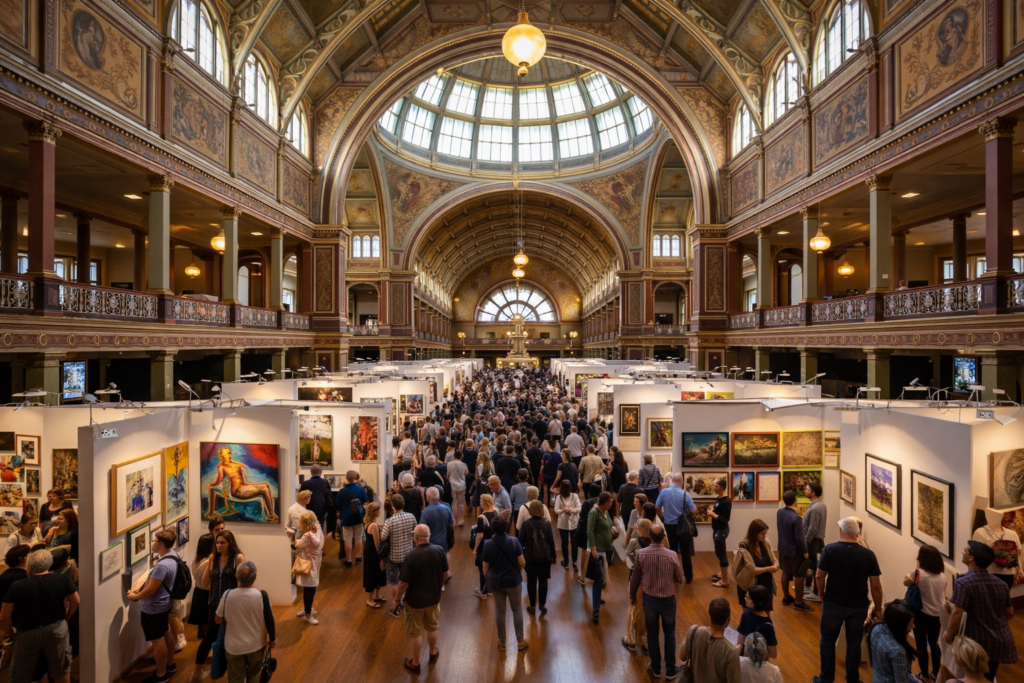
Since its completion, the Royal Exhibition Building has been one of Australia’s most important cultural venues. Originally built for the Victorian Exhibition, it soon became a major site for exhibitions, artistic events, and international conferences. In the early 20th century in particular, it served as a focal point for exhibitions in science, industry, and the arts, attracting exhibitors and visitors from around the world.
Today, the Royal Exhibition Building remains highly active in Melbourne’s cultural landscape. It regularly hosts art exhibitions, cultural festivals, and large-scale events, attracting tens of thousands of visitors and art enthusiasts each year. It functions as an important window for showcasing Australian culture and creative expression. For example, the Melbourne International Arts Festival and exhibitions associated with the National Gallery of Victoria are often held here, drawing audiences from across the globe.
Beyond exhibitions and the arts, the building also hosts cultural celebrations and community events. It provides local residents with a space for interaction and collaboration, while offering international visitors an opportunity to gain deeper insight into Australian culture.
IV. The Integration of Architecture and Nature
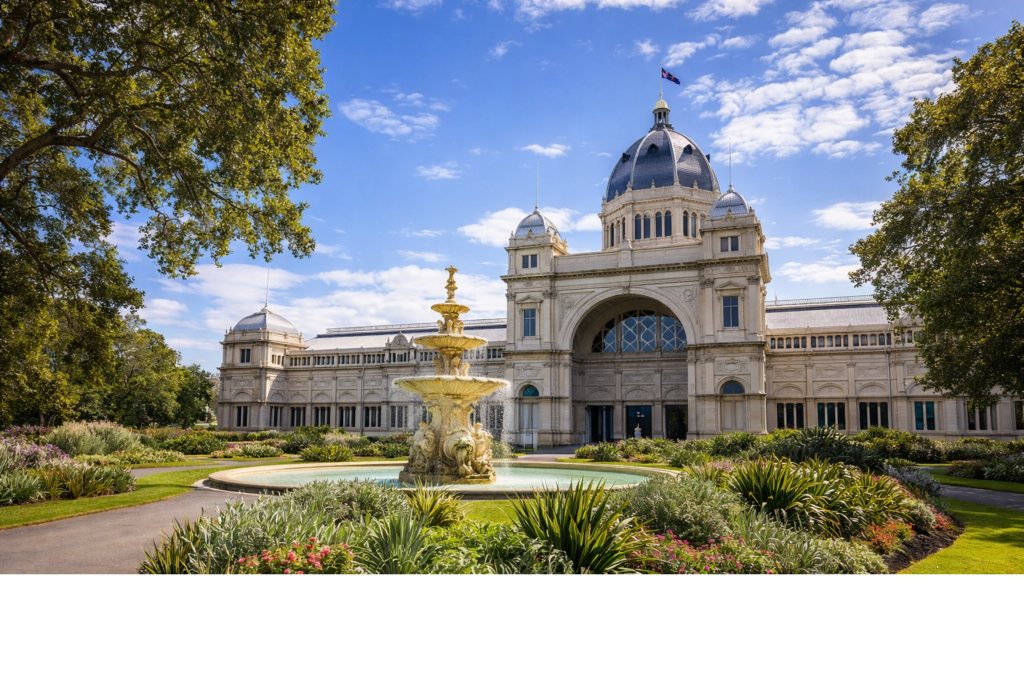
The Royal Exhibition Building is not only architecturally impressive; its surrounding environment is equally captivating. Located within Carlton Gardens—a historic park listed as a UNESCO World Heritage site—the building is harmoniously integrated into its natural setting. The design and landscape of the gardens complement the exhibition hall, together creating a balanced and elegant atmosphere.
Trees, fountains, lawns, and winding paths throughout the gardens enhance the grandeur of the building while reflecting the Victorian-era pursuit of harmony between architecture and nature. This green space offers visitors a place to relax and unwind, adding a sense of tranquility and refinement to the site. After exploring the interior, visitors can step outside and enjoy a peaceful walk through the gardens.
V. World Heritage Status
In 2004, the Royal Exhibition Building was inscribed on the UNESCO World Heritage List, marking its significance in global architectural and cultural history. It is not only a source of pride for Melbourne, but also a cultural treasure of Australia. As a World Heritage site, the building represents the architectural and social achievements of late 19th-century Australia, and its conservation has become an important example of heritage preservation worldwide.
This recognition has brought international attention to the Royal Exhibition Building and reinforced its role as a symbol of Australian cultural identity. Today, visitors can not only enjoy world-class art and cultural events here, but also experience the deep historical and cultural resonance embedded within the structure.
VI. Looking to the Future
The Royal Exhibition Building is not merely a relic of the past; it continues to play an important role in modern cultural and social life. Looking ahead, as technology advances and society evolves, the building will remain a vital platform for exhibitions, artistic expression, and cultural exchange. Through innovative curatorial approaches and contemporary programming, it will continue to attract art lovers and cultural tourists from around the world.
At the same time, as concepts of heritage conservation and sustainable development gain importance, the Royal Exhibition Building will further explore approaches to architectural preservation and environmental sustainability. These efforts will help safeguard its World Heritage status while creating a more dynamic cultural platform for future generations.
VII. Conclusion
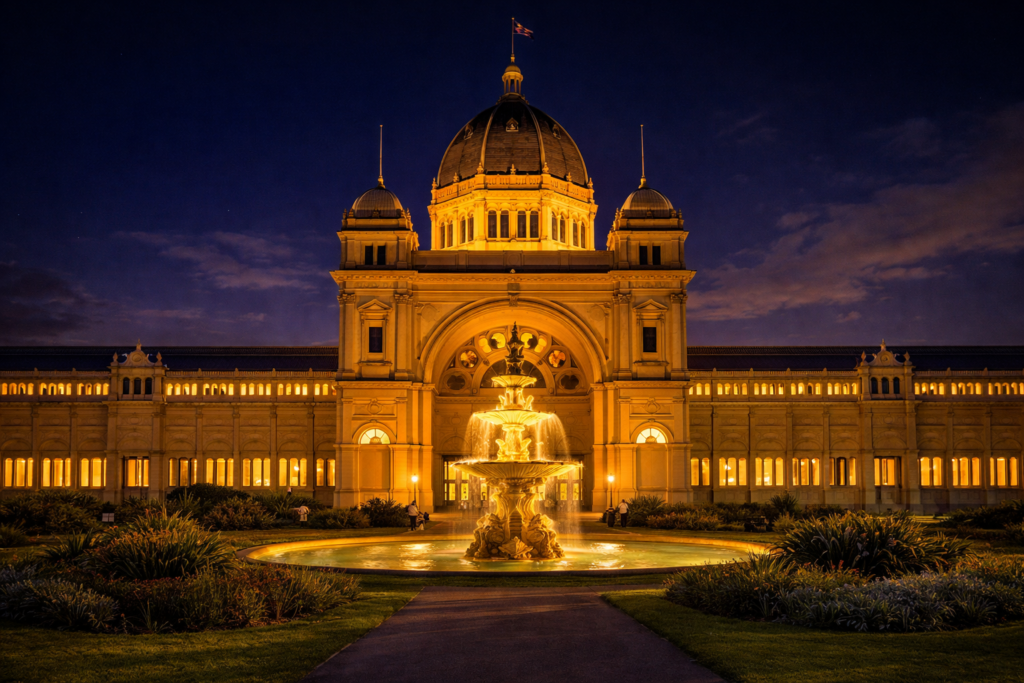
The Royal Exhibition Building is far more than a piece of architecture; it is a symbol of Australia’s history and culture. It has witnessed the transformation and growth of the city, carrying countless memories of art and cultural life. Today, it remains an important stage for global art and culture, welcoming visitors and artists from around the world. As a World Heritage site, its significance in history, architecture, and culture is irreplaceable, and the Royal Exhibition Building will continue to play a vital role in global cultural exchange and artistic creation in the years to come.
Related Posts