In recent years, those following the international auction market may have noticed an interesting phenomenon:…
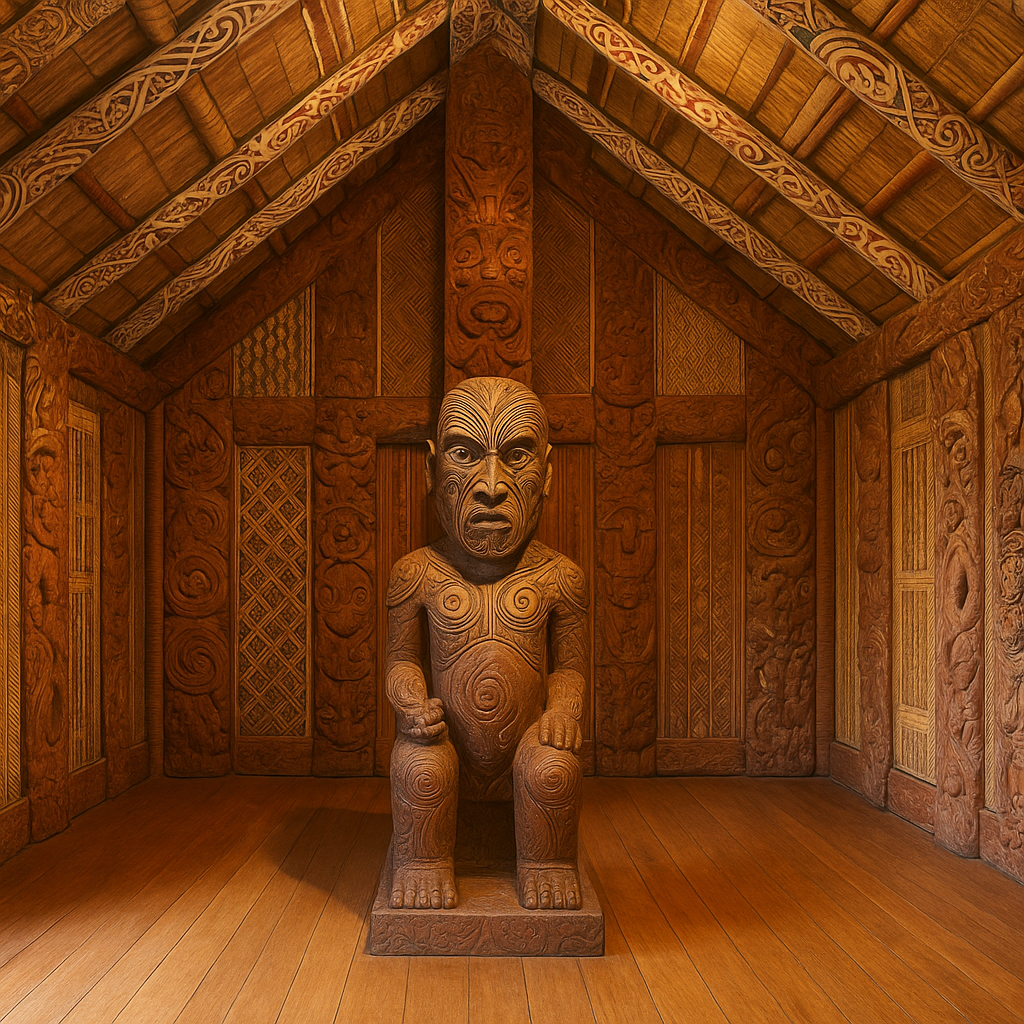
“Māori Carving (Whakairo) and Tattooing (Moko): The Cultural Imprint of New Zealand’s Indigenous People”
1. Māori Carving (Whakairo)
1. Origins and Significance
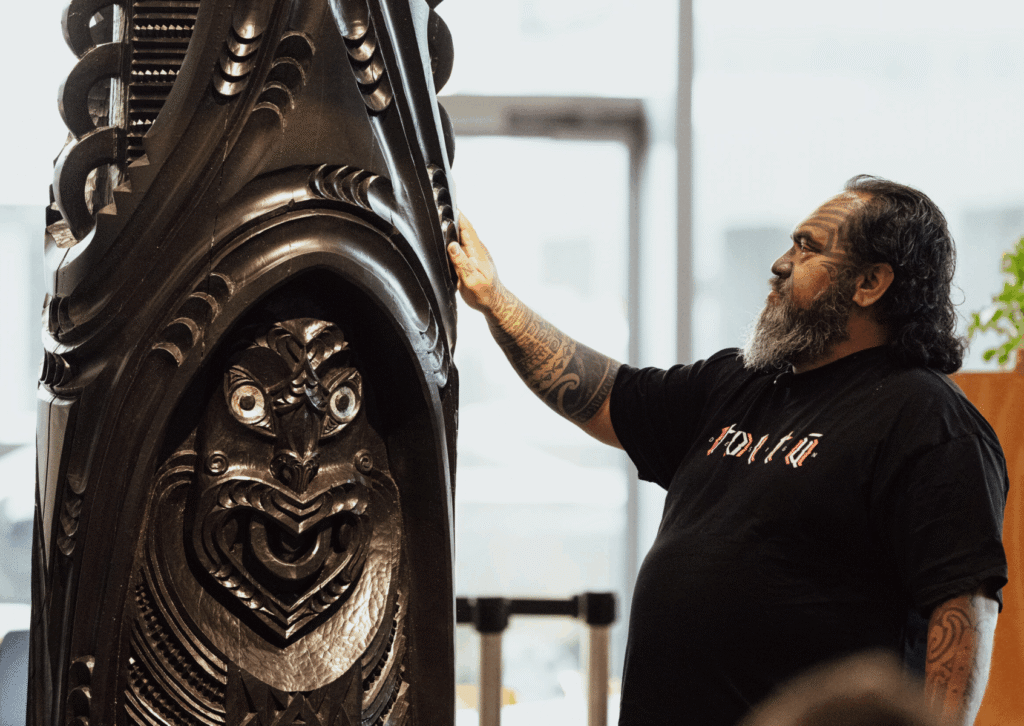
“Whakairo” in the Māori language means “carving,” encompassing wood, bone, and stone carving. Māori carving is not merely decorative art but a narrative medium used to preserve family genealogies (Whakapapa), tribal history, and mythological stories.
The Māori believe that carving is a way of communicating with ancestral spirits. Every carved piece is considered to hold Mana (spiritual power), carrying the protection of the ancestors.
2. Common Themes and Symbols
-
Figurative carvings (Tiki or ancestral figures): Often found in tribal meeting houses (Wharenui), symbolizing ancestors and protecting descendants.
-
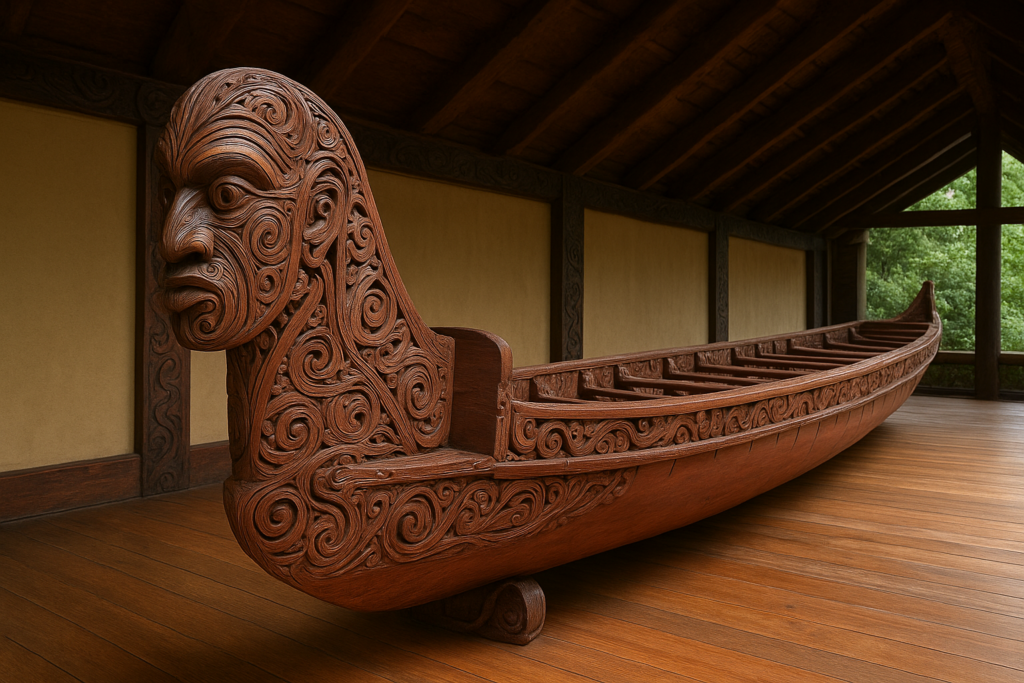
Spiral motifs (Koru): Inspired by the unfurling fronds of ferns, symbolizing life, growth, and renewal.
-
Interwoven patterns (Pakati, Rauru): Representing warrior spirit and the continuity of family bloodlines.
-
Canoe carvings (Waka Whakairo): War canoes often featured elaborate carvings, intended to invoke ancestral protection and ensure victory.
3. Tradition and Modern Transmission
Traditional Māori carvers (Tohunga Whakairo) held a highly respected position in society, mastering their craft through long years of study and oral transmission of knowledge. Today, carving remains widely practiced and celebrated in New Zealand, with many works regarded as national symbols and frequently displayed in public buildings and museums.
2. Māori Tattooing (Moko)
1. Origins and Sacredness
“Moko” refers to traditional Māori tattooing, which can be traced back to the Polynesian heritage of the Māori people. Unlike modern tattoos, Moko is not merely decorative; it serves as a symbol of identity and social status.
In Māori culture, tattooing is regarded as a sacred ritual (Tapu) and an essential rite of passage into adulthood. Through Moko, a person is endowed with a new identity and elevated social standing.
2. Patterns and Symbolism
-
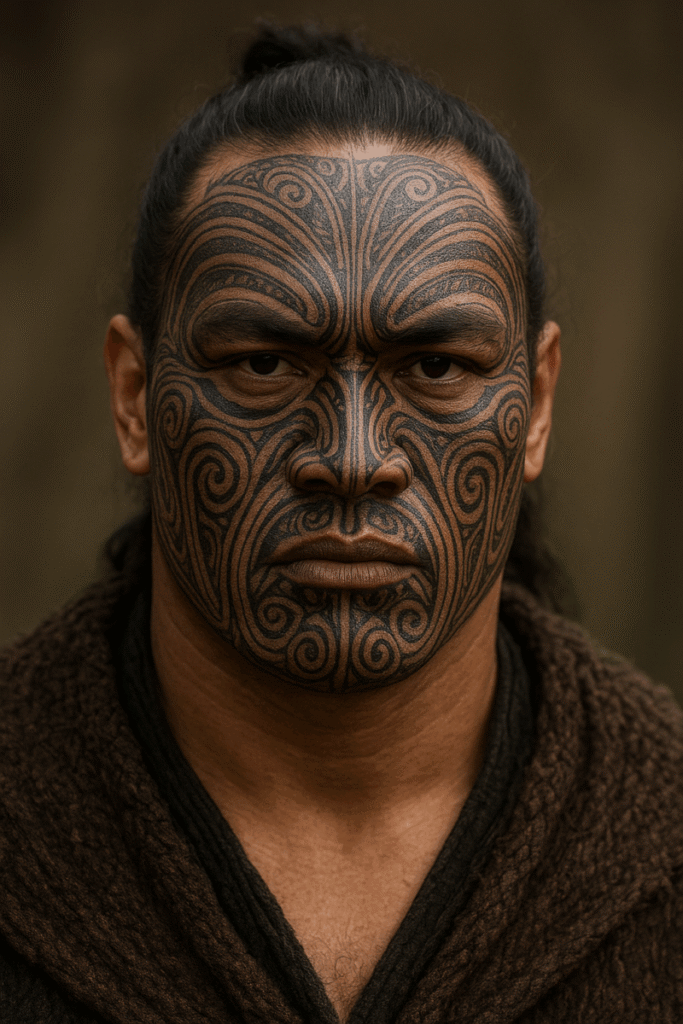
Facial tattoos (Ta Moko): The most iconic form, typically covering the chin, forehead, and nose ridge. For men, Ta Moko often extends across the entire face, symbolizing courage and dignity.
-
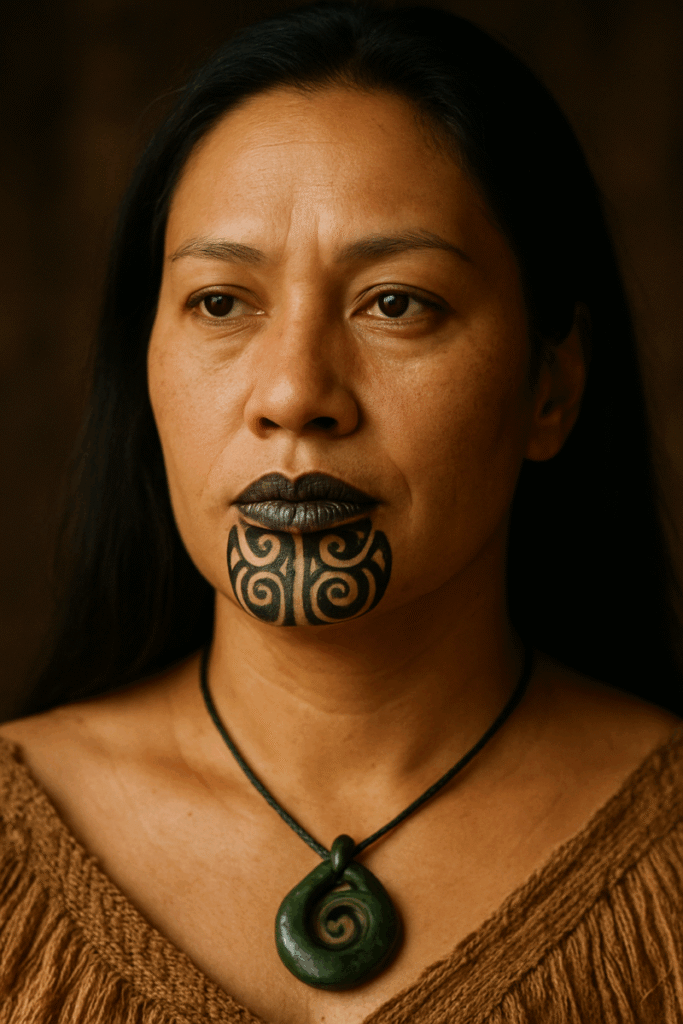
Female tattoos: Commonly found on the chin (Kauae), representing purity, wisdom, and family identity.
-
Symbolic meanings: The various lines and curves represent genealogy, tribal affiliation, personal achievements, and spiritual strength. No two Moko designs are identical—each is as unique as a fingerprint.
3. Technique and Process
Traditional Moko was not applied with needles but carved into the skin using special chisels (Uhi), with natural pigments rubbed into the grooves. The process was extremely painful, but precisely because of this, it symbolized bravery and resilience.
Today, Moko art has merged with modern tattooing techniques, yet its cultural and spiritual significance continues to be deeply respected.
3. The Cultural Resonance of Whakairo and Moko
Although Māori carving (Whakairo) and tattooing (Moko) differ in form, they share deep cultural similarities:
-
Identity and lineage: Both carving and Moko serve as vessels of family and tribal history.
-
Spiritual power (Mana): Each represents ancestral protection and embodies spiritual strength.
-
Art and storytelling: Through patterns and lines, they record the stories of individuals and communities.
In essence, Whakairo is culture carved into wood and stone, while Moko is culture carved into the human body.
4. Contemporary Influence
Today, Māori carving (Whakairo) and tattooing (Moko) have reached a global audience and are regarded as iconic symbols of New Zealand culture. Members of the national rugby team, the All Blacks, have even appeared on the field bearing Moko. This is not only an expression of personal identity but also a proud affirmation and continuation of Māori culture.
In contemporary art and design, Māori patterns are widely applied—appearing in architecture, national emblems, and souvenir design. At the same time, Māori communities actively emphasize the importance of respecting the original cultural meanings behind these symbols, cautioning against shallow commercialization or superficial imitation.
Related Posts