In recent years, as Chinese antique ceramics have continued to attract attention in the international…
The Golden Pavilion of Kyoto and the Spatial Poetics of “Impermanence”
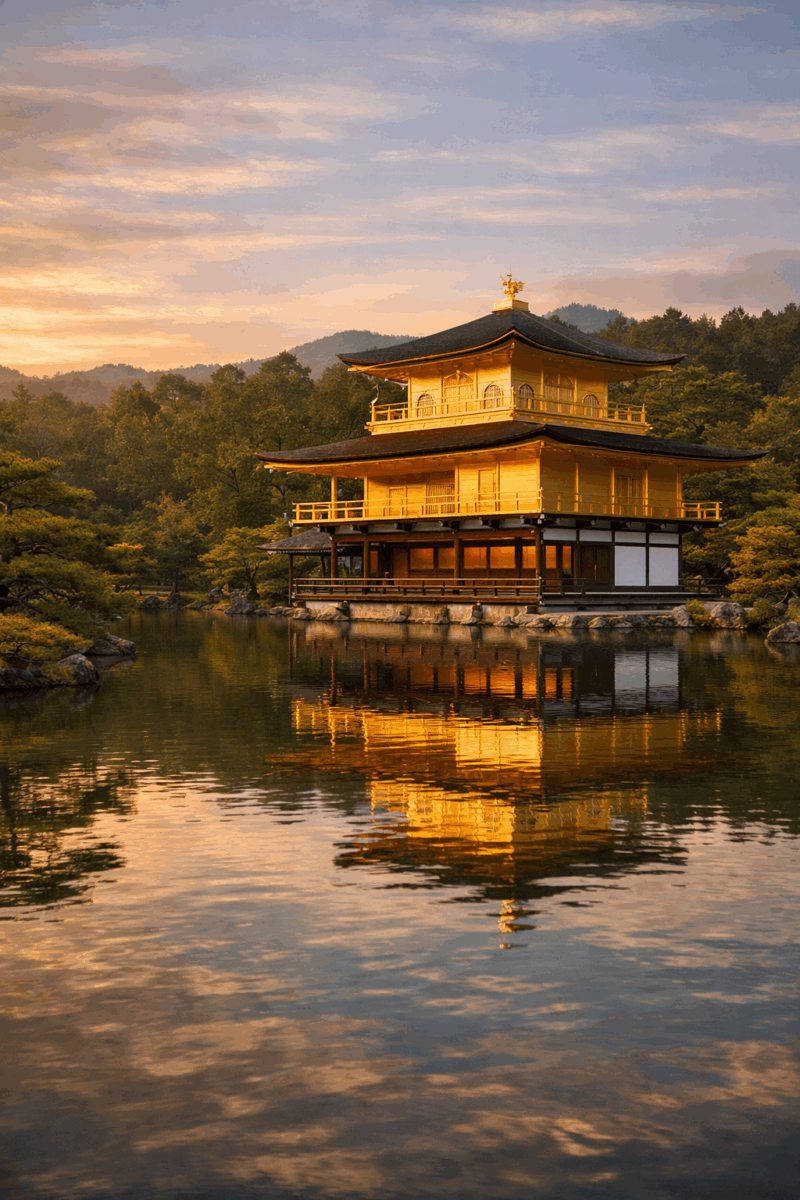
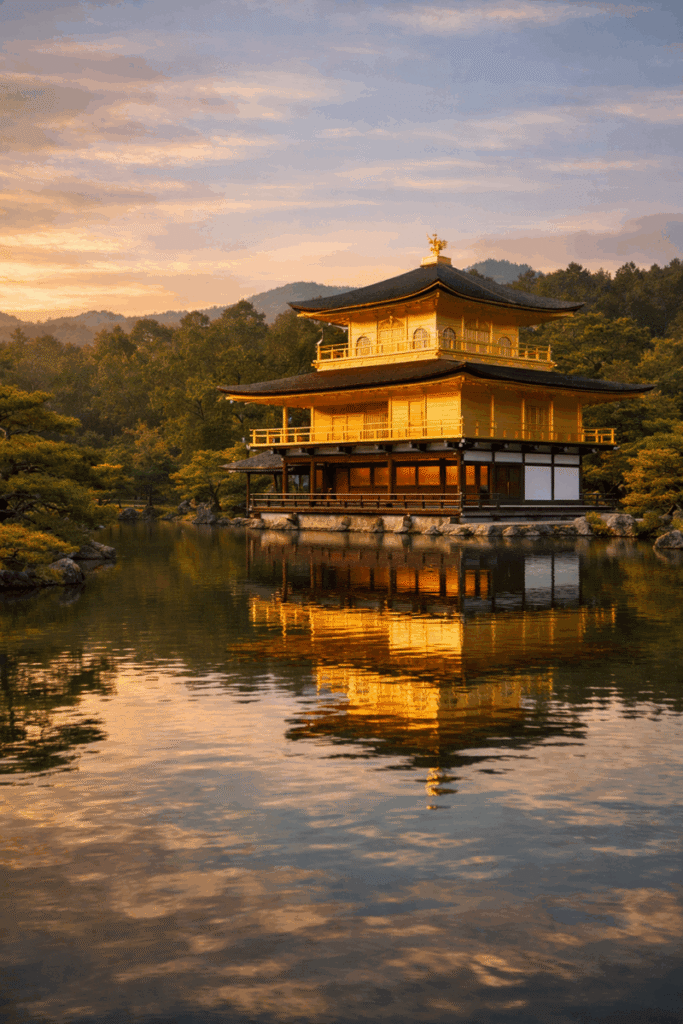
In the woods of northern Kyoto, the Golden Pavilion (Kinkaku-ji) does not awe visitors with grand scale. Instead, it feels like an object delicately placed within nature: quiet, restrained, yet impossible to ignore. As sunlight filters through the pine branches, the gold leaf on the building’s surface reflects a soft, unpretentious light, and the water ripples in response. Time seems to slow down momentarily. The Golden Pavilion captivates not due to its opulence of gold, but because of the serene order it embodies—it tells the deepest narrative of Japanese aesthetics: impermanence.
I. From Power Villa to Zen Symbol
The official name of the Golden Pavilion is Rokuon-ji (Deer Garden Temple). It was constructed at the end of the 14th century, initially not as a religious building, but as the villa of the third shogun of the Ashikaga shogunate, Ashikaga Yoshimitsu. During this period in Japan, power, culture, and aesthetics were highly concentrated within the samurai class. Yoshimitsu was not only a political ruler but also a cultural patron. He designed a new aesthetic style on the stage of Kyoto’s northern mountains that merged court culture, Chinese Song-Yuan influences, and Zen Buddhist thought—what we now refer to as the “Northern Mountain Culture.”
II. Three Stories, Three Worlds
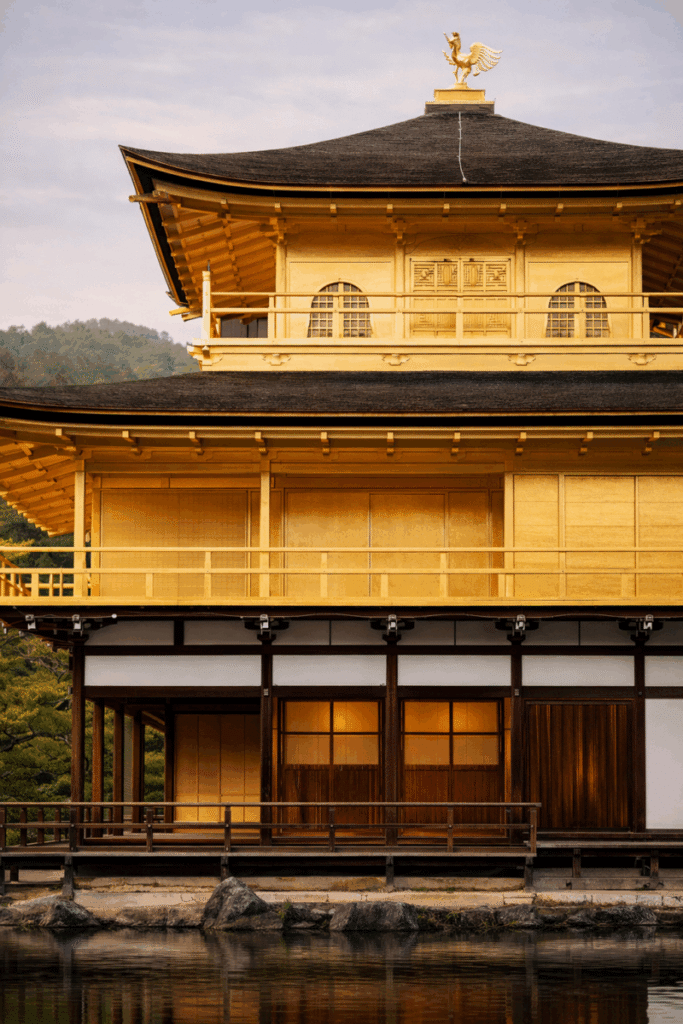
The Golden Pavilion is a three-story structure, with each level adopting a different architectural style, which is rare in Japanese temples. This difference is also key to its symbolic meaning.
First floor: Hōsui-in, constructed in the style of a residential palace, is simple and open, retaining much of the wooden structure and white walls, with minimal decoration. It symbolizes the mundane world—the human realm, nature, and daily life.
Second floor: Chōon-dō, built in the samurai style, is more enclosed, and the decor becomes more refined. It represents the transitional phase of spiritual practice and meditation.
Third floor: Kūchū-kyō, entirely covered in gold leaf, houses a statue of Amida Buddha and symbolizes the Pure Land, the ultimate spiritual destination.
This upward progression forms a silent spiritual journey: from the dust of the world, through practice, to transcendence. This is not accomplished through grand scale but through subtle variations in scale, materials, and light, making the act of viewing itself a kind of experiential meditation.
III. Gold, Not for Show
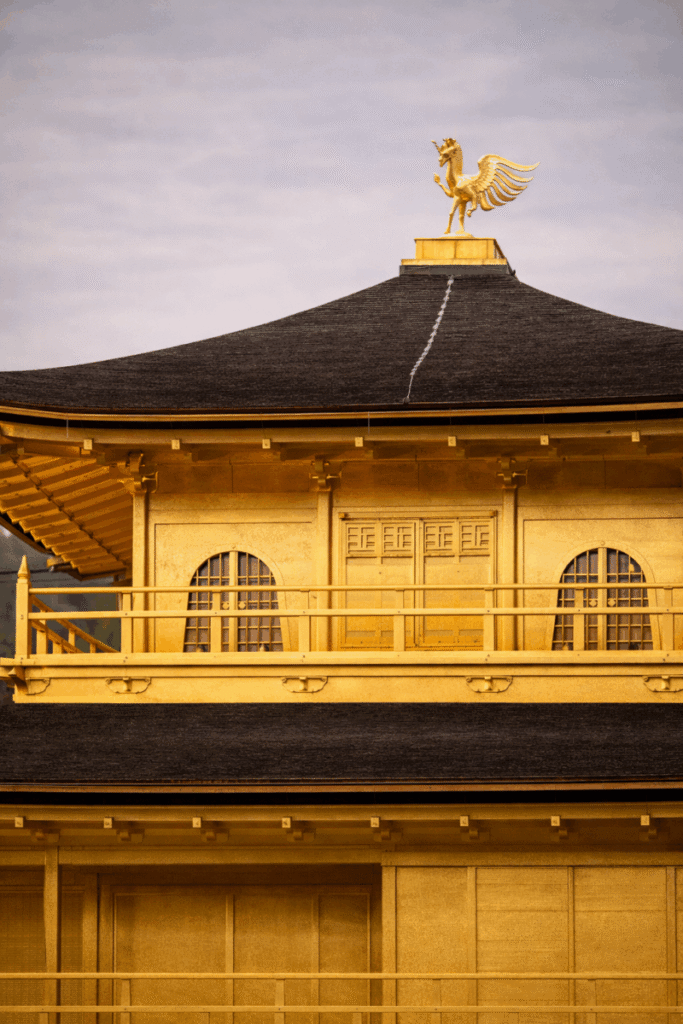
Many first-time visitors may believe that the gold on the Golden Pavilion is a symbol of ostentatious power. But if you observe closely, it is far from dazzling. The gold leaf, under natural light, takes on a soft luster that is not flashy, especially on cloudy days or at dusk, when it seems restrained and modest.
In Japanese aesthetics, gold does not equate to Western luxury; rather, it is the “reverse of emptiness”—pointing to the sacred within simplicity. In the context of Zen Buddhism, gold symbolizes the light of enlightenment, yet it must be “dissolved” by nature and the water’s surface, lest it becomes glaring. For this reason, the Golden Pavilion faces the Mirror Pond, where its brilliance is split and reflected, rendering it illusory and uncertain.
IV. The Mirror Pond: A Device for Time
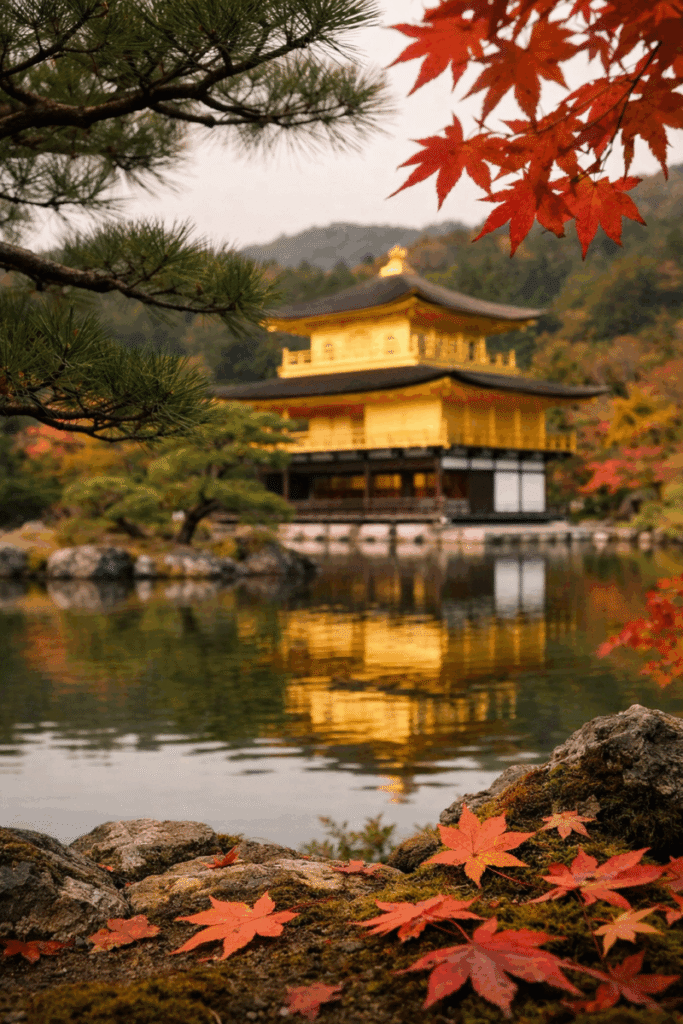
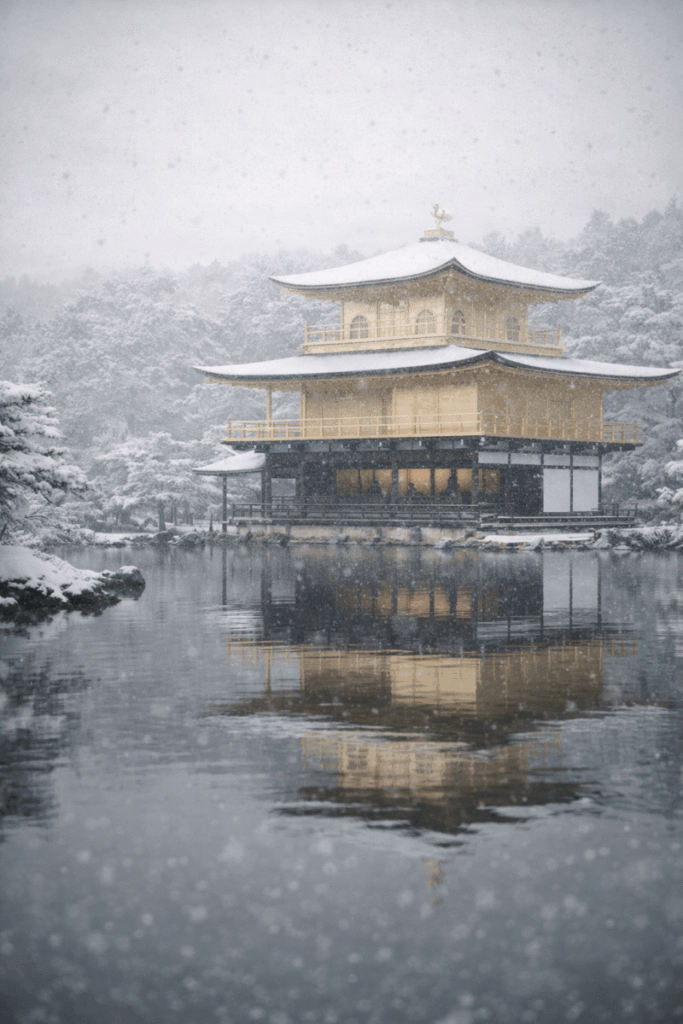
One of the most important “architectural” elements of Kinkaku-ji is the Mirror Pond. The water’s surface is not merely a scenic backdrop but an integral part of the spatial narrative. The changing of seasons, the movement of clouds, and the falling of leaves are all reenacted in the pond, transforming the building into a painting constantly rewritten by time.
In spring, the cherry blossoms reflect on the water; in summer, the new greenery; in autumn, the red maples; and in winter, the snow-covered pavilion. These changes are not merely decorative; they are a direct presentation of impermanence—the building is no longer an eternal object, but a presence constantly sculpted by time.
V. Destruction, Rebirth, and the Reality of “Impermanence”
In 1950, the Golden Pavilion was set on fire by a monk, an event that shocked Japanese society and later served as the spiritual backdrop for Yukio Mishima’s novel The Temple of the Golden Pavilion. In the novel, the Pavilion is portrayed as an “absolute beauty” that cannot be endured, and ultimately, only through its destruction can its overwhelming power be dispelled.
The current structure is a reconstruction completed in 1955. It is not the original but is still regarded as the Kinkaku-ji. This reflects another understanding of “authenticity” in Japanese culture: authenticity is not about whether the material is original, but whether the form, spirit, and memory have been preserved. Rebuilding is not a betrayal of impermanence but an acknowledgment of it.
Conclusion: In the Golden, All Things Are Empty
The most profound aspect of the Golden Pavilion lies not in its beauty, but in its refusal to remain static. It allows itself to be burned, rebuilt, and rewritten by the seasons. It retains a sense of emptiness amidst its golden splendor.
When you stand by the Mirror Pond and see the Golden Pavilion gently swaying in the water, you will suddenly realize: the true object of your gaze is not the building itself, but time, change, and your own inner state. In this deeply quiet manner, the Golden Pavilion reminds us—beauty is not an eternal existence, but a fleeting appearance.
Related Posts