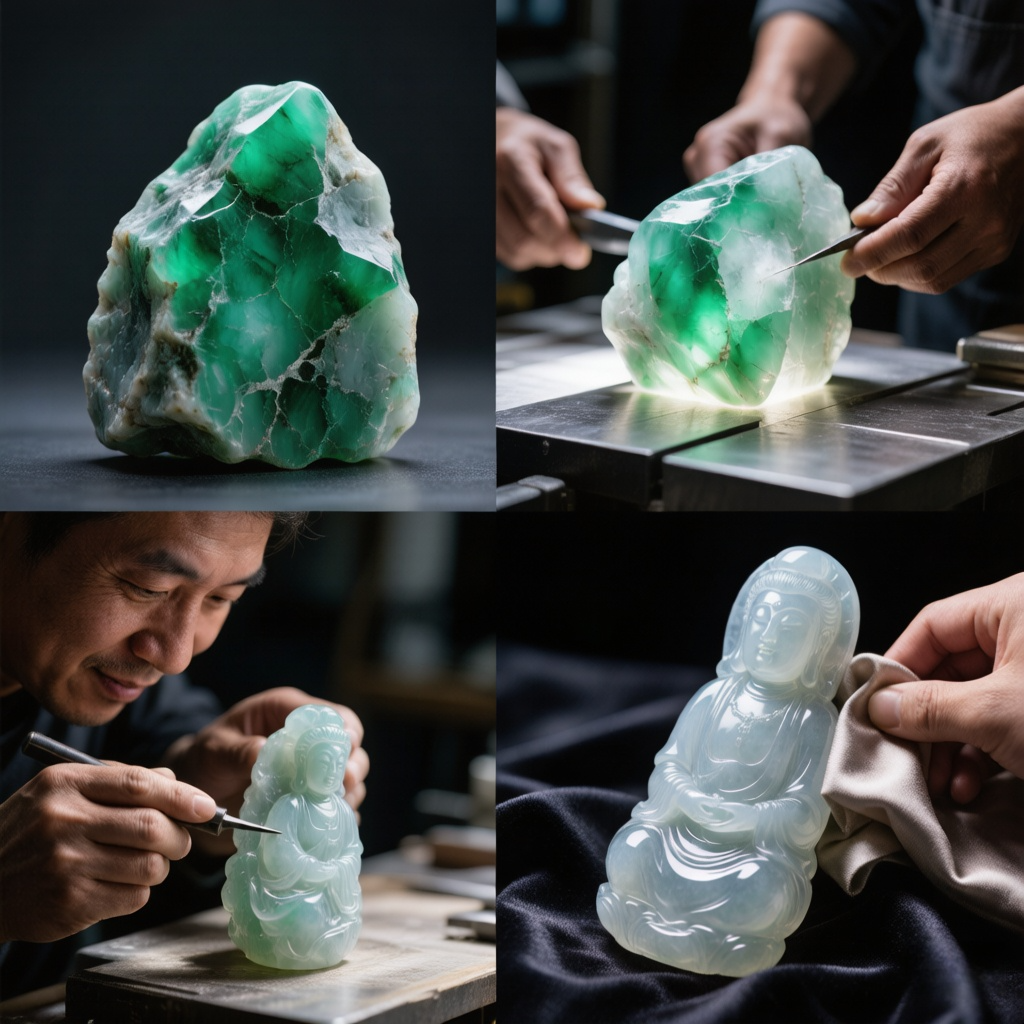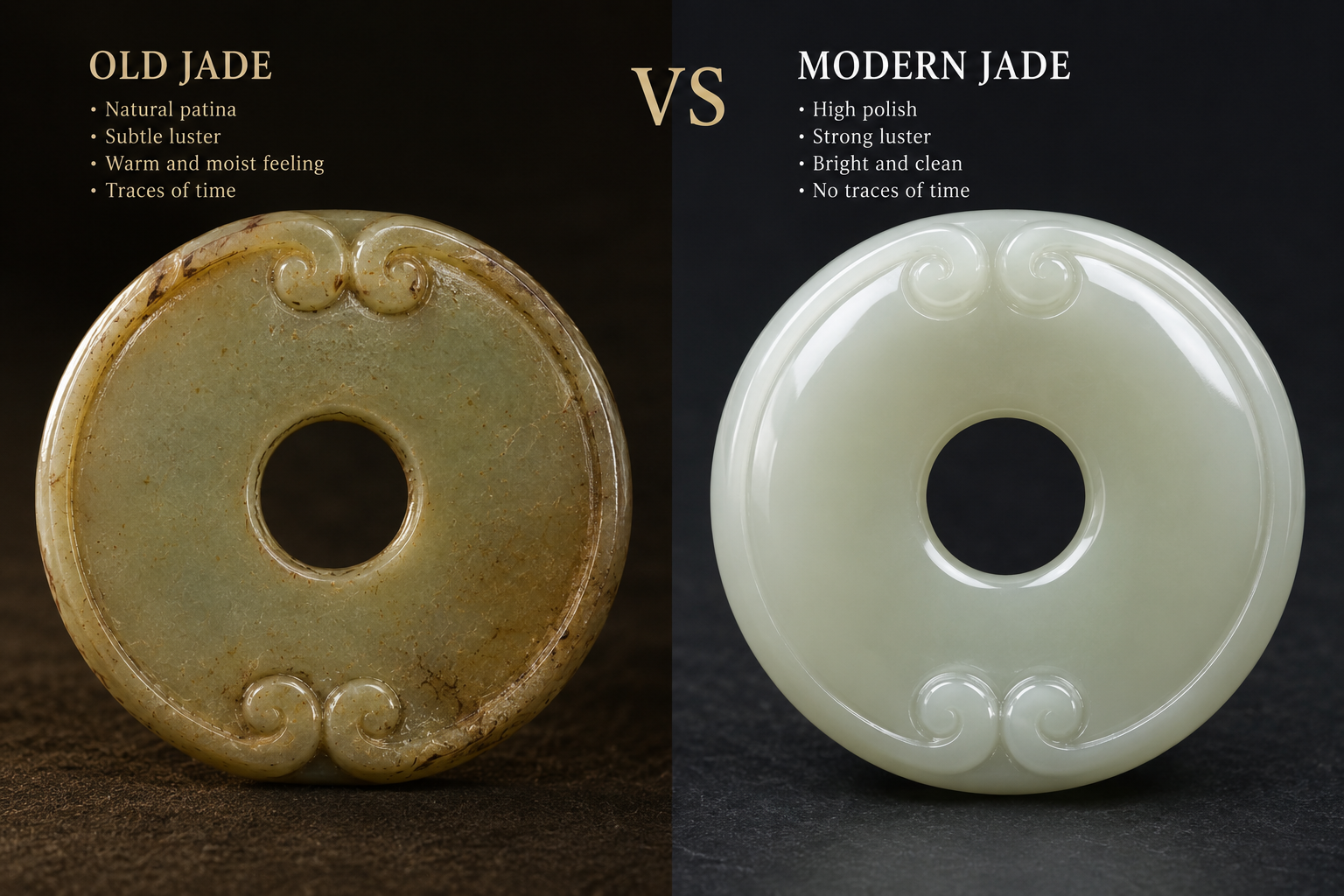
In the world of Eastern jewelry, jadeite is more than just a beautiful stone; it's…
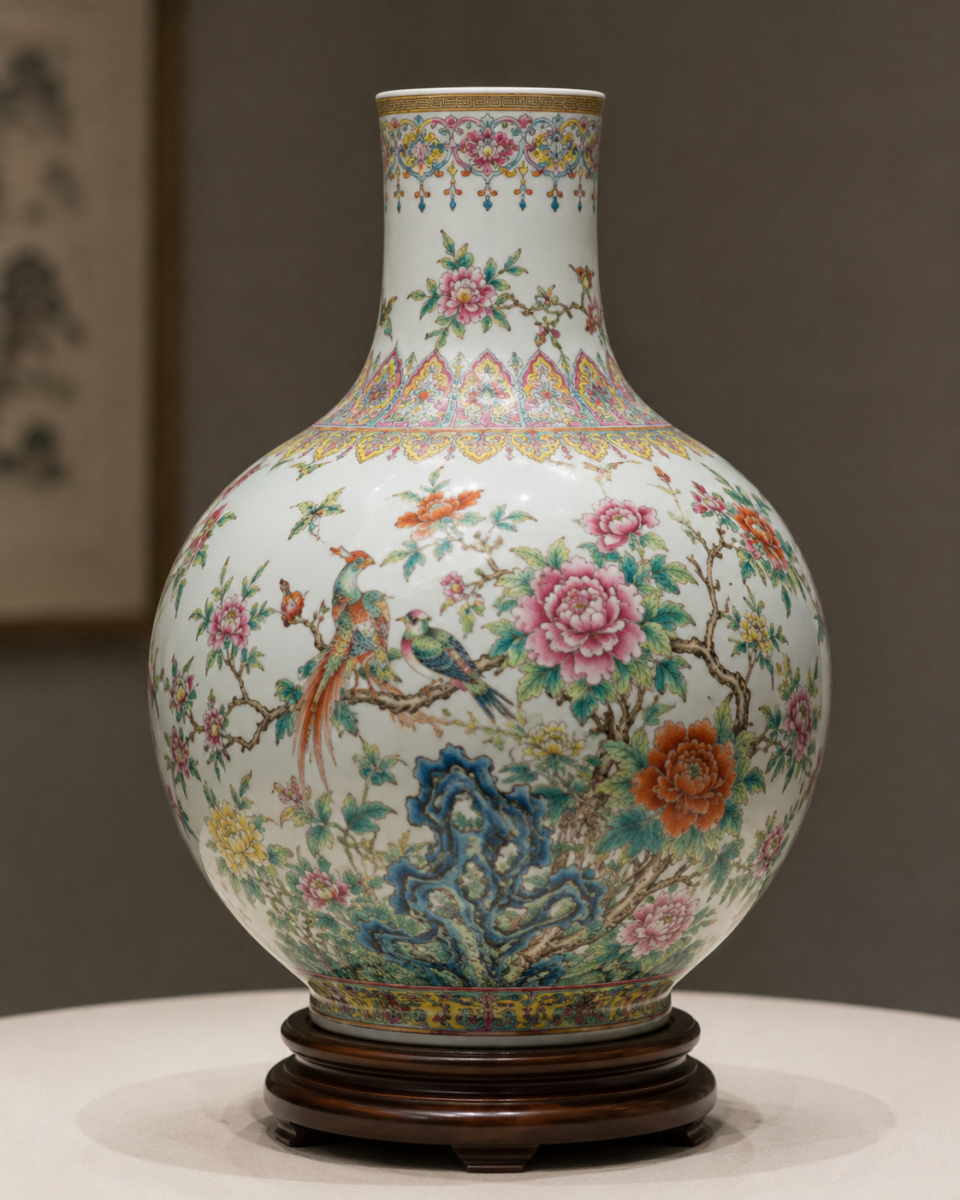
Why Are Some Famille Rose Porcelains Worth Millions? A Guide to Identifying Authentic Qing Dynasty Pieces and Modern Reproductions
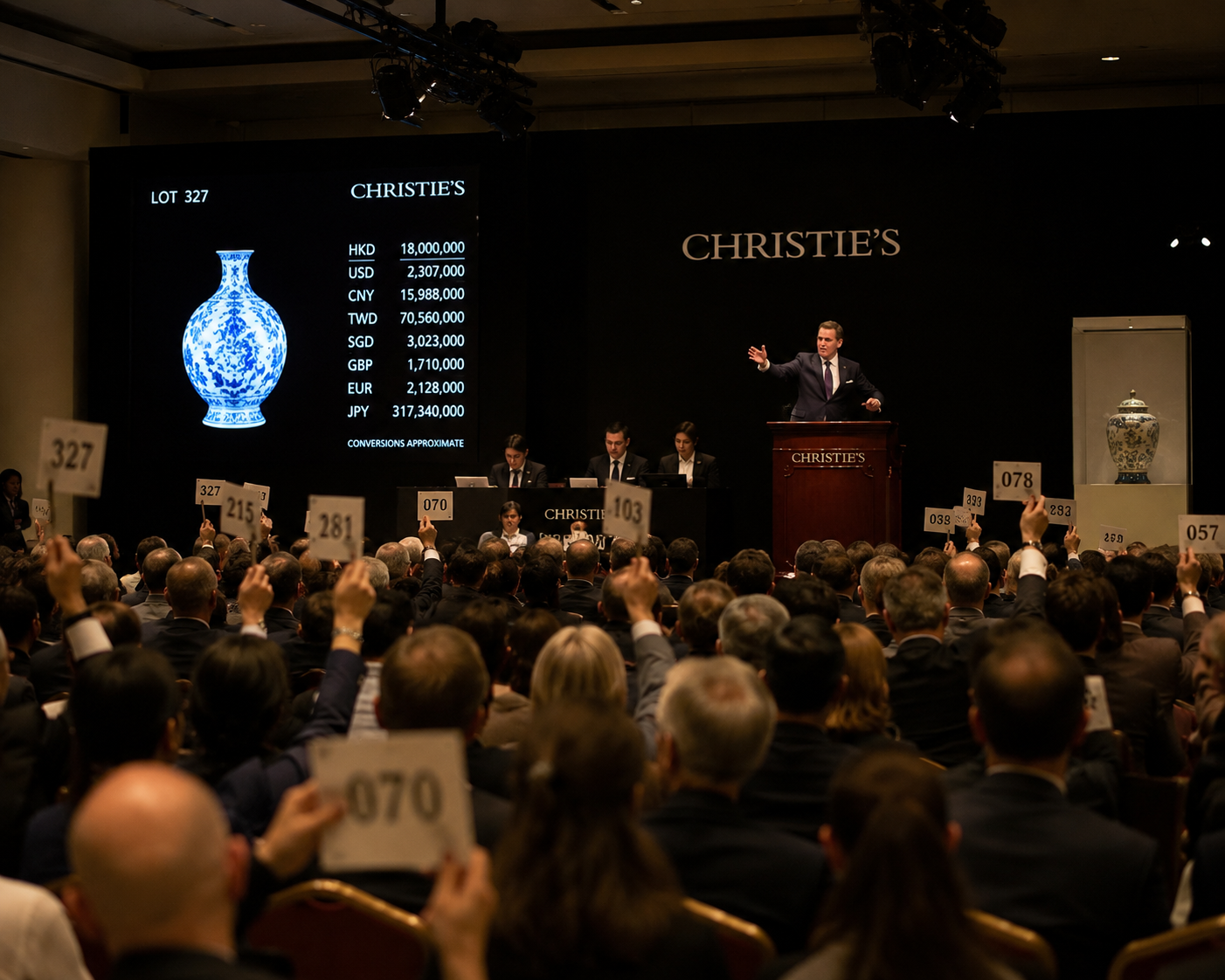
In recent years, as Chinese antique ceramics have continued to attract attention in the international auction market, Qing Dynasty famille rose porcelain has become one of the most sought-after categories among collectors. From magnificent Qianlong-period masterpieces to exceptional examples from the Jiaqing and Daoguang eras, prices have risen steadily. However, increasing market value has also encouraged the proliferation of high-quality reproductions.
For newcomers to porcelain collecting, learning how to distinguish genuine Qing Dynasty famille rose porcelain from modern imitations is essential to avoiding costly mistakes.
So, what are the characteristics of authentic Qing famille rose porcelain, and how can collectors recognize modern reproductions?
1. What Is Famille Rose Porcelain?
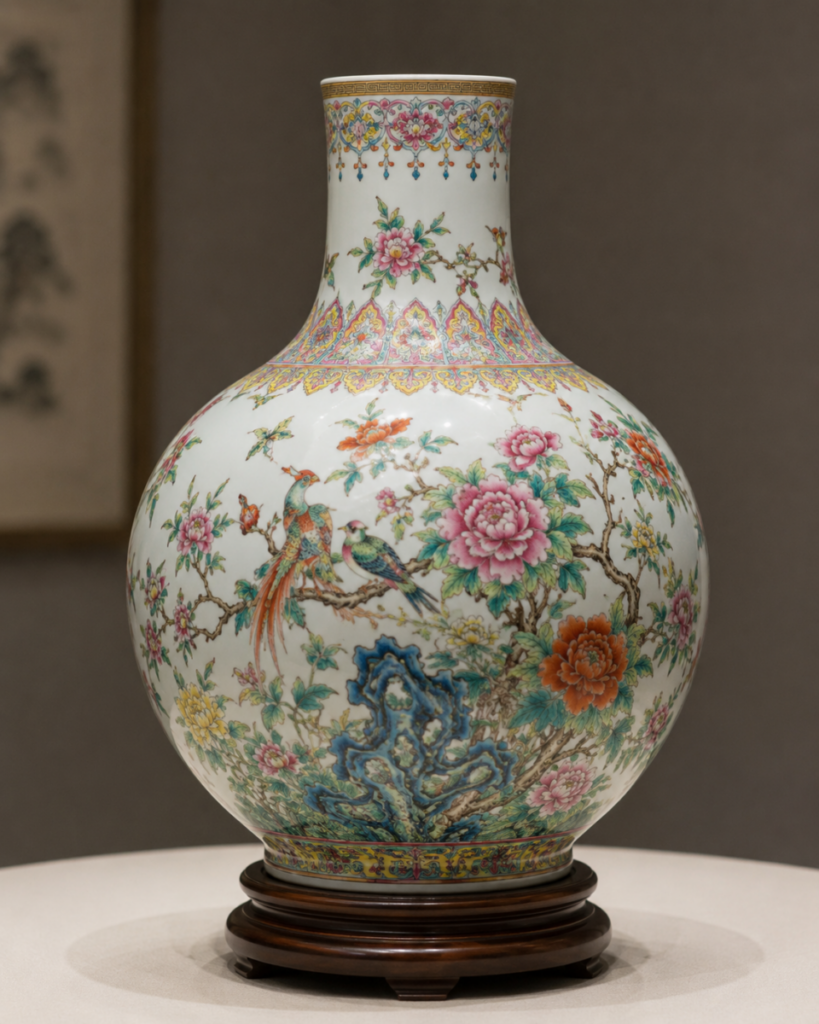
Famille rose, known in Chinese as fenca, is a type of overglaze enamel decoration that matured during the late Kangxi period and reached its artistic peak during the Yongzheng and Qianlong reigns.
Its defining characteristics include:
Soft and elegant color tones
Rich color gradation
Strong sense of depth and dimensionality
Delicate depictions of flowers, birds, landscapes, and figures
Compared with traditional wucai (five-color ware), famille rose places greater emphasis on shading and tonal transitions, making it highly valued for its artistic sophistication.
2. Examine the Porcelain Body — The Skeleton of the Piece
One of the first steps in authentication is examining the porcelain body.
Authentic Qing Dynasty famille rose porcelain was generally produced using high-quality kaolin clay and often exhibits:
Fine and compact texture
Solid, substantial feel
Clear and resonant sound when lightly tapped
Dense fracture surfaces resembling glutinous rice
Imperial wares from the Qianlong period are especially known for their exceptionally refined and white porcelain bodies.
Modern reproductions may closely imitate the appearance, but they often lack the natural warmth and refined quality associated with genuine antique porcelain.
3. Study the Glaze — Traces Left by Time
After centuries of preservation, genuine famille rose porcelain develops subtle signs of natural aging.
Common characteristics include:
Soft, mellow glaze luster
Smooth, jade-like surface
Localized areas of natural wear
Gentle light diffusion rather than harsh reflections
Modern reproductions often employ chemical treatments to simulate age, but careful examination frequently reveals:
Excessively bright gloss
Uniform aging effects
Lack of authentic wear from long-term use
True antique glaze rarely appears artificially aged or deliberately distressed.
4. Evaluate the Painting — The Most Difficult Feature to Replicate
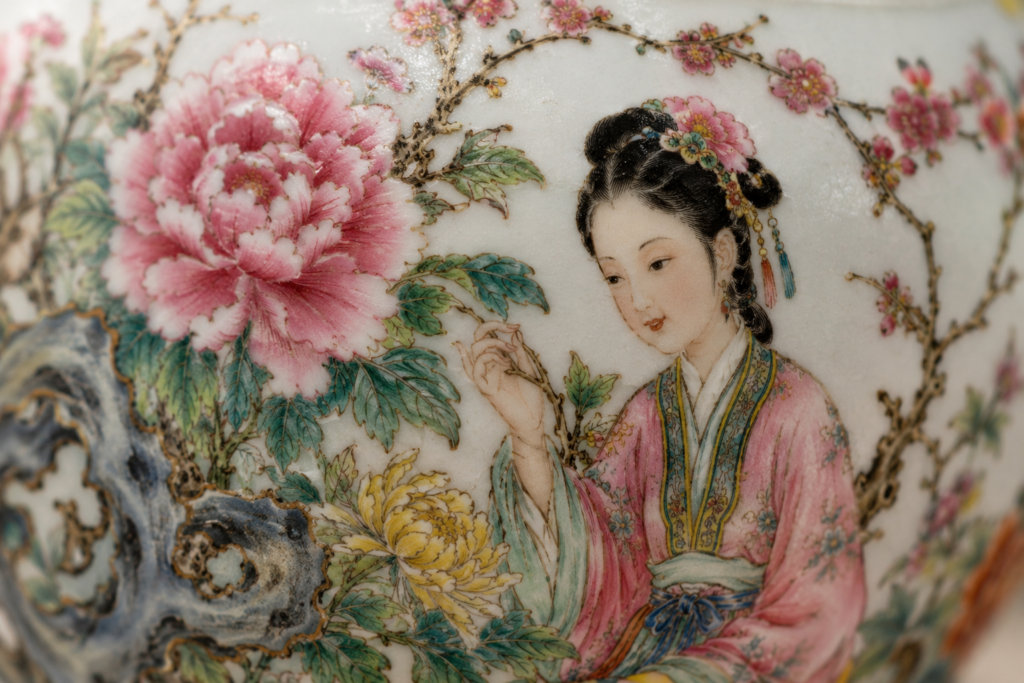
For famille rose porcelain, the quality of the painting is often more important than the reign mark itself.
Outstanding Qing Dynasty examples typically display:
Natural Facial Expressions
Figures are rendered with lifelike features and expressive faces.
Fluid Brushwork
Details such as robes, branches, and decorative motifs are painted with confidence and continuity.
Rich Color Layering
A single color may contain multiple shades and tonal transitions, creating depth and realism.
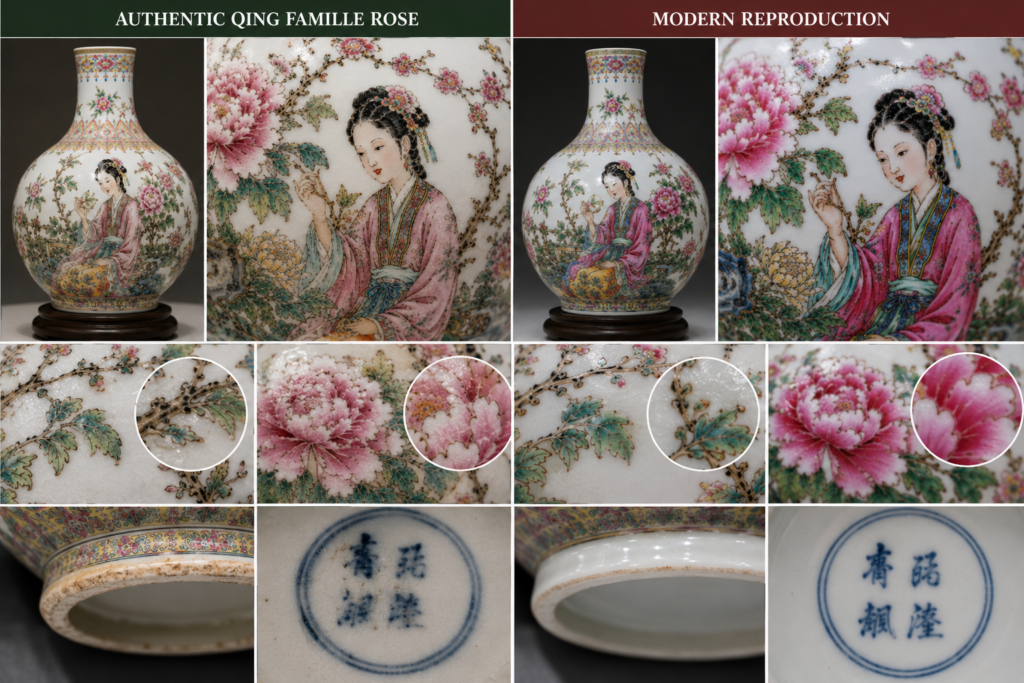
Modern reproductions often suffer from:
Rigid or mechanical lines
Expressionless figures
Flat colors or excessive pigment buildup
This remains one of the most important areas of evaluation for experienced collectors and specialists.
5. Inspect the Foot Rim — Where Many Clues Are Hidden
A well-known saying among ceramic experts is:
“Examine the foot before anything else.”
The foot rim of authentic Qing Dynasty famille rose porcelain often reveals valuable information.
Typical characteristics include:
Fire-Stone Red
Natural reddish discoloration resulting from traditional firing techniques.
Authentic Wear
The edges of the foot ring display gradual abrasion caused by centuries of handling and storage.
Naturally Aged Clay
The exposed body clay develops a subdued and stable appearance over time.
Modern reproductions frequently attempt to imitate these effects through grinding, staining, or acid treatment, but close examination often exposes artificial intervention.
6. Reign Marks — Never Judge Authenticity by the Mark Alone
One of the most common mistakes made by beginner collectors is placing excessive trust in reign marks.
In fact, the inscription:
“Made During the Great Qianlong Reign”
is among the most frequently copied marks found on modern reproductions.
This is largely because Qianlong imperial porcelain is widely regarded as one of the most valuable categories in the market.
Proper authentication requires consideration of:
Calligraphic style of the mark
Quality and tone of underglaze blue decoration
Placement and structure of the inscription
Overall consistency with the vessel’s period style
Relying solely on a reign mark can easily lead to misidentification.
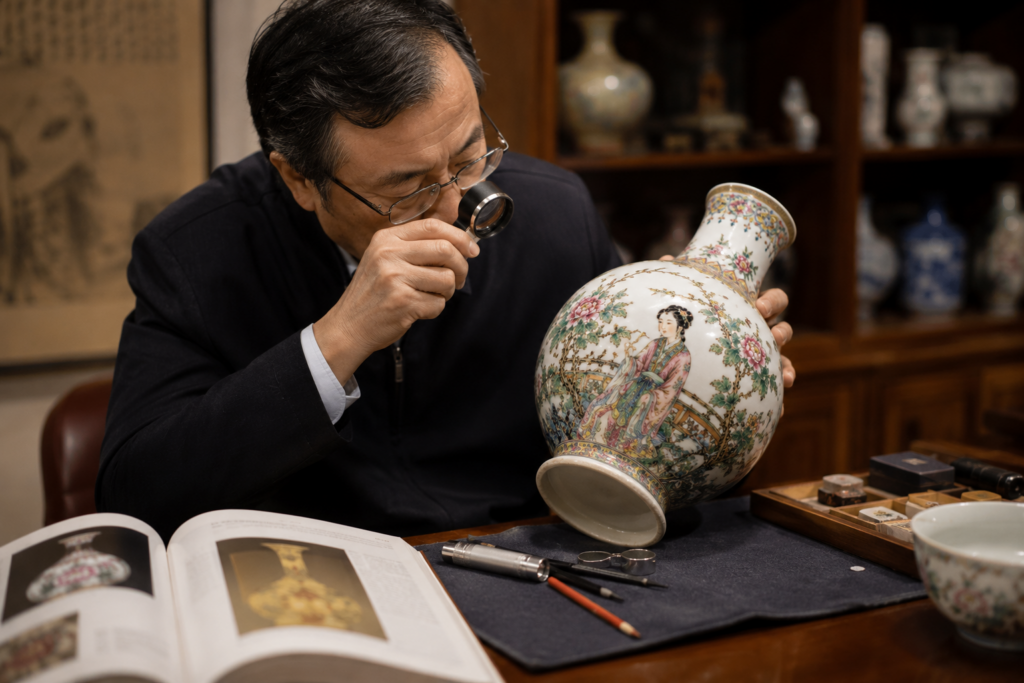
7. Observe Patina and Signs of Use
Porcelain that has survived for several centuries often bears natural evidence of age and handling.
Examples include:
Slight wear around the rim
Natural oxidation on the foot rim
Localized friction marks from prolonged use
These signs usually appear random and organic.
Artificial aging techniques often produce:
Uniform wear patterns
Concentrated dirt accumulation
Obvious manufacturing traces
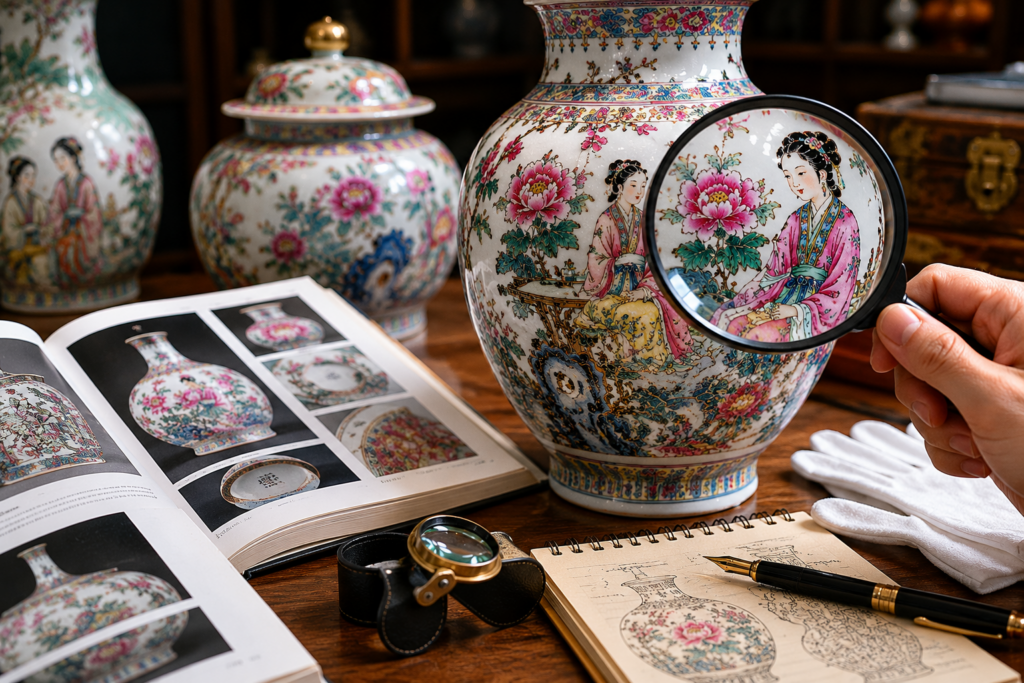
Experienced collectors frequently assess authenticity based on the overall visual impression rather than any single feature.
8. Why Are High-End Reproductions Becoming Harder to Identify?
Advances in modern ceramic technology have enabled skilled workshops to replicate many aspects of antique porcelain, including:
Vessel shapes
Decorative motifs
Reign marks
Glaze colors
Some sophisticated reproductions even incorporate ground fragments of old porcelain into the manufacturing process.
As a result, judging authenticity from photographs alone has become increasingly unreliable.
For high-value acquisitions, collectors should consider:
Requesting documented provenance
Reviewing published references and exhibition records
Consulting professional authentication services
Comparing the piece with recognized standard examples
These precautions can significantly reduce collecting risks.
Conclusion
Qing Dynasty famille rose porcelain is more than a collectible object—it represents one of the highest achievements of Chinese ceramic artistry.
Successful authentication depends not on a single feature but on a comprehensive evaluation of:
Porcelain body
Glaze quality
Painting technique
Foot rim characteristics
Patina
Historical style and craftsmanship
For collectors, studying museum-quality examples, auction catalogues, and authentic antiques is far more valuable than relying on simplified authentication formulas.
The true value of antique porcelain lies not only in its market price but also in the history, artistry, and cultural heritage it preserves for future generations.
Related Posts