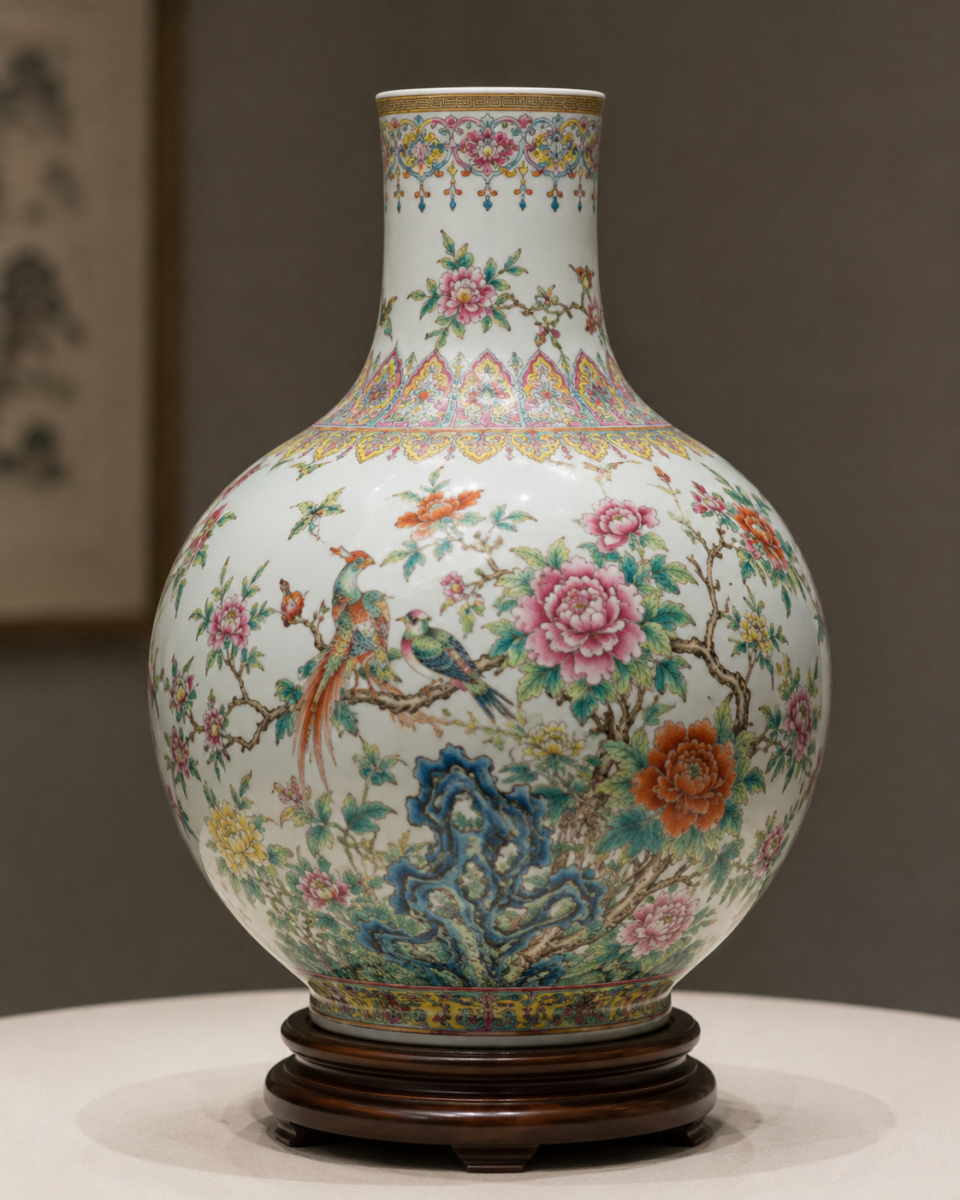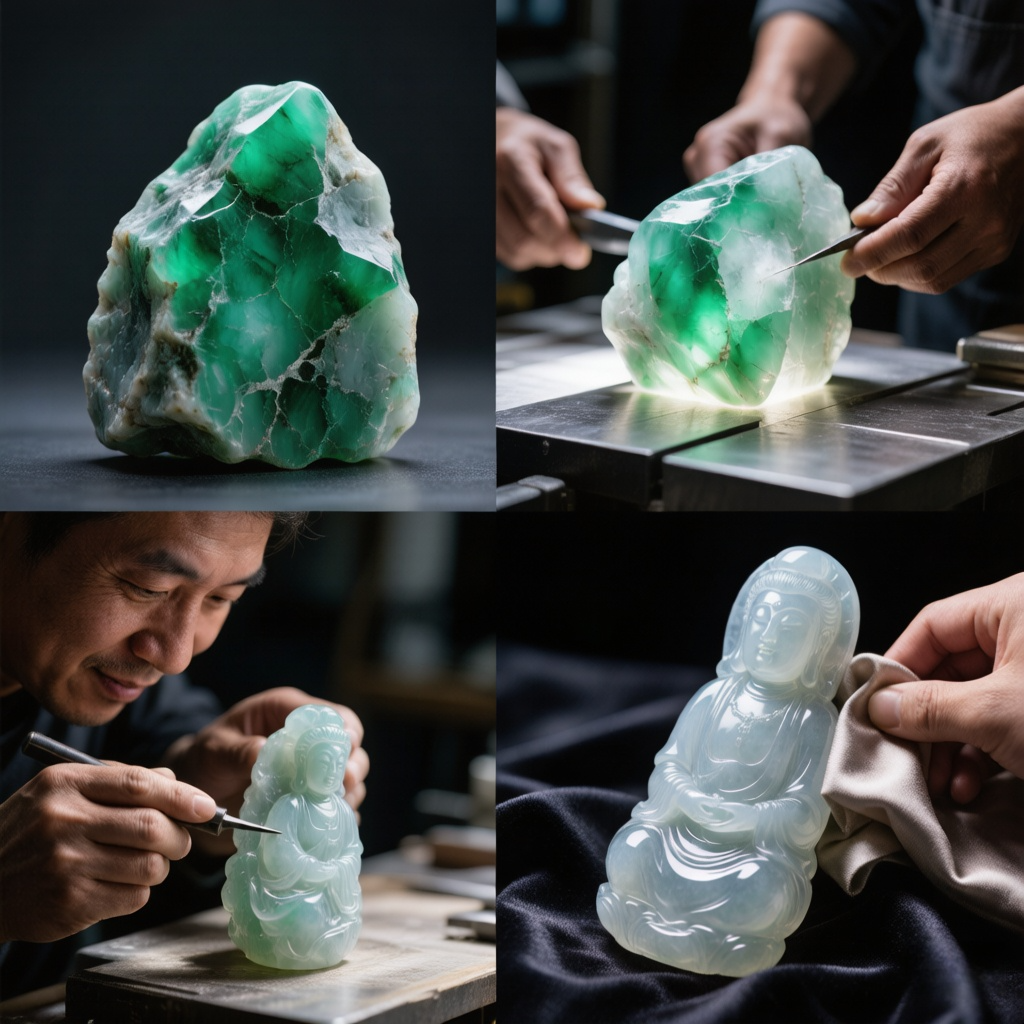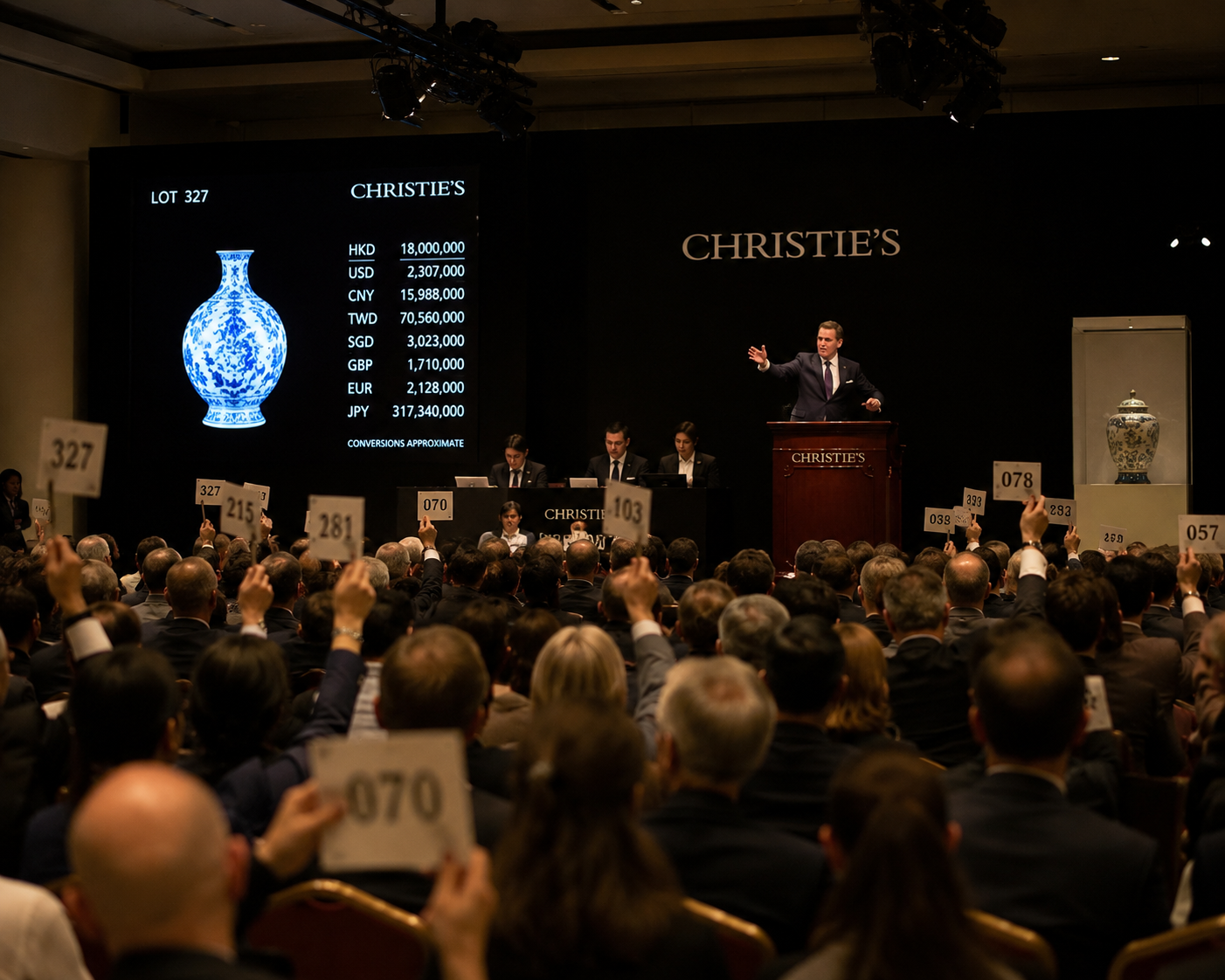
In recent years, as Chinese antique ceramics have continued to attract attention in the international…
The French Crown: A Crowning Item of Power, Glory, and History
Throughout human history, the crown has always been one of the most direct and symbolic manifestations of power. Among the many symbols of monarchy in Europe, the French crown is particularly unique. It not only represents the legitimacy of royal power but also carries complex meanings related to religious beliefs, political changes, and national identity. From medieval coronation ceremonies to the turmoil of the French Revolution, this crown has witnessed a nation’s historical journey from divine right of kings to the modern nation-state.
I. The Origin of the Crown: A Symbol of Divine Right of Kings
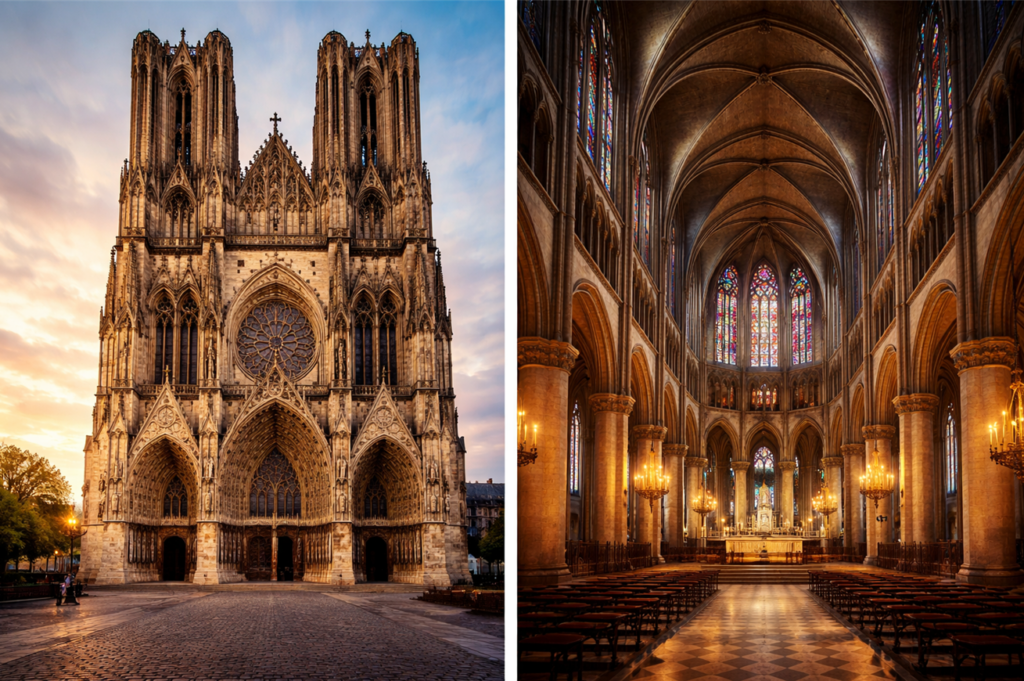
The history of the French crown can be traced back to the early Middle Ages. As French royal power gradually consolidated, the crown became an important symbol of the “divine right of kings.” The coronation ceremony of the French king was usually held in Reims Cathedral, considered a sacred place. Legend has it that the holy oil used for coronation came from heaven, bestowed by angels, making the French king not only a secular ruler but also seen as God’s representative on earth.
In this system, the crown is not merely an ornament but a vessel of divine power. Wearing the crown signifies acquiring the legitimate power to rule the country and assuming the responsibility of upholding faith and order.
II. Form and Materials: The Power Language of Gold and Gemstones
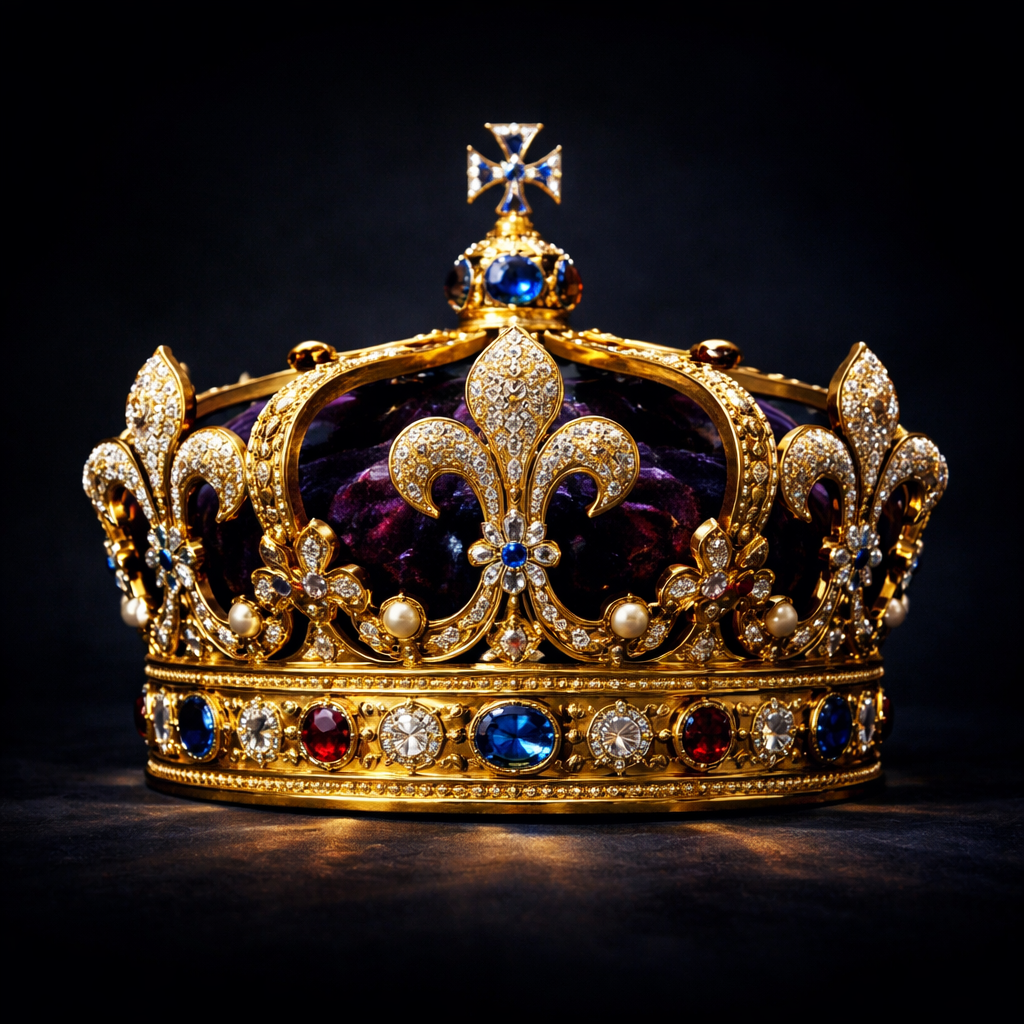
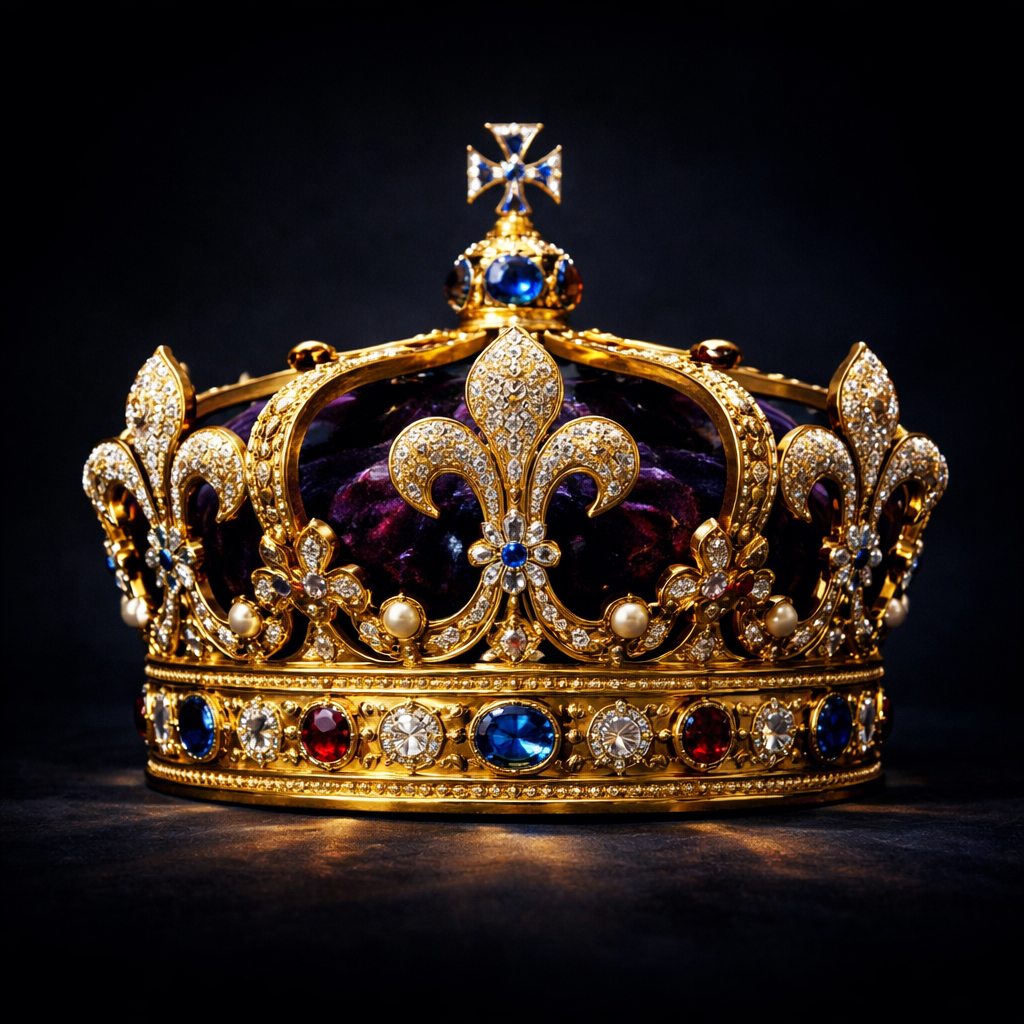
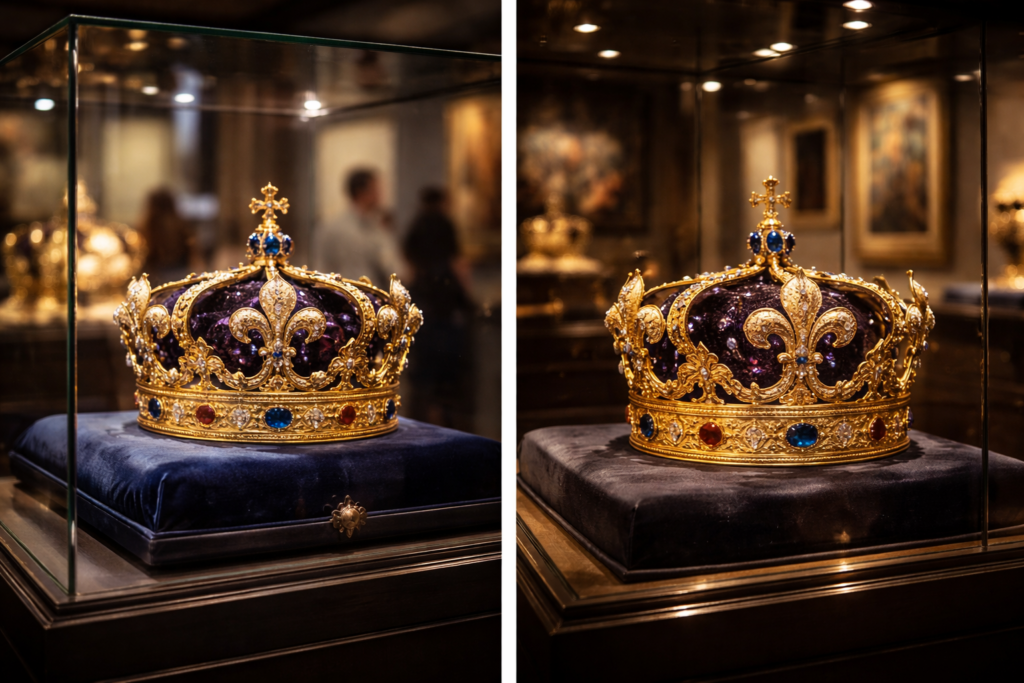
The French crown is typically crafted from gold and inlaid with numerous gemstones, such as sapphires, rubies, emeralds, and pearls. These gemstones not only symbolize wealth and power but also possess profound symbolic meanings. For example, sapphires symbolize loyalty and wisdom, rubies represent courage and royal authority, while pearls are often seen as a symbol of purity and divinity.
The crown’s shape is usually a circular base with fleur-de-lis extending upwards, one of the most representative symbols of the French monarchy. The fleur-de-lis not only symbolizes the purity and sanctity of royal power but has also gradually become an important symbol of French national identity.
The overall design emphasizes symmetry and solemnity, creating a visually striking effect that is both magnificent and awe-inspiring through the contrast between the luster of gold and the colors of the gemstones. This visual language essentially proclaims to the world: royal power is supreme and unquestionable.
III. The Coronation Ceremony: The Sanctification of Power
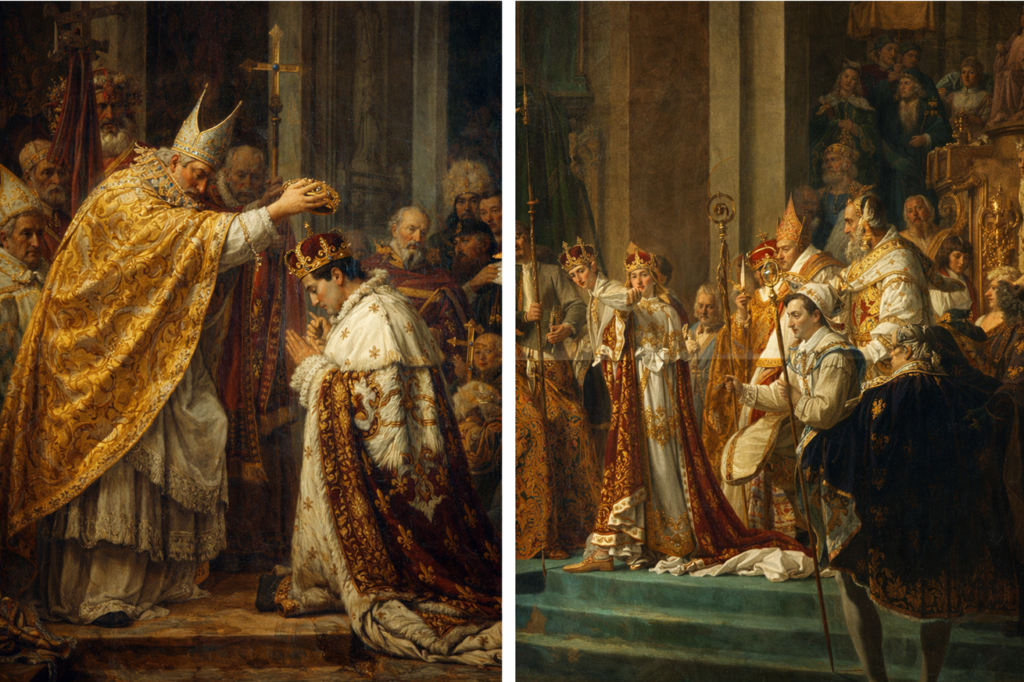
In French tradition, the coronation ceremony was far more than a simple enthronement procedure; it was a complex and solemn religious ritual. During the ceremony, the king not only donned the crown but also received an anointing with holy oil, a process symbolizing divine blessing and approval.
The crown became the heart of the ceremony. When it was placed on the king’s head, it signified not only the transfer of power but also the establishment of a divine identity. The king was no longer merely an individual but the embodiment of the nation and the faith.
This ceremony reinforced the legitimacy of royal power, elevating it beyond secular politics and into the sacred realm. This is why, in the Middle Ages, resistance against the king was often seen as a challenge to divine will.
IV. Historical Transformation: From Glory to Disruption
The fate of the French crown fluctuated dramatically with the upheavals of French history. During the reigns of Louis XIV and other “Sun Kings,” royal power reached its zenith, and the crown became the most dazzling symbol of absolute monarchy. However, this system of centralized power also sowed the seeds of social conflict.
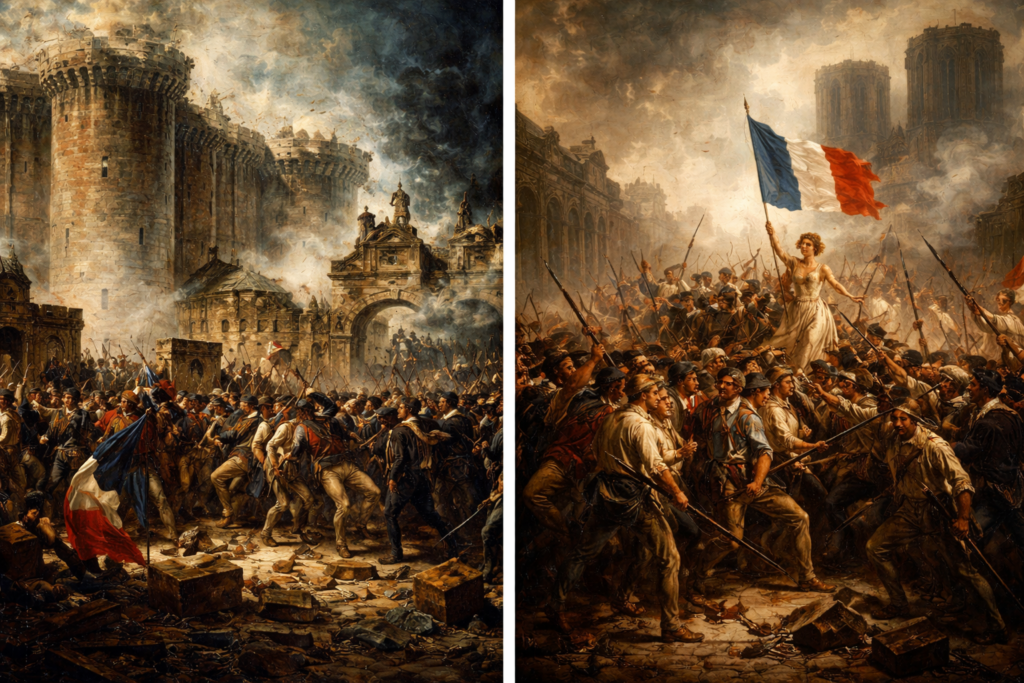
The French Revolution of 1789 completely changed everything. The monarchy was overthrown, and the crown ceased to symbolize sacred authority, becoming a symbol of the old regime. A vast amount of royal treasures were confiscated, melted down, or auctioned off, and many original crowns disappeared into history.
This disruption had profound significance: it marked Europe’s transition from feudal monarchy to a modern political system. The disappearance of the crown was not merely a material destruction, but also symbolized the end of a political ideology.
V. Cultural Symbolism: From Power to Memory
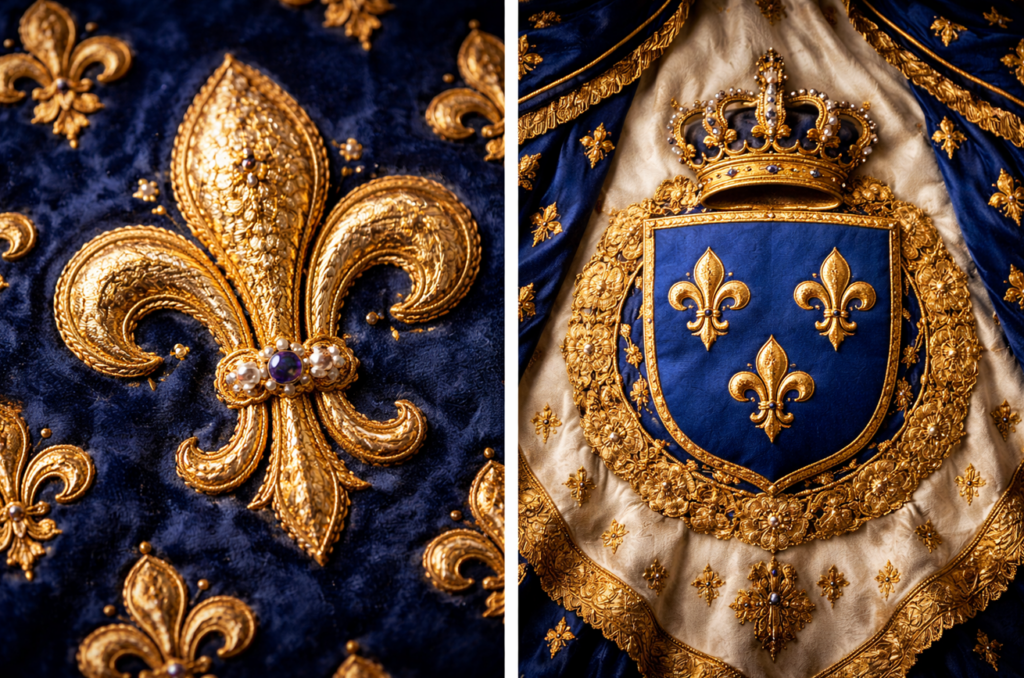
Although many physical crowns no longer exist, their imagery endures in culture. The fleur-de-lis pattern, crown shape, and related symbols continue to appear in art, architecture, and design.
In literature and film, the French crown is often used to symbolize power, glory, and destiny. It can represent both splendor and decay and destruction. This multifaceted meaning makes it a highly expressive cultural symbol.
Meanwhile, related artifacts and replicas in museums allow modern people to reinterpret the historical significance of this symbol. It is no longer merely a tool of power, but has become part of historical memory.
VI. A Modern Perspective: Re-examining Symbols of Royal Power
In contemporary society, the crown no longer wields actual political power, but its symbolic meaning remains. Through it, people reflect on the source and legitimacy of power, and consider how institutions influence social development.
The French Crown reminds us that power is not immutable. It can be imbued with sacred meaning, and it can be overthrown and reconstructed. Every historical transformation is a redefinition of the power structure.
VII. Conclusion: A Crown’s Journey Through Time
The French Crown is not merely a piece of jewelry or art; it is a crystallization of history. Born from a sacred coronation ceremony, it vanished in the storms of revolution, and was reborn in cultural memory.
Beneath the brilliance of gold and jewels lies a nation’s profound narrative of power, faith, and identity. It shows us how humanity expresses abstract authority through material forms, and how these symbols are constantly redefined throughout history.
When we look back at this crown, we see not only past glory, but also the trajectory of the continuous evolution of human civilization.
Related Posts