In recent years, as Chinese antique ceramics have continued to attract attention in the international…

How to Identify Tang Dynasty Sancai: A Complete Guide to This Millennium-Old Ceramic Art
I. Introduction: Colors of the High Tang, the Spirit of Sancai
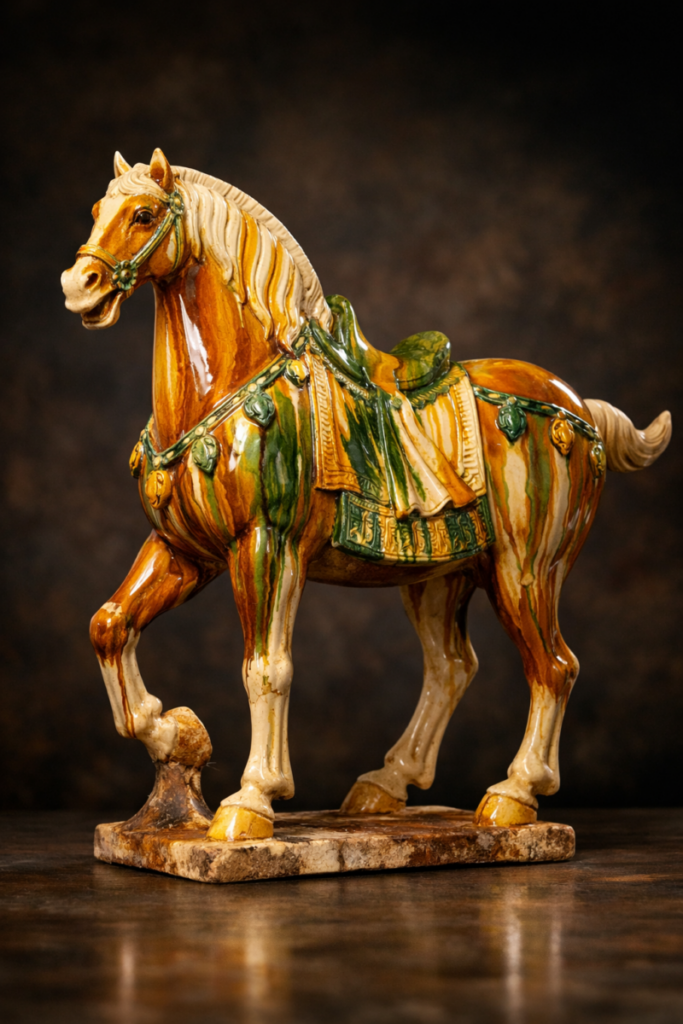
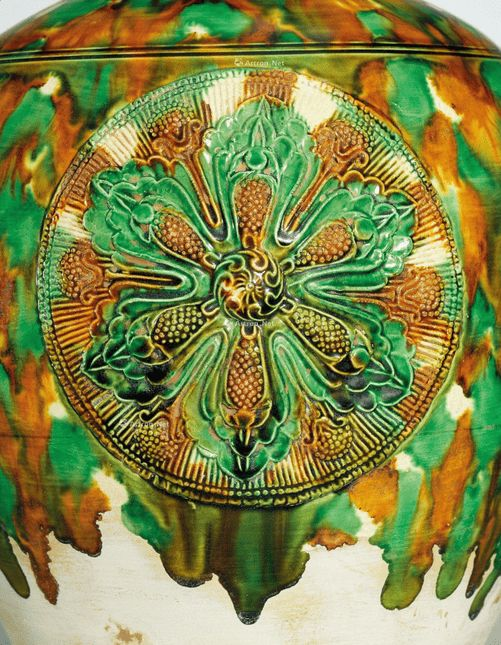
Tang Sancai (three-colored glazed pottery) is one of the most representative ceramic forms in Chinese art history. Flourishing during the Tang Dynasty (7th–8th century), it is characterized by its lead-glazed surfaces in yellow, green, and white, often accented with brown and blue. These colors blend and flow together, creating a distinctive visual effect.
More than decorative objects, Tang Sancai pieces reflect the vibrant life of the High Tang period and stand as tangible evidence of cultural exchange along the Silk Road.
Due to both their artistic and market value, Tang Sancai objects have long attracted collectors—along with numerous imitations and artificially aged pieces. Understanding how to identify authentic examples is the essential first step into this field.
II. Body (Clay) Characteristics: The Foundation of Authentication
Authentic Tang Sancai typically uses a clay body with relatively high iron content, resulting in a grayish-white or reddish-brown tone. The texture is generally coarse rather than refined.
Common features include:
Relatively heavy but not dense or hard
A granular fracture surface
Visible sand particles or small օդ pores
A dull, muted sound when tapped
By contrast, modern reproductions often use industrial clay or kaolin, producing a much finer and more uniform body—sometimes appearing “too clean,” which should raise suspicion.
III. Glaze Characteristics: The Key Lies in Flow
The glaze is the most critical factor in identifying Tang Sancai.
Typical features:
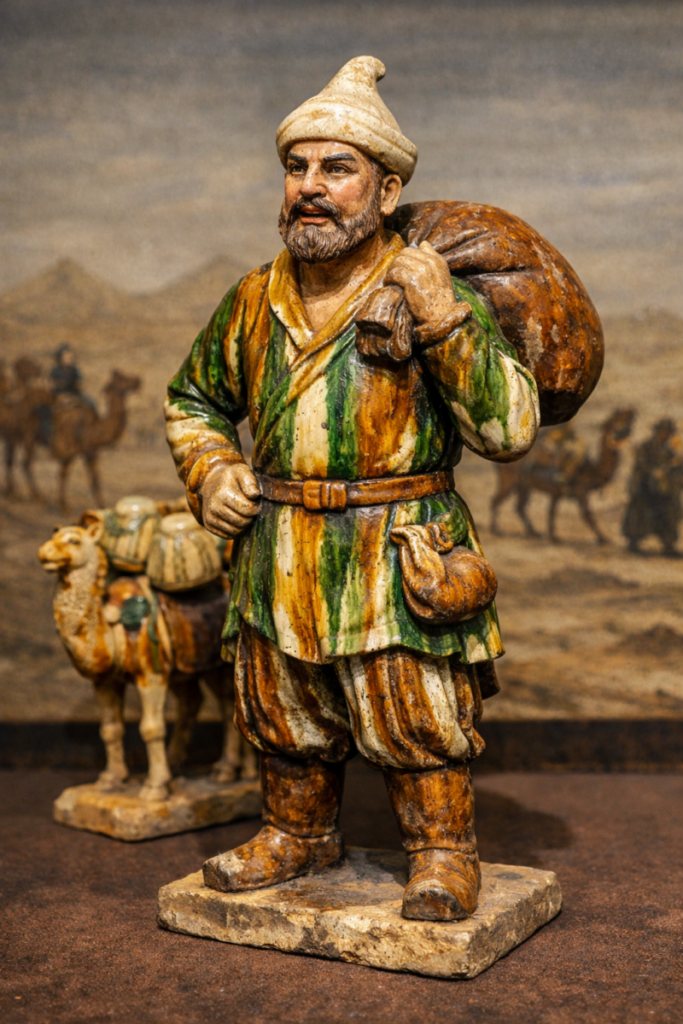
Naturally flowing glaze with irregular blending
Yellow, green, and white intermingling without clear boundaries
Presence of kiln transformation effects (natural chemical variations)
Noticeable variation in glaze thickness
Authentic glaze gives the impression of “frozen liquid.” In contrast, imitations often show:
Overly bright and uniform colors
Clearly defined, artificial boundaries
Lack of natural diffusion and fluidity
Particular attention should be paid to green glaze: authentic examples tend to appear darker and more muted, rather than the bright or fluorescent greens often seen in modern copies.
IV. Form and Subject Matter: Indicators of the Era
Tang Sancai forms and subjects strongly reflect their historical context.
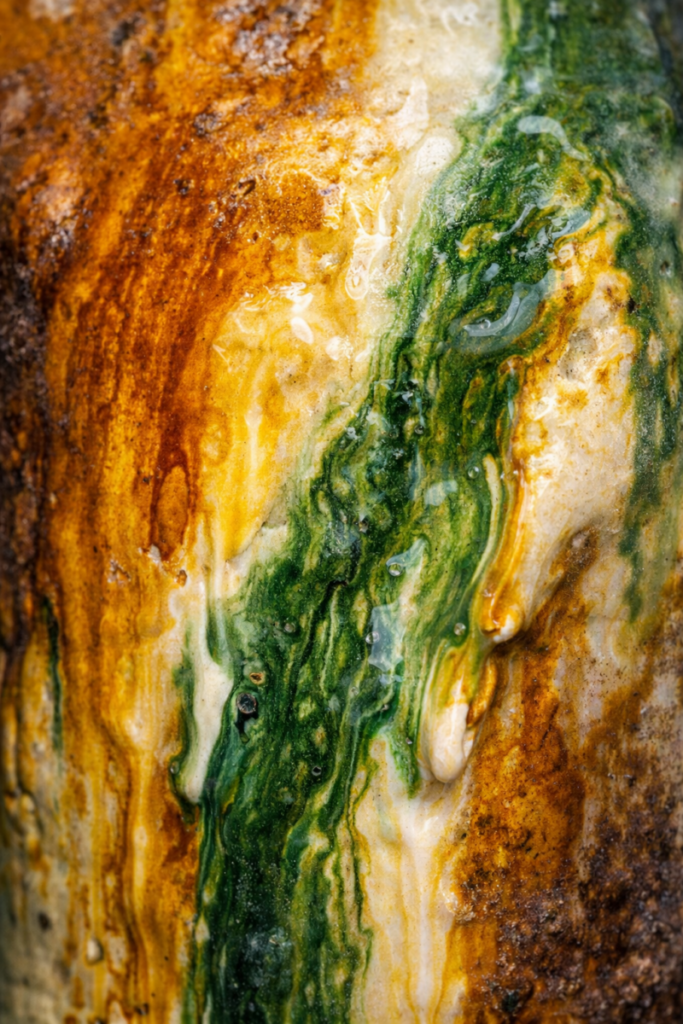
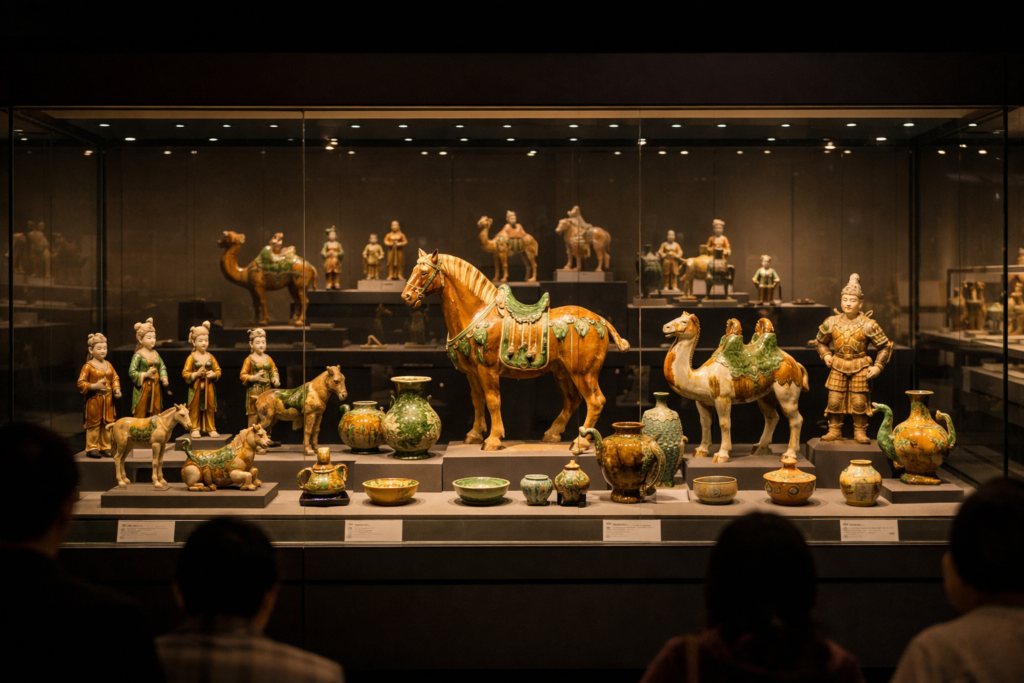
1. Funerary Objects (Mingqi):
Camels
Horses
Foreign merchant figurines
Court ladies
These were typically burial objects, reflecting the multicultural exchanges and Silk Road prosperity of the Tang era.
2. Functional Vessels:
Ewers
Plates
Pillows
These tend to be full-bodied in form, with an emphasis on decorative appeal.
Identification tips:
Natural proportions, without strict symmetry
Expressive, slightly exaggerated figures
Foreign figures with distinct features (e.g., high noses, deep-set eyes)
Common issues in reproductions:
Overly regular and mechanical forms
Lack of dynamism
Repetitive, “template-like” facial expressions
V. Surface Aging and Weathering
Natural aging is an important indicator of authenticity.
Authentic pieces often exhibit:
Natural wear and fine crackle (crazing)
Partial glaze loss or weathering
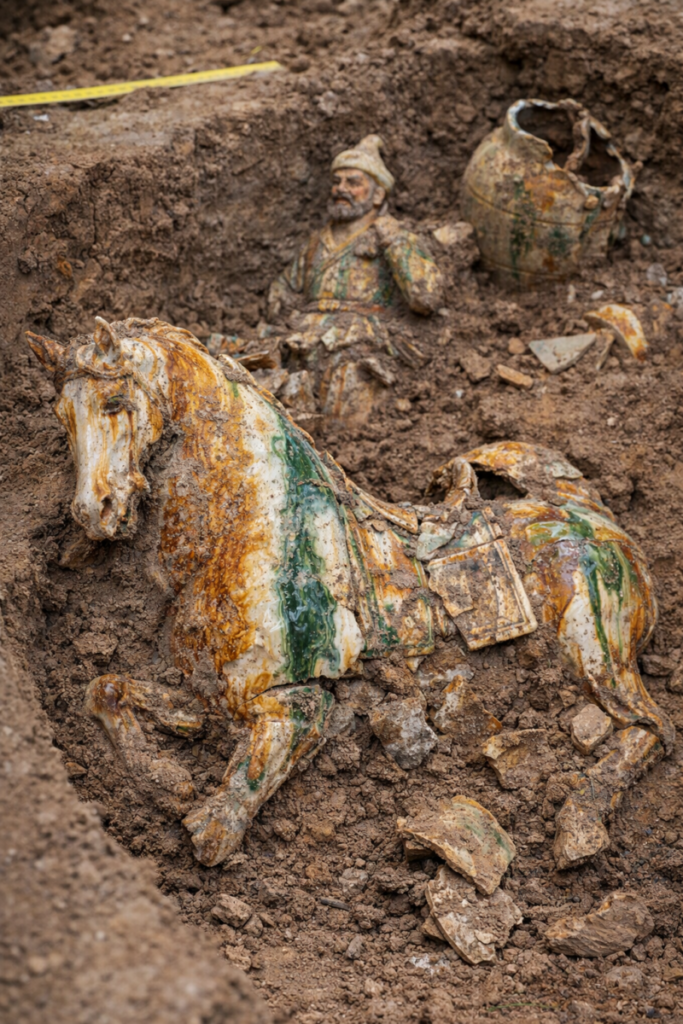
Burial encrustations
Localized oxidation or calcification
Modern imitations, even when artificially aged, often reveal:
Obvious polishing marks
Unnatural or repetitive weathering patterns
Artificial patina
True aging is random, layered, and impossible to replicate precisely.
VI. Burial Deposits and Soil Infiltration
Since many Tang Sancai objects were excavated from tombs, they often carry distinct burial characteristics:
Soil encrustations in gray-white, yellow-brown, or rust tones
Uneven, penetrating diffusion
In some cases, infiltration beneath the glaze
In contrast, reproductions often show:
Surface-level deposits that can be wiped away
Uniform coloration
Deliberately arranged patterns
VII. A Practical Framework for Authentication
Avoid relying on a single criterion. Instead, evaluate comprehensively:
Body (material and texture)
Glaze (flow and color)
Form (shape and proportion)
Aging (natural wear)
Aura (overall historical coherence)
Authentic Tang Sancai presents a harmonious sense of historical integrity, rather than excelling in just one aspect.
VIII. Conclusion: More Than Objects—Fragments of an Era
Tang Sancai is not merely decorative pottery; it is a reflection of the openness and cultural dynamism of the Tang Dynasty. Incorporating influences from Central China, Persia, Central Asia, and beyond, it stands as physical evidence of Silk Road exchange.
In authentication, the key is not simply to “find flaws,” but to understand historical logic. Only objects that align with their cultural and temporal context can truly be considered authentic Tang Sancai.
Related Posts