In recent years, as Chinese antique ceramics have continued to attract attention in the international…
The Epic in Stone — The Eternal Narrative of the Parthenon Frieze
When sunlight falls upon the heights of the Acropolis in Athens, the white marble still dazzles with divine brilliance. Over twenty-five centuries ago, the ancient Greeks, on this land wrapped in myth, built a sanctuary for the goddess of wisdom and war — Athena.
Yet, within the soul of this temple lies more than solid columns and harmonious proportions. There exists an epic carved in stone and inked in faith — the Parthenon Frieze.
I. The Light of Civilization in Stone
The Parthenon was built between 447 and 438 B.C., designed by architects Iktinos and Kallikrates, under the artistic direction of the great sculptor Phidias.
In the hands of Phidias and his craftsmen, cold marble was given life — it became the vessel of Greek spirit and aesthetic ideals.
The sculptures covered the pediments, metopes, and continuous friezes of the temple, stretching for about 160 meters — a “stone epic” that tells stories of gods and mortals, of order and glory.
The sculptural themes fall into three main parts:
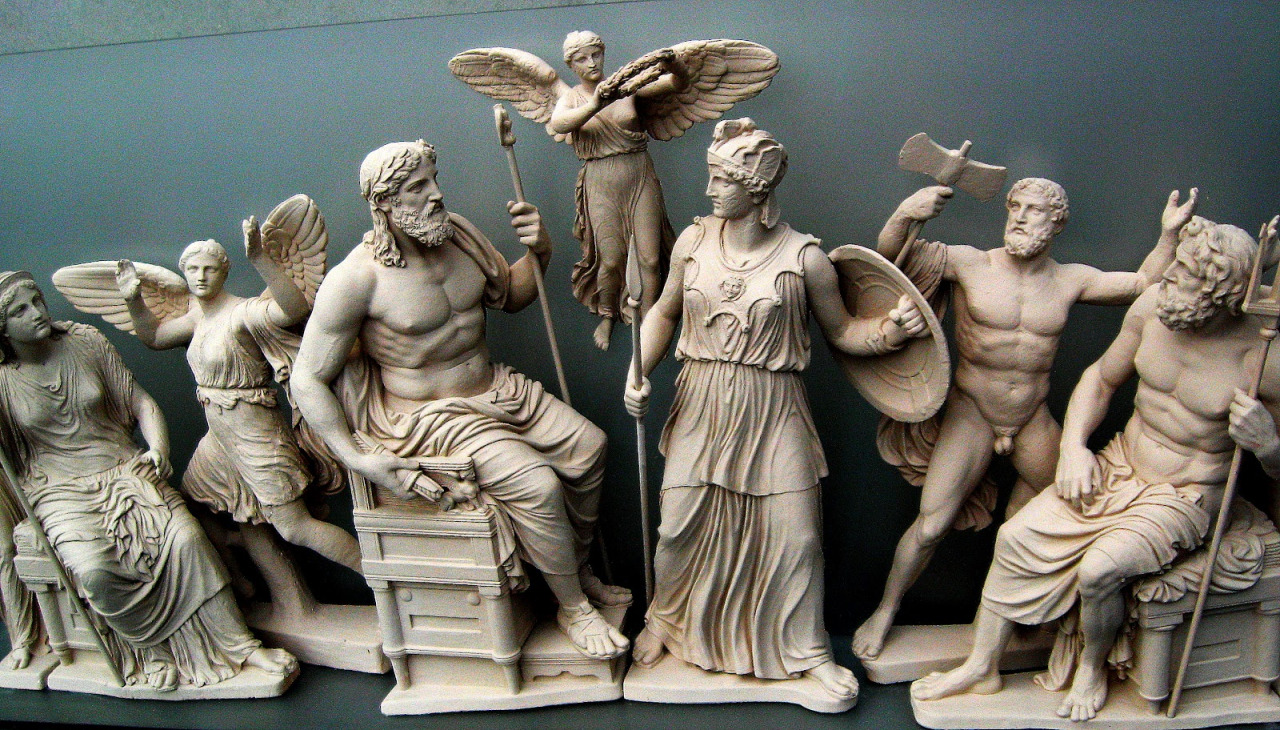
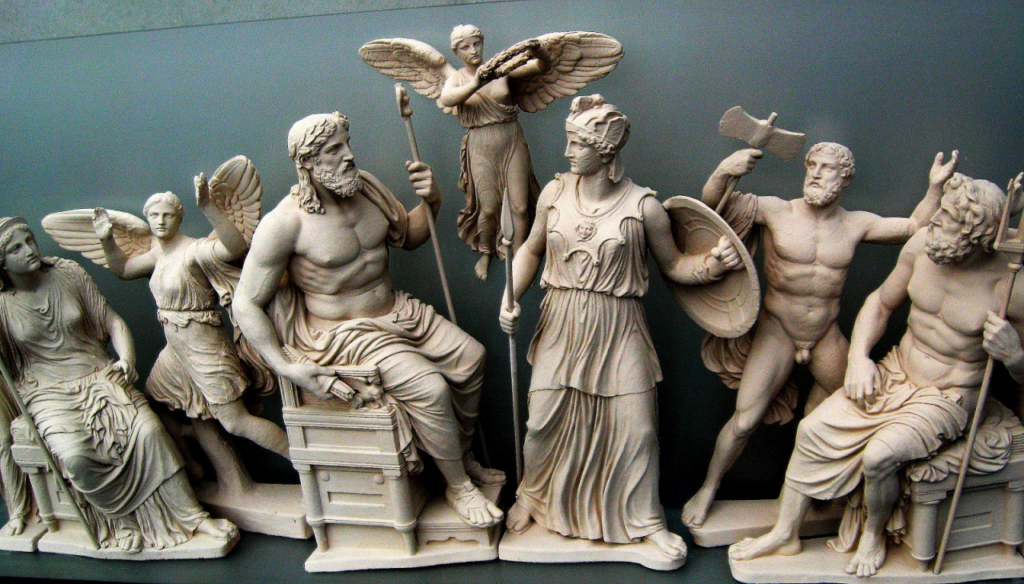
The pediments depict mythic tales — Athena’s birth and her contest with Poseidon for the patronage of Athens.
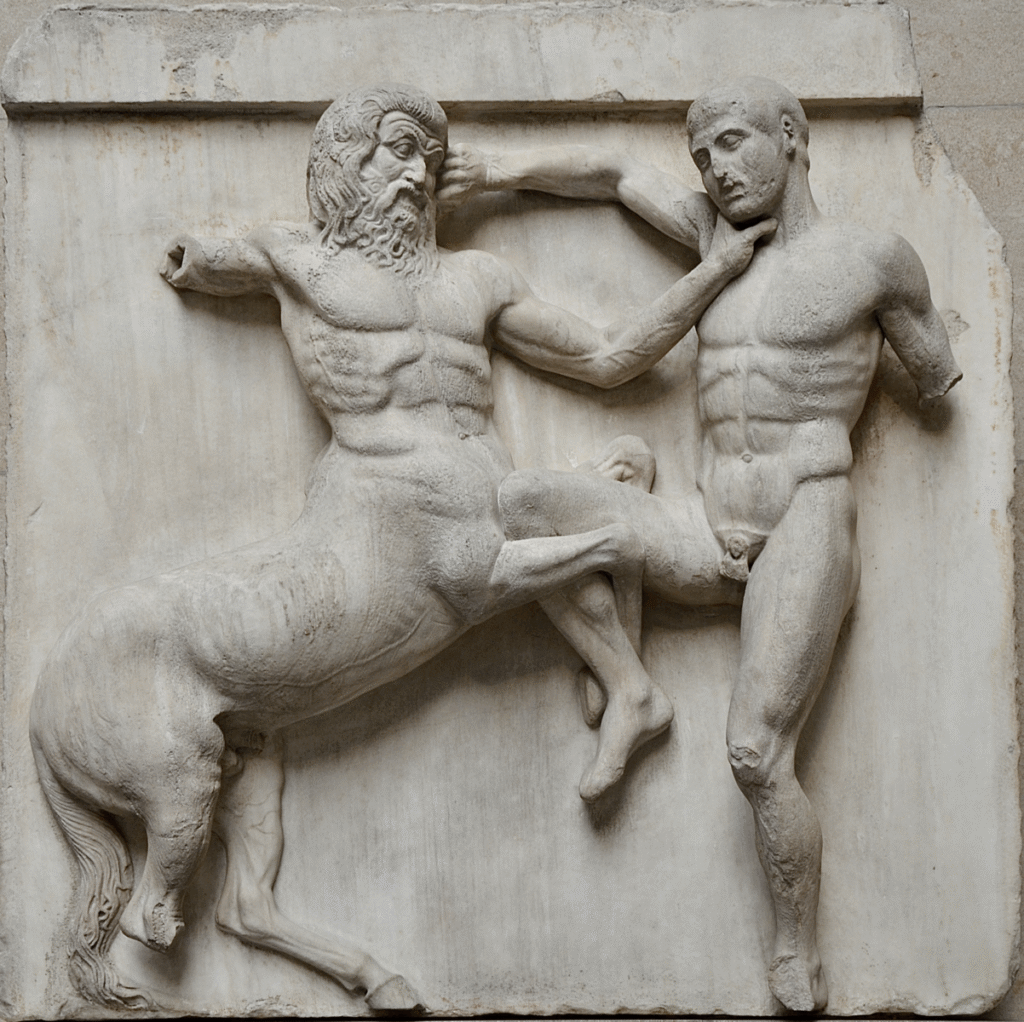
The metopes show dynamic battles: Greeks versus barbarians, men versus centaurs, gods versus giants.
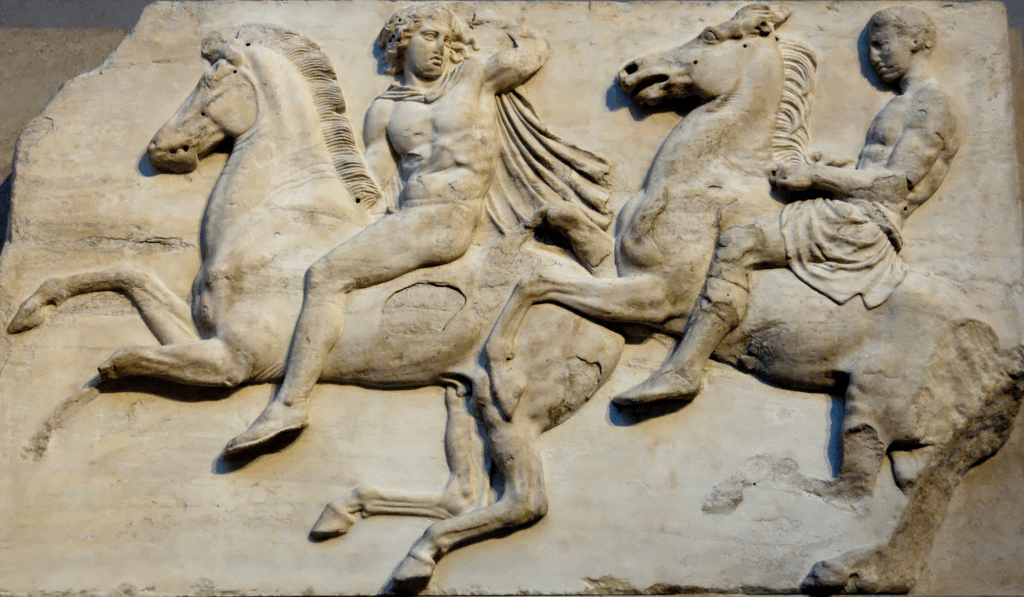
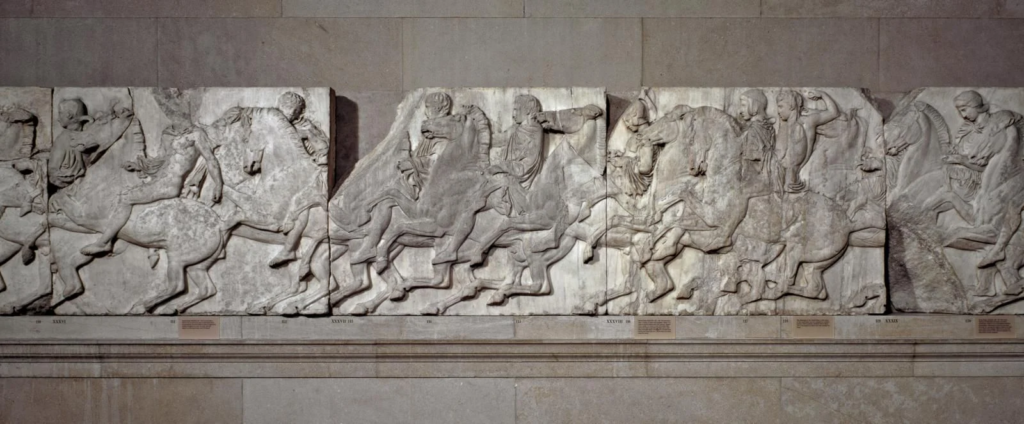
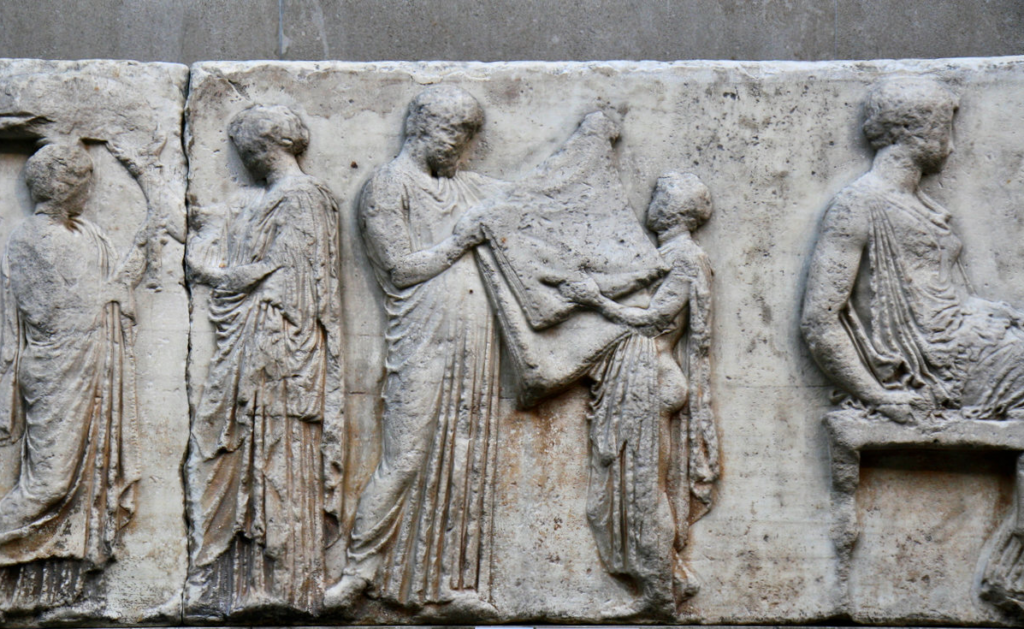
The central frieze — the Panathenaic Procession — weaves reality and ritual, portraying the citizens of Athens paying their highest tribute to their goddess.
II. Echoes of Myth: The Dance of Gods and Mortals
The first layer of meaning in the Parthenon sculptures is the revival of myth.
On the east pediment, Athena is born from the head of Zeus, greeted by the joyful gaze of the assembled gods. On the west, Poseidon and Athena compete for the right to name the city — the sea’s wave against the olive branch, nature’s force against the wisdom of civilization.
These stories are not mere religious symbols; they are reflections of the Greek worldview — a vision where divine will intertwines with human destiny, where myth mirrors courage, reason, and order.
The metopes elevate this dialogue into drama:
The battle between Centaurs and Lapiths symbolizes the struggle between wildness and reason; the Amazons and Greeks embody chaos and order; the Gigantomachy — gods against giants — enacts the eternal restoration of cosmic balance.
In each battle, the tension of muscles, the flow of drapery, and the twisting of bodies are carved with vivid realism. It is the unity of power and grace — a visual hymn to human spirit and resistance.
III. The Poem of Reality: The Glory and Ritual of Athens
Compared to the mythical scenes, the Panathenaic Frieze breathes with the rhythm of real life.
It depicts Athens’ grand religious festival held every four years in honor of Athena. Thousands of citizens — priests, maidens, knights, musicians — form a solemn procession toward the Acropolis.
On the marble, the figures move in quiet dignity: a young rider adjusting his bridle, a maiden offering a sacred robe, gods seated in calm contemplation watching the mortals’ ritual.
Across 160 meters of carved procession, there is no excess, no chaos — only harmony and grace. One almost hears the measured steps and faint music echoing through the ancient city.
For the first time in art, humankind itself stands at the center of the sacred narrative.
These figures are not servants of the gods but free citizens. Through art and ritual, they proclaim: human order, reason, and unity are themselves divine.
IV. The Breath of Stone: Philosophy in Form
Artistically, the Parthenon Frieze is not only a vehicle of narrative but a pinnacle of formal beauty.
The sculptors combined high and low relief to create a dynamic depth under natural light. The fluid lines of garments reveal both body and motion; the raised hooves of horses and the graceful tilt of maidens’ heads capture that elusive moment between stillness and movement — the “eternal instant.”
This is not mere craftsmanship, but the visual embodiment of Greek rational philosophy — Metron (measure) and Harmonia (harmony).
In the Parthenon, the artists resisted excess and disorder; they sought beauty through balance, freedom through form.
As Aristotle once said, “The aim of art is not to represent the outward appearance of things, but their inward significance.”
V. Fragments of Loss and Echoes of Eternity
Yet this “epic in stone” did not survive intact.
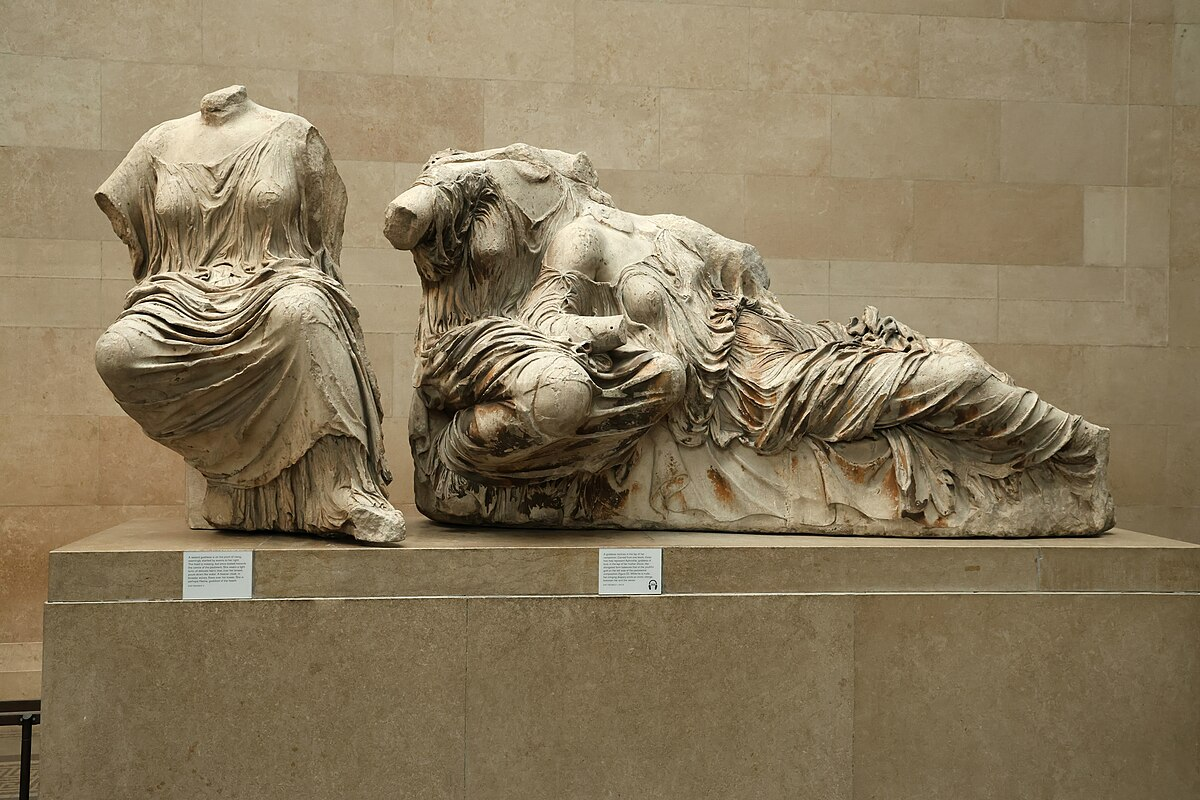
In the early 19th century, Lord Elgin, a British diplomat, removed a large portion of the Parthenon sculptures to London — now displayed in the British Museum as the “Elgin Marbles.” The act remains one of the most debated issues in cultural heritage and restitution.
Today, in the Acropolis Museum of Athens, replicas stand beside the surviving originals. The missing sections — the scars of absence — remind us of the fragile link between civilization, morality, and memory.
Perhaps what moves us most about the Parthenon sculptures is not their perfection, but their incompleteness.
Those weathered, fractured forms echo history itself — for civilization has never been flawless, yet its spirit endures, continually reinterpreted and re-carved through time.
VI. From Temple to World: Humanity’s Universal Language
Today, whether under the Athenian sun or within the halls of the British Museum, the Parthenon Frieze continues to whisper.
It speaks of humanity’s reverence for the divine, its faith in reason, and its longing for harmony.
When we gaze upon these stones, what do we truly see?
Perhaps we see the soul of a people — the Greek devotion to order, beauty, and freedom.
Perhaps we see time itself — sculpted by wind and light, where the image of civilization is endlessly reshaped.
As Phidias once did, so too do we: through art, we give transient life the weight of eternity.
Related Posts