In recent years, as Chinese antique ceramics have continued to attract attention in the international…
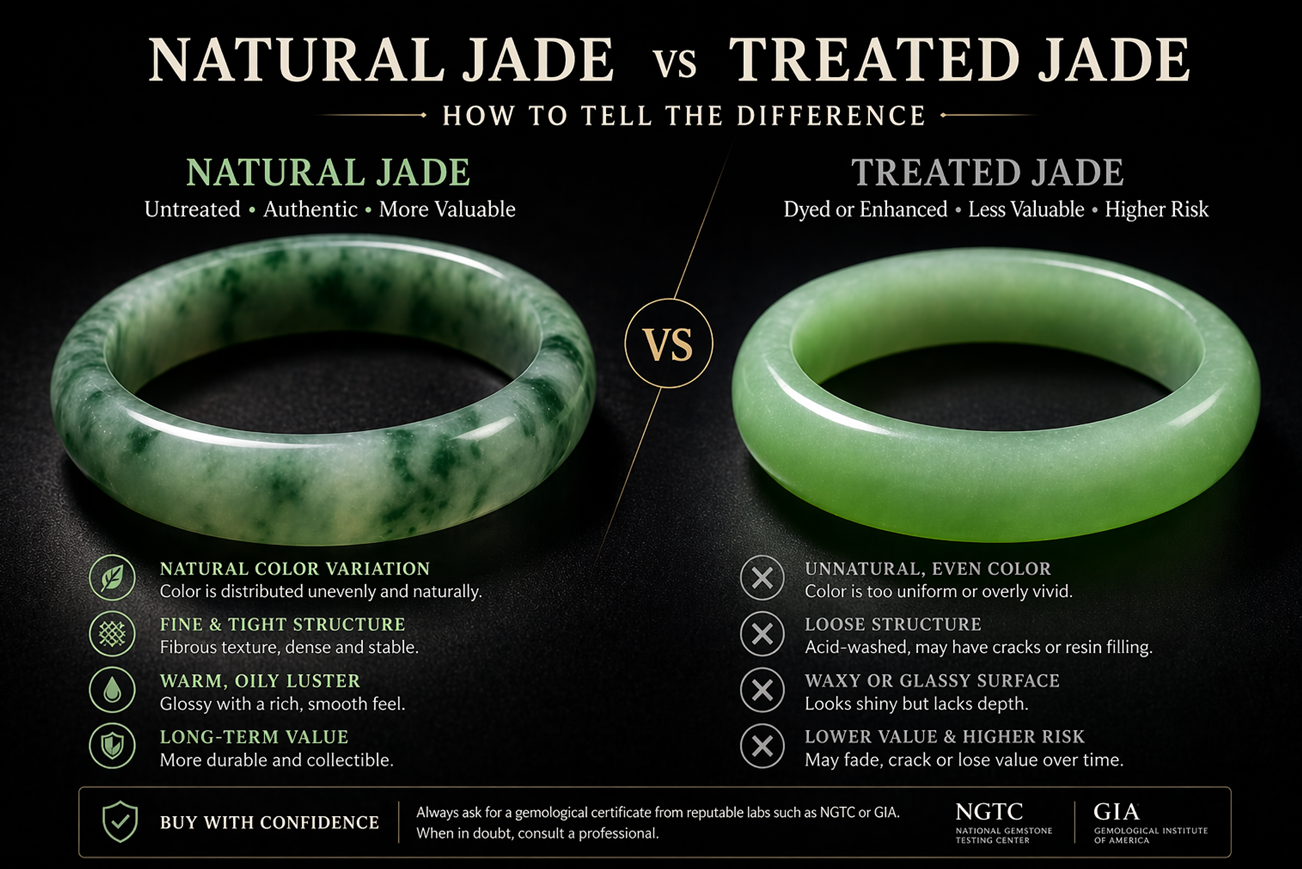
How to Identify Chinese Jade: The Difference Between Natural and Treated Jade (Complete Collector’s Guide 2026)
I. Why is Jade Authentication More Important Than Ever?
Chinese jade occupies an extremely important position in the Asian art and antiques system. From ancient ritual jade artifacts to Qing Dynasty imperial jadeite, and to the high prices achieved in the contemporary auction market, jade has always represented a combination of culture, scarcity, and value.
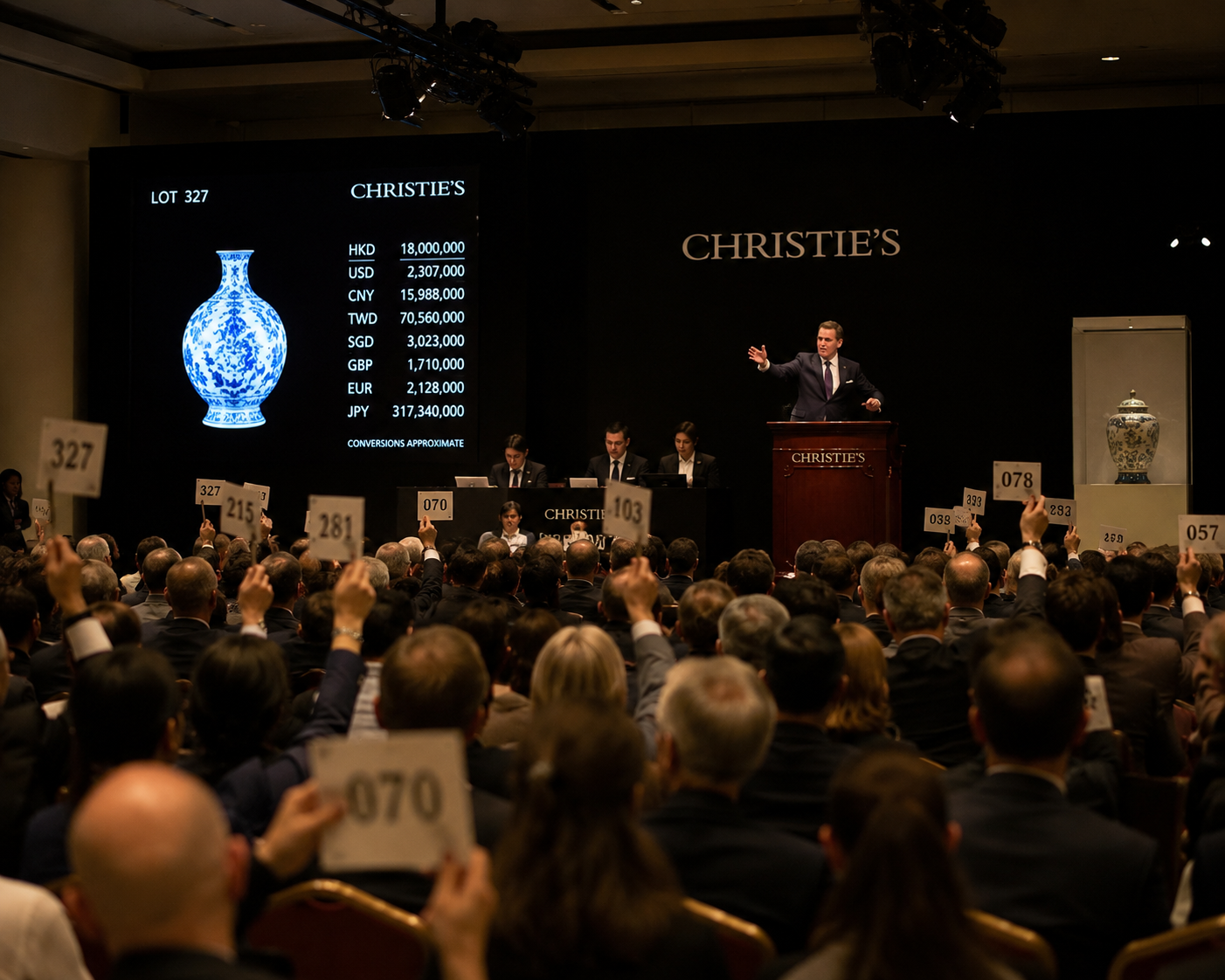
However, with the growth of global demand—especially on international auction platforms such as LiveAuctioneers—the market has seen an increasing number of treated jade pieces and imitations.
For buyers, the key questions are no longer simply:
👉 “Is this piece of jade beautiful?”
but rather:
👉 “Is it natural? Does it have long-term value?”
II. What is Natural Jade? What is Treated Jade?
In the actual market, jade artifacts are generally divided into three main categories:
1. Natural Jade (Grade A)
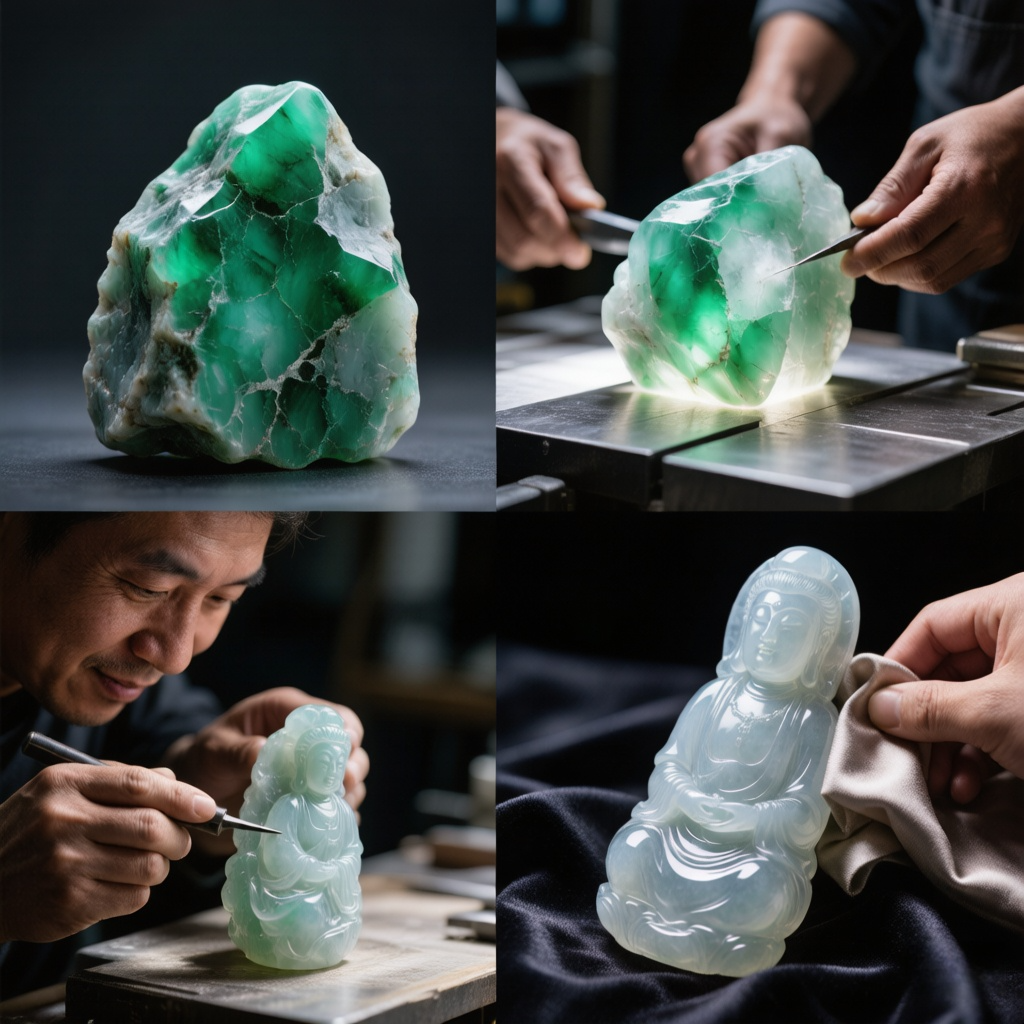
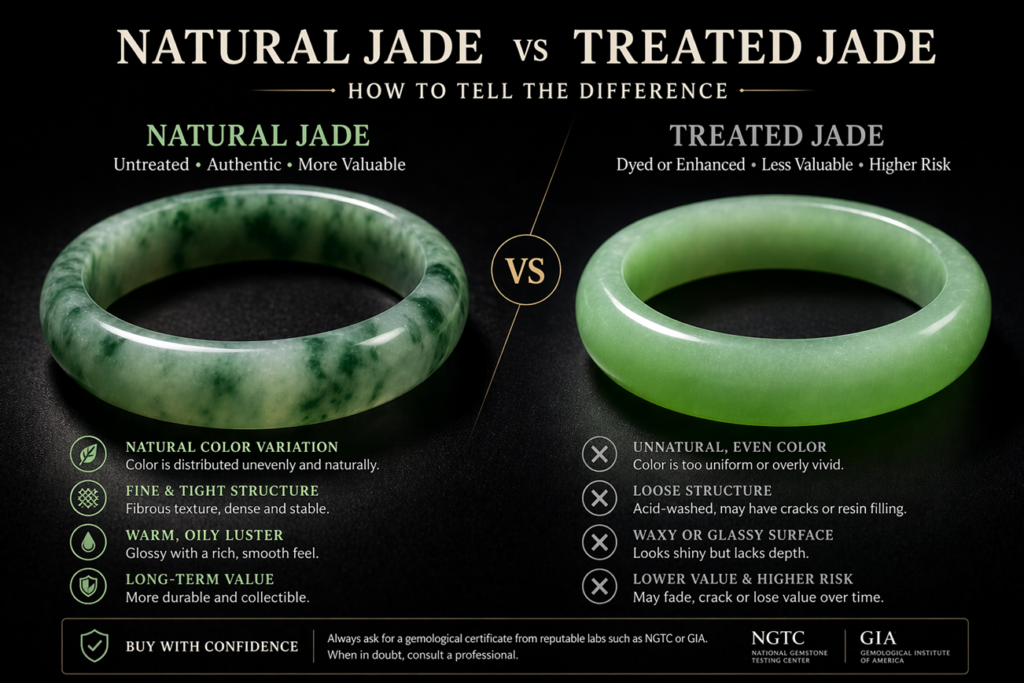
Natural jade refers to jade that has not undergone any chemical treatment, only cutting and polishing.
Common types include:
Hetian Jade (Nephrite)
Jadeite (Jadeite)
Core characteristics:
Stable internal structure
Natural color distribution
Long-term value retention or even appreciation
2. Treated Jade (Grade B / Grade C / B+C)
This is the category most likely to mislead buyers.
Grade B: Acid-washed and then injected with resin (to improve transparency)
Grade C: Artificially dyed (to change color)
Grade B+C: Performed simultaneously
⚠ The key issue is:
While these treatments make the jade “look better,” they damage its structural stability.
👉 Long-term potential issues:
Color changes
Cracks appear
Value drops significantly
3. Imitations (non-jade materials)
Including:
Glass
Resin
Dyed quartzite
👉 Although they may look similar, they have no collectible value.
III. Core Differences Between Natural Jade and Treated Jade
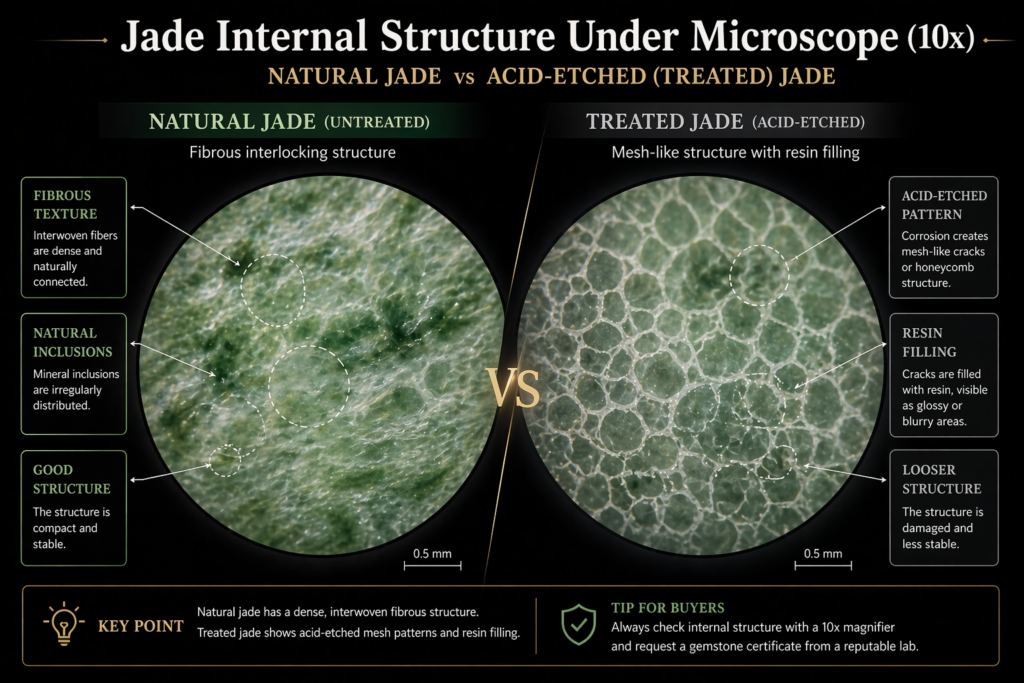
1. Internal Structure (Most Crucial)
Natural Jade:
Fiber or granular structure; naturally and irregularly distributed.
Treated Jade:
Exhibits network cracks formed by acid etching; often filled with resin.
👉 Core basis for professional identification
2. Luster
Natural Jade:
Soft and restrained luster; has an “oily” feel.
Treated Jade:
Strong surface reflection; lacks depth, appears “superficial”.
3. Color Distribution
Natural Jade:
Variations in shade; natural color transition.
Treated Jade:
Uniform color, sometimes overly vibrant; often shows dye aggregation.
4. Feel and Weight
Natural Jade:
Warm and smooth to the touch; has a certain weight.
Imitations:
Lighter; feels cold or rough.
IV. 5 Practical Identification Methods (Even Beginners Can Use)
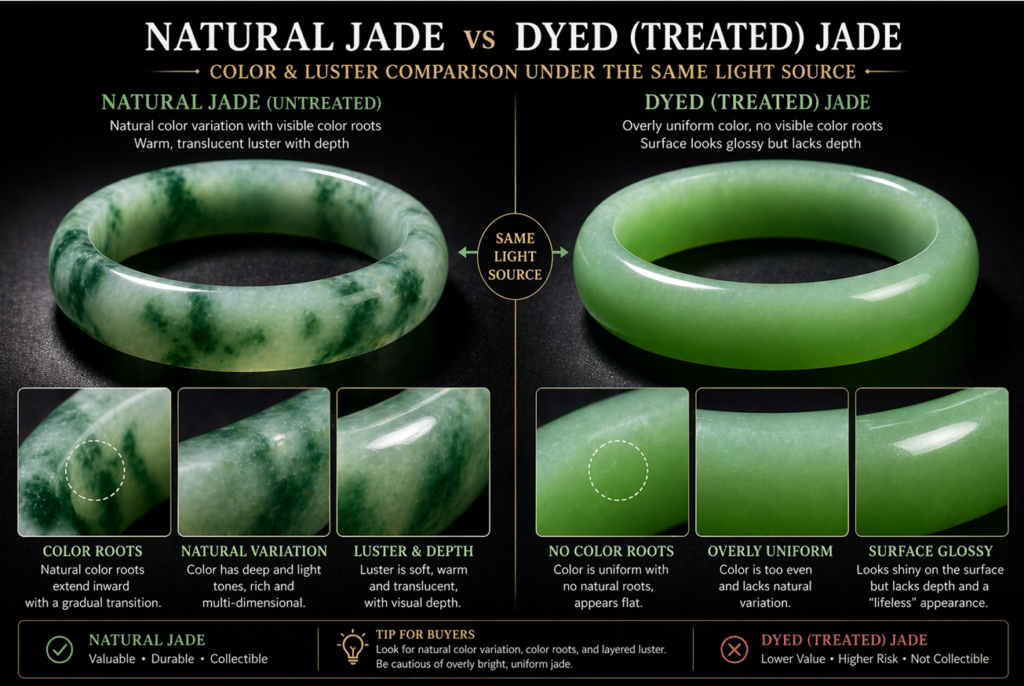
Method 1: Observe the Color Roots
Natural jade color diffuses naturally, rather than abruptly stopping.
Method 2: Observe with a Magnifying Glass (10x)
Focus on:
Natural Structure (Normal)
Reticulated Acid Etching Texture (Treatment Marks)
Method 3: Observe in Natural Light
Slowly Rotate the Jade:
Natural Jade: Layered Light Reflection
Treatment Jade: Uniform Reflection
Method 4: Listen to the Sound (Auxiliary)
Tap Lightly:
Natural Jade: Crisp Tap
Imitation: Dull Tap
⚠ Not the sole basis for judgment
Method 5: Check the Certificate of Quality (Strongly Recommended)
Recommended Institutions:
NGTC
GIA
👉 This is the safest method for beginners.
V. Market Trends: Why is there an increasing amount of treated jade?
The jade market is expanding rapidly on platforms like LiveAuctioneers.
This leads to three clear trends:
High-quality natural jade prices continue to rise.
The quantity of treated jade in the mid-to-low-end market is increasing.
New buyers are more easily misled by appearance.
👉 The result is:
Higher risks, but also greater opportunities.
VI. Case Study Analysis: Why is there such a huge price difference?
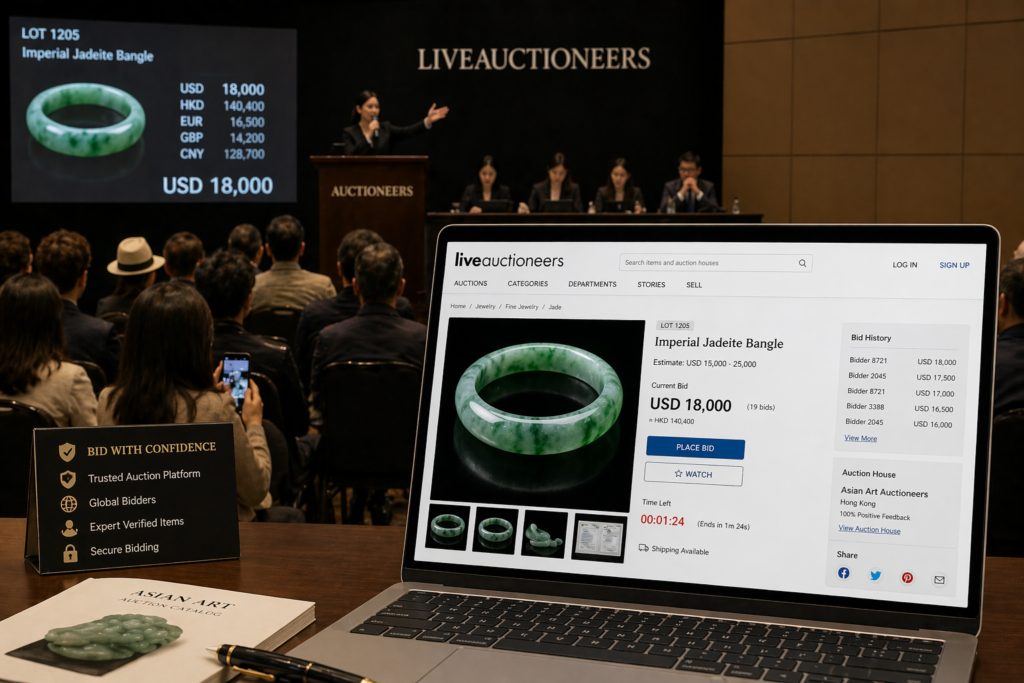
Taking a jadeite bangle as an example:
Natural Grade A: Approximately $3,000 – $30,000+
Treated jade: Approximately $100 – $500
The core difference lies in:
Whether it is natural
Whether it is stable
Whether it has collectible value
👉 The market essentially only pays for “authenticity and scarcity”.
VII. Key Advice for Collectors
1. Be Wary of “Perfect Appearances”
The more uniform and vibrant the appearance, the more cautious you need to be in judging it.
2. Choose Reliable Platforms
For example: LiveAuctioneers
You can check:
Historical Transactions
Seller Reputation
Expert Descriptions
3. Establish a Bottom Line with Certificates
When Inexperienced:
👉 Don’t Buy Based on Feelings Alone
VIII. Conclusion: Learn to See the “Essence,” Not Just the Appearance
The value of jade is never just about its “beauty,” but rather:
Whether it is natural
Whether it is rare
Whether it can withstand the test of time
When you truly understand the difference between “natural and treated,” you have already crossed the threshold from ordinary buyer to collector.
Related Posts