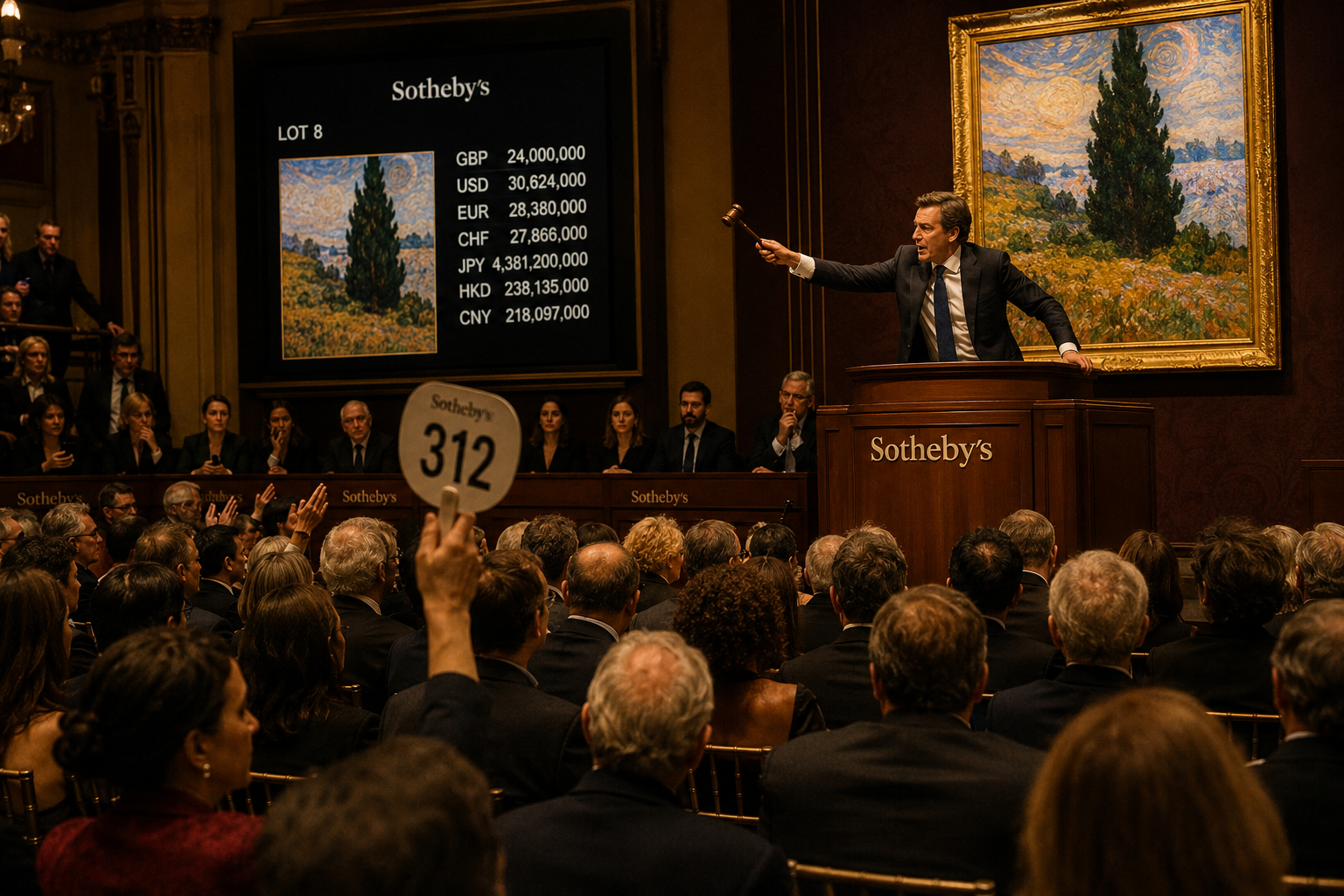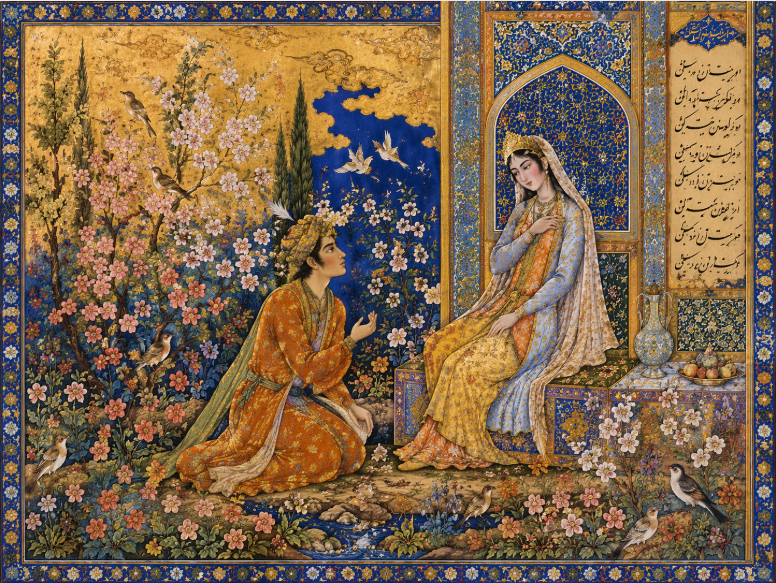
In recent years, those following the international auction market may have noticed an interesting phenomenon:…
The Sermon of Stone: The Origin and Evolution of Gothic Cathedral Sculpture
Strolling through the medieval old towns of Europe, as you gaze into the distance at the Gothic cathedrals piercing the sky, the first things that catch your eye are often the soaring spires and the vibrant rose windows. However, when you draw closer and look up at the portals and facades, you find yourself surrounded by a multitude of stone figures. These are not cold, lifeless rocks, but a group of “medieval emissaries” telling stories through their eternal poses. Today, let’s discuss the origins of these Gothic cathedral sculptures and see how they gradually moved from being architectural appendages to the center stage of art history.
From a “Barbaric” Label to an Artistic Revolution
Interestingly, the term “Gothic” was not originally a compliment. In the 16th century, the Italian Renaissance art historian Vasari named this artistic style after the “barbarian” Goths who had brought down the Roman Empire, considering it crude, lacking in classical proportion, and filled with “oppressively absurd ornamentation.” However, history is full of reversals. It was this very denigrated art that, starting from France in the first half of the 12th century, sparked a visual revolution that swept across Europe for four hundred years.
The birth of Gothic sculpture is inseparable from breakthroughs in architectural technology. Prior to this, Romanesque churches had thick walls and small windows, with sculptures heavily upon the wall surfaces, often appearing twisted and deformed. But with the emergence of rib vaults and flying buttresses in the latter half of the 11th century, the structural system of churches underwent a fundamental change. Walls no longer needed to bear the primary supporting load, so they became thinner, heights soared, and large expanses of wall were replaced by stained-glass windows. This left no room for the murals once painted on the walls, yet it provided for freestanding sculptures and reliefs. Sculpture finally had the opportunity to “step out” from the constraints of the wall.
The Stone Bible: Making It Readable for the Illiterate
In the Middle Ages, the vast majority of common people were illiterate. The cathedral was not only a place for prayer but also a “stone textbook.” The primary origin of sculpture was therefore to undertake the crucial task of visual preaching.
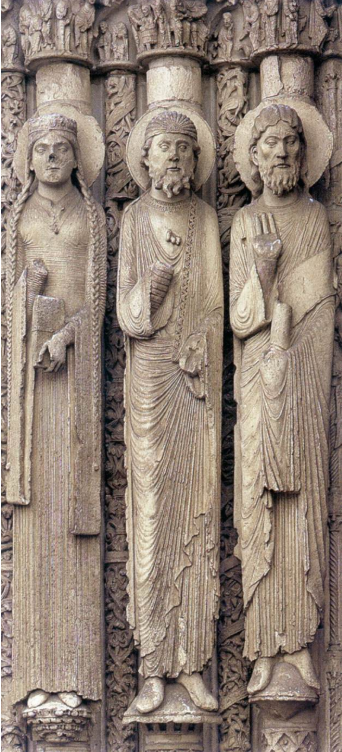
In early Gothic sculpture (such as the “Royal Portal” of Chartres Cathedral from the 12th century), the human figures still bore traces of stylization. Their elongated forms were tightly attached to the columns, hence the term “jamb figures,” with rigid drapery folds and solemn, even somewhat vacant expressions. Although this style had not yet shed the shackles of architecture, compared to the bizarre and terrifying images of the Romanesque period, it revealed a new sense of order and serenity.
Craftsmen began to pour more effort and heart into these stone figures. They carved prophets and saints from the Bible, as well as kings and queens (reflecting the of church and state). As the faithful entered the cathedral, it was like stepping into an unfolding Bible. The central position above the main door was reserved for a majestic Christ, flanked by saints on the door jambs, while the tympanum above depicted the “Last Judgment.” Each statue had its fixed “identity code”; a believer glance at its pose and attire to recognize whether this was Saint Peter holding the keys, or the Virgin Mary holding the infant Jesus.
The “Awakening” of Stone Statues: A Return from Divinity to Humanity
If early Gothic sculpture still emphasized the majesty of divinity, then by the 13th century, it had entered its golden age. Sculptors were no longer satisfied with formulaic production; they began to observe nature and attempted to infuse stone with warmth.
This transformation is vividly illustrated in the sculptures of the south transept at Chartres Cathedral. Compared to the rigid figures on the west façade from just decades earlier, works like the Four Saints or the statue of St. Theodore in the south porch exhibit a natural and measured torsion in the body’s axis. Their faces are no longer abstract symbols but living individuals with distinctive characteristics. The connection between the sculpture and the column behind it begins to loosen, revealing a strong naturalistic tendency.
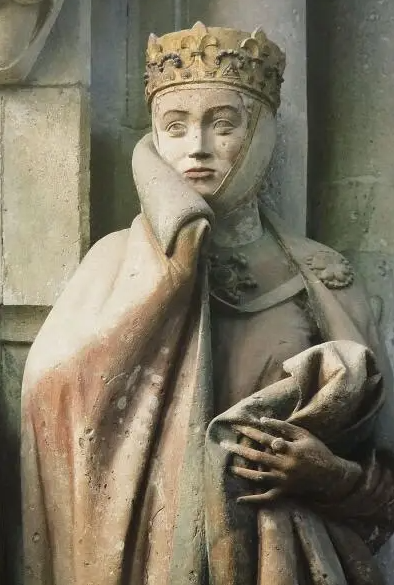
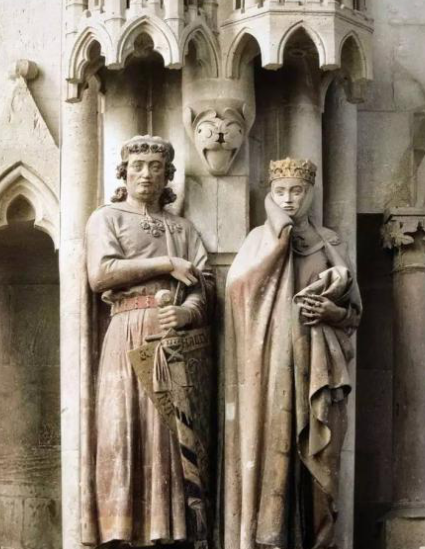
As the art historian Ernst Gombrich noted, Gothic artists rediscovered techniques lost since antiquity, allowing them to render bodily structures beneath the folds of drapery. Christ was no longer the terrifying, stern judge of Romanesque art but had transformed into a merciful Son of Man; the of the Virgin Mary holding the infant Jesus was filled with human tenderness. In Germany, this realist spirit was even more pronounced. The donor figures in Naumburg Cathedral—Ekkehard and Uta—seem as if they might step down from their pedestals at any moment and join the congregation. The of Uta pulling down her collar, seemingly about to speak, was forever in stone by an unknown craftsman.
The Illusion of Color and an Independent Life
The Gothic sculptures we see today in museums or cathedrals are mostly bare stone in its natural color. Yet, in the Middle Ages, they were actually resplendent with color. According to historical records, Gothic sculptures were typically painted: faces and hands were rendered in natural flesh tones, hair was gilded, and garments were painted in bright, vivid colors, sometimes even adorned with jewels and colored glass. When sunlight streamed through the stained-glass windows and fell upon these gilded and painted statues, the entire cathedral indeed became like a miniature vision of the celestial kingdom.
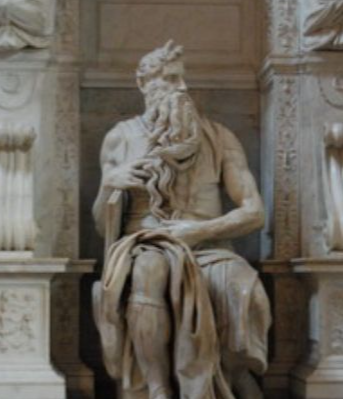
By the 14th and 15th centuries, Gothic sculpture gradually moved into its late phase, forming an elegant style known as the “International Gothic.” Sculpture during this period began to emphasize a sense of volume and weight, and even saw a trend of expressing religious subjects through secular forms. More importantly, sculpture began to attempt to break free from its absolute dependence on architecture. A typical example is the Well of Moses created by the Netherlandish sculptor Claus Sluter. Although it still served as a base within a monastery cloister, the figures upon it—Moses, David, and others—proclaimed the possibility of sculpture as an independent art form through their realism and intense inner emotion.
Conclusion
Tracing the origin and evolution of Gothic sculpture, we can discern a clear trajectory: from serving the structure of architecture, to serving the narrative of the Church, and finally returning to a contemplation of humanity itself. These saints, prophets, and mortals carved in stone are not only testimonies to the extraordinary skill of medieval craftsmen but also the very embodiment of the spiritual beliefs of that era.
Just as Rodin celebrated these cathedrals throughout his life, the Renaissance master Michelangelo also drew nourishment from them. For they contain a most fundamental folk tradition and a vibrant, unbridled vitality. The next time you stand before a Gothic cathedral, take a moment to look closely at those statues. You will find that they are no longer cold stone, but a group of storytellers spanning a millennium, quietly waiting to meet your gaze.
Related Posts