
Strolling through the medieval old towns of Europe, as you gaze into the distance at…
The Shape of Time: Exploring the Origin of Clocks
From the lightweight smartwatches on our wrists to the classic analog clocks on our living room walls, timepieces have long become an integral part of our daily lives. We glance at our watches to know the present moment; we look up at clock towers to feel the heartbeat of a city. But have you ever wondered how this “little box” that faithfully records time came into being, evolving step by step into what it is today?
The history of clocks is far more complex, lengthy, and illuminating than one might imagine. It is not only a technological chronicle of humanity’s fight against the void and its pursuit of precision but also a cultural history reflecting the progress of civilization. Today, let us turn back the hands of time and trace this fascinating journey into “the shape of time.”
Starting with Looking Up at the Sky: The First Attempts at Timekeeping
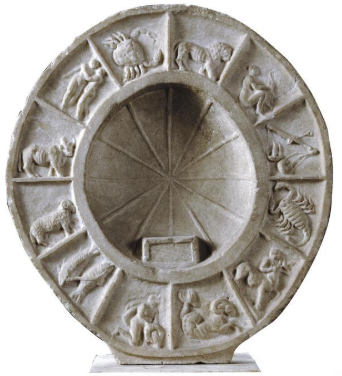
Human perception of time originated from observing nature. Around 6,000 years ago, in the land of ancient Babylon, humanity’s first “clock”—the sundial—was born. Ancient people discovered that as the sun moved, the length and direction of shadows cast by objects would change accordingly. Using this principle, they erected a wooden stick or stone pillar on the ground and divided the day by observing the shadow’s path. In China, the gnomon (a type of sundial) also has a long history, with records found on oracle bones dating back to the Shang Dynasty over 3,000 years ago.
However, the sundial had a critical flaw: it was useless at night or on cloudy days when the sun was absent. To track time around the clock, our ancestors invented the “clepsydra,” or water clock. About 4,000 years ago, people utilized the principle of water flowing at a steady rate, marking time by observing the rise and fall of a calibrated arrow shaft floating in a water container. This method of timekeeping, (unaffected by day, night, or weather), significantly advanced humanity’s control over measuring time. Besides water clocks, various other timing devices emerged around the world, such as hourglasses, candle clocks, and incense clocks. Together, they formed the ingenious landscape of time measurement before the invention of mechanical clocks.
The Beat of the Heart: The Dawn of Mechanical Clocks and a “Chinese Creation”
Neither sundials nor water clocks qualify as “timepieces” in the modern sense. A true clock must have a core component: the escapement mechanism. It is this very mechanism that converts power into a uniform, intermittent “tick-tock” sound, thereby dividing time with precision.
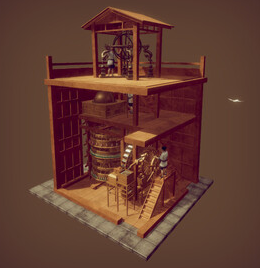
Remarkably, the prototype of the escapement mechanism first appeared in China. During the Northern Song Dynasty, the astronomer Su Song, along with Han Gonglian and others, oversaw the construction of a magnificent “Cosmic Engine” (Water-Powered Astronomical Clock Tower) in 1090 AD (the third year of the Yuanyou era). This three-story astronomical structure, standing 12 meters tall, could not only observe the movements of celestial bodies but also tell time automatically. Inside, a system known as the “Heavenly Steelyard” (Tian Heng) controlled the water-driven escapement wheel to rotate at a constant, intermittent speed, a principle remarkably similar to the escapement mechanism of modern clocks. The renowned British historian of science, Joseph Needham, therefore pointed out that Su Song’s invention predated similar developments in Europe by six centuries. The international horological community now generally acknowledges that the escapement of modern mechanical clocks originated from this great invention of ancient China.
From Colossus to Pocket Treasure: The European Technological Revolution
When Chinese astronomical clock technology spread to Europe, huge tower clocks began to appear in churches across 14th-century Europe. These colossal machines, powered by heavy weights, were installed in towering belfries to remind the faithful of prayer times and to regulate the townspeople’s workdays. The oldest working clock in existence—the Salisbury Cathedral clock in England, built in 1386—stands as a testament to this era. Remarkably, it has no clock face and only tells time by striking bells.
The true democratization of clocks, bringing them “into the homes of ordinary people,” was made possible by two key inventions. The first was the mainspring, which appeared in the 15th century. This seemingly simple steel strip, which slowly releases energy as it unwinds from its tightly coiled state, completely replaced the cumbersome weight, enabling a dramatic reduction in the size of clocks.
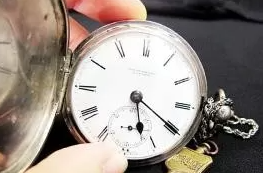
Shortly thereafter, around the beginning of the 16th century, the German locksmith Peter Henlein utilized mainspring technology to create a small, portable, spherical clock. Due to its egg-like shape, it was vividly nicknamed the “Nuremberg Egg.” This can be regarded as the earliest prototype of the pocket watch. Although it had only an hour hand and its timekeeping was highly inaccurate, it marked a monumental leap: the timekeeping tool was no longer confined to public buildings but could now be carried personally.
Subsequently, scientific discoveries continuously infused the soul of “precision” into clocks. In 1656, the Dutch physicist Christiaan Huygens applied Galileo’s principle of the isochronism of the pendulum to build the first pendulum clock, greatly improving timekeeping accuracy. Then, in 1675, Huygens successfully applied the balance spring system to portable timepieces, laying a solid foundation for their further miniaturization and precision.
Related Posts