In recent years, as Chinese antique ceramics have continued to attract attention in the international…
Why is Chinese blue-and-white porcelain so popular in Japan?
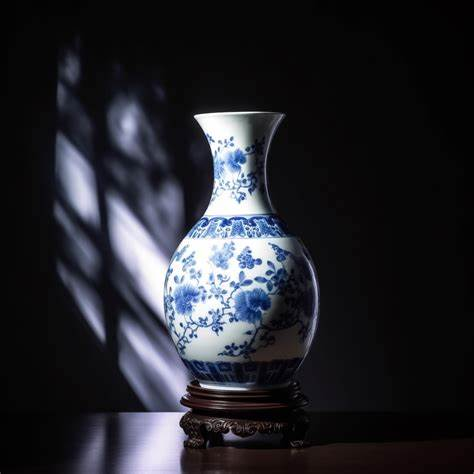
Blue-and-white porcelain is one of the most iconic artistic treasures in the history of Chinese ceramics. Since its maturation in the Yuan dynasty and its flourishing in the Ming and Qing periods, it has not only been widely circulated within China but also profoundly influenced neighboring countries and Europe. Among these regions, Japan has shown a particularly strong appreciation and acceptance of blue-and-white porcelain. From the Muromachi period to the Edo era, and continuing into today’s realms of collecting and craft revival, blue-and-white porcelain has held a special cultural status in Japan. Why, then, is Chinese blue-and-white porcelain so popular in Japan? The reasons lie not only in historical trade exchanges, but also in shared aesthetic sensibilities, religious philosophy, and deeper social psychology.
II. Aesthetic Affinity: The Beauty of Blue and White in Japanese Cultural Psychology
1. Minimalist Colors and Zen Philosophy
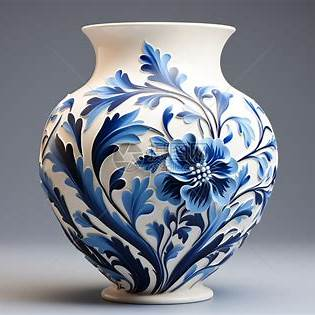
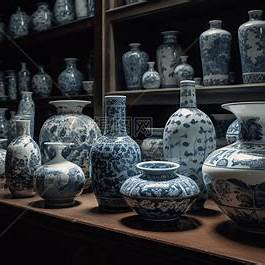
Blue-and-white porcelain is characterized by its white background and cobalt-blue designs. This simple yet striking contrast aligns perfectly with the Japanese traditional aesthetic ideals of wabi-sabi and yūgen. Under the influence of Zen Buddhism, the Japanese came to favor a sense of simplicity, clarity, and ethereal beauty—qualities that the blue-and-white palette conveys through its quiet elegance and purity.
2. Resonance with Natural Imagery
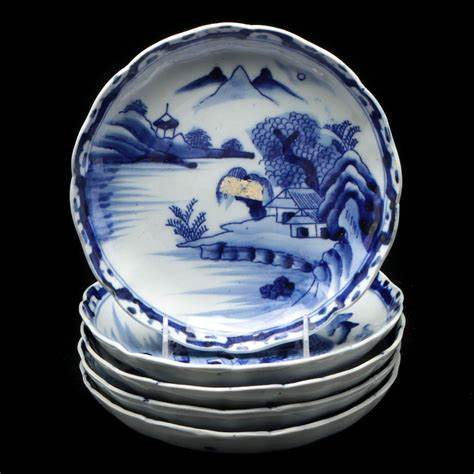
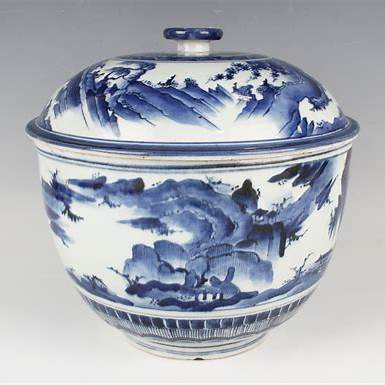
The motifs on blue-and-white porcelain often feature lotus blossoms, plum branches, landscapes, and birds—natural subjects that echo the Japanese aesthetic sensibilities of mono no aware (the pathos of things) and deep awareness of the seasons. Since harmony with nature is central to Japanese daily life, these designs struck a profound cultural resonance.
3. The Tea Ceremony and the Beauty of Utensils
From the 16th century onward, the tea ceremony became a cultural cornerstone in Japan, and “karamono” (Chinese objects) were regarded as the highest-quality tea utensils. Valued for their durability and elegance, blue-and-white porcelains were often used to serve sweets, tea, or as decorative pieces. The subtle beauty of their patterns reflected the spirit of wa, kei, sei, jaku (harmony, respect, purity, and tranquility) that lies at the heart of the tea ceremony.
III. Social Psychology: Identity, Status, and Aspiration
1. Blue-and-White Porcelain as a Symbol of Status
During the Sengoku and Edo periods, owning Chinese blue-and-white porcelain often signified wealth and social rank. Shoguns, daimyō, and wealthy merchants alike took pride in collecting karamono (Chinese objects), with blue-and-white porcelain serving as a visible marker of prestige. Even after the rise of Arita ware in Japan, the continued imitation of Chinese blue-and-white designs demonstrated an enduring admiration for authentic Chinese porcelain.
2. Exotic Appeal and Spiritual Aspiration
For Japan, China had long been regarded as the source of civilization and a cultural fountainhead. Despite historical political and military conflicts, Japan consistently maintained a deep fascination with Chinese culture. As works of art from the “other shore of civilization,” blue-and-white porcelains satisfied material desires while also embodying a spiritual yearning for the grandeur of the Tang and Ming dynasties.
3. From “Learning” to “Re-creation”
The Japanese appreciation for blue-and-white porcelain was never mere imitation. Through long-term absorption, they developed their own distinct styles. Imari ware and the Kakiemon style, for example, inherited decorative techniques from blue-and-white porcelain but infused them with Japan’s characteristic sense of simplicity and color aesthetics. This transformation—from foreign admiration to local innovation—illustrates how deeply blue-and-white porcelain became rooted in Japanese cultural consciousness.
Conclusion
The popularity of Chinese blue-and-white porcelain in Japan stems from a combination of historical, aesthetic, and psychological factors. It is both a product of Sino-Japanese trade and exchange, and a perfect match for Japan’s distinctive aesthetic sensibilities. At the same time, it has served as a symbol of status and a vessel for cultural aspiration. More importantly, blue-and-white porcelain did not remain merely an imported novelty; it was integrated into Japanese culture, giving rise to a new chapter in the country’s own ceramic arts.
Today, when we trace the trajectory of blue-and-white porcelain in Japan, we not only appreciate its artistic beauty but also perceive the civilizational forces that transcend borders and nurture one another. This, perhaps, is the fundamental reason why blue-and-white porcelain has endured and continues to be cherished in Japan.
Related Posts