
In recent years, as Chinese antique ceramics have continued to attract attention in the international…
The Historical Echo and Urban Spirit of the Berlin Cathedral
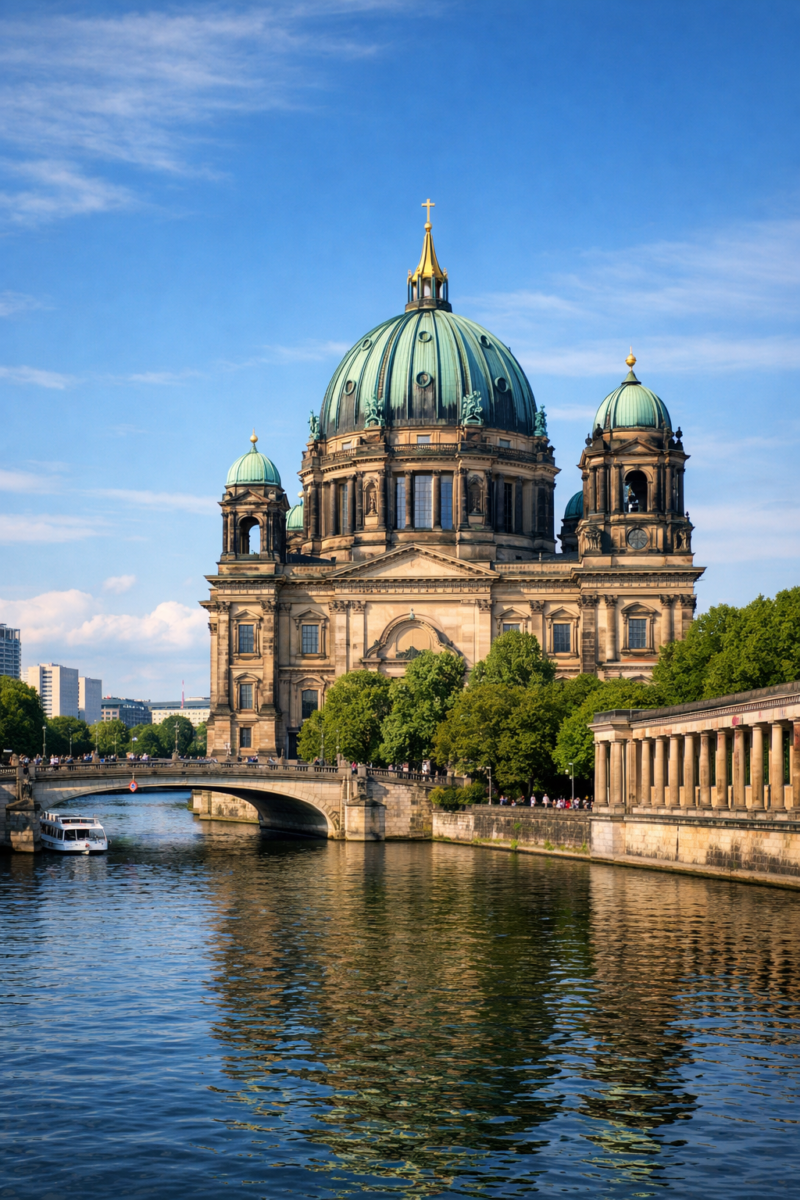
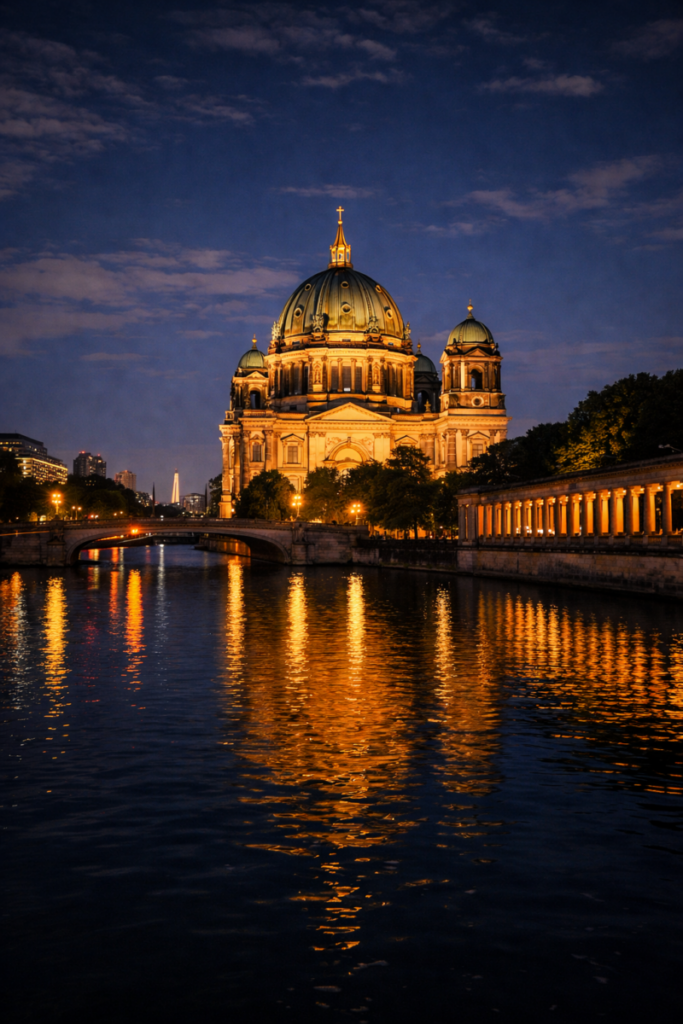
On the banks of the Spree River in the German capital of Berlin stands a magnificent domed structure. Its copper-green dome shines with a calm and solemn glow beneath the sky. This is one of Germany’s most representative religious buildings—Berlin Cathedral.
More than just a church, it resembles a history book written in stone and time, recording the glory of the Prussian Kingdom, the scars of war, and the resilience of a city reborn.
I. A Symbol of the Imperial Era
Berlin Cathedral is located near the famous Museum Island, a cultural center filled with world-renowned museums. The earliest church on this site can be traced back to the 15th century. However, the grand structure we see today was mainly built in the late 19th and early 20th centuries.
In 1894, German Emperor Wilhelm II decided to rebuild the cathedral. His vision was to create a monumental Protestant church that would symbolize the Prussian monarchy and rival the magnificence of St. Peter’s Basilica in Rome.
The architect Julius Raschdorff was commissioned to design the new cathedral. He adopted a Neo-Baroque style, giving the building a sense of grandeur, richness, and ceremonial presence.
Completed in 1905, the cathedral’s central dome—rising nearly 100 meters—quickly became a defining element of Berlin’s skyline.
At that time, the building was not merely a religious structure but also a political and cultural symbol. The monumental columns, sculptures, and decorations expressed the strength and confidence of the German Empire.
II. Architectural Beauty: The Art of Stone and Light
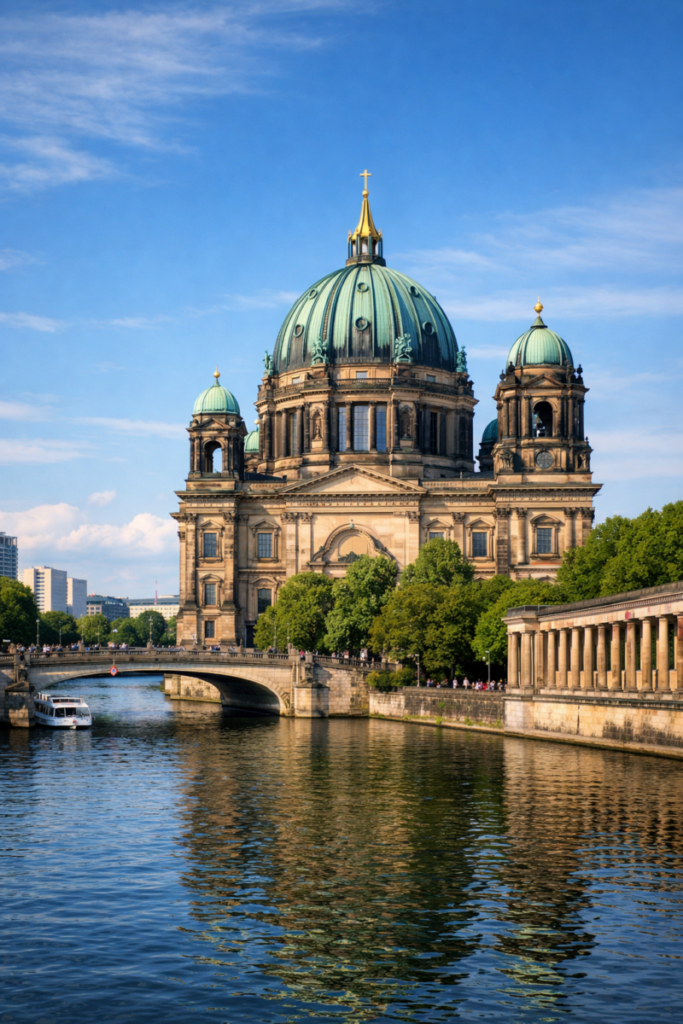
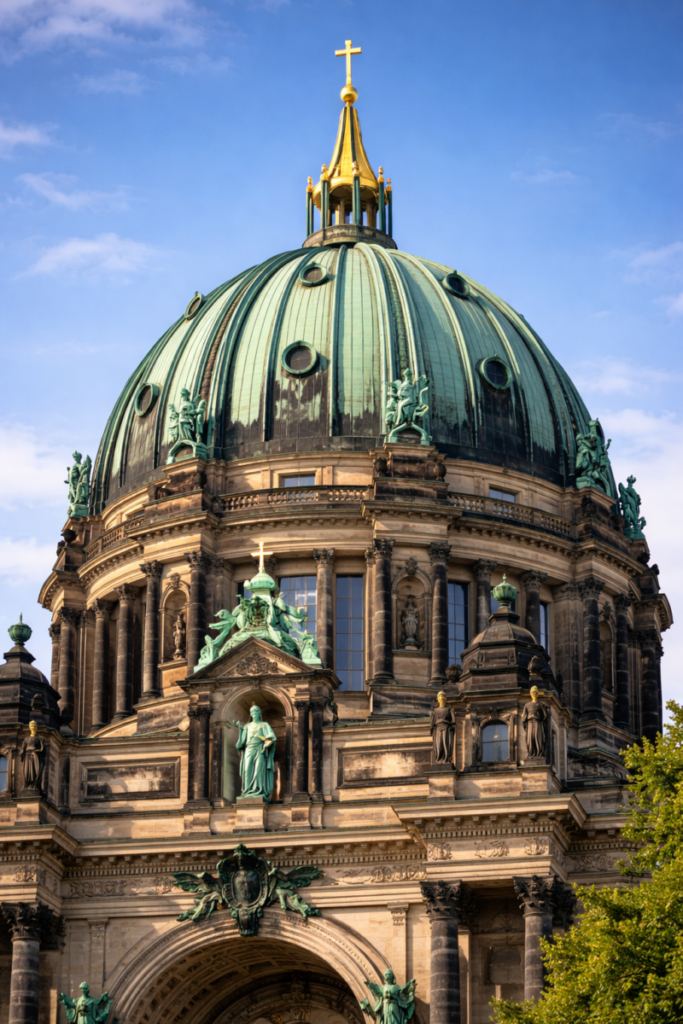
From a distance, the most striking feature of Berlin Cathedral is its massive central dome. The green copper roof contrasts beautifully with the pale stone walls, creating an elegant and dignified appearance in sunlight.
The façade is richly decorated with sculptures and intricate architectural details. Statues of saints, carved reliefs, and arched windows layer the building with depth and artistry. Wide staircases and the grand entrance hall create a powerful ceremonial atmosphere, as if each step leads deeper into history.
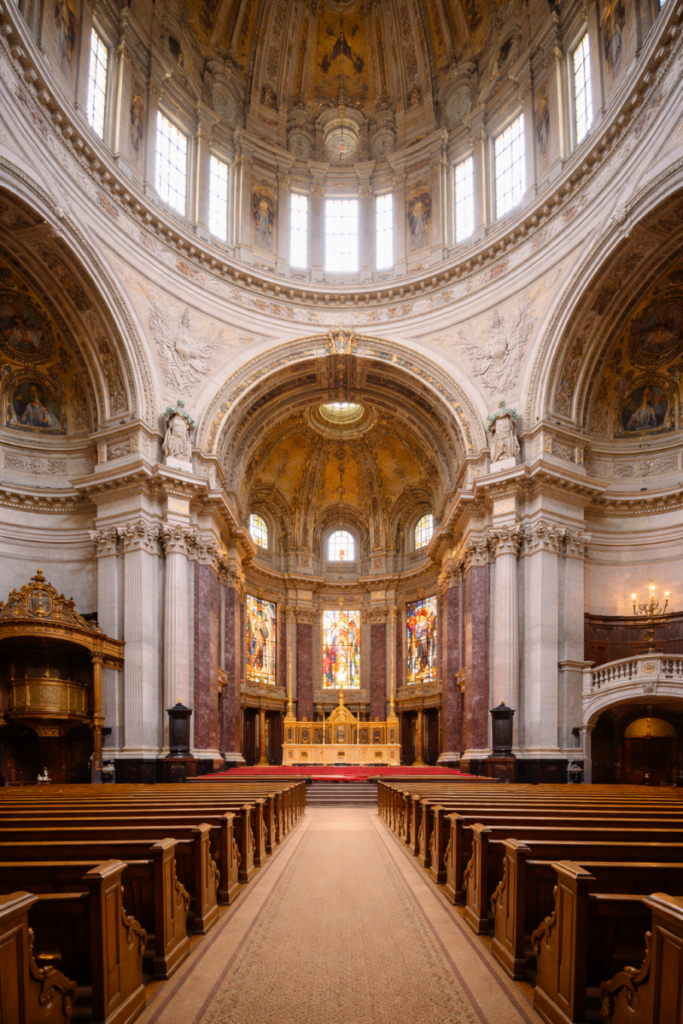
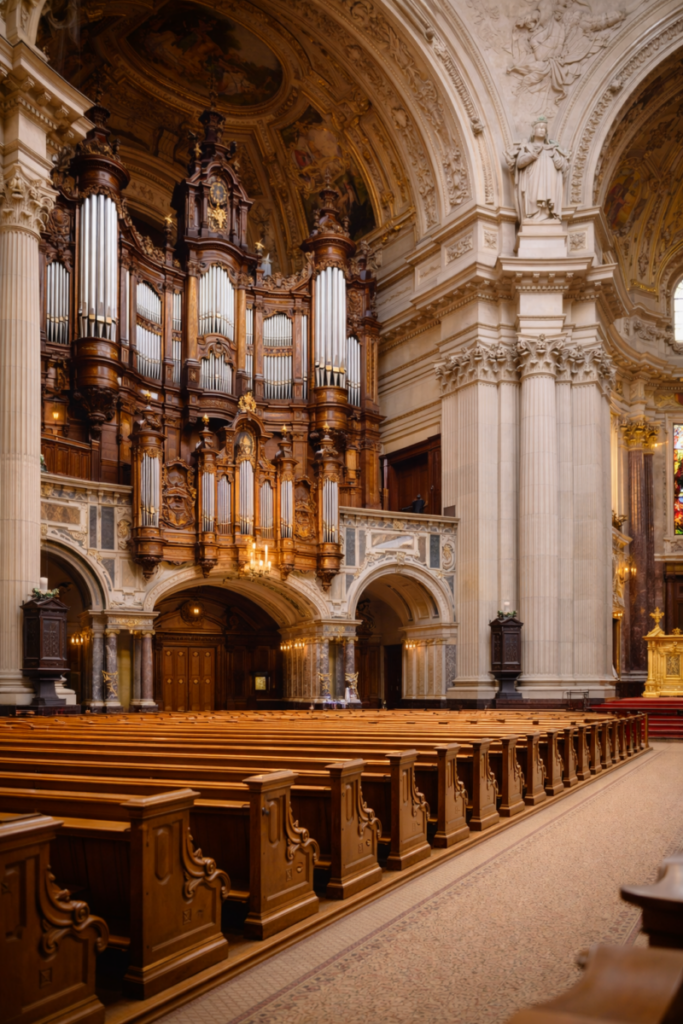
Inside the cathedral, visitors are immediately overwhelmed by the magnificence of the interior space. Golden decorations, enormous columns, and the towering dome combine to create a dramatic sense of scale. Sunlight filters through stained-glass windows, casting moving patterns of color and light across the stone walls and floor.
One of the most impressive features inside the cathedral is its enormous pipe organ. With more than 7,000 pipes, it is among the largest church organs in Europe. When the music begins, the sound reverberates beneath the vast dome, filling the entire space as if the building itself were breathing.
III. War and Rebirth
However, the history of Berlin Cathedral is not only a story of grandeur. During the World War II, Berlin suffered devastating bombing raids. The cathedral’s dome was destroyed, and much of its interior structure was severely damaged.
After the war, Berlin was divided into East and West. The cathedral stood in East Berlin, where economic difficulties and political circumstances left it in a semi-ruined state for many years.
It was not until 1975 that the government of East Germany began restoration work, though the reconstruction was simplified compared to the original design.
The true and comprehensive restoration began only after German reunification in 1990. Throughout the 1990s, the German government invested significant resources to restore the cathedral to its historic appearance. After decades of work, the once-damaged building finally regained its brilliance.
Today, standing before the cathedral, it is difficult to imagine that this place was once a wartime ruin. Its rebirth symbolizes the revival of Berlin and the hope that can emerge after historical suffering.
IV. A Spiritual Landmark in the City Center
Today, Berlin Cathedral is not only a church but also one of the most important cultural landmarks in Berlin. Together with the surrounding museums, squares, and the river, it forms one of the city’s most captivating districts.
Visitors can climb to the dome’s viewing platform and enjoy a panoramic view of the city. From above, one can see Museum Island, the Spree River, and the modern skyline where history and contemporary architecture meet.
Inside the cathedral, concerts and religious services are frequently held. Pipe organ performances, choir concerts, and festive ceremonies bring life to the historic building, making it not only a monument of the past but also a living part of the city.
V. Echoes Left by Time
Many buildings fall silent as time passes, but Berlin Cathedral does the opposite. It has witnessed the glory of the imperial era, the devastation of war, and the rebirth of modern Germany. Each chapter of history is engraved in its stone walls and towering dome.
When the evening sun touches the dome, the copper-green roof glows with a warm golden hue. In that quiet moment, the cathedral seems to whisper stories from the past.
It reminds us that a city is more than steel structures and busy streets—it is a collection of memories preserved by architecture.
Berlin Cathedral is therefore not merely a religious building. It is a monument to time itself. Beneath its great dome, history still echoes.
Related Posts