In recent years, as Chinese antique ceramics have continued to attract attention in the international…
Crowned with Amber: Time Crowns All Things
Among all gemstones, amber may be the one closest to the essence of time itself.
It is not a mineral, not a cold crystalline structure, nor the crystallization of volcanic fury or tectonic upheaval. It comes from trees—from the breath and tears of ancient forests. Resin slowly oozes, capturing air, dust, insects, and light, and then, over countless years, sleeps, hardens, and transforms, eventually becoming a warm, luminous presence.
Thus, when we speak of “crowned with amber,” we are not merely referring to a material, but to time bestowing its crown upon all things.
1. The Tree’s Tears Become Light
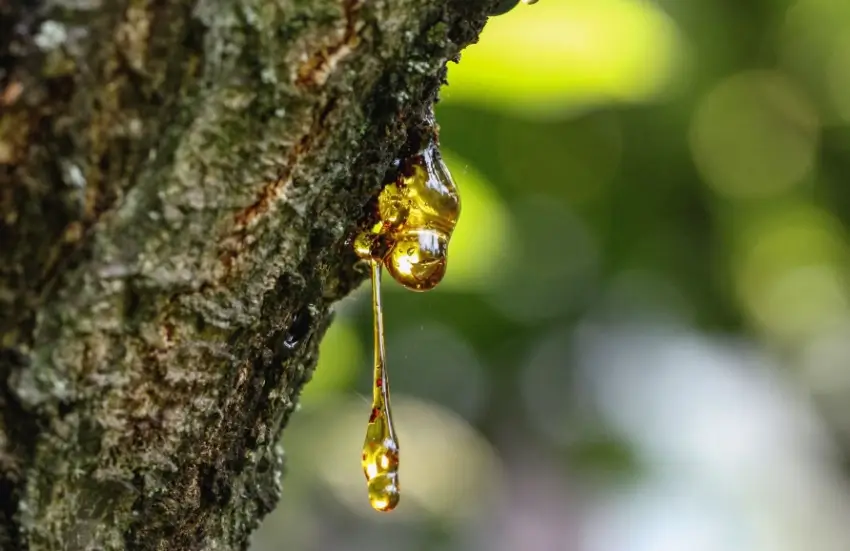
Amber begins simply as tree resin.
In forests billions of years ago, coniferous trees secreted resin when wounded, a protective measure for survival. The resin dripped to the ground or clung to branches, trapping the tiny lives floating in the wind. Some preserved insects in mid-flight, some held fragments of delicate petals, and some merely captured light and air.
Through the deposition of layers and the shifts of geology, these resins underwent polymerization under pressure and time, gradually transforming into amber. What was once soft and flowing became a resilient, semi-transparent gemstone.
It is a miraculous transformation—
from liquid to solid, from fleeting to eternal, from nature’s chance to human treasure.
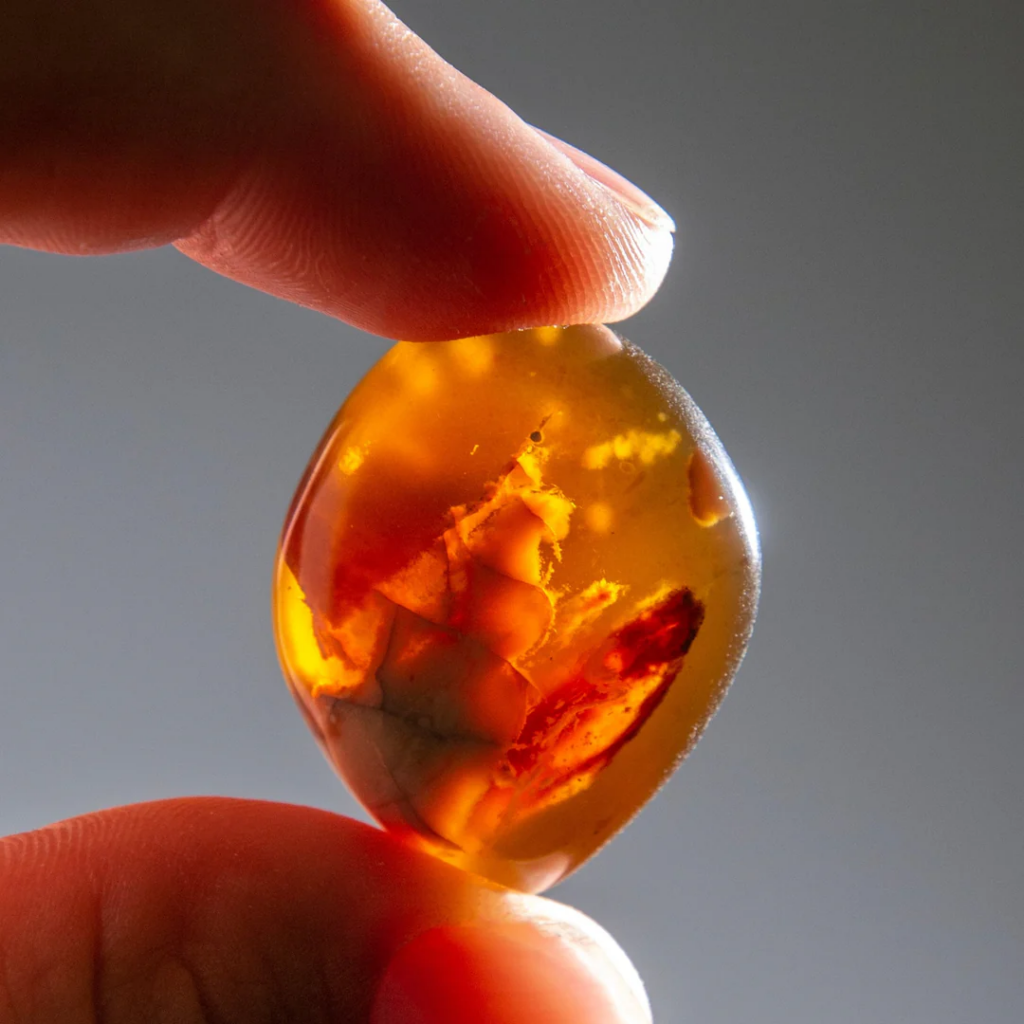
Amber thus possesses a singular character: unlike the sharp brilliance of diamonds or the profound depth of sapphires, it is gentle, warm, and intimate. When sunlight passes through, it seems to reveal traces of motion within, as if time has not yet fully solidified.
2. A World Preserved
What makes amber captivating is not merely its color or luster.
More importantly, it preserves slices of time.
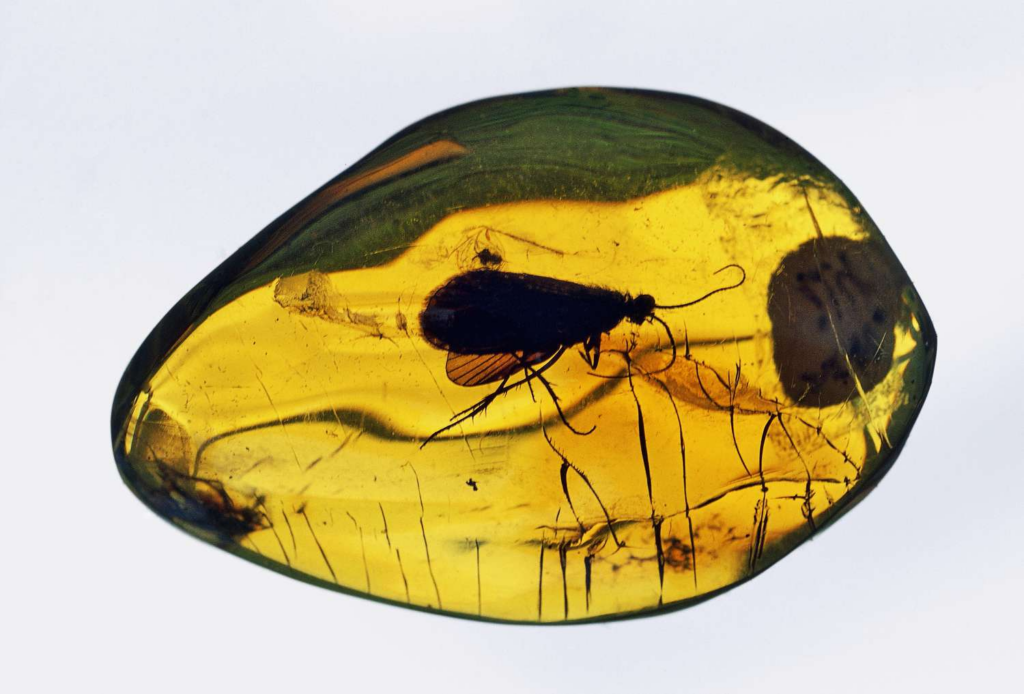
In some rare insect-bearing ambers, we can see complete forms of insects: the veins of their wings clearly defined, the curves of their antennae still elegant. This is not carving—it is life itself frozen, captured eternally in a single moment.
Scientists study ancient ecosystems through amber, reconstructing plant distributions and climatic conditions. Artists, meanwhile, find poetry in these miniature worlds—a tiny, seemingly insignificant insect granted eternity by chance.
Time does not favor only the grand.
It crowns the small as well.
3. Layers of Color and Warmth
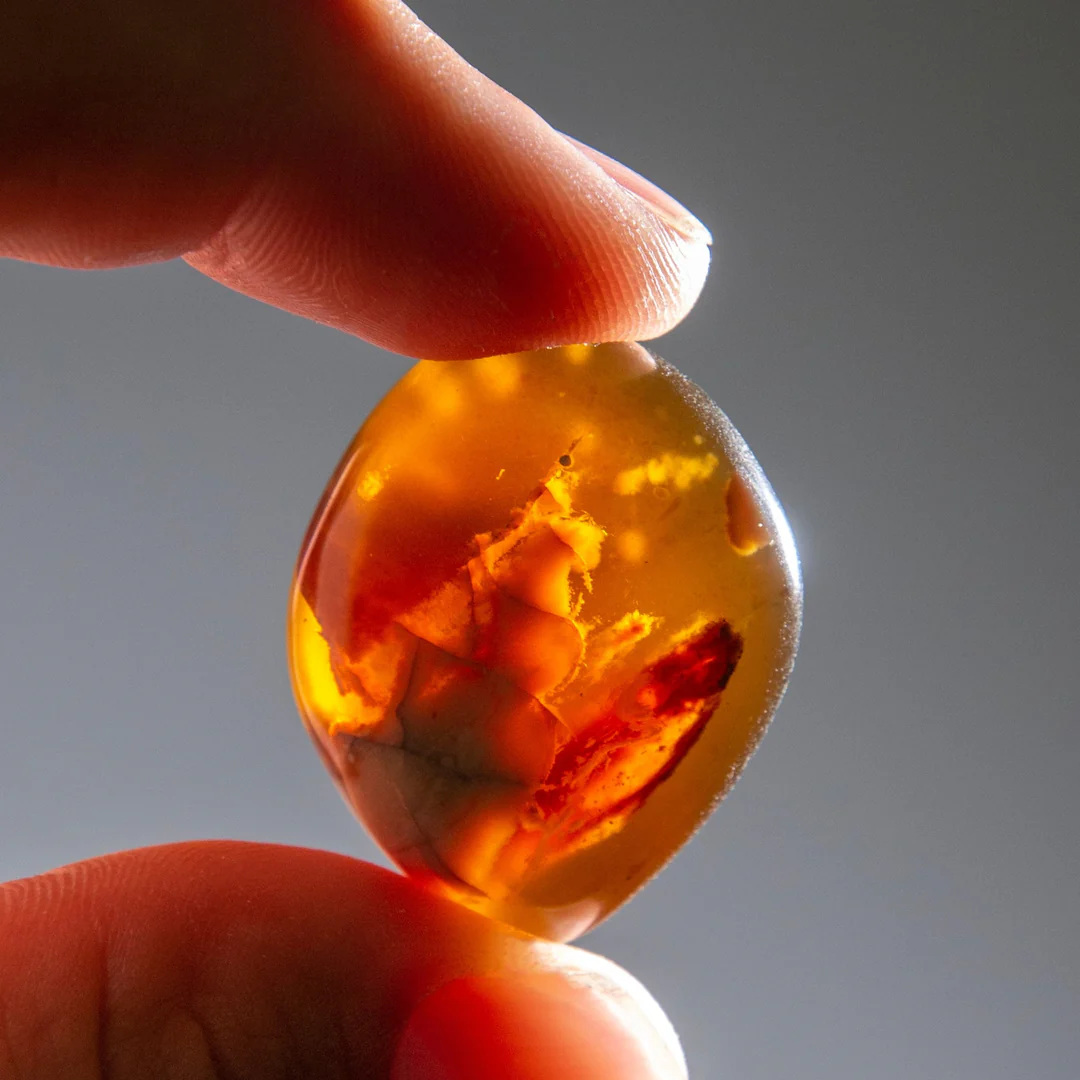
Amber’s hues range from pale honey to deep tea, from golden yellow to fiery orange, and even, in rare cases, to blue or green. Amber from different regions and eras reveals subtle differences under the light.
Some pieces are as translucent as morning sunlight; others are as rich as the glow of dusk.
Some hold “flowing patterns” within, like rivers frozen in time;
some contain natural bubbles, echoes of ancient air.
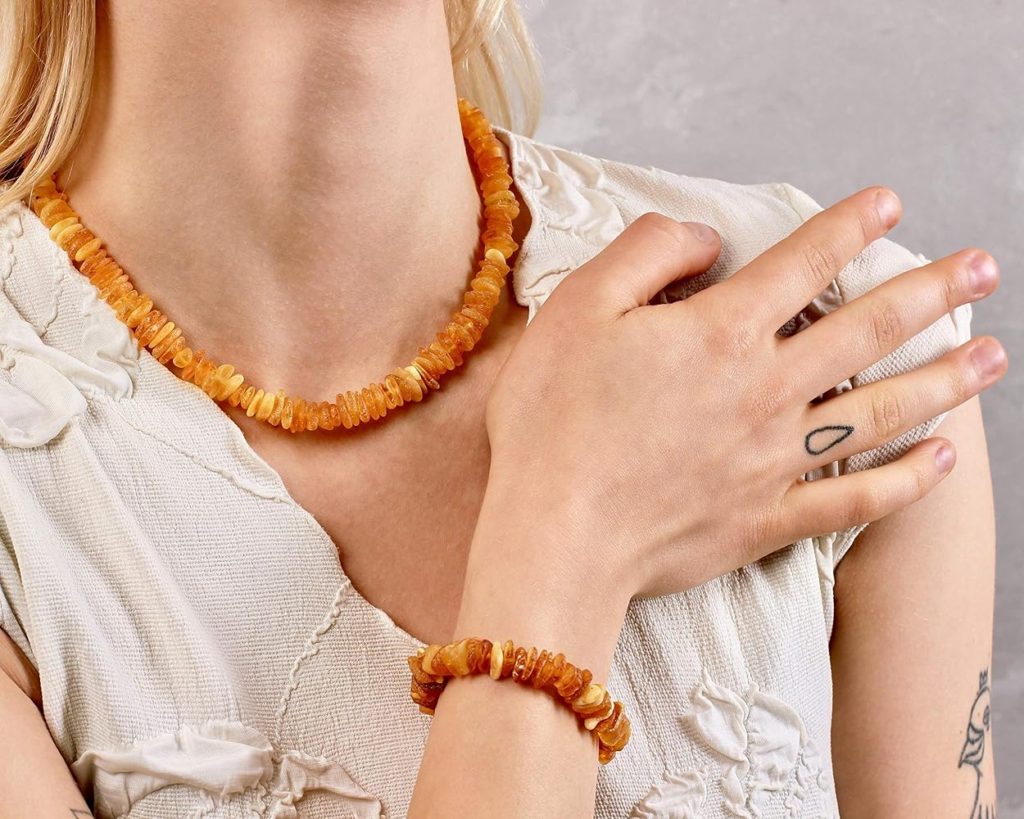
Unlike cold gemstones, amber does not feel distant—it resonates with the warmth of the human body. Worn close to the skin, it softens, interacting subtly with the wearer.
This “gem with warmth” has ensured amber’s enduring, unique place in human culture.
4. Ancient Talismans
Throughout human history, amber has been more than mere ornamentation.
In ancient Europe, it was regarded as fragments of the sun; in Eastern cultures, it was believed to bring calm and protection. People long ago sensed that amber held the vital breath of life, for it comes from living plants themselves.
In tombs and archaeological sites, amber beads, adornments, and talismans have been discovered. They accompanied the deceased on their journey to another realm. Perhaps even then, people understood—
only time itself is worthy to accompany time.
Amber is not a symbol of power, nor a mark of ostentation. It is more akin to a guardian, a quiet, enduring presence.
5. From Nature to Craft
When amber is collected, polished, and carved by human hands, it enters another dimension.
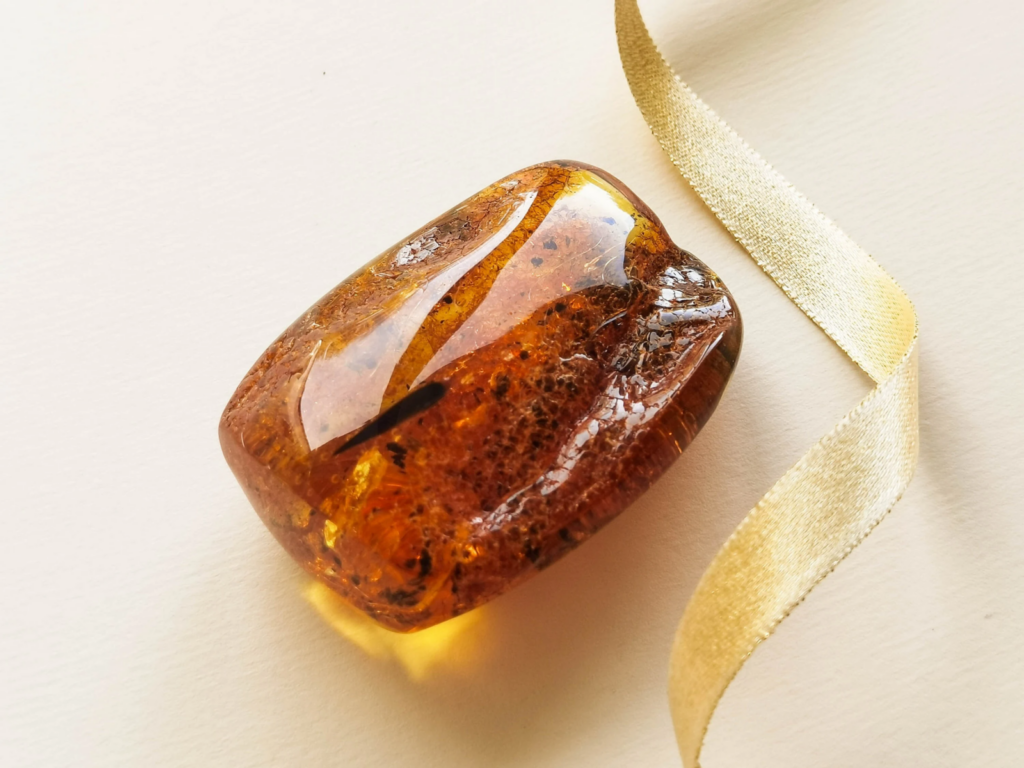
Artisans follow its natural form, taking care not to disturb the internal structure. Masterful amber carvings do not seek excessive complexity; rather, they honor the material’s inherent light and patterns. The natural sense of flow often becomes an integral part of the design.
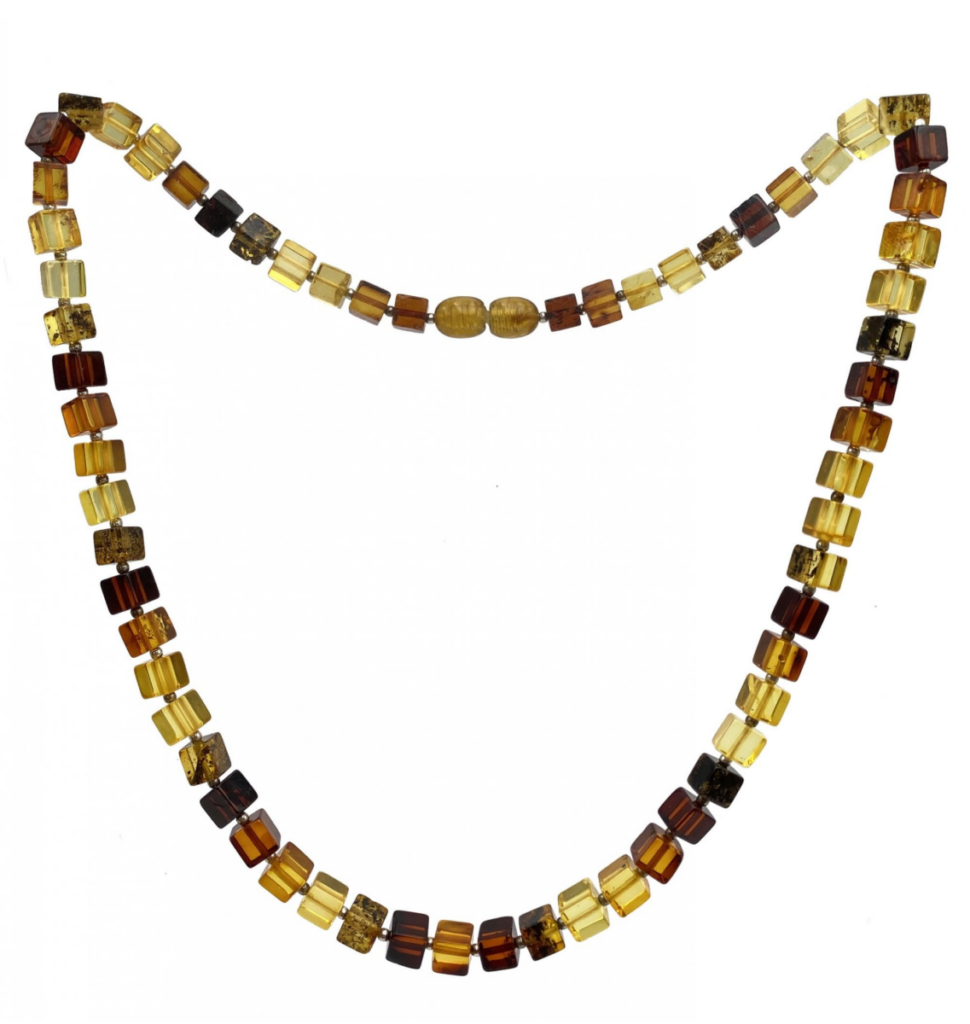
Sometimes, it is simply polished into a smooth bead;
sometimes, it is carved into flowers, animals, or auspicious motifs;
sometimes, the raw form is preserved, letting nature itself take center stage.
True craftsmanship lies in achieving a harmony between time and the human hand.
6. Light Yet Profound
Among gemstones, amber has a relatively low density, making it light and easy to wear. This lightness allows it to accompany life comfortably over long periods.
Unlike some precious stones that emphasize a “value label,” amber emphasizes a sense of companionship. In everyday light, it glows quietly; in the night, it is gentle and reserved.
It has no sharpness, yet it possesses depth.
This quality, in contemporary aesthetics, is itself precious. People begin to rethink: Must jewelry always dazzle? Can it be gentle, natural, and bear the traces of time?
Amber’s answer is yes.
7. Crowned with Amber: A Symbol
“Crowned with Amber” is more than a literal phrase.
When we crown an idea, a memory, or an emotion with amber, we are bestowing upon it the weight of time. It signifies that it is worth preserving, worth solidifying, worth handling with care.
What amber teaches us is patience.
It has endured millions of years of sedimentation, yet it does not hurry to reveal itself; it encases the fragile, yet makes no boast; it glows softly, yet carries the power to traverse centuries.
In a world of rapid change, amber is like a slowed-down clock. It reminds us that what is truly valuable often requires patience.
Epilogue: The Warmth of Time
If diamonds symbolize eternal hardness,
then amber symbolizes eternal gentleness.
It does not conquer the world with sharpness, but preserves it with embrace.
It does not proclaim loudly, yet quietly proves:
Time can destroy, and it can preserve;
It can take away, and it can crown.
When we gaze upon a piece of amber, we see not just its luster and color,
but the wind of ancient forests,
the fleeting flap of insect wings,
the healing of wounded trees,
and the silent passage of countless years.
It is a dialogue that spans millions of years.
Perhaps this is amber’s true meaning—
to render time tangible,
to give memory form,
to grant the fleeting a measure of eternity.
When all things are worn by time,
some will still be crowned with amber.
Related Posts