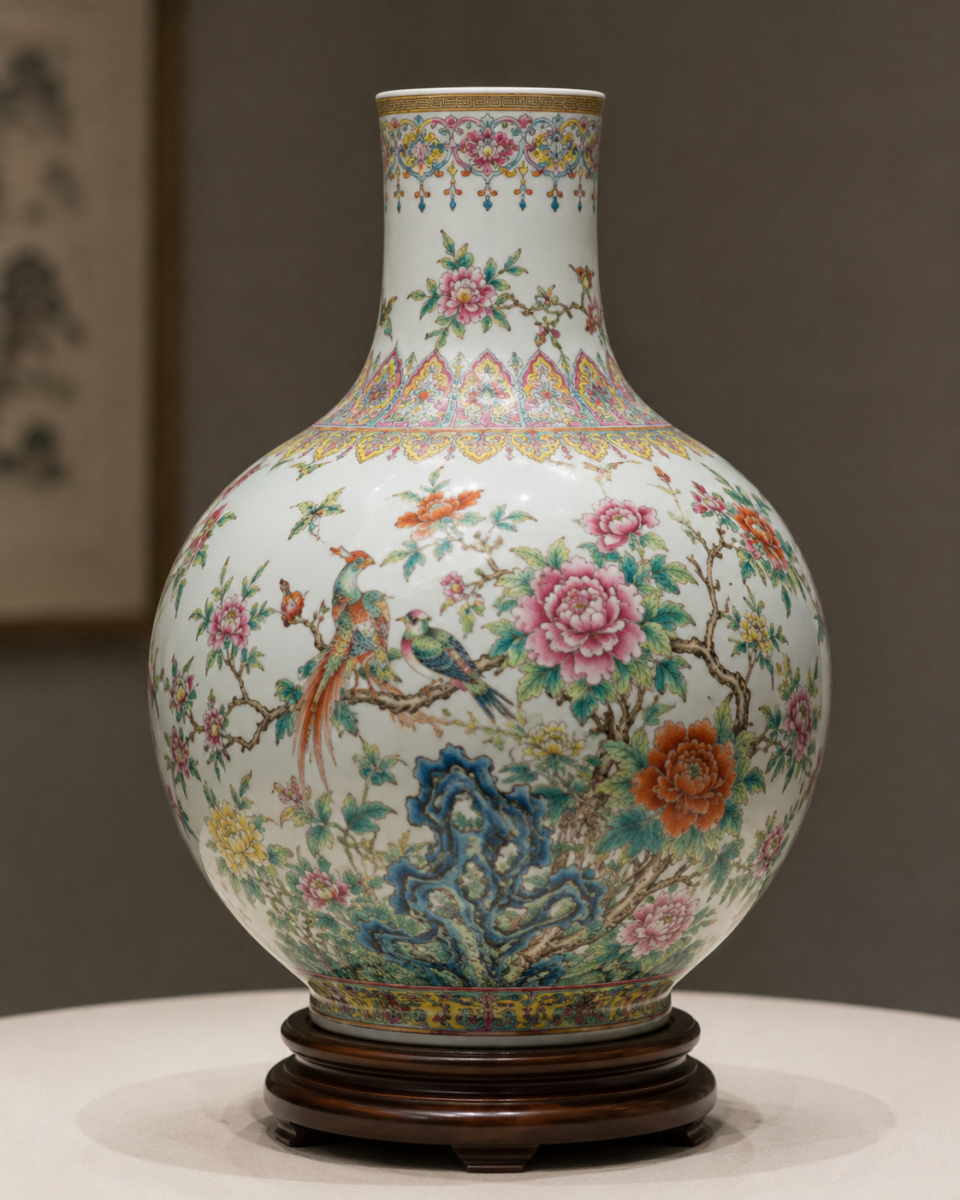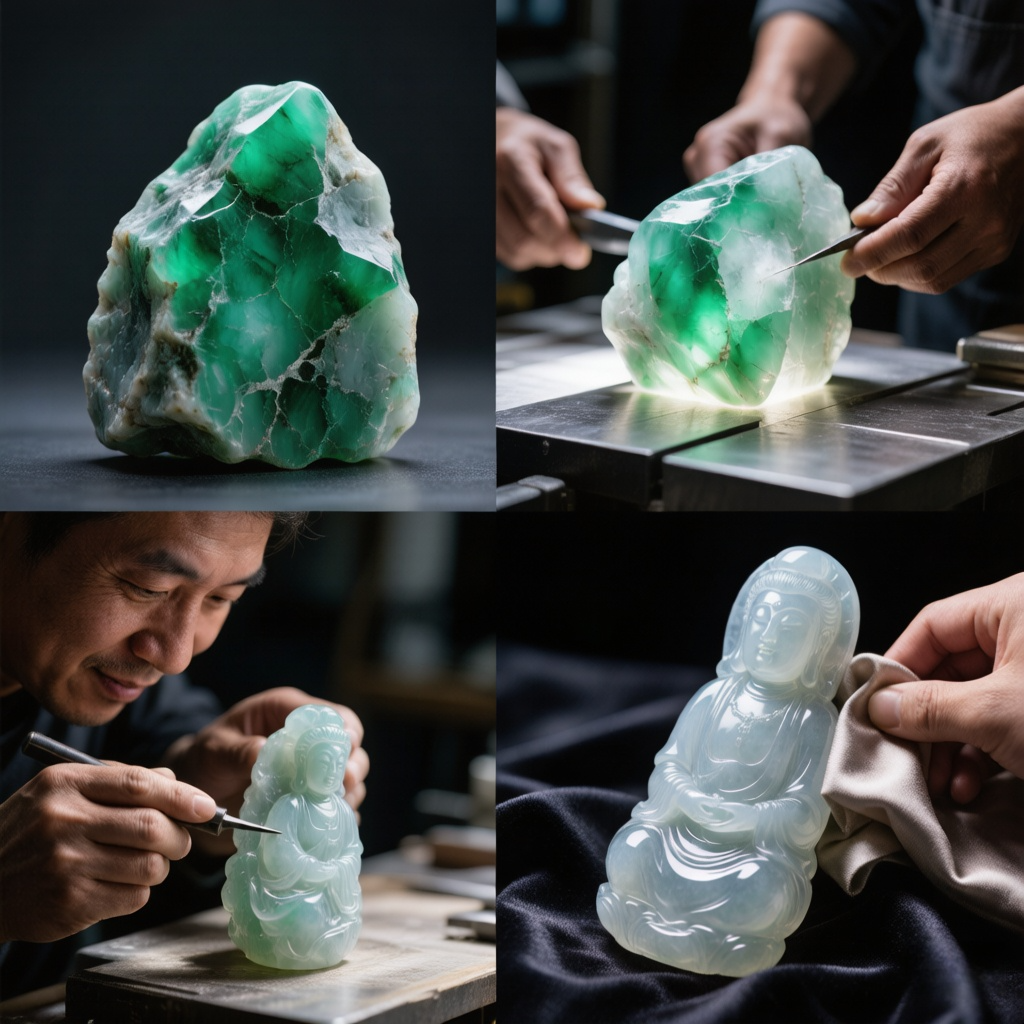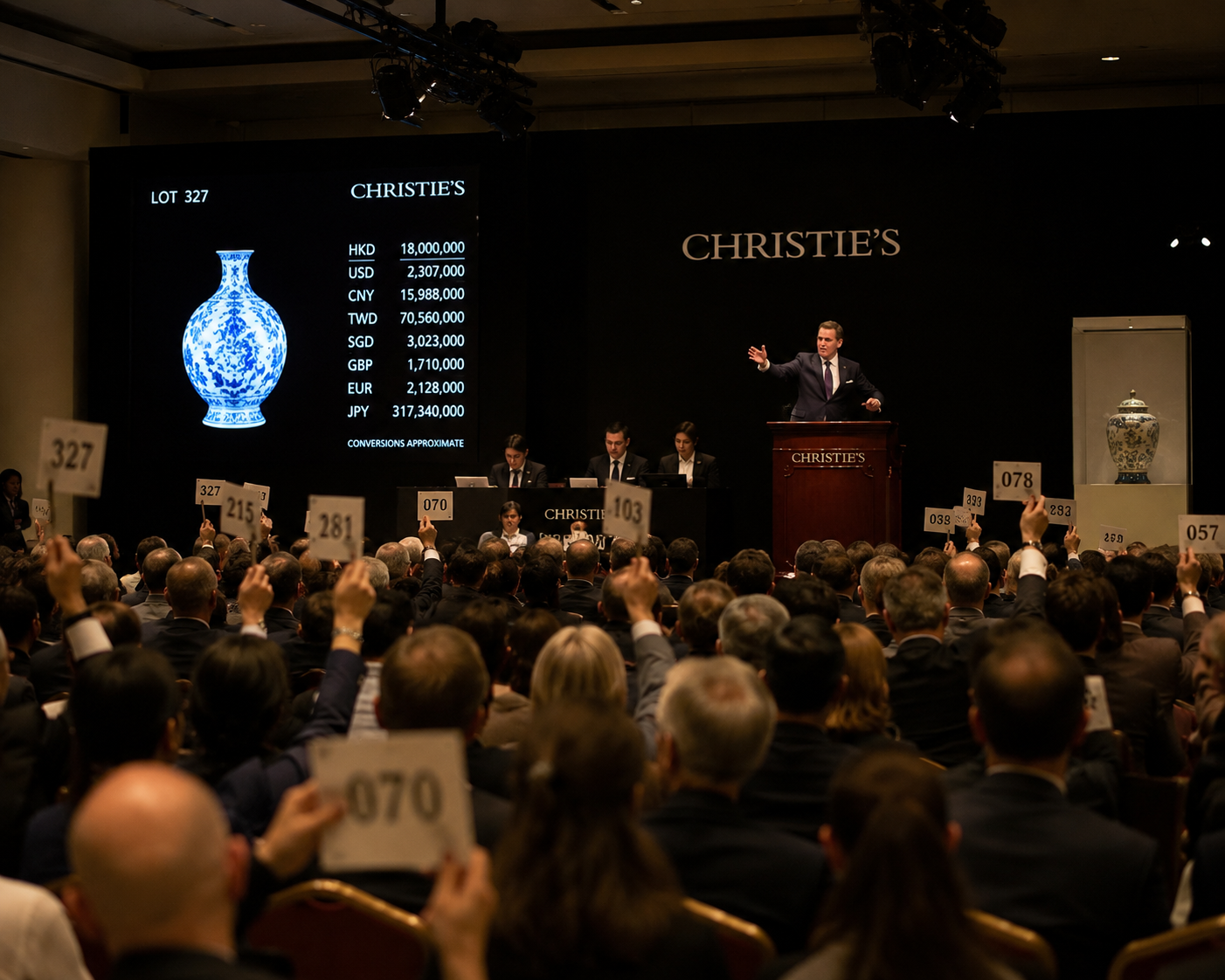
In recent years, as Chinese antique ceramics have continued to attract attention in the international…
The Egyptian Pharaoh’s Golden Mask: The Eternal Face and a Symbol of Immortal Power
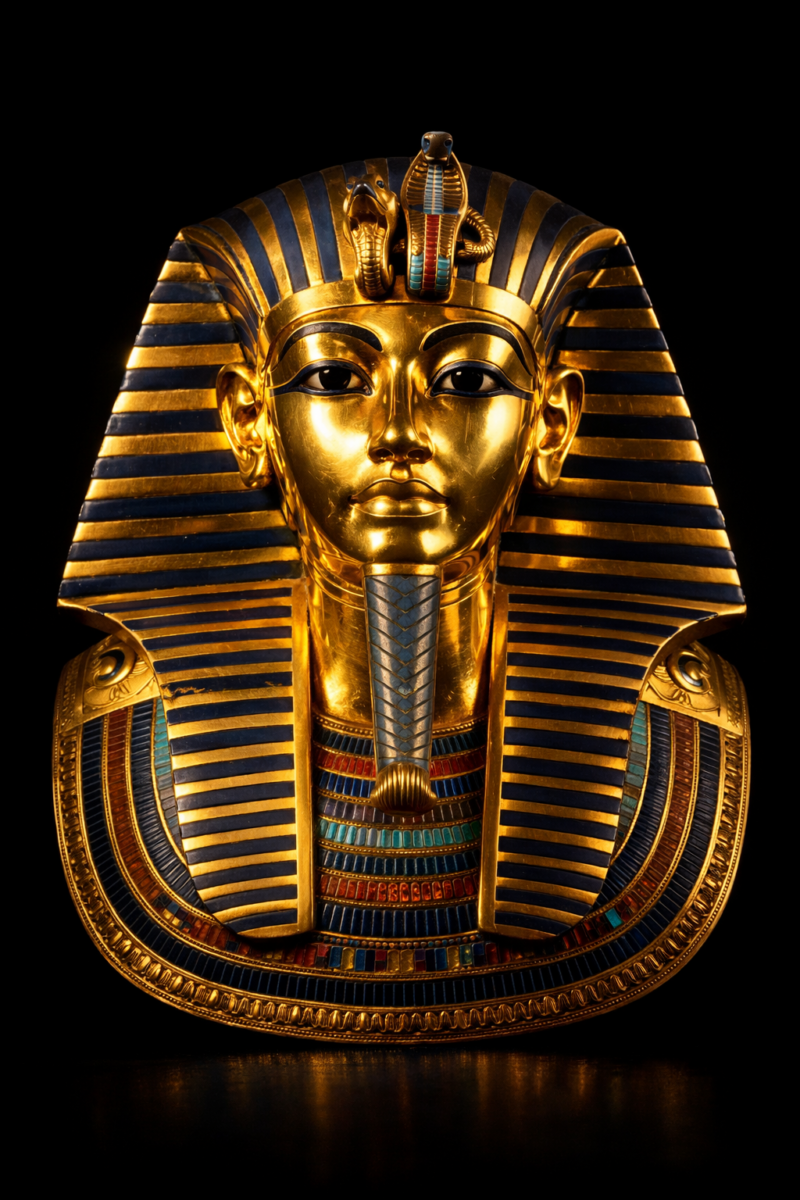
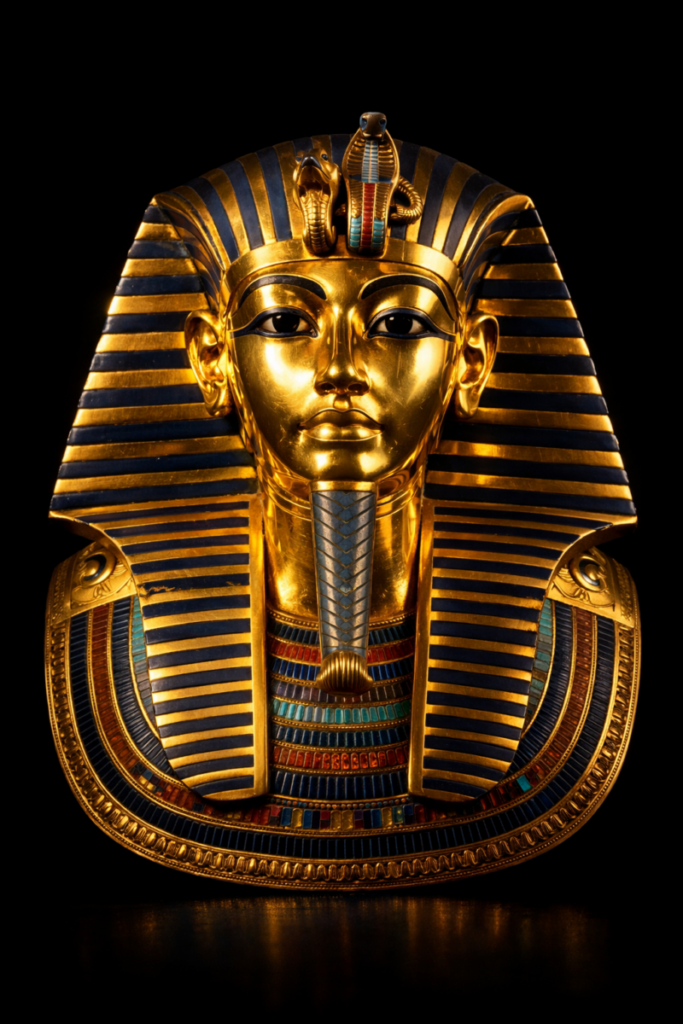
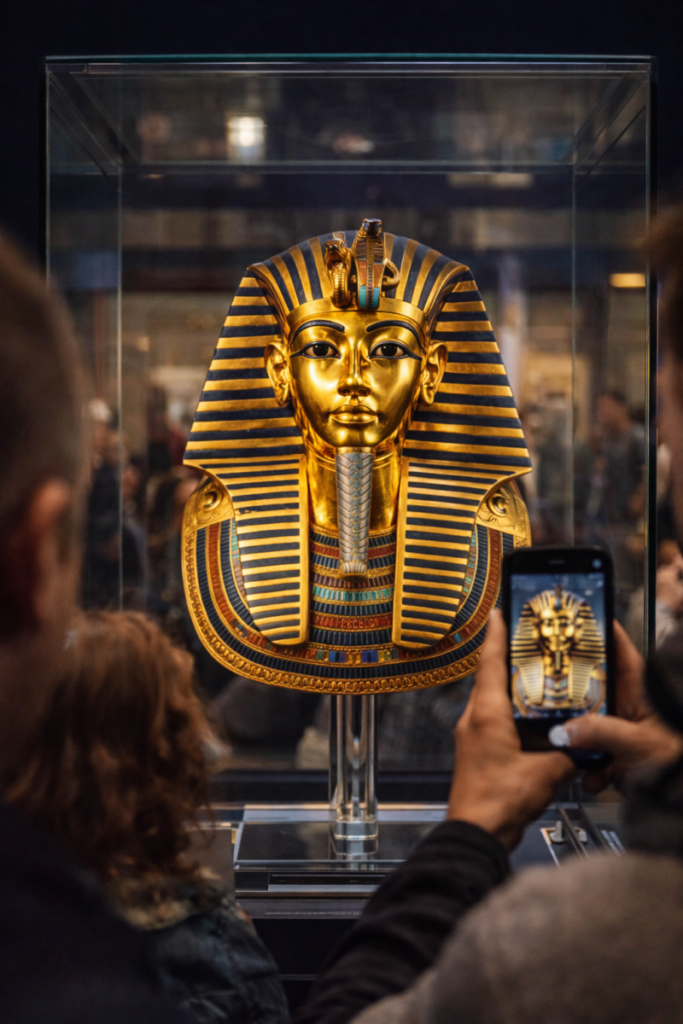
In the long course of human civilization, few artifacts possess both the overwhelming visual power and the profound religious and political significance of the golden mask of Tutankhamun. It is not merely a masterpiece of gold and precious stones, but an “eternal face” that gazes across more than three millennia into the modern world.
I. From Slumber to Revelation: A Legendary Discovery
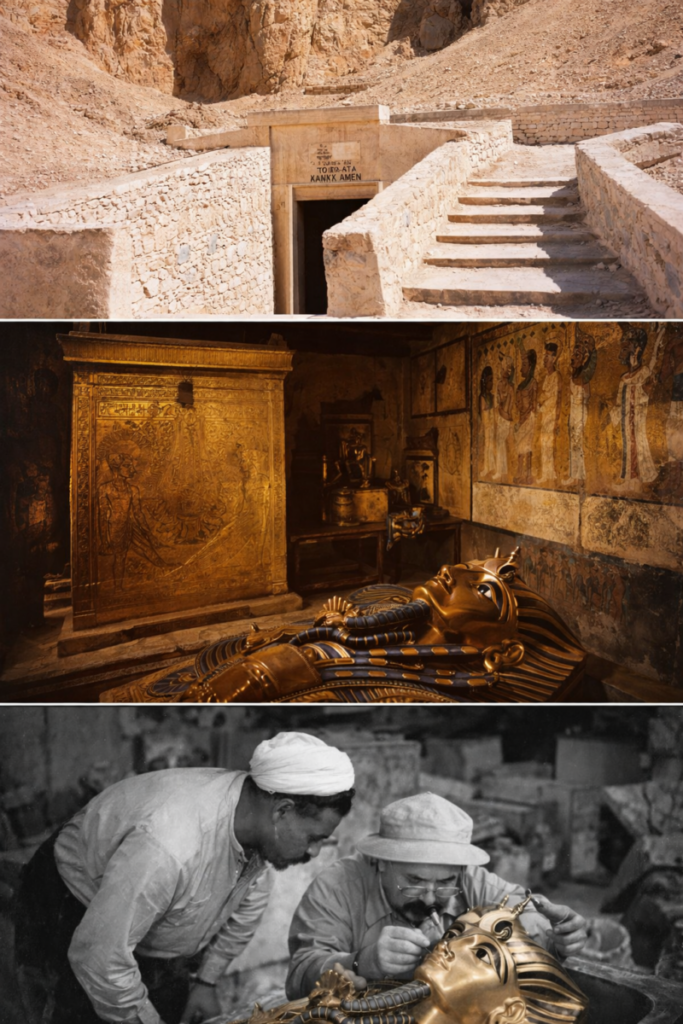
In 1922, British archaeologist Howard Carter discovered an almost untouched royal tomb in the Valley of the Kings—belonging to the young pharaoh Tutankhamun. As the chambers were gradually opened, gold, jewels, and exquisite artifacts came into view. Yet the most breathtaking object of all was the golden mask that covered the face of the pharaoh’s mummy.
The unveiling of this mask marked a pivotal moment in the history of ancient Egyptian archaeology. For the first time, the world was able to gaze so closely upon the visage of an ancient king. It not only astonished scholars, but also profoundly shaped the public imagination of ancient Egyptian civilization.
III. Image and Symbolism: The Visual Language of Power and Divinity
The mask is not merely a portrait, but a complex assemblage of symbols.
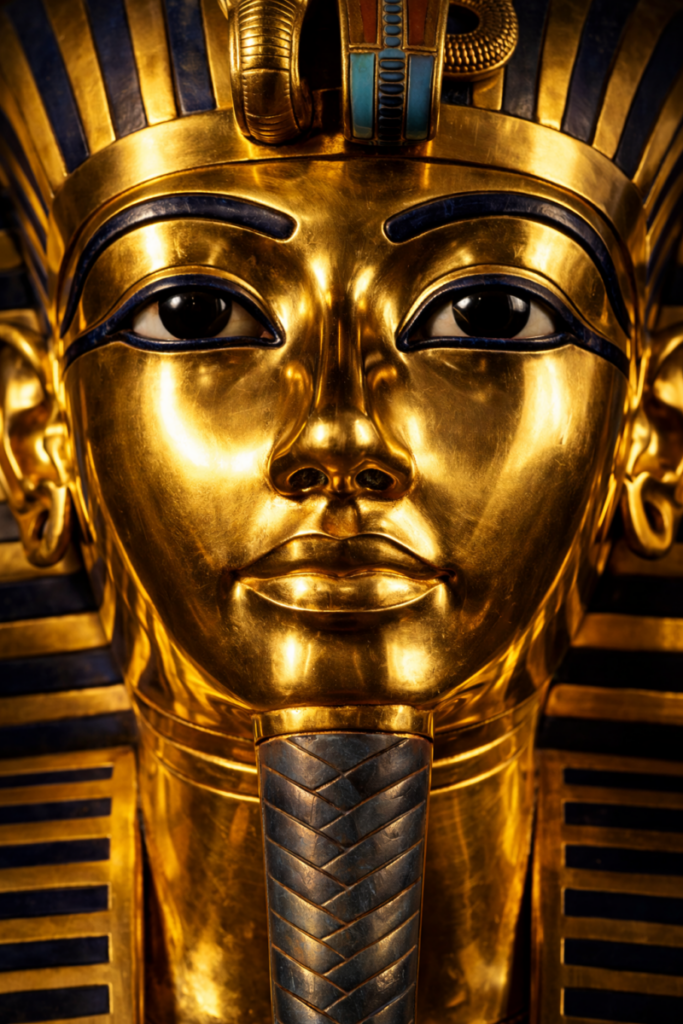
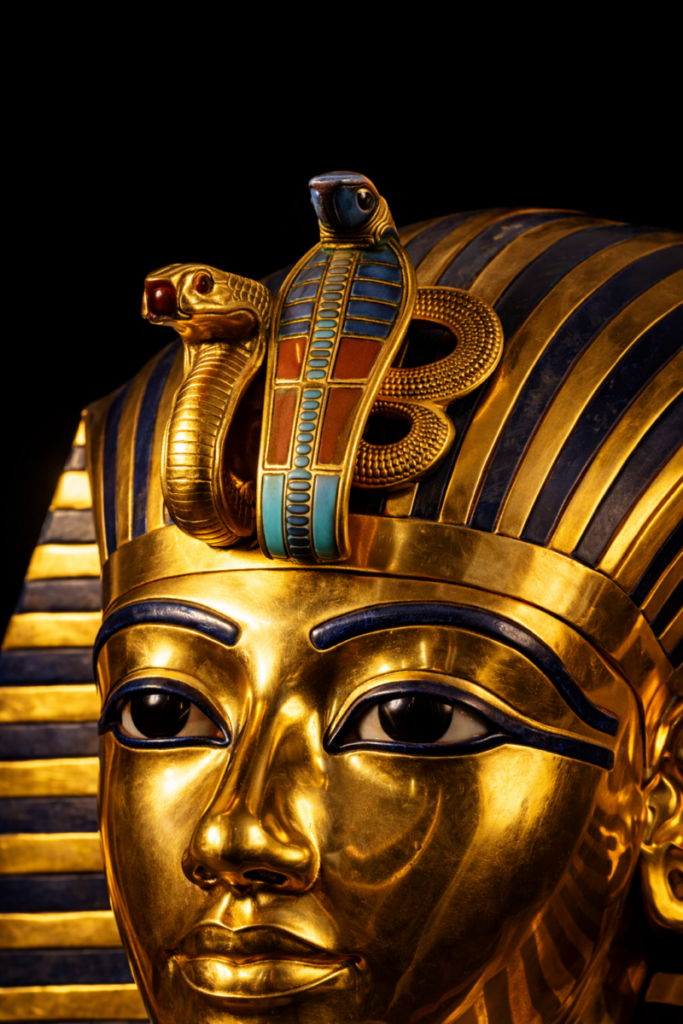
On the forehead, the cobra and vulture represent the protective deities of Upper and Lower Egypt, signifying the pharaoh’s sovereignty over the unified kingdom. The curved false beard on the chin is a mark of divinity, indicating that the pharaoh is not only a ruler on earth, but also the earthly embodiment of a god.
The facial features of the mask are highly idealized—smooth lines and a serene expression convey a sense of timeless beauty that transcends individuality. This is not a realistic depiction of Tutankhamun’s actual appearance, but rather a “divinized portrait,” intended to ensure that he would exist in perfect form in the afterlife.
IV. Religious Significance: An Amulet for Eternal Life
In the belief system of ancient Egypt, death was not an end, but a transition to the afterlife. The body had to be carefully preserved so that the soul—comprising the Ka and Ba—could be reborn beyond death.
The function of the golden mask was to provide the deceased with an “eternal face.” As the physical body decayed, the mask would serve as a substitute, allowing the soul to recognize itself and continue to exist. Thus, it was not merely decorative, but a sacred amulet endowed with profound spiritual purpose.
On the back of the mask are inscribed spells derived from the Book of the Dead, intended to protect the pharaoh on his journey through the underworld. These texts, together with the imagery, form a complete system of religious protection.
V. Historical Context: A Short Life, an Eternal Name
Tutankhamun was a young pharaoh of Egypt’s Eighteenth Dynasty. He ascended the throne at around the age of nine and died at just nineteen. His reign was brief, and his historical achievements were relatively limited. Yet, because his tomb was discovered largely intact and undisturbed, he has become one of the most famous pharaohs in history.
In contrast, great rulers such as Ramesses II, despite their remarkable accomplishments, did not leave behind tombs and burial treasures as complete and well-preserved. As a result, Tutankhamun’s “accidental preservation” has granted him a cultural influence in the modern world that far exceeds his historical role.
Related Posts