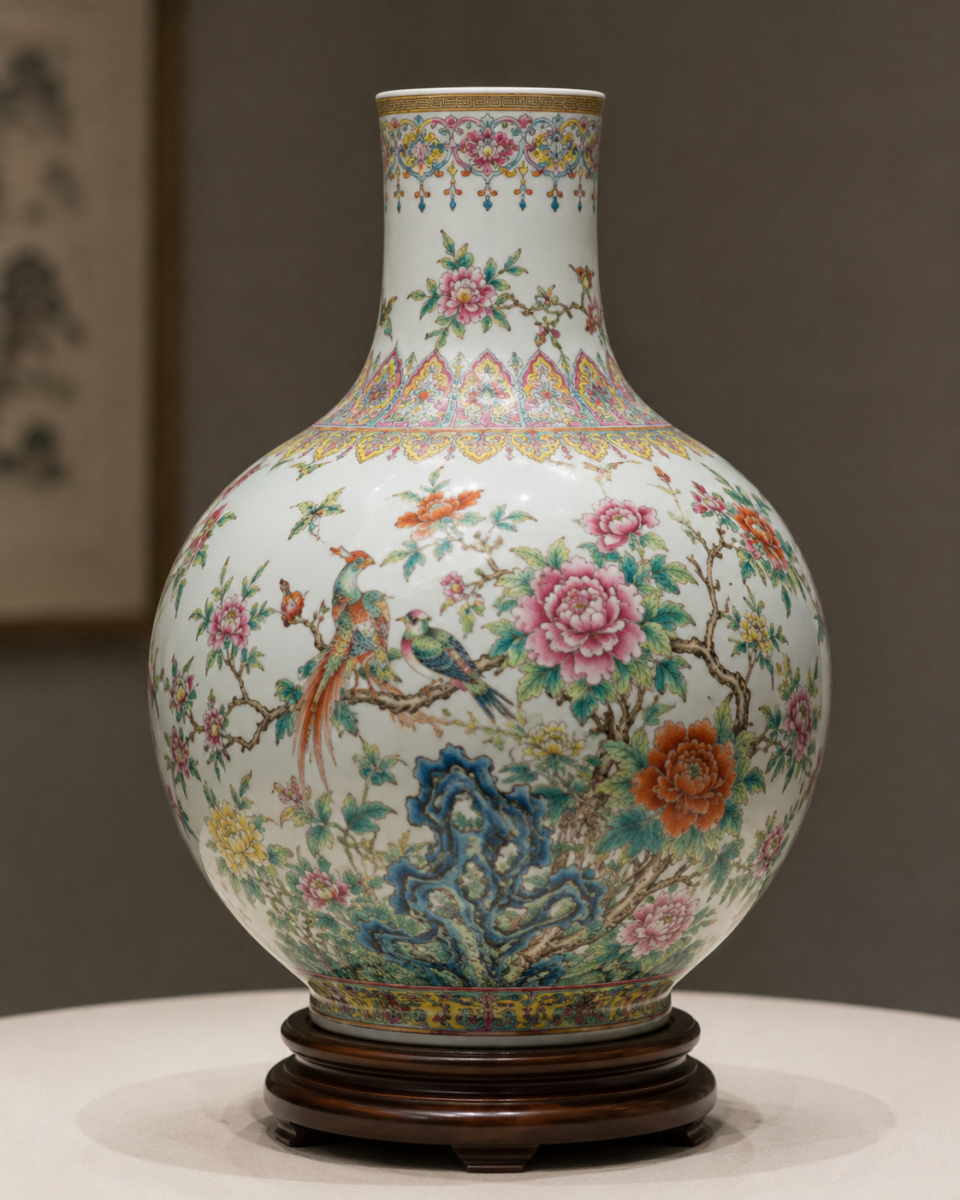
In recent years, as Chinese antique ceramics have continued to attract attention in the international…
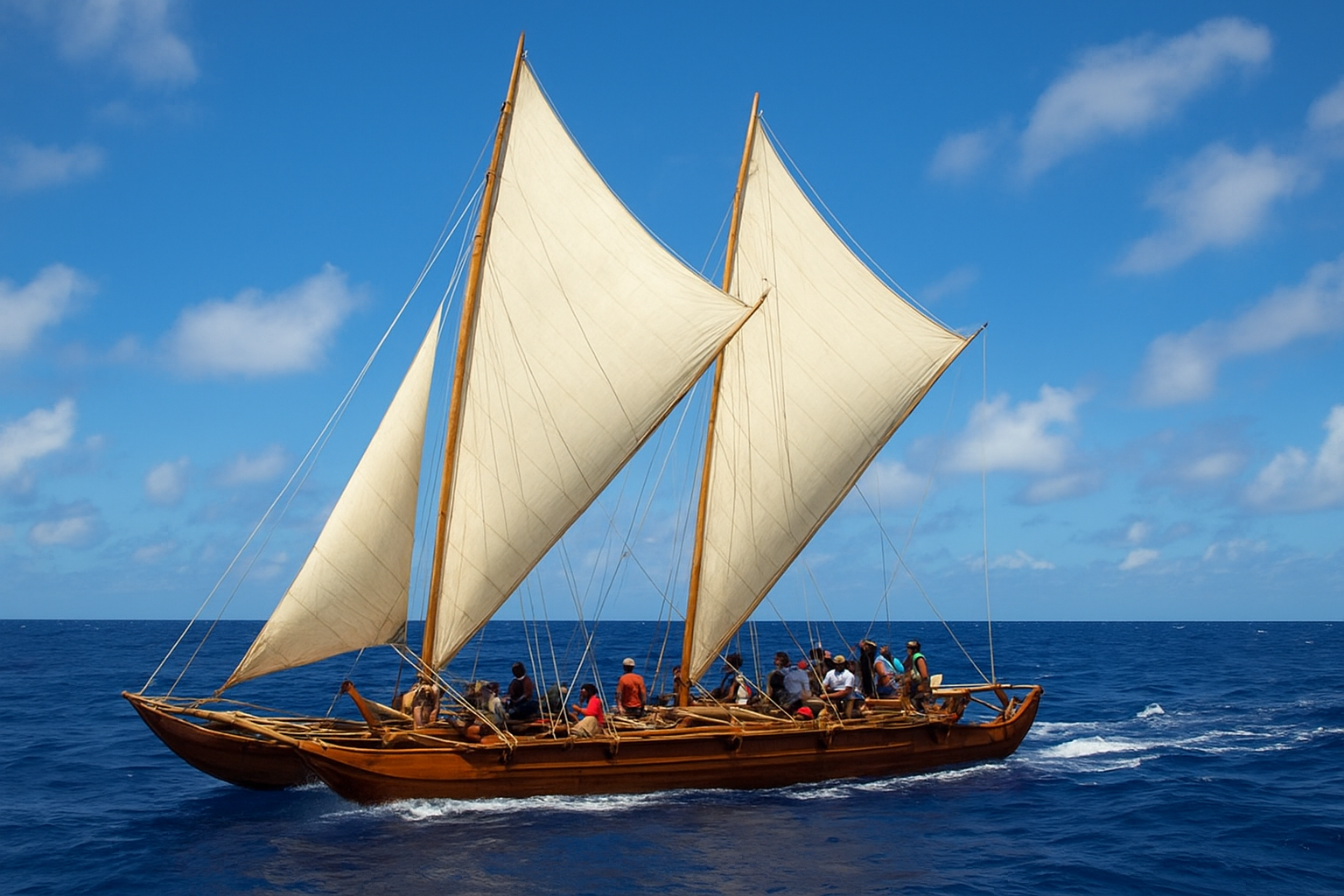
“Sailing with the Wind and Waves — The Seafaring Civilization of Polynesian Canoes and Catamarans”
In the history of world navigation, there is a group often overlooked yet full of legendary significance—the Polynesians. Living among countless islands scattered across the Pacific Ocean, from Hawai‘i to New Zealand, from Easter Island to Tahiti, they traversed millions of square kilometers of vast ocean. What enabled them to achieve this remarkable feat was their unique technology of the canoe and the catamaran.
I. Origins and Symbolism
The origins of Polynesian seafaring culture can be traced back to around 1000 BCE. At that time, their ancestors had no metal tools and no compass, yet they explored the ocean by carefully observing the stars, ocean currents, wind directions, and the migration of birds. Their canoes were not merely means of transportation; they were symbols of tribal migration and the spread of civilization.
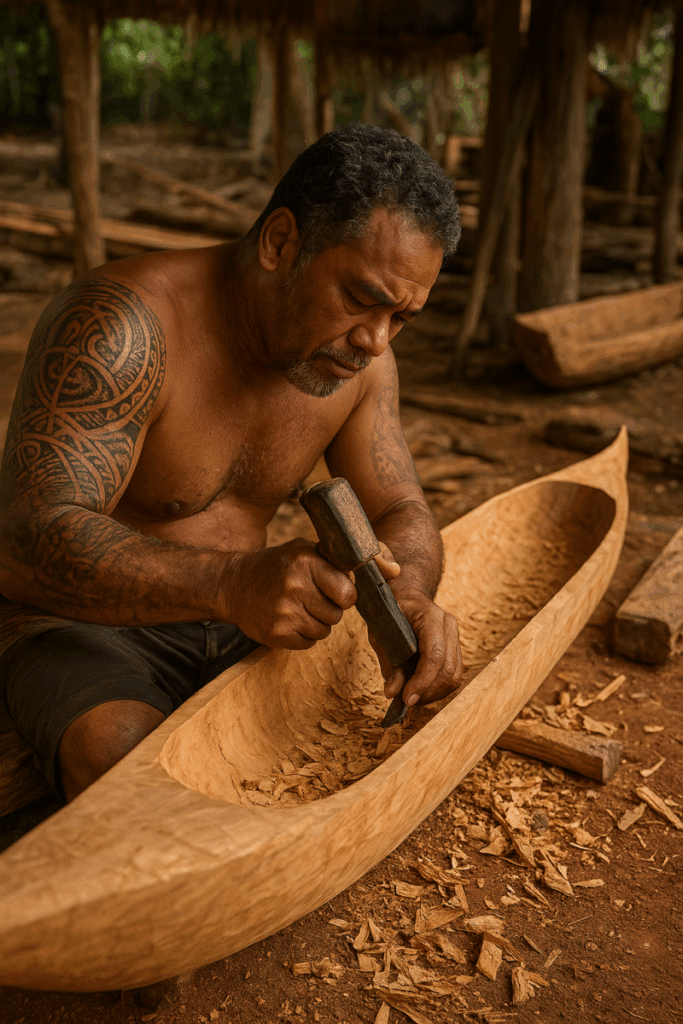
In Polynesian culture, the canoe was often regarded as an extension of the ancestors. The construction of a canoe required solemn ritual ceremonies to ensure the protection of ancestral spirits. Each vessel was imbued with Mana (spiritual power), carrying not only the lives of its people but also their beliefs and their future.
II. Structural Ingenuity of Canoes and Catamarans
Outrigger Canoe
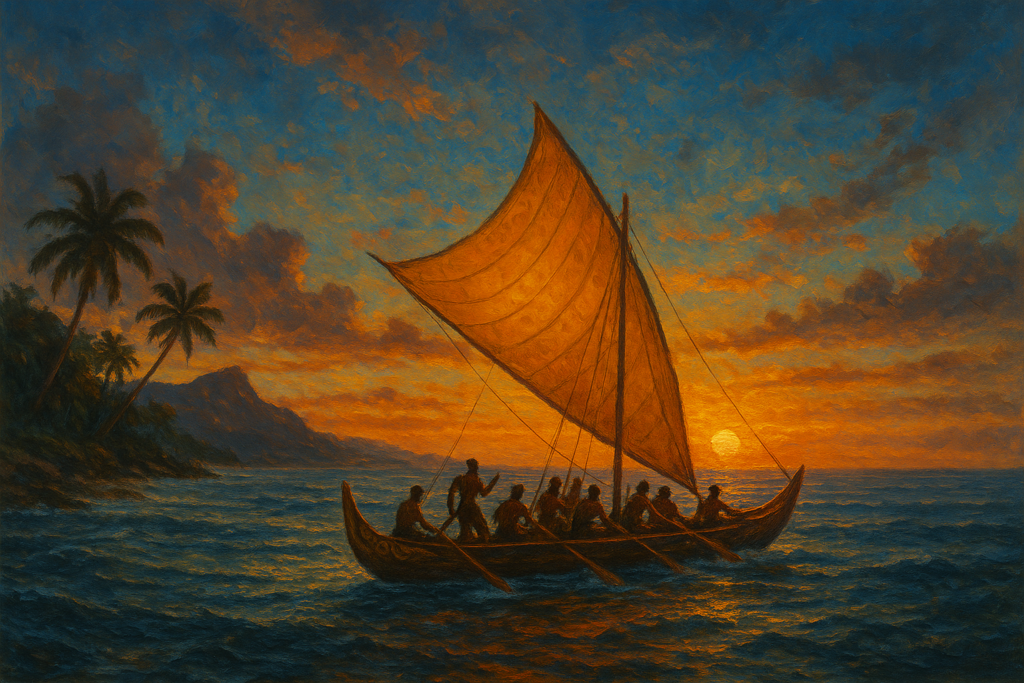
The most common form was the single-hulled canoe with an outrigger attached to one side, serving as a stabilizer against the impact of waves. Its lightness and agility allowed navigators to maintain balance even amidst rough seas.
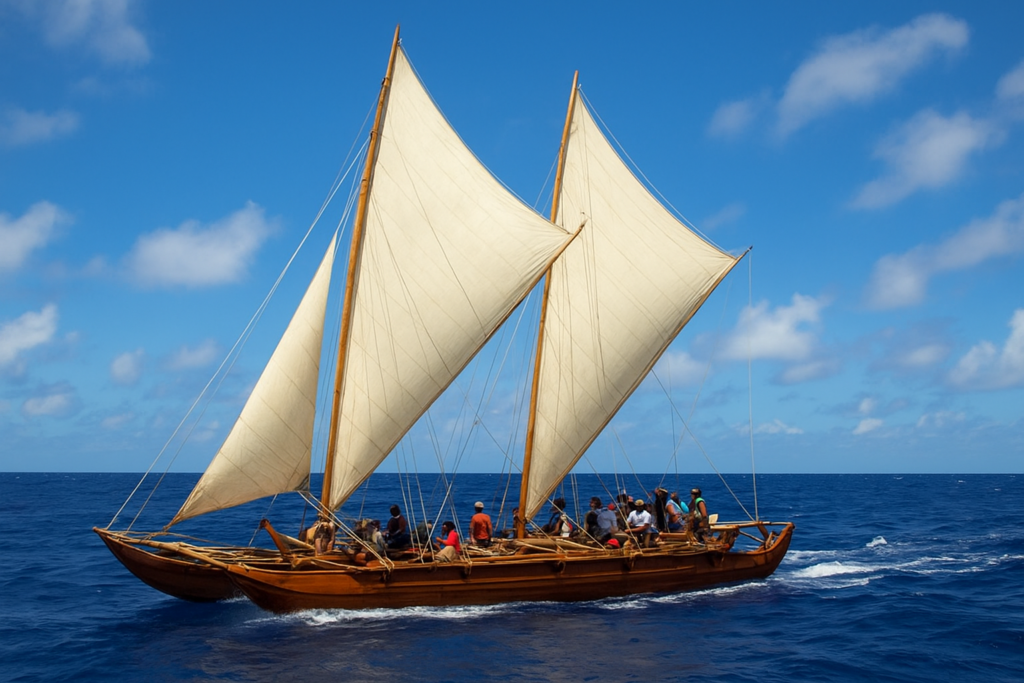
Catamaran / Double-hulled Canoe
The catamaran was formed by joining two canoes side by side. This structure provided greater carrying capacity, enabling the transport of dozens or even hundreds of people, along with food, livestock, and tools—making it well-suited for long-distance voyages.
This structural innovation allowed the Polynesians, as early as the turn of the Common Era, to complete journeys spanning thousands of kilometers—centuries before the so-called Age of Discovery in Europe.
III. Navigation Techniques and Oral Wisdom
The secret of Polynesian seafaring lay not only in the design of their vessels but also in their orally transmitted system of celestial navigation.
They determined direction by recognizing the positions of constellations and the angles at which they rose and set;
they sensed the presence of land through the direction and shape of ocean swells;
and they predicted the proximity of islands by observing the flight paths of birds.
This knowledge was never written down but was passed from generation to generation through oral tradition. The Wayfinders, or master navigators, held great prestige within their communities. They were not only scientists but also spiritual guides.

IV. Symbol of Culture and Spirit
In Polynesian society, the significance of the canoe extended far beyond its function as a tool.
It was a bridge of migration — enabling people to explore new islands and establish new homes;
It was a symbol of the tribe — each vessel was closely tied to a specific community, often endowed with mythic origins;
It was a vessel of life — in the boundless Pacific Ocean, the canoe represented harmony between humanity and nature.
Thus, in Polynesian myths and songs, canoes are frequently associated with heroic deeds and revered as vessels that carry people into the unknown world.
V. Contemporary Revival and Global Influence
Since the 20th century, with the intervention of Western technology, traditional Polynesian navigation once fell into decline. However, in 1976, a reconstructed double-hulled canoe named Hōkūleʻa set sail from Hawai‘i. Using only traditional celestial navigation, it successfully crossed the Pacific and reached Tahiti. This achievement not only astonished the world but also reignited a sense of cultural identity among Polynesians.
Today, Polynesian canoes have become symbols of cultural revival and national pride. They appear not only in festivals and ceremonies but also in modern education and the arts. Many young people, by learning the skills of boatbuilding and navigation, are reconnecting with the wisdom of their ancestors.
Conclusion
If European sailing ships symbolized conquest and colonization, then Polynesian canoes and catamarans embodied exploration, migration, and dialogue with nature. They were not only emblems of a seafaring civilization but also stories of how humanity, with courage and wisdom, survived and endured upon the ocean.
In today’s era of globalization, the presence of Polynesian canoes reminds us that culture is not a static inheritance, but a living force that can continue to shine within modern society.

Related Posts