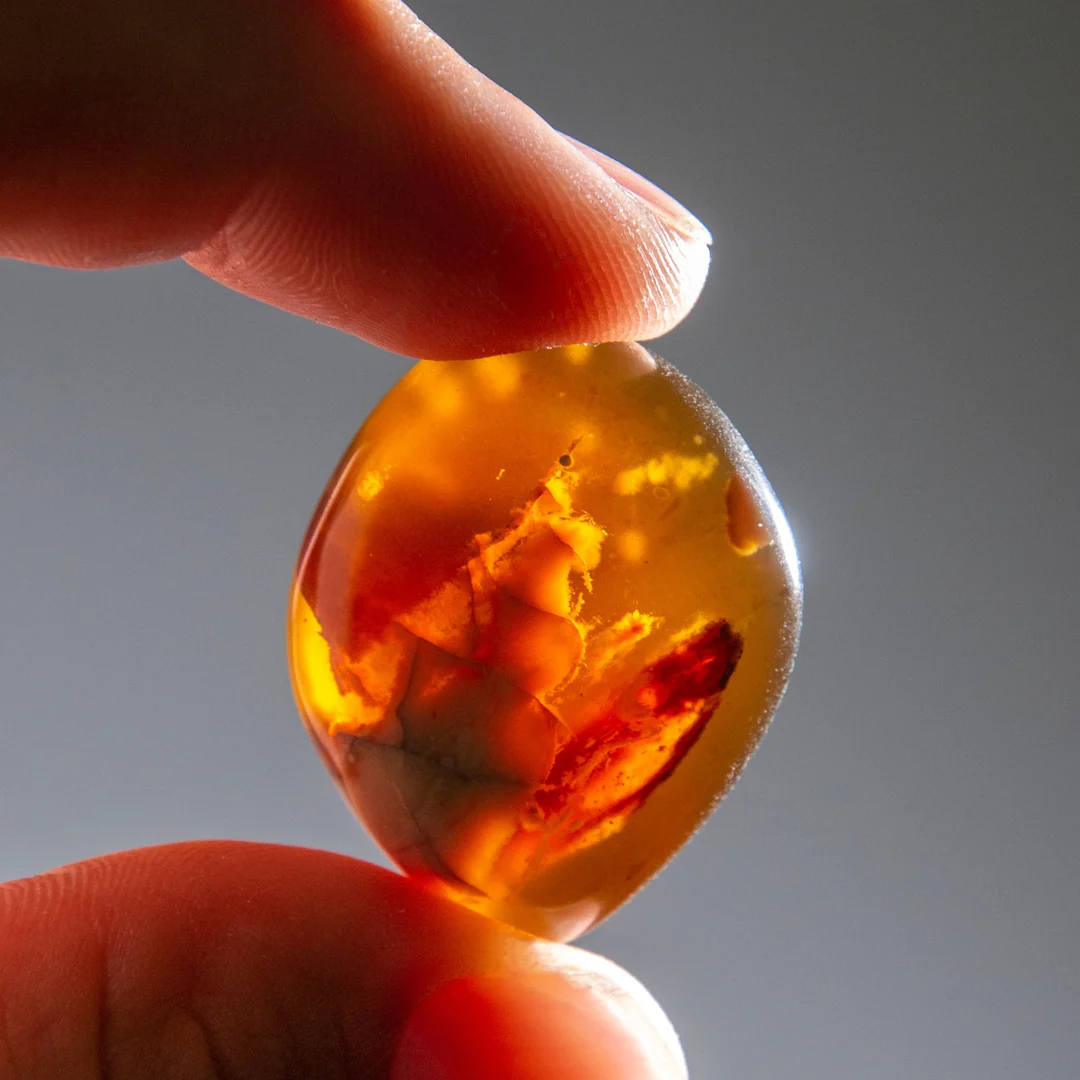
Among all gemstones, amber may be the one closest to the essence of time itself.…
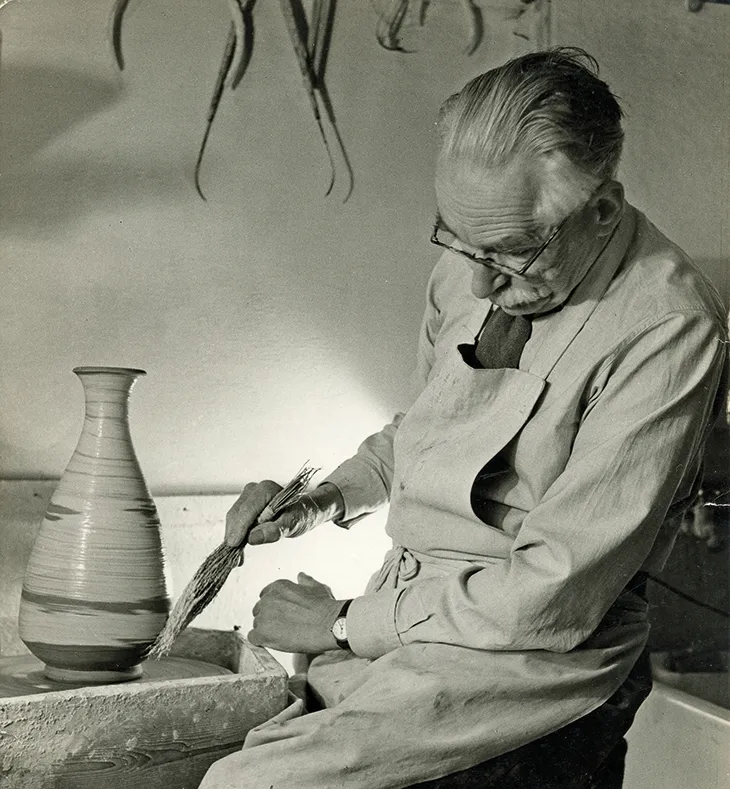
Mud and Fire: The Philosophy of Bernard Leach’s Eastern Journey — The Father of British Studio Pottery
When we speak of the revival of pottery and the spirit of the modern crafts movement in the 20th century, one name inevitably comes to mind—Bernard Leach (1887–1979). He was not only the founding father of modern British studio pottery, but also a philosophical artist who bridged East and West. His life was a cross-cultural journey about vessels and the Way, craft and spirit.
I. Beginning in the East: A Chance Encounter and a Predestined Awakening
Bernard Leach was born in Hong Kong and grew up between East Asia and England. After receiving his education in Britain, he first aspired to become a painter. In 1909, he traveled to Japan, intending to teach etching, but a chance encounter soon changed the course of his life.
In Tokyo, Leach met renowned Japanese potters such as Shōji Hamada, Kanjiro Kawai, and Muneyoshi Yanagi, and studied under the master Shoji Hamada (or in some accounts, the potter Hagiwara Shōichi). The decade he spent in Japan profoundly shaped his worldview. He learned the traditional techniques of throwing and kiln firing, but more importantly, he was deeply moved by Japan’s philosophy of the beauty of use—the idea that spiritual beauty can be found in everyday utensils, and that simplicity and nature reflect the rhythm of life itself.
This aesthetic understanding became the very core of his philosophy when he later returned to Britain.
II. Return to the West: The Flame of St Ives
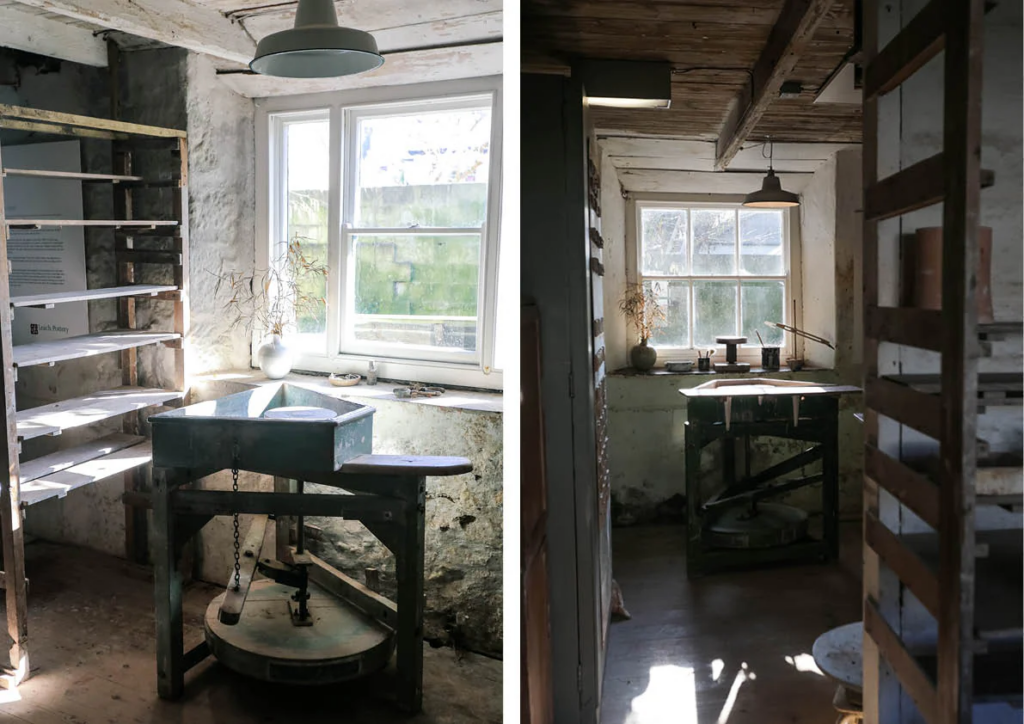
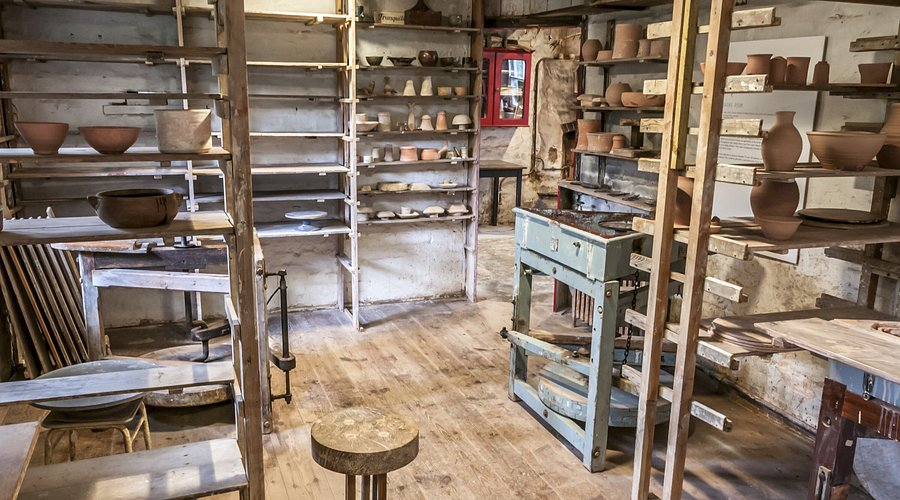
In 1920, Bernard Leach returned to England and settled in the seaside town of St Ives, Cornwall, where he founded the famous Leach Pottery. This was not merely a workshop, but a laboratory of ideas—a place where he sought to fuse the craftsmanship and philosophy of the East with the creative spirit of the West, and to pioneer a new path for modern pottery.
At St Ives, Leach built traditional wood-fired kilns and emphasized hand-throwing and natural glazes. He believed that a potter must be both craftsman and thinker:
“A true potter is a philosopher who expresses his mind through his hands.”
This echoed the ideals of the Japanese Mingei (Folk Craft) Movement, led by Yanagi Sōetsu, which championed the spiritual value of craftsmanship and resisted the loss of artistry in industrial production.
Leach’s collaboration with Shōji Hamada became one of the most celebrated friendships in modern craft history. Together, they experimented with glazes, forms, and philosophies, their work becoming a meeting point of East and West. St Ives was soon hailed as “the Japanese pottery of the West,” influencing generations of British and international potters.
III. The Way of the Vessel: The Unity of Art and Life
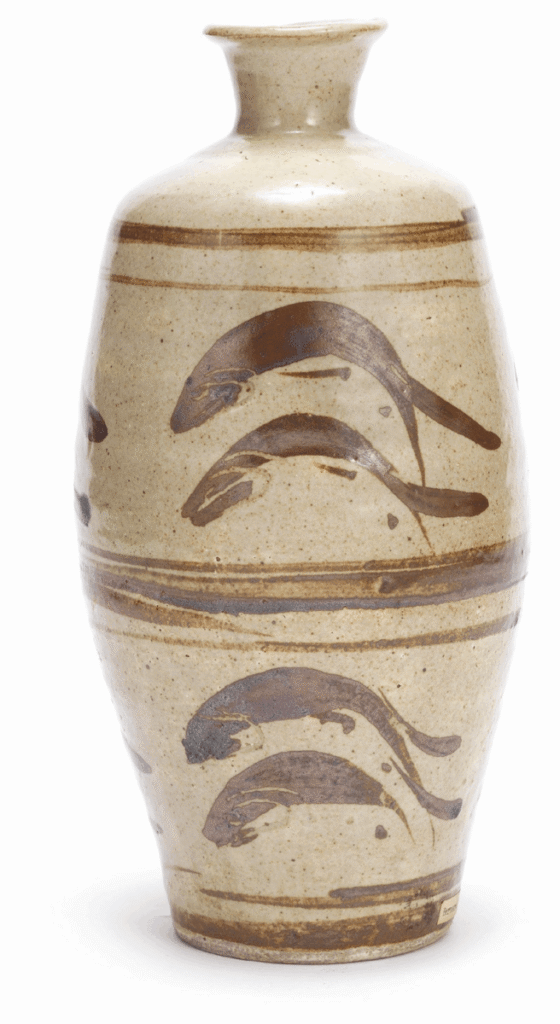
At the heart of Bernard Leach’s artistic philosophy lay what could be called the Way of the Vessel. For him, pottery was not just about beauty of form or utility of function—it was a way of life, a union of art and spirit. In his seminal work A Potter’s Book (1940), he wrote:
“The significance of pottery lies not in its perfection, but in its honesty.”
He rejected the cold perfection of industrial production, valuing instead the human traces of the hand, the spontaneity of the flame, and the natural flow of glaze—all of which gave life to a piece. This aesthetic of imperfection reflects the Japanese notion of wabi-sabi—finding beauty in transience and imperfection.
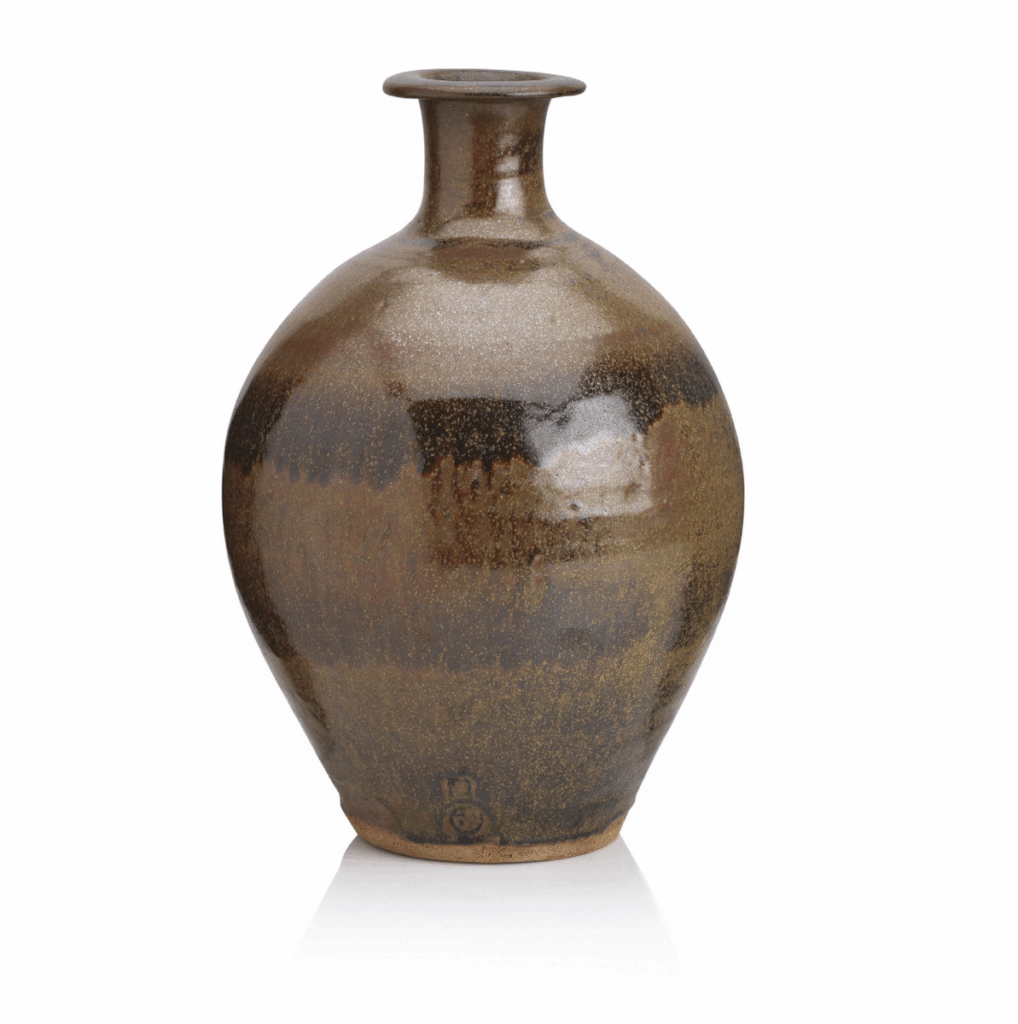
His works were earthy and serene, often using natural ash, iron, and tenmoku glazes. He avoided symmetrical rigidity, seeking instead a breathing quality—as if the vessel itself were alive, quietly inhaling and exhaling.
IV. The Way of the Teacher: Students and Legacy
Bernard Leach was not only an artist but also a profound educator. At the Leach Pottery, he trained many who would later shape modern ceramics, including Lucie Rie, Hans Coper, and his son David Leach.
Under his guidance, students learned not merely techniques but also philosophy—why one makes pottery. He emphasized the unity of hand and heart, urging them to understand materials, respect nature, and reflect on humanity. His teaching style was often described as Zen-like—quiet, observant, contemplative rather than directive.
He taught that pottery was not simply a profession, but a way of living:
“When you are throwing clay, you are also shaping yourself.”
This idea of pottery as a form of self-cultivation made Leach not only a master craftsman, but a kind of spiritual mentor.
V. A Pioneer of Cross-Cultural Art
From the perspective of cultural history, Bernard Leach’s greatest contribution lies not only in founding the modern British pottery movement, but in his role as a pioneer of East–West artistic dialogue.
In early 20th-century Europe, Eastern art was often viewed as mysterious and exotic. Leach’s practice helped Western audiences truly understand the thought behind Eastern craftsmanship. He did not merely imitate Japanese forms, but internalized their spirit, allowing it to take root and blossom in Western soil.
Today, Leach’s influence can be seen worldwide—in the emphasis on natural materials, the tactile qualities of handwork, the rejection of mass production, and the search for spiritual calm through craft. The global resurgence of handmade pottery carries the seed he planted a century ago.
VI. Conclusion: Philosophy in Fire, the Heart in Clay
Bernard Leach’s life was a spiritual journey between mud and fire. Through clay, he shaped not only vessels but also reflections on human existence. In his work, we find not merely beauty of form, but a kind of awakening to life itself.
He once said—words still cherished by potters today:
“The value of craft lies not in what it makes, but in what it makes of us.”
In an age dominated by machines and speed, Leach’s philosophy remains quietly powerful—a reminder that in the dialogue between hand and earth, art is not just creation, but a way of returning to what is real.
Related Posts