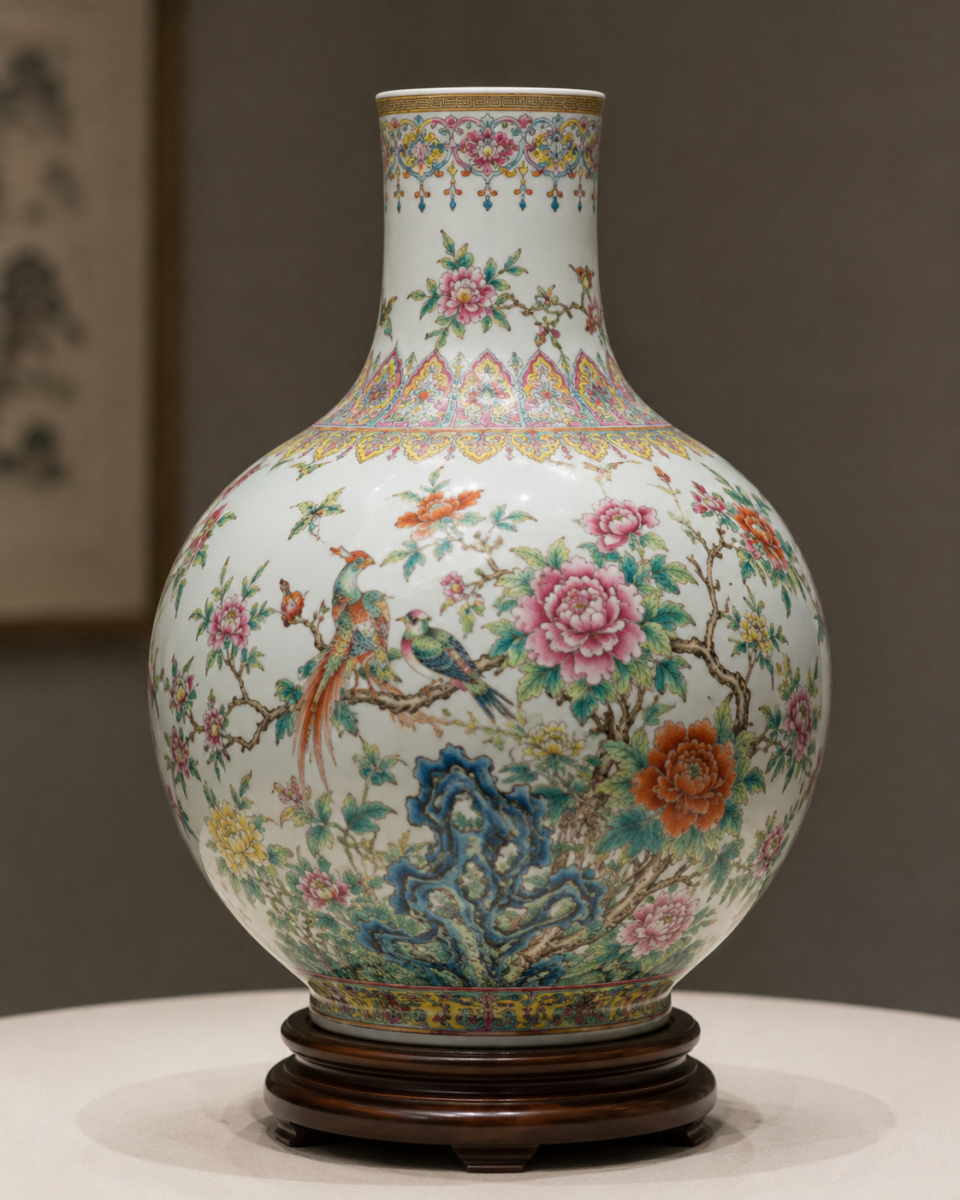
In recent years, as Chinese antique ceramics have continued to attract attention in the international…
Japanese Noh: A Classical Performing Art that Transcends Time and Spac
Among the many traditional arts of Japan, Noh undoubtedly stands out as one of the most representative. It is not merely a form of theater, but a comprehensive art that integrates poetry, music, dance, and spiritual elements. Since its emergence in the 14th century, Noh has served as an important medium of aesthetic expression for the samurai class and the upper echelons of society, earning the reputation of being “the oldest surviving stage art in the world.” In 2001, Noh was inscribed by UNESCO as a “Masterpiece of the Oral and Intangible Heritage of Humanity,” highlighting its unique cultural value.
1. The Origins and Development of Noh
Noh originated from the Heian-period performing arts of sangaku and dengaku, and developed through the Kamakura and Muromachi periods, eventually taking shape under the father-and-son duo Kan’ami and Zeami. Zeami was not only a performer and playwright but also the theoretical founder of Noh; in his treatise Fūshi Kaden (Transmission of the Flower of Acting), he introduced the aesthetic concepts of yūgen (mysterious profundity) and hana (the flower), which remain central guiding principles in Noh performance today.
From its very inception, Noh has carried strong religious and philosophical undertones. Deeply influenced by Zen Buddhism, it emphasizes the balance between emptiness and substance, stillness and motion. This art form does not pursue outward extravagance, but rather, through restrained movements and profound chanting, it guides the audience into a meditative, contemplative state.
2. Stage and Performance Characteristics
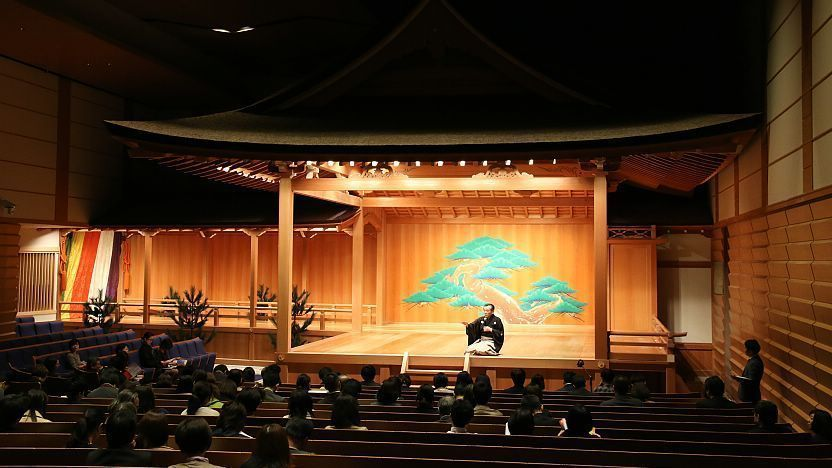
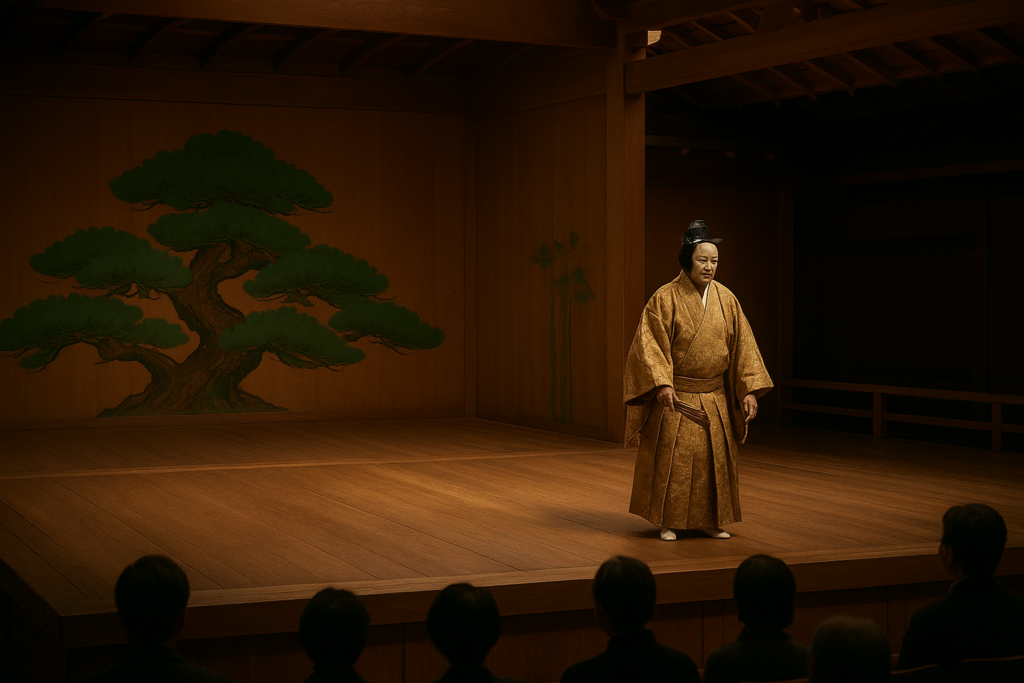
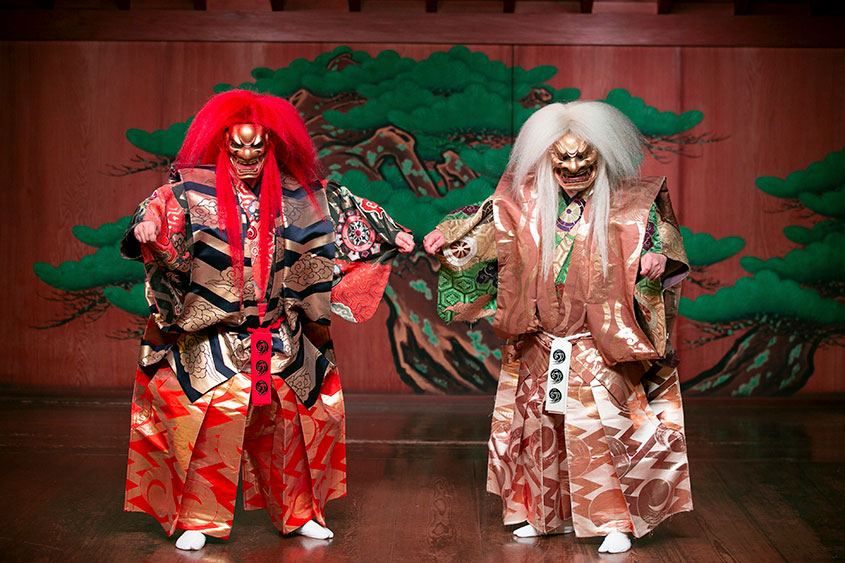
The Noh stage is extremely minimalist: a square wooden platform with a backdrop painted with a pine tree symbolizing longevity. At the top of the stage is a roof-like structure, evoking the sacred atmosphere of a Shinto shrine. The hanamichi (the bridgeway through which actors enter the stage) serves not only as a physical passage but also as a symbolic connection between the real and the supernatural worlds.
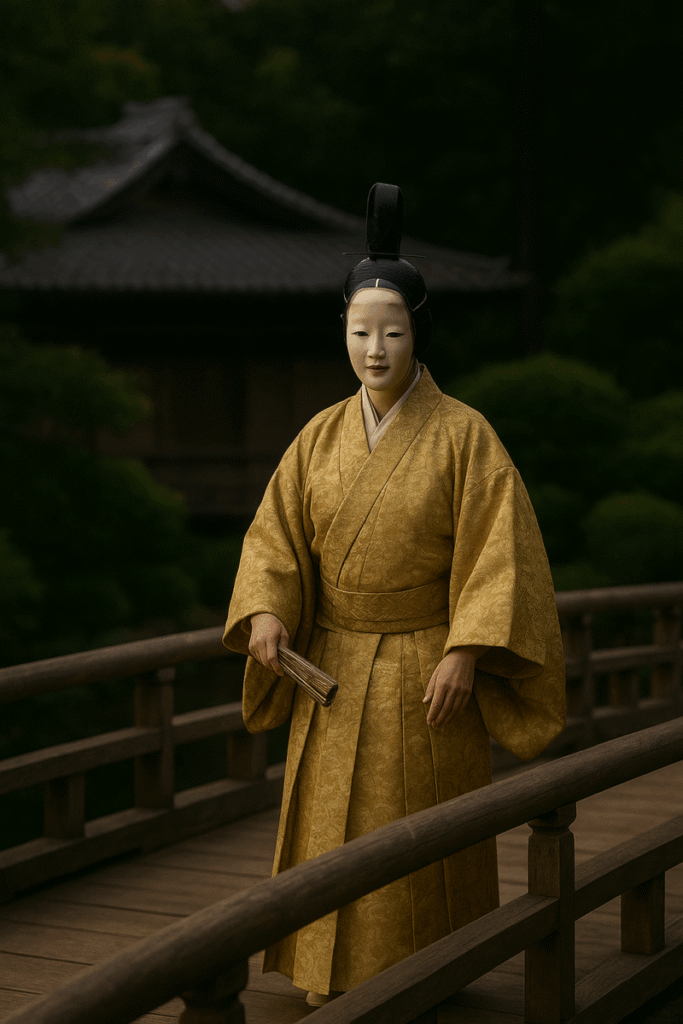
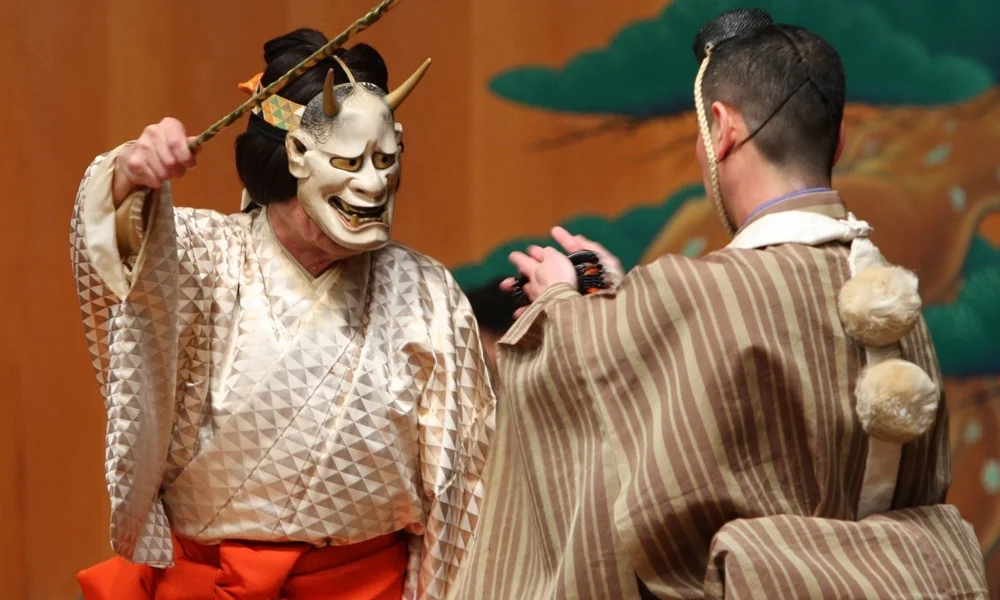
Noh actors often wear intricately carved wooden masks to convey a character’s personality and social status. For example, the Waka-onna mask represents a beautiful young woman, the Okina mask depicts an elderly man, and the Hannya mask embodies a demon or vengeful spirit. Since the expressions of these masks are highly restrained, actors must rely on subtle body tilts and the play of light and shadow to communicate complex emotions.
Musically, Noh is accompanied by four main instruments—the nohkan (flute), kotsuzumi (small hand drum), otsuzumi (large hand drum), and taiko (stick drum)—alongside a low, chanting chorus, creating an atmosphere that is at once mysterious and solemn.
3. Themes and Repertoire
Most Noh plays draw on ancient Japanese mythology, historical tales, or Buddhist legends, and are generally classified into five main categories: Kami (God), Otoko (Man), Onna (Woman), Kyō (Madness), and Oni (Demon).
-
Kami Noh: Celebrates the arrival and protection of deities.
-
Otoko and Onna Noh: Depict the loyalty and valor of samurai and the emotions of women.
-
Kyō Noh: Portrays characters driven to madness by extreme emotions.
-
Oni Noh: Represents demons and the supernatural world.
Among these, many plays—such as Hagoromo and Dōjōji—have become classics, performed repeatedly over centuries, and continue to move modern audiences to this day.
4. The Aesthetic Core: Stillness and Yūgen
The defining characteristic of Noh lies in stillness. Unlike the flamboyant exaggeration of Kabuki, Noh movements are often extremely slow, at times giving the impression that “time itself has frozen.” This rhythm gradually detaches the audience from the ordinary sense of time, guiding them into a nearly meditative state. Zeami referred to this quality as yūgen, a subtle and profound beauty.
The stillness of Noh is not mere passivity; through slight movements and deliberate pauses, it allows the audience to perceive the inner emotional currents of the characters. Much like the Japanese tea ceremony’s philosophy of wabi-sabi, the aesthetic of Noh lies in its understated expression and lingering resonance, where meaning emerges quietly yet profoundly.
5. Contemporary Significance of Noh
Today, although Noh is no longer a form of mass entertainment, it continues to hold significant cultural value. Venues such as the National Noh Theatre in Tokyo and the Kongō Noh Theatre in Kyoto regularly host performances, attracting audiences from both Japan and abroad. Many contemporary directors and artists also draw inspiration from Noh, integrating its elements into modern stage productions and exploring new forms of expression.
For the Japanese, Noh is not merely an artistic experience but a cultural memory that connects them to history, religion, and national identity. For global audiences, it offers a unique window into Eastern aesthetics and a path to inner tranquility.
Conclusion
Noh is a stage art that “controls movement through stillness.” Through its minimalist stage, slow gestures, and understated poetic expression, it reveals the subtle connections between human emotions and the order of the universe. Even in today’s fast-paced society, Noh continues, in its unique way, to remind us that art is not merely entertainment but also a means of purifying the spirit.
Related Posts