In recent years, as Chinese antique ceramics have continued to attract attention in the international…
How to identify Hetian jade: structure, testing methods, and common imitations.
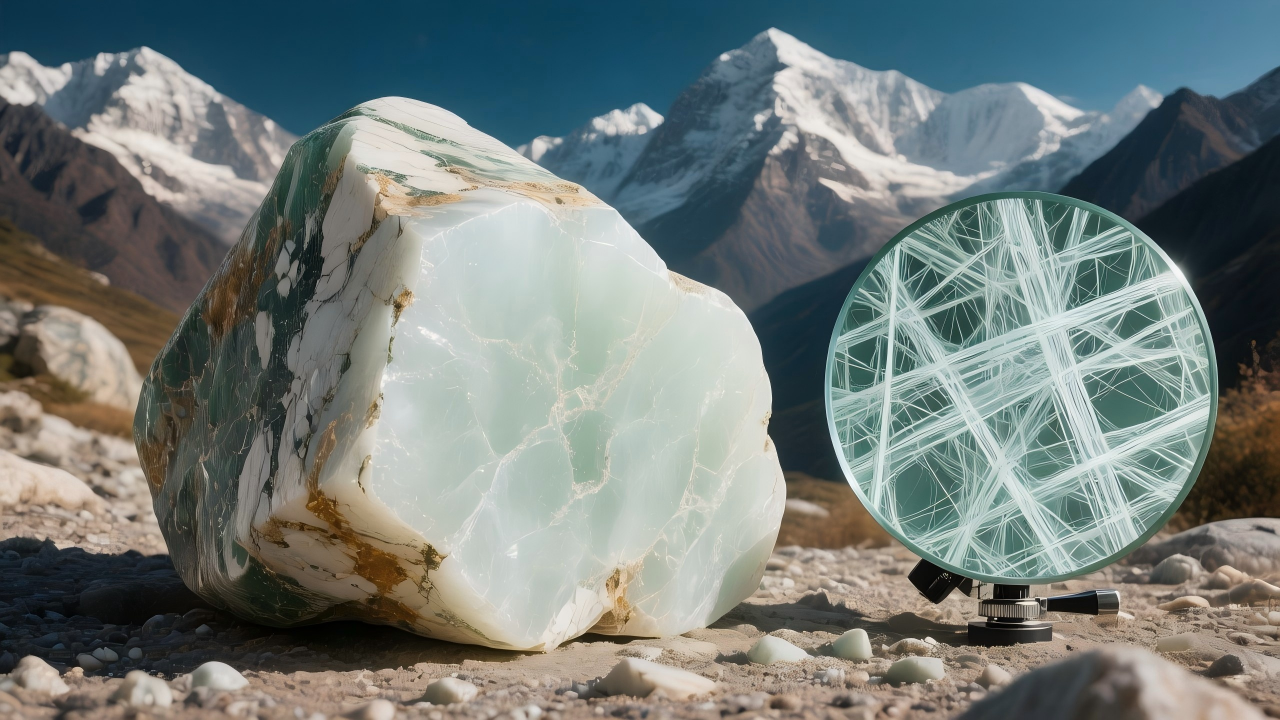
At the junction of the Kunlun and Altun Mountains in northwestern China, above the snow line at an altitude of 4,500 meters, a special type of rock is undergoing a miraculous transformation in geological history. After tens of millions of years of compression, infiltration, and reorganization, they are no longer ordinary rocks, but have been transformed into Hetian jade, one of the most precious gemstones in Chinese civilization.
When a piece of Hetian jade is cut open, revealing its smooth, lustrous surface, most people see a natural, untouched beauty. But under a gemologist’s microscope, this smooth surface hides a delicate world woven from millions of microfibers. The arrangement of each fiber tells the story of the jade’s formation and its quality grade.
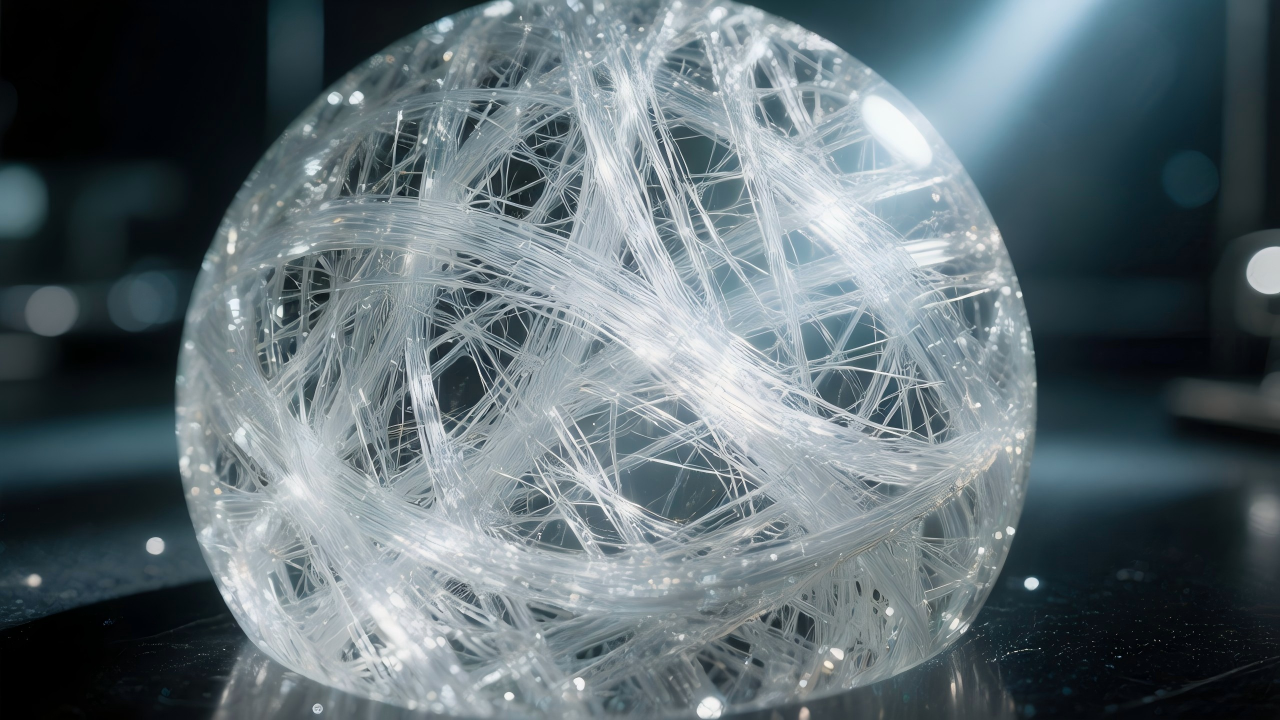
The unique texture of Hetian jade rough stones from the Kunlun Mountains, and the warm, lustrous quality they reveal after cutting, stems from their special microstructure.
The Dual Identity of Hetian Jade: Tremolite and Actinolite
From a mineralogical perspective, Hetian jade is not a single mineral, but rather an aggregate of amphibole group minerals. It is primarily composed of two minerals:
Tremolite is the main component of Hetian jade, with the chemical formula Ca₂Mg₅Si₅O₂₂(OH)₂. When magnesium ions are partially replaced by iron ions, tremolite transforms into actinolite. These two minerals coexist in different proportions within Hetian jade, creating a continuous color range from white to bluish-green.
“The unique feature of Hetian jade,” explains Professor Zhang, a gemologist at China University of Geosciences, “is that its mineral crystals do not exist in a granular form, but rather are interwoven in a fibrous, felt-like structure. This special structure gives it a toughness and a warm, lustrous feel far exceeding that of single-crystal minerals.”
Three Structural Types: The Code to Jade Quality
Under a gem microscope, the internal structure of Hetian jade can be divided into three basic types:
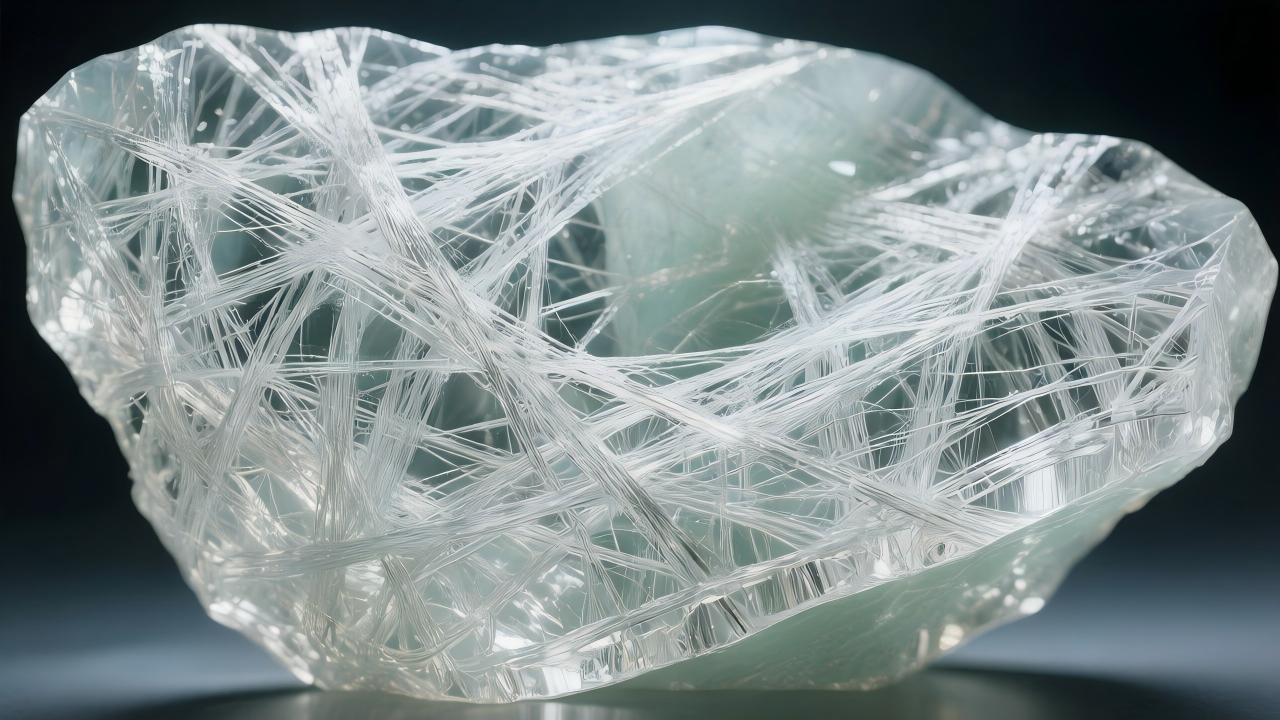
A felt-like interwoven structure is considered a hallmark of superior Hetian jade. In this structure, tremolite fibers are randomly and tightly interwoven like wool, with fiber diameters typically between 0.0005 and 0.01 millimeters, so small that they are completely invisible to the naked eye. This structure causes diffuse reflection of light within the jade, creating the unique “greasy luster” and “warm, lustrous feel” of Hetian jade.
A microfibrous-cryptocrystalline structure is another common structure. The tremolite fibers are partly oriented, and partly cryptocrystalline (the crystals are extremely small, difficult to distinguish even under a microscope). This type of Hetian jade still has a fine texture, but its transparency is often slightly higher than that of the felt-like structure.
Microscopic lamellae-cryptocrystalline structures are commonly found in ordinary Hetian jade. The tremolite crystals are platy or long columnar, loosely arranged. Hetian jade with this structure usually has a coarser texture and relatively weaker luster and oiliness.
Scientific Identification: From Ancient Methods to Modern Technology
Traditional Hetian jade identification relies on the rule of thumb: “look, touch, listen”:
Look: Observe the oily luster and internal texture
Touch: Feel the warm and delicate texture
Listen: The sound is clear and resonant when struck.
However, with the advancement of imitations and enhancement techniques in the market, these traditional methods are no longer sufficient to handle all situations. Modern scientific identification relies on cross-verification using multiple techniques:
Refractive index testing is the most basic identification method. The refractive index of Hetian jade is 1.60-1.61. Using a refractometer, Hetian jade can be quickly distinguished from common imitations (such as marble, quartzite, etc.).
Density measurement provides another crucial piece of data. The density of Hetian jade is approximately 2.90-3.10 g/cm³, while the density of many imitations is significantly different. Precise measurement can be achieved through hydrostatic weighing.
Microscopic observation is the gold standard for identifying the structure of Hetian jade. Under a gem microscope, the fibrous interwoven structure can be clearly seen, which is the most fundamental difference between Hetian jade and similar jades. For example, jadeite has a granular structure, and serpentine has a scaly structure, which are completely different from the fibrous structure of Hetian jade.
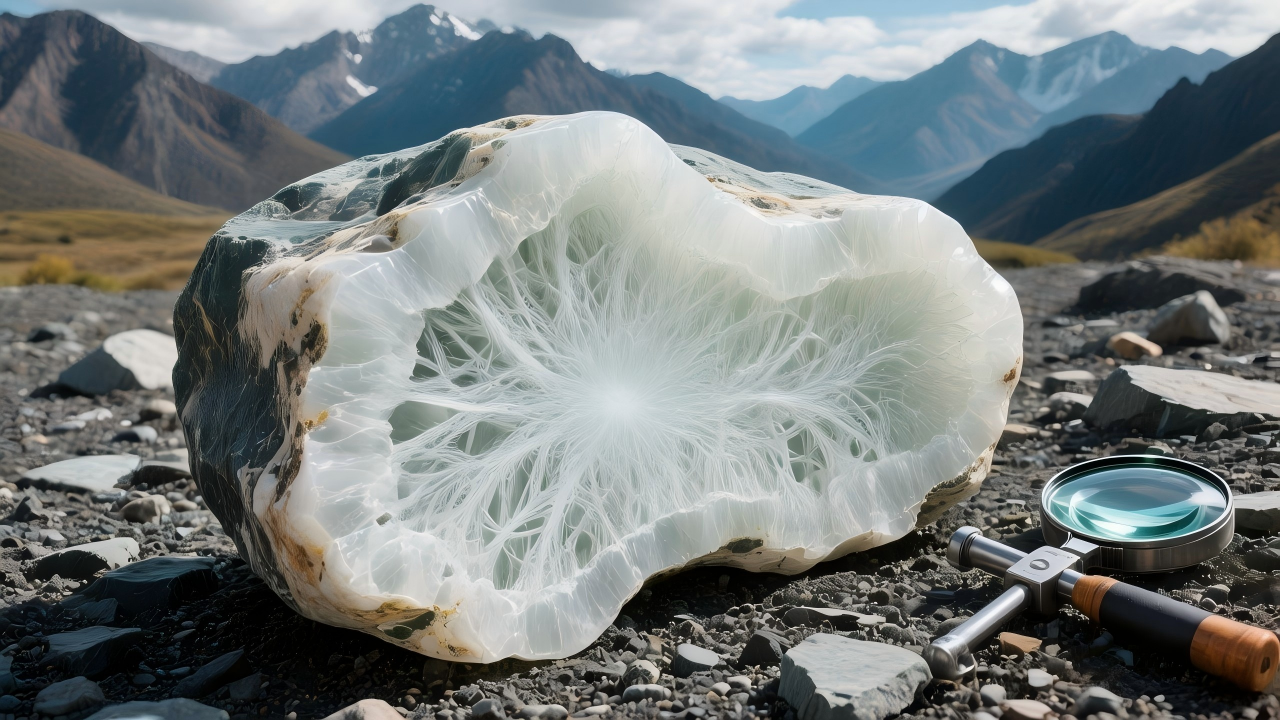
The fibrous, interwoven structure of Hetian jade under a microscope is the source of its unique physical properties.
Infrared spectroscopy and Raman spectroscopy can identify the mineral composition of Hetian jade. These techniques can not only confirm the presence of tremolite but also detect whether it has undergone enhancement treatments such as wax filling or resin impregnation.
X-ray diffraction analysis is the final confirmation method, which can accurately determine the crystal structure and composition ratio of the minerals.
Market Traps: Enhanced Products and Imitations
As the price of Hetian jade continues to rise, the market is flooded with treated and imitation products. Common examples include:
Dyeing: Inferior-colored jade is dyed to a more marketable sugar-white or emerald-green color. Under a microscope, the dye is typically distributed along cracks, forming characteristic color clusters.
Wax Filling: Wax is applied to the surface of the jade to enhance its luster. Wax-filled Hetian jade feels slightly oily and will ooze wax beads under a hot needle test.
Imitations: Common imitations include marble (refractive index 1.48-1.65, but low hardness), quartzite (granular structure, no fibrous feel), and glass (bubbles, flow lines). These materials differ significantly from Hetian jade in structure and properties.
From Geological Wonder to Cultural Symbol
The unique structure of Hetian jade is not only a natural geological miracle but has also profoundly influenced Chinese culture. Its toughness (resistance to breakage) allowed ancient jade craftsmen to carve extremely intricate patterns without easily chipping. Its warm, smooth texture is interpreted by Confucian culture as the physical basis for the saying “a gentleman compares his virtue to jade.”
“The fibrous structure of Hetian jade is like the lines of a brush in Chinese calligraphy,” says Professor Li, a jade expert at the Palace Museum. “It possesses both inherent toughness and external softness, perfectly aligning with the harmonious beauty revered in Chinese culture.”
Today, when a collector holds a piece of Hetian jade, they are touching not only the warm, smooth stone, but also a geological epic spanning tens of millions of years. Under a microscope, the interwoven fibers resemble fingerprints of time, recording the uplift of the Kunlun Mountains, the collision of tectonic plates, and the flow of hydrothermal fluids.
Scientific identification allows us to see through the cultural fog and understand the true nature of this precious jade. But perhaps the true charm of Hetian jade lies in its connection to two worlds: scientifically, it is a mineral aggregate with a unique structure; culturally, it is a perfect carrier of Eastern aesthetics and philosophy. Each appraisal is not only an examination of the material, but also an interpretation of civilization.
Related Posts