In recent years, as Chinese antique ceramics have continued to attract attention in the international…
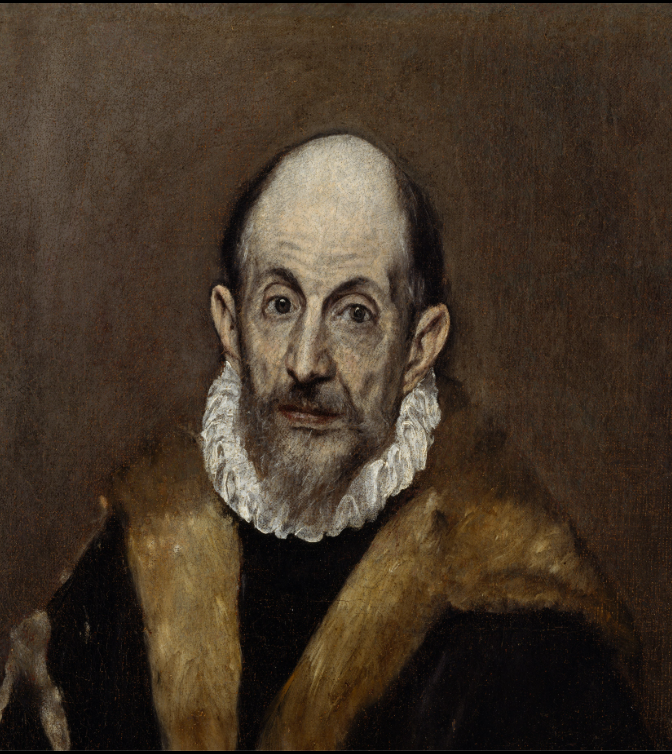
El Greco: A Painter Between Flame and Faith
In the history of European art, El Greco has always been a name that resists easy classification.
He belongs neither fully to the Italian Renaissance nor entirely to the Spanish Golden Age. He inherited the Byzantine tradition, absorbed the color of Venice and the compositional drama of Rome, yet ultimately moved toward a highly personal mode of expression.
His compositions rise like flames; figures are elongated and distorted; colors burn against darkened backgrounds. Some interpret this as religious fervor, others as spiritual ascension. In any case, his paintings consistently evoke a tremor that seems to exceed reality itself.
I. From Crete to Toledo: The Making of an “Outsider”
Born in 1541 on the island of Crete—then under the rule of the Venetian Republic—El Greco first trained in the Byzantine icon tradition. Flattened compositions, golden backgrounds, and sacred themes left a lasting imprint on his artistic language.
Later, he traveled to Venice and Rome, where he encountered the artistic worlds of Titian and Michelangelo. Venice gave him a bold sense of color; Rome taught him structure and theatricality.
Yet the place that truly shaped “El Greco” was the Spanish city of Toledo, where he eventually settled.
There, he was both a foreigner and a responder to the spirit of his age. Toledo’s intense religious atmosphere and psychological tension provided the most fertile ground for his art.
2. Elongated Figures: Why Do Their Bodies Look So Unreal?
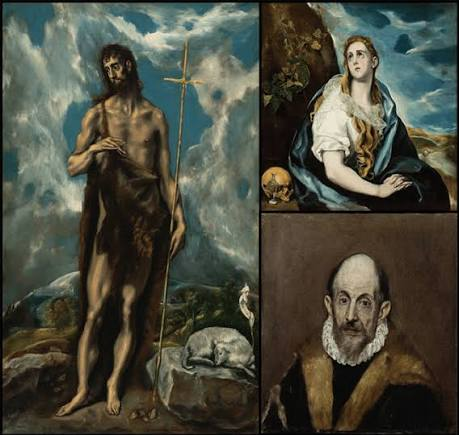
In The Burial of the Count of Orgaz, reality and heaven coexist within the same canvas: the earthly plane is depicted with precise realism, while the figures above—inhabiting the celestial realm—seem to float, stretch, and blaze with light.
El Greco’s figures are deliberately elongated: their necks flare like flames, fingers are slender and tense, and folds of clothing ripple like waves.
This is not a mistake in anatomy, but a conscious expression of spirit. In his world, the body is no longer merely a physical structure; it becomes a vessel for the soul. The distortion of proportion allows the spiritual essence to become visible.
While this style appeared strange and was often misunderstood in his own time, it was rediscovered centuries later by modern artists—including Pablo Picasso and expressionist painters—who drew inspiration from his expressive distortions.
If you want, I can also make a slightly more literary version that emphasizes the visual drama—making the “flaming necks” and “rippling garments” even more vivid for a general audience.
3. Colors Like Fire: Drama Between Light and Darkness
El Greco’s use of color is instantly recognizable.
Against deep, shadowed backgrounds, bursts of blue, green, and red erupt like flames ignited in the night. He does not aim for the gradual transitions of natural light; instead, he favors creating a spiritual light source—as if the figures themselves are glowing.
In The Disrobing of Christ, the bright red robe becomes the visual focal point, while the surrounding figures are compressed into darkened space.
This stark contrast generates an emotion that is at once oppressive and uplifting.
For El Greco, light is not merely a physical phenomenon—it is a theological metaphor.
4. View of Toledo: Solitude Beyond Religion
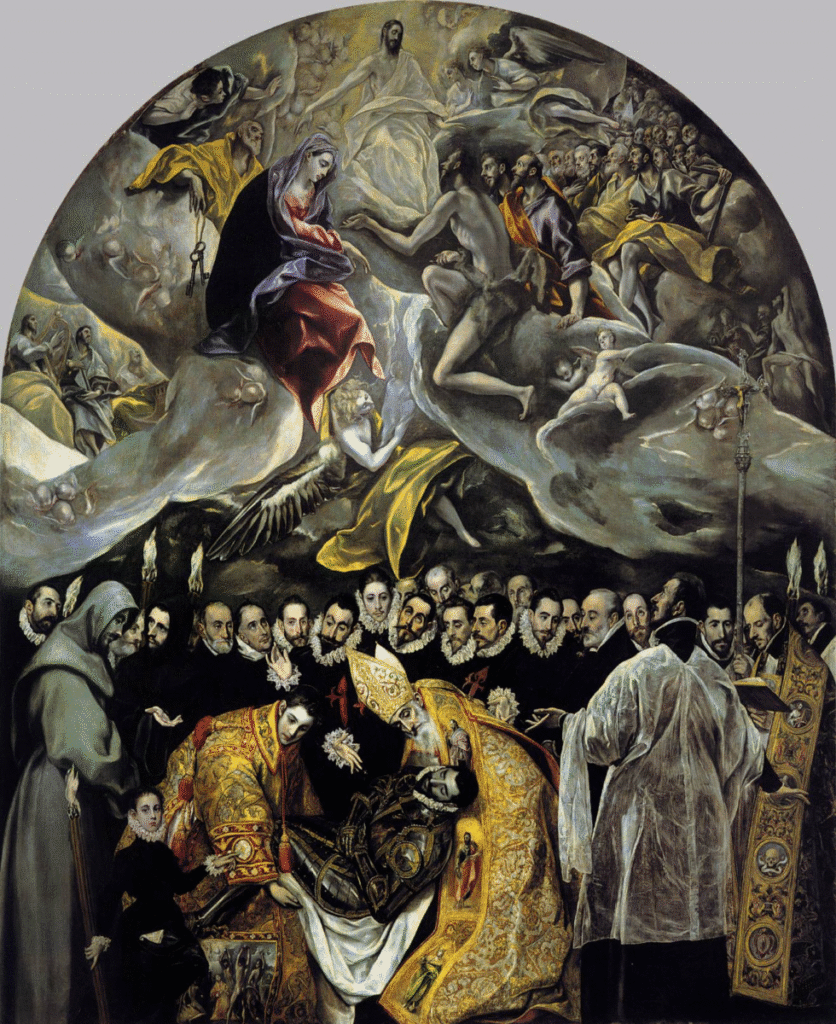
El Greco’s rare landscape View of Toledo is considered one of the earliest Western cityscapes to exhibit a distinctly expressionistic quality.
The sky churns with movement, clouds hang low, and the city seems enveloped by a spiritual force.
This is not an objective record, but an emotional rendering.
Here, the city itself becomes an extension of the soul.
By transforming nature into a psychological space, El Greco appears remarkably modern. Centuries later, with the advent of Impressionism and Expressionism, people recognized that he had already achieved a kind of avant-garde breakthrough in the 16th century.
5. Forgotten and Rediscovered
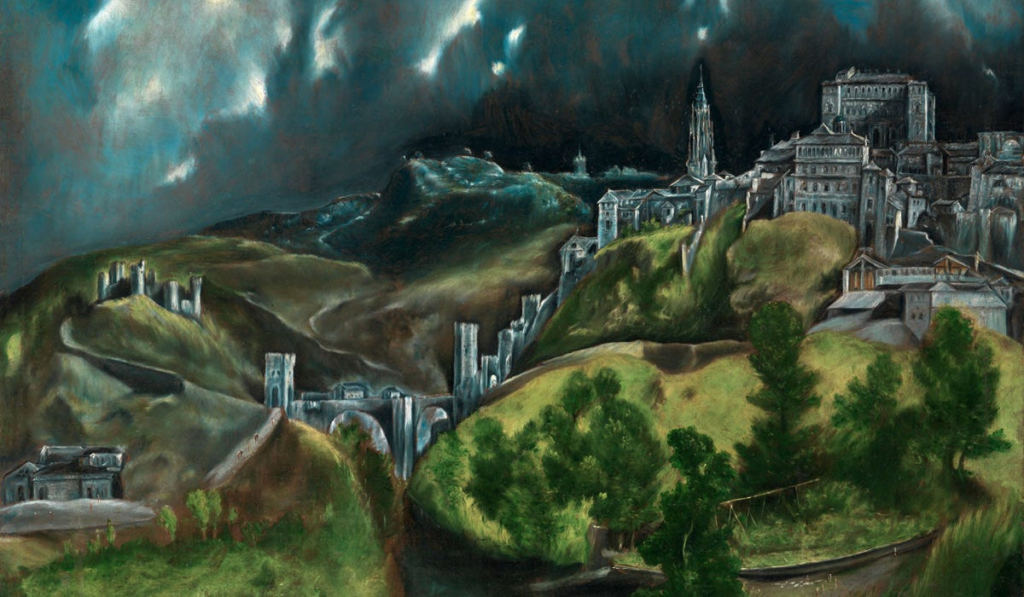
In the centuries following his death, El Greco was often dismissed as an “eccentric painter.” His elongated figures were misunderstood as technical errors, and his bold use of color was considered untimely.
It was not until the late 19th century, when modernist artists began reevaluating art history, that he was reassessed.
His work was no longer seen as flawed, but as an exploration that transcended his era.
He was no longer a marginal figure, but became a vital bridge connecting the Renaissance to modern art.
6. A Flame-Like Presence
If Leonardo da Vinci symbolizes rational balance, and Michelangelo embodies the power of the human body, then El Greco represents the burning of the spirit.
His paintings offer no gentle transitions, no soft realism. Through elongated bodies, intense colors, and swirling skies, he constructs a world that seems almost free from gravity.
In an age still governed by faith, he rendered religious experience as a visual shock.
And today, when we revisit his work, we see not only religious passion but also a timeless meditation on how humans might transcend themselves.
Conclusion: Light Beyond Time
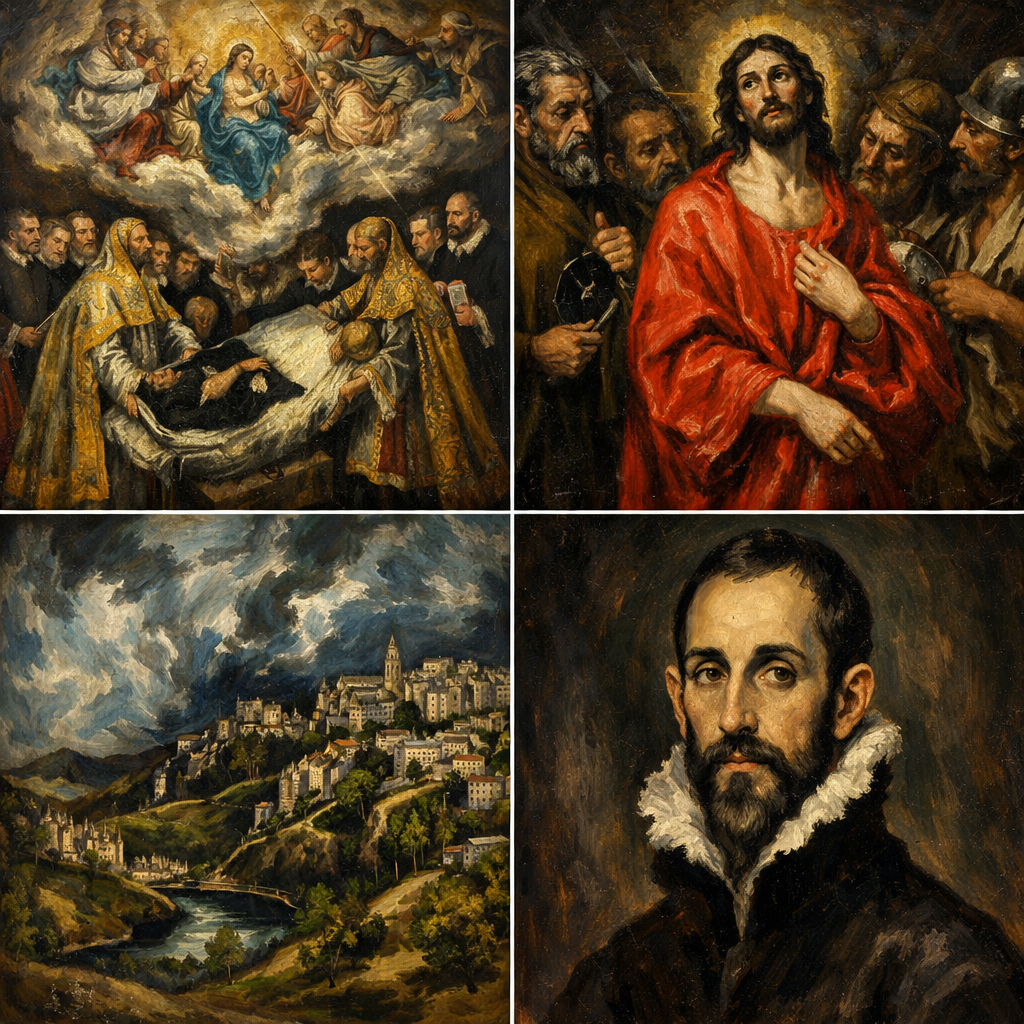
El Greco does not belong to a single tradition, nor to a single style.
He is like a flame burning through the long river of history—absorbing energy from his surroundings while constantly transforming himself.
Perhaps for this reason, his work always retains a certain tension and restlessness.
Those upward-reaching figures, those blazing colors, remind us that art has never been a mere replication of reality—it is a pursuit of the heights of the spirit.
Related Posts