
In recent years, as Chinese antique ceramics have continued to attract attention in the international…
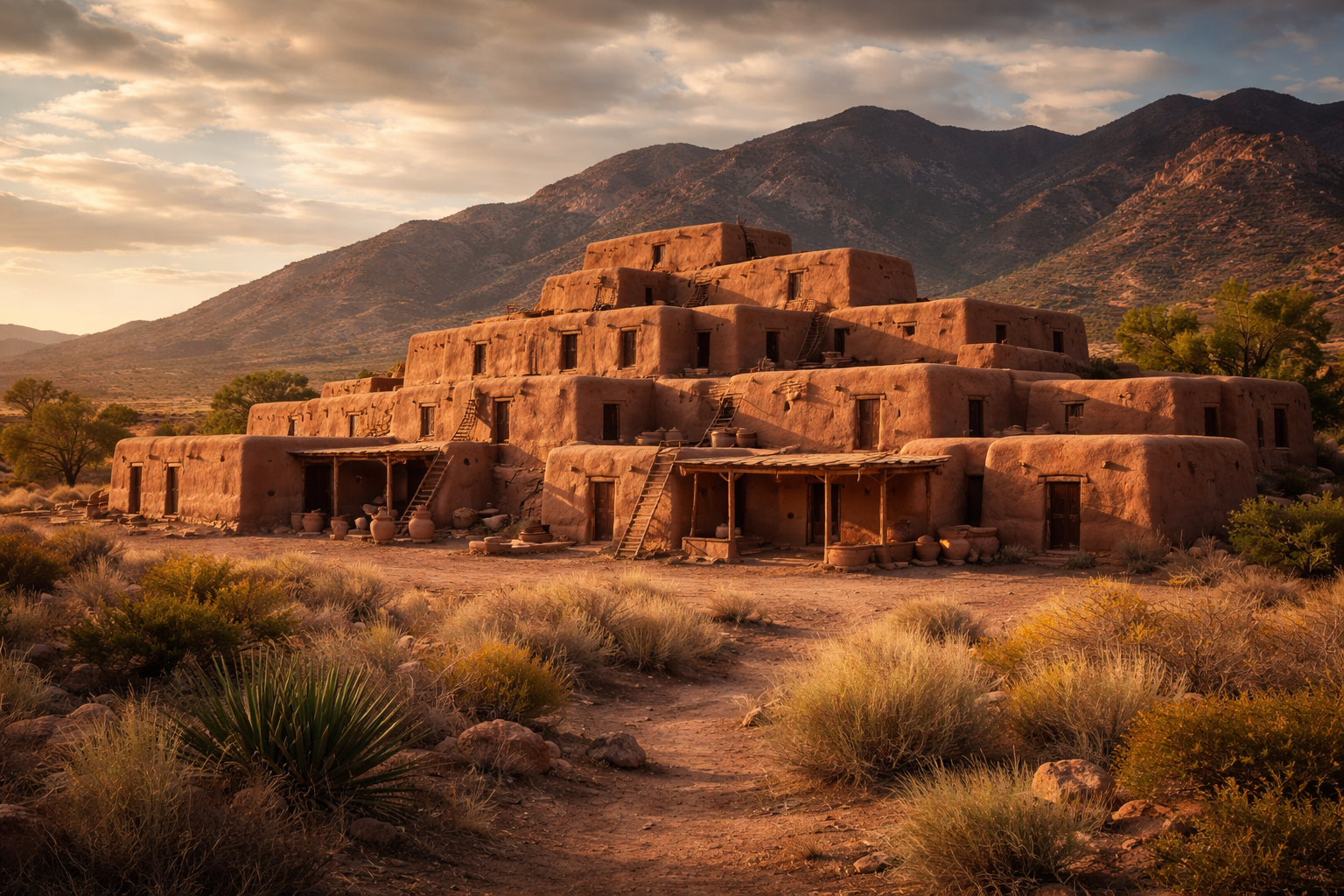
Earth and Spirit — The Ecological and Cultural Integration of Indigenous Adobe Architecture in the Americas
Across the vast lands of North America and Central and South America, Indigenous peoples developed distinctive adobe architecture through wisdom deeply rooted in their relationship with the land. These structures are not merely shelters from wind and rain; they represent a profound fusion of ecological intelligence and cultural continuity.
I. The Origins of Adobe Architecture: Where Nature Meets Survival
Adobe architecture—also known as earthen or rammed-earth construction—uses natural soil as its primary material, processed through sifting, mixing with water, molding, and compacting. For Indigenous communities, adobe was more than a building material; it embodied survival knowledge. Sourced directly from the environment and requiring minimal processing, adobe structures adapt remarkably well to local climates. Thick earthen walls keep interiors cool in hot, arid regions and store heat in cold highlands, creating a natural microclimate.
The ecological qualities of adobe architecture also include humidity regulation, natural airflow, and minimal pollution during construction. At the end of a building’s life cycle, the materials can return harmlessly to the earth, resulting in virtually zero waste. This building tradition reflects Indigenous respect for and dependence on nature, offering valuable inspiration for contemporary ecological architecture.
II. Cultural Meanings of Adobe Architecture: Architecture as a Way of Life
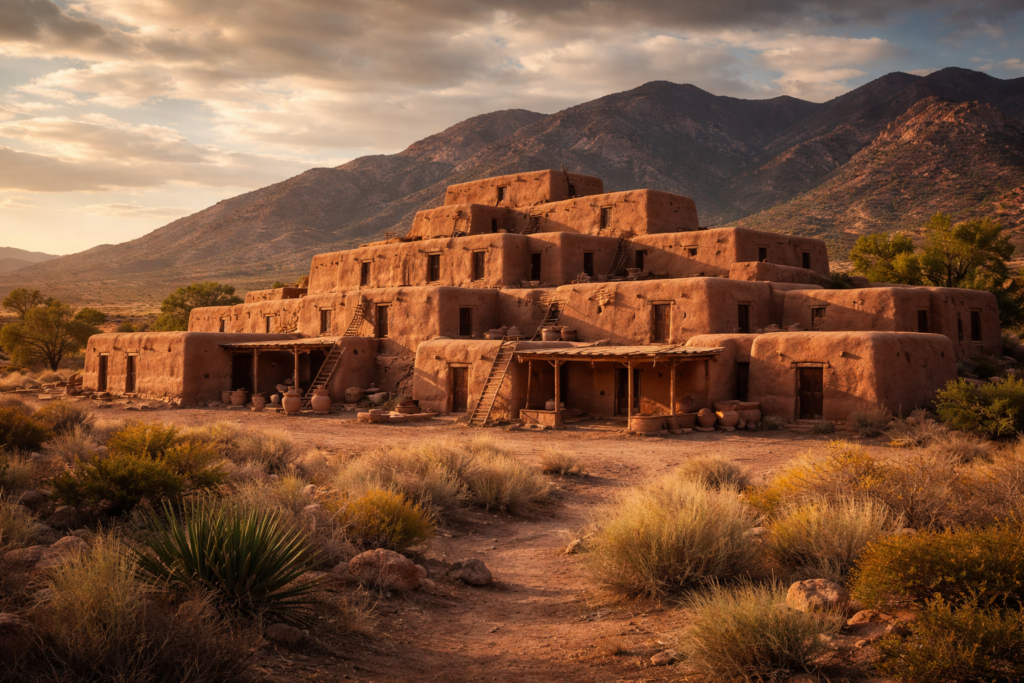
For Indigenous peoples of the Americas, adobe buildings are not simply dwellings; they serve as vessels of social structure and cultural identity. In the Pueblo cultures of the American Southwest, multi-story adobe complexes form compact villages that express strong communal bonds. In the Andean regions of Central and South America, adobe homes cascade along mountain slopes, harmonizing with the terrain while fulfilling social and spiritual functions.
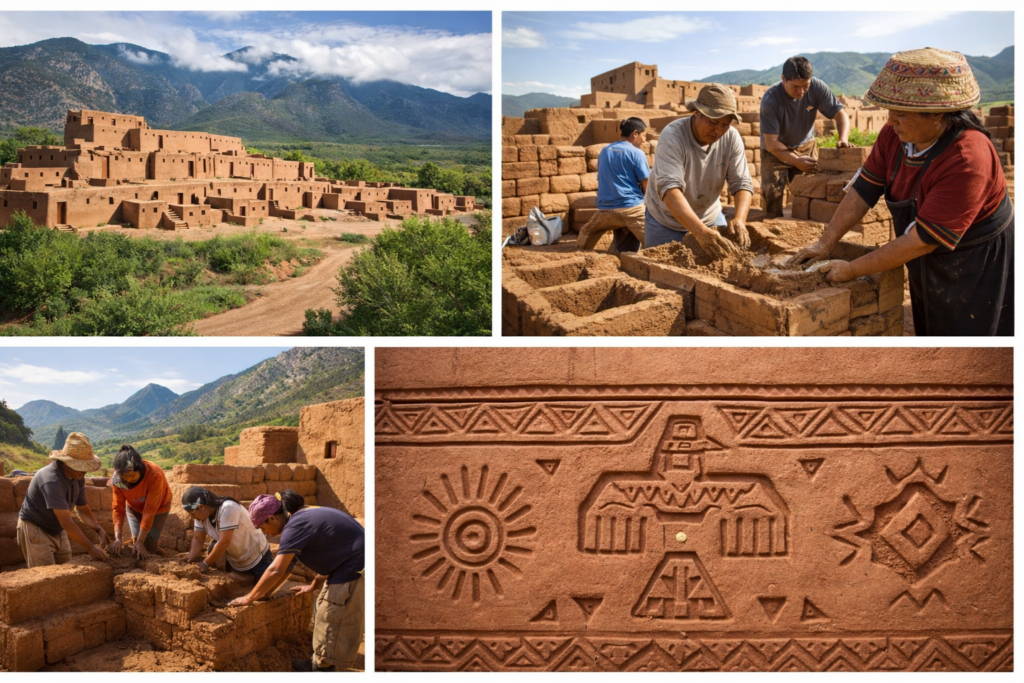
Every block of earth and every wall surface carries historical memory, daily customs, and aesthetic values. Walls are often adorned with natural pigments, geometric patterns, or symbolic representations of deities. These elements do more than beautify space—they reflect Indigenous understandings of nature and the cosmos. Each architectural detail becomes a tangible expression of culture and spirit.
III. Construction and Community Participation: Craftsmanship and Social Cohesion
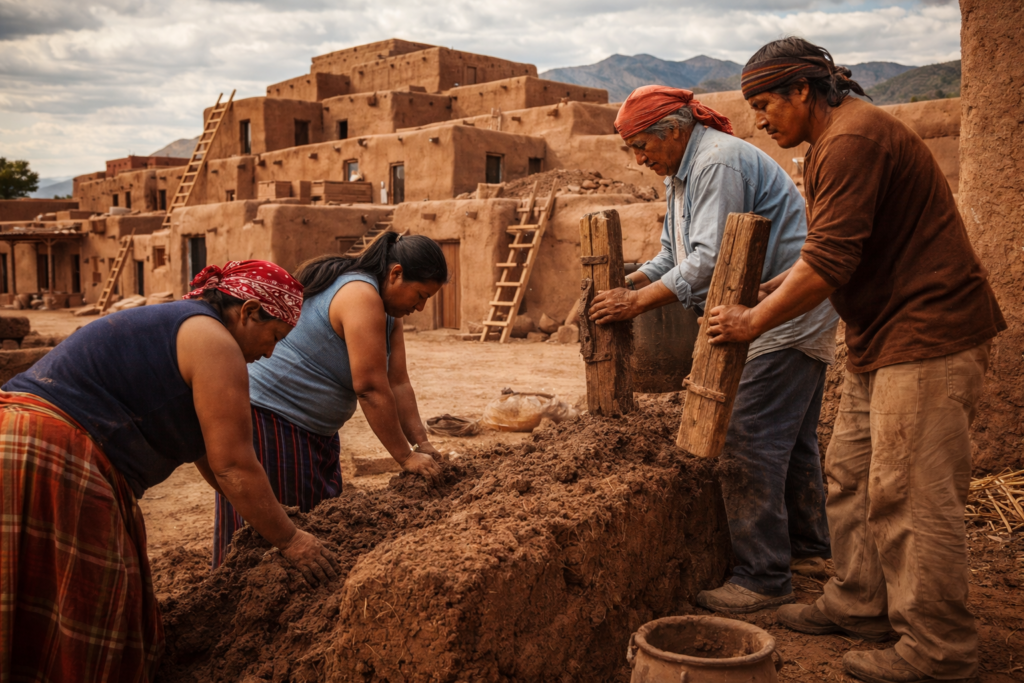
Adobe construction relies on hands-on craftsmanship, emphasizing the careful selection, mixing, and compaction of earth—skills mastered through experience. Building is often a collective effort, with community members working together. This cooperation not only improves efficiency but also strengthens social bonds and a shared sense of belonging.
Through the act of building, knowledge and skills are passed down across generations, reinforcing communal cultural identity. The forms, structures, and decorations of adobe architecture embody understandings of nature, spirituality, and social order, highlighting deep interactions between people, environment, and society.
IV. Ecological Wisdom and Modern Inspiration
With modernization, adobe architecture faces challenges such as climate change and urbanization. Heavy rains and flooding can damage earthen walls, while modern materials have altered traditional construction methods. Yet by integrating contemporary reinforcement techniques, scientific planning, and ecological principles, adobe architecture is experiencing renewed vitality—preserving cultural heritage while informing sustainable design.
Its ecological wisdom—using natural materials, adapting to the environment, and regulating indoor climate—is especially valuable in today’s pursuit of green architecture and low-carbon living. Adobe architecture is not only a historical legacy but also a meaningful ecological guide for modern life.
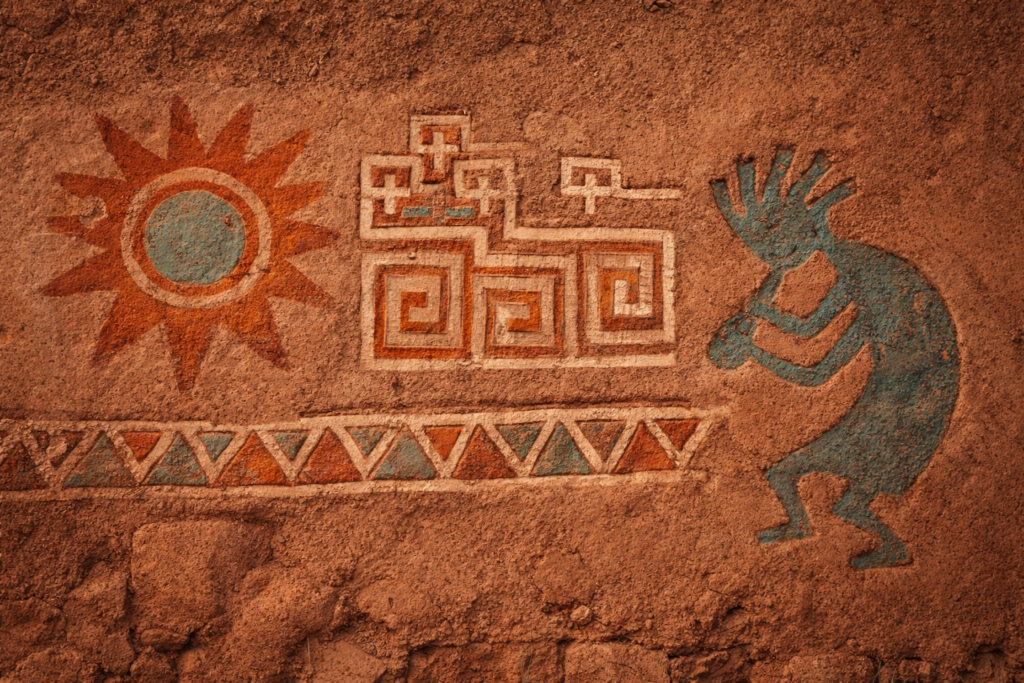
V. Earth and Spirit: Harmonious Coexistence of Humanity, Nature, and Culture
Indigenous adobe architecture teaches us that buildings are more than physical structures; they are expressions of culture and ecological practice. As we contemplate the warm, earthen walls and layered adobe villages, we witness profound connections between people and land, community and history.
Earth forms the body of architecture; culture is its soul. Within this humble yet profound wisdom, we are invited to reconsider the relationship between modern life and nature, and to appreciate the harmony between ecology and culture. The warmth and weight of earth allow us to touch the roots of civilization, while architectural forms and decorations reveal the pulse of culture. Adobe architecture stands as an enduring testament to ancient wisdom and contemporary ecological ideals.
Related Posts