In recent years, as Chinese antique ceramics have continued to attract attention in the international…
Nicolas Poussin: A French Sage Reconstructing Classicism in Rome
In the 17th century, as Baroque art swept across Europe, one French painter chose a radically different path. Nicolas Poussin (1594-1665) did not follow Bernini’s dramatic passion or Rubens’ sensual revelry, but instead delved into the ruins of ancient Rome and the wisdom of the Renaissance, constructing a painting language based on reason, order, and moral seriousness. He gained immense prestige in Rome during his lifetime and became the “legislator of painting” in the French academic world after his death, his influence lasting for three centuries.
From Normandy to Paris: A Difficult Beginning (1594-1624)
Poussin was born in June 1594 into a minor noble family in Lessanly, Normandy, France. Although his parents hoped he would study classical literature, he began his artistic career at the age of 18 by studying painting with the itinerant painter Quentin Valin. Around 1612, he went to Paris, an early period filled with struggle.
A Key Enlightenment: In Paris, Poussin was exposed to the art of Raphael and Giulio Romano through copying Italian prints. More importantly, he discovered copies of ancient Roman sculptures, as well as engravings of works by Mantegna and Titian—these became lifelong sources of inspiration. He also met Alexandre Coutois, who was in charge of the French royal art collection, allowing him to study original works by Italian masters.
In 1622, an opportunity arose: Poussin created a six-panel series of paintings for the Jesuit church in Paris, which, though lost, earned him some renown. The following year, he illustrated the poet Marino’s themes of mythology, works that showcased his early style: Mannerist influences and a strong interest in classical subjects. Marino encouraged him to go to Rome and provided crucial connections.
The Tempering in Rome: From Struggle to Establishment (1624-1640)
In March 1624, Poussin arrived in Rome after a difficult journey, and the first few years were exceptionally challenging. He studied Latin, researched antiquities, and copied ancient sculptures and Raphael’s frescoes. A turning point came in the late 1620s when he met his most important patron: Cassiano del Pozzo, secretary to Cardinal Francesco Barberini.
A turning point in his scholarship: Del Pozzo, a renowned collector and scholar of antiquities, introduced Poussin to a circle of scholars, collectors, and intellectuals. Through studying Del Pozzo’s extensive collection of antiquities (especially ancient Greek and Roman sarcophagus reliefs), Poussin developed a systematic understanding of classical art principles. He began to believe that painting, like classical tragedy, should follow specific rules and pursue an effect that is eternal rather than fleeting.
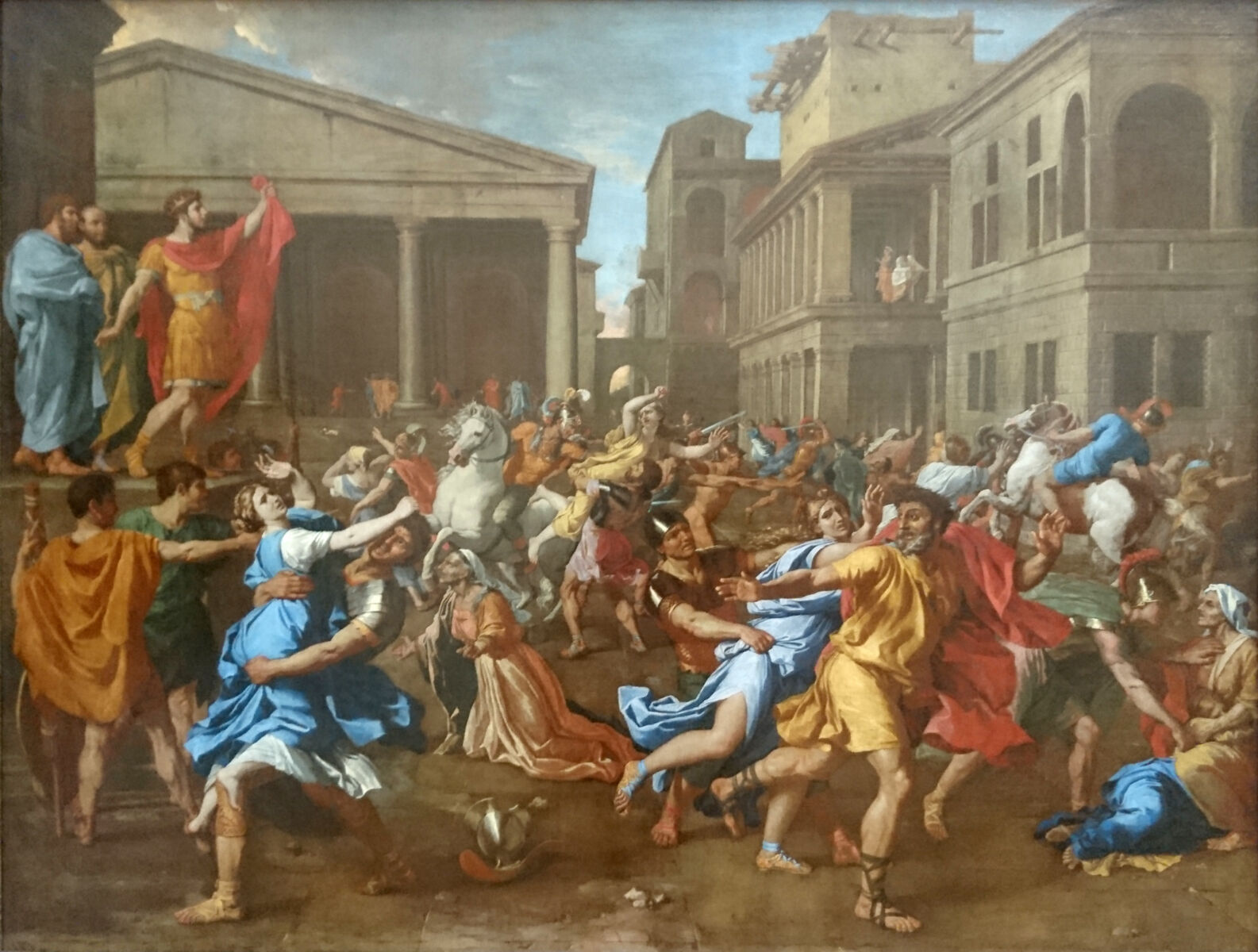
In the 1630s, Poussin gradually developed his mature style. Works such as *The Poet’s Inspiration* and *The Rape of the Sabine Women* demonstrate his mastery of classical composition: figures arranged like sculptures, their postures expressive, and the narrative clear as a stage play. While his *The Martyrdom of St. Erasmus* for St. Peter’s Basilica did not receive universal acclaim, it showcased his ability to handle grand scenes.
A Brief Parisian Interlude and a Final Return (1640-1642)
In 1640, at the insistence of French Prime Minister Richelieu and the invitation of King Louis XIII, Poussin reluctantly returned to Paris, where he was appointed “Chief Painter to the King,” responsible for decorating the Louvre’s galleries and designing royal tapestries.
A Master Unsuited to His New Environment: The two years in Paris were the most unpleasant period of Poussin’s career. He loathed the court’s formalities, had strained relationships with other artists (especially Simon Vouet), and large-scale decorative projects were hampered by bureaucratic delays. Despite completing works such as *The Miracle of St. Francis Xavier* and painting decorations for Fontainebleau, he always felt like a “prisoner of Paris.”
In 1642, using his wife’s illness as an excuse, Poussin returned permanently to Rome. This experience, however, solidified his belief: artists must work in freedom and contemplation, far removed from the distractions of the court. He never left Rome again.
The Mature Years in Rome: A Balance of Reason and Emotion (1642-1665)
Upon returning to Rome, Poussin entered his creative peak. He developed a systematic method of creation: first arranging figures and lighting on a small stage using wax figures, then drawing sketches, and finally creating the final image on canvas. This rational method ensured perfect compositional balance.
A Revolution in Landscape Painting: In the late 1640s, Poussin began creating a series of “ideal landscapes,” such as *Landscape with Polyphemus* and *The Ashes of Phoebus*. These works were not simple imitations of nature, but visual interpretations of classical pastoral poetry and Stoic philosophy. The landscapes were organized into clear planes, incorporating ancient architecture and figures, creating a harmonious and timeless “Arcadian” world.
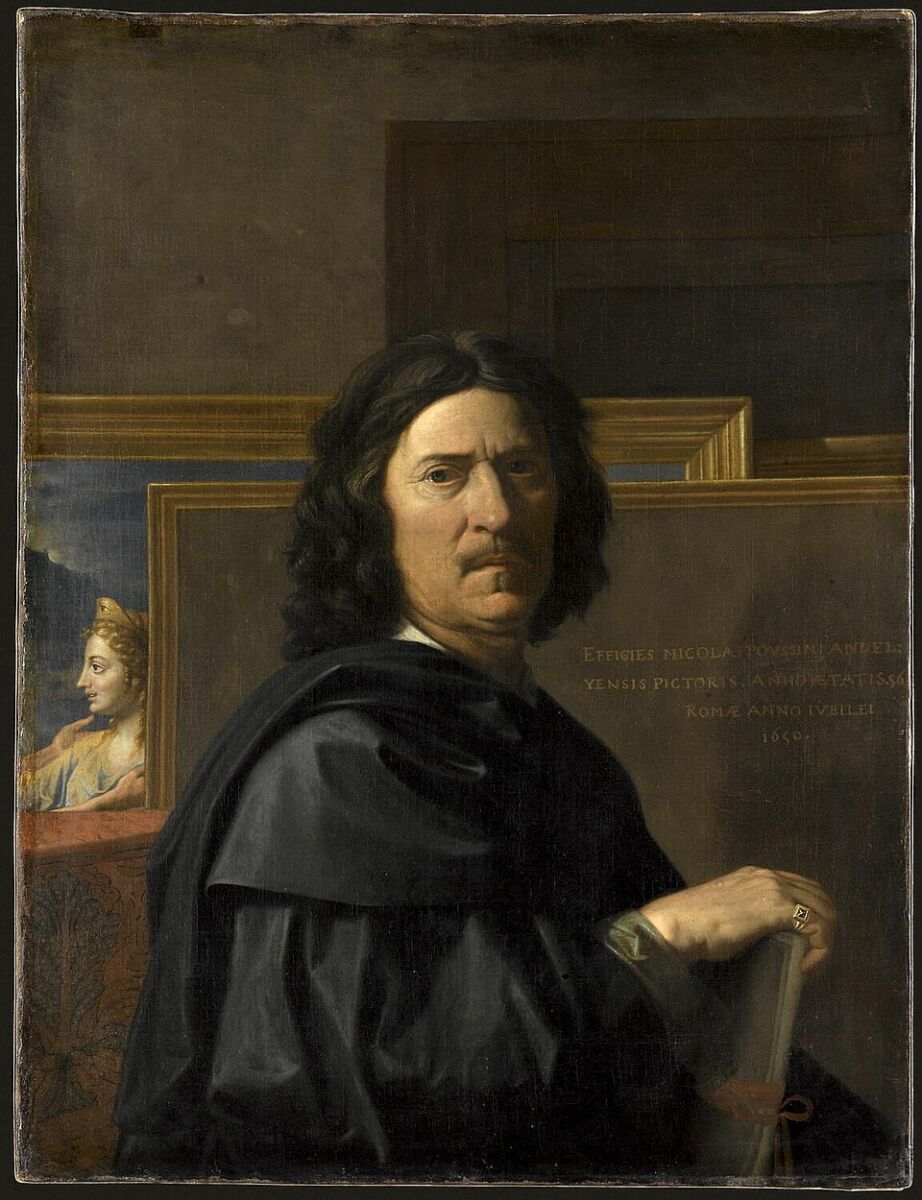
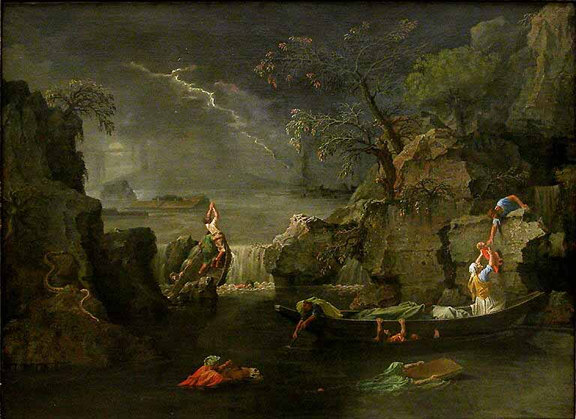
Works from the 1650s were more contemplative and introspective. The *Four Seasons* series (1660-1664) is widely considered his last masterpiece, integrating the cycles of nature, human labor, and Old Testament stories, demonstrating profound reflections on time, life, and divine will. In his self-portrait (1650), he holds a book with a partial view of the frame behind him, his expression serious and introspective, proclaiming the painter’s new identity as an intellectual.
Philosophy and Painting: Poussin’s Methodology
The core of Poussin’s art was the concept of “rational painting.” Deeply influenced by Stoic philosophy and Neoplatonism, he believed that beauty originated from rational order and that art should elevate morality and the spirit. He categorized paintings into three types:
1. Pleasant: merely satisfying the senses
2. Strange: pursuing novel effects
3. Subjective: based on profound thought, this is the highest form of art
His letters are filled with reflections on art theory, emphasizing the importance of “painting subject matter,” believing that subjects should be noble and moral, representing the great deeds of humanity. Color and form should both serve to clearly express this goal.
Legacy: A Long Echo from Rome to Posterity
On November 19, 1665, Poussin died in Rome and was buried in the Church of San Lorenzo. His influence only fully manifested after his death:
Charles Leblanc, the founder of the French Academy and Louis XIV’s chief painter, regarded Poussin as a model, establishing his principles at the Royal Academy of Painting and Sculpture. Throughout the 18th century, the “drawing versus color debate” between the Poussin and Rubens schools defined the French art debates.
A pioneer of Neoclassicism: Neoclassical painters such as David and Ingres directly inherited his rationalism and reverence for classical themes. David’s *The Oath of the Horaces* clearly borrows from Poussin in its composition and moral solemnity.
A modern reflection: Even the Impressionist painter Cézanne once said, “Every time I leave the Louvre, I understand Poussin better.” Cézanne’s pursuit of structural timelessness and Picasso’s Neoclassical figure painting both bear the shadow of Poussin.
A dialoguer across time and space: Poussin’s greatness lies in his establishment of a complete philosophy of art. In an era when Baroque art pursued emotional conquest, he upheld the dignity of reason; in a century when art increasingly served power and religious propaganda, he defended the independence of painting as an intellectual activity. His works are not expressions of emotion, but rather invitations for viewers to contemplate: about virtue, destiny, the laws of nature, and humanity’s place in the universe.
Nicolas Poussin was not the kind of artist who enjoyed a life of luxury and was quickly forgotten after his death. On the contrary, his reputation grew with time. He chose to leave his homeland, seeking eternal artistic principles in the ancient ruins of Rome; he refused to cater to courtly tastes, upholding the intellectual dignity of painting; he championed reason in an age of emotionalism, and insisted on moral seriousness in an era of sensual indulgence.
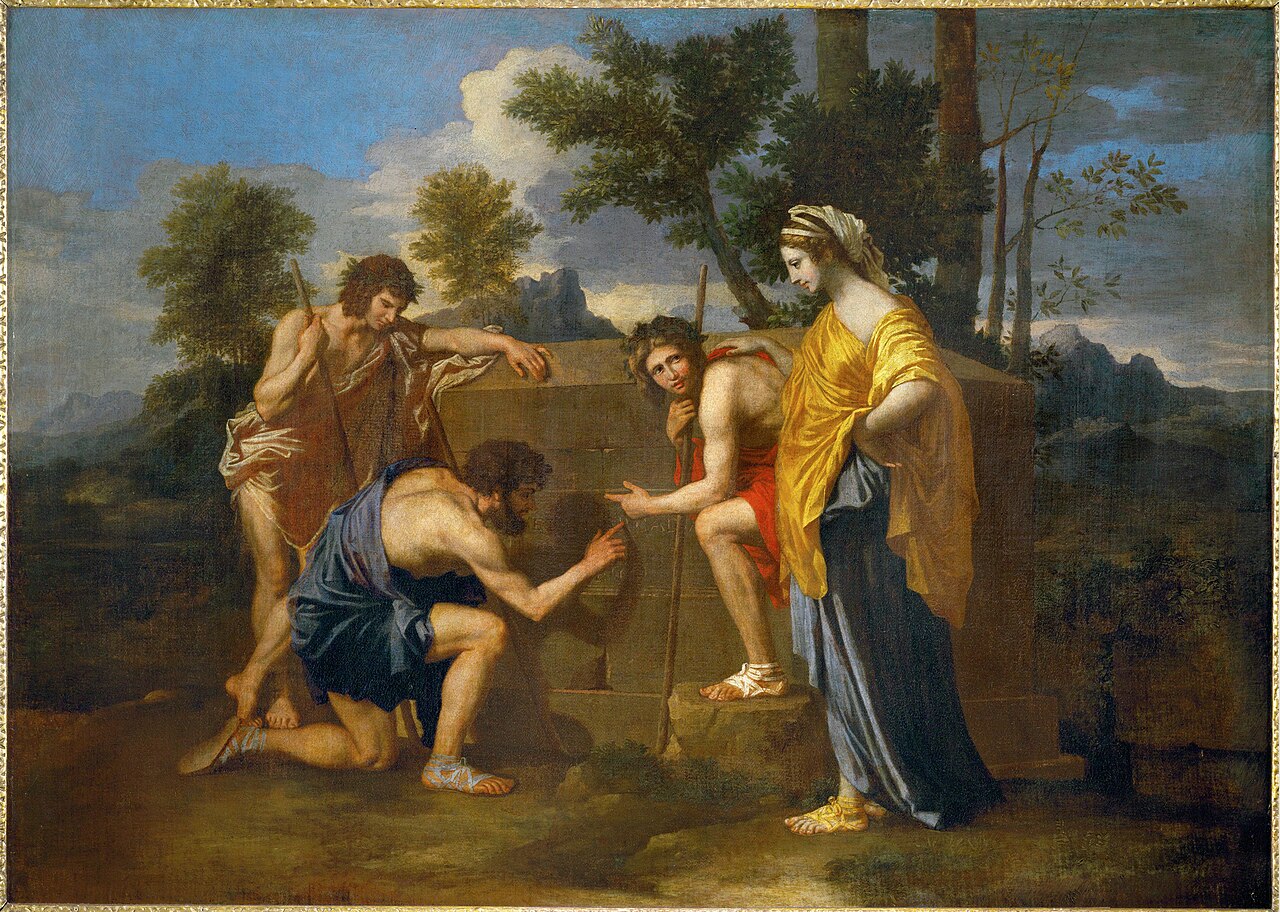
Today, when we gaze upon the shepherds contemplating death in *The Arcadian Shepherds* in the Louvre or the National Gallery in London, or feel the timeless tranquility in *Landscape with Polyphemus*, we are not facing merely a 17th-century painting, but an eternal question about the possibilities of art: Can painting think like philosophy? Can visual form express rational concepts? Poussin provided an affirmative answer throughout his life, setting an immortal example for future artists—the painter is not merely a craftsman or decorator, but also an explorer of thought and an interpreter of the world.
Related Posts