In recent years, as Chinese antique ceramics have continued to attract attention in the international…
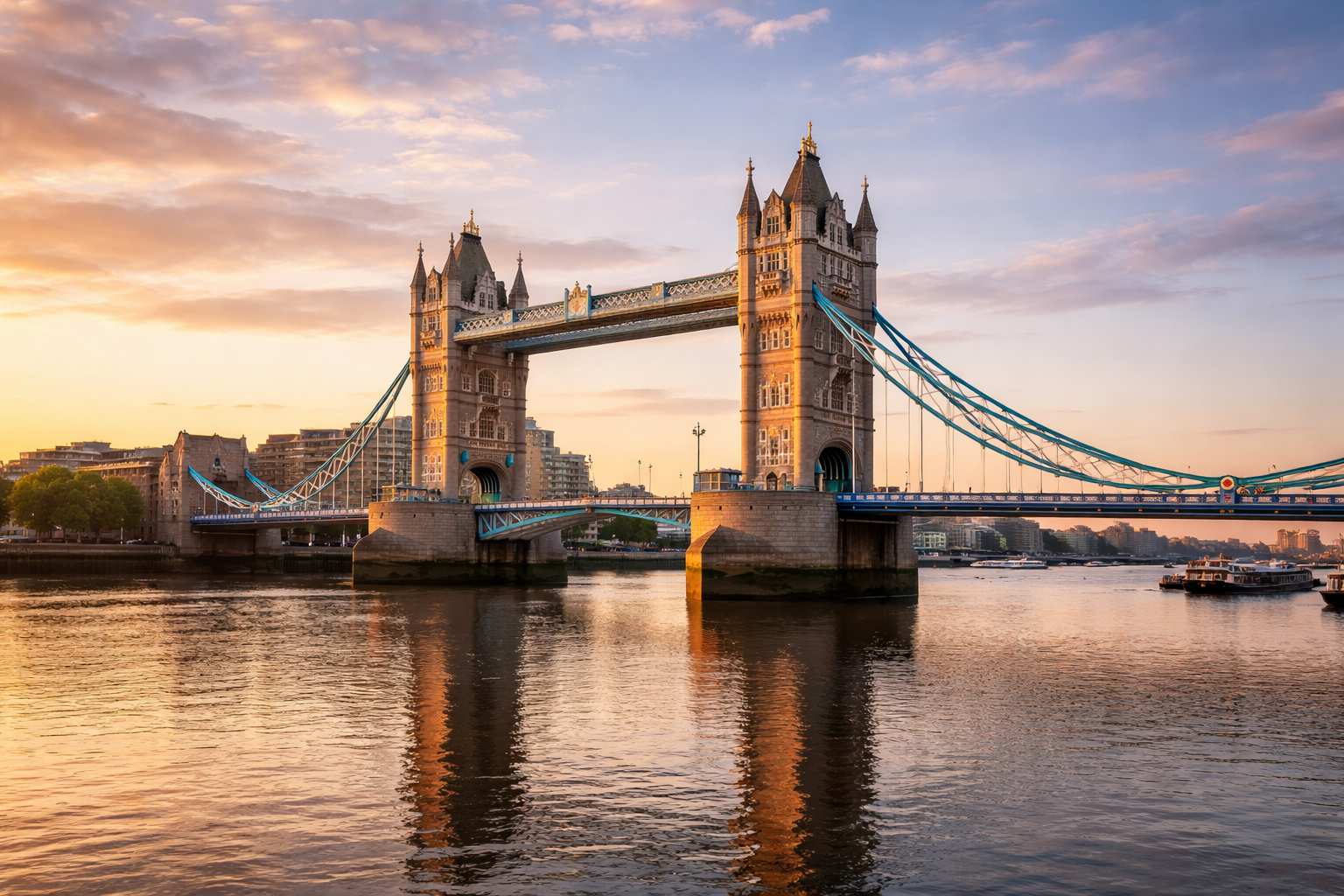
A Steel Poem Across a Century: How Tower Bridge Has Witnessed London’s Transformation
Spanning the River Thames in the heart of London, there stands a bridge that embodies both strength and elegance. More than a vital transport link, it is a cultural icon—this is the world-renowned Tower Bridge. It connects not only the physical banks of the city, but also the realms of history and modernity, industry and art, reality and imagination.
I. A Grand Vision of the Industrial Age
In the late 19th century, as commercial and port activities in East London expanded rapidly, traffic along the Thames grew increasingly congested. The city needed a bridge that could accommodate road traffic without obstructing river navigation. Thus emerged a bold engineering concept: a movable bridge.
Construction of Tower Bridge began in 1886, designed by city architect Horace Jones and engineer John Wolfe Barry. After eight years of work, it was completed in 1894. The bridge employed the most advanced steam-powered systems of its time, enabling the central bascules to lift and allow large ships to pass. This design not only reflected the technological achievements of the Industrial Revolution but also demonstrated humanity’s pursuit of balance between functionality and aesthetics.
II. Structural Beauty and Architectural Language
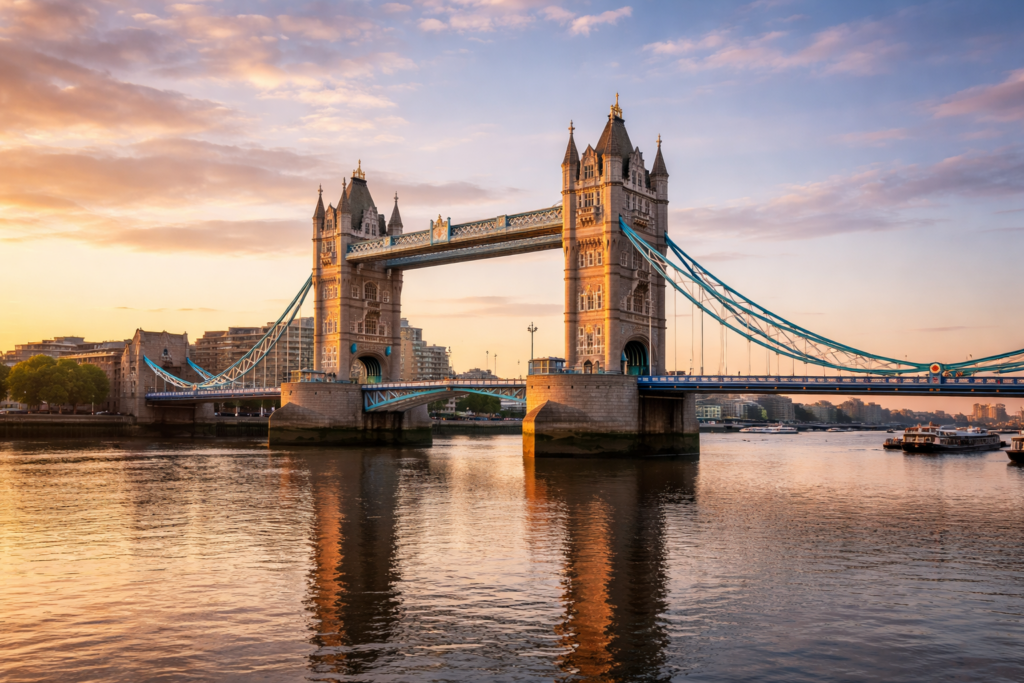
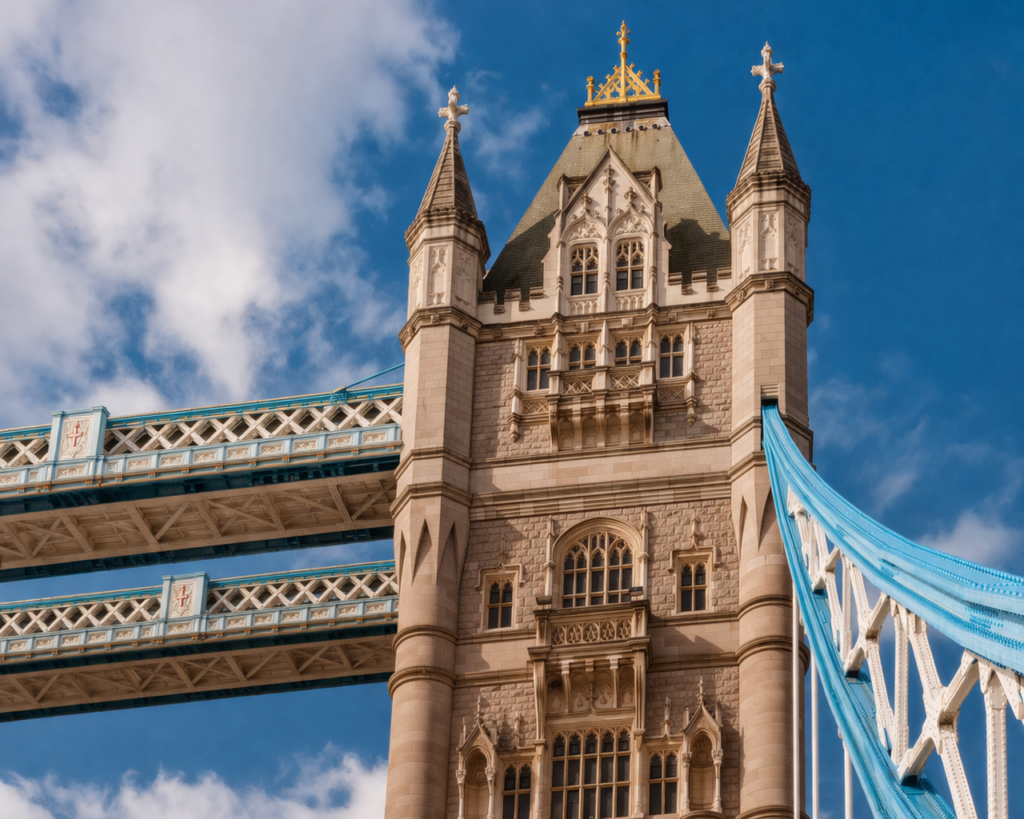
One of Tower Bridge’s most striking features is its pair of soaring Gothic-style towers. Clad in stone over a steel framework, they provide structural support while harmonizing with the historic surroundings—especially the nearby Tower of London.
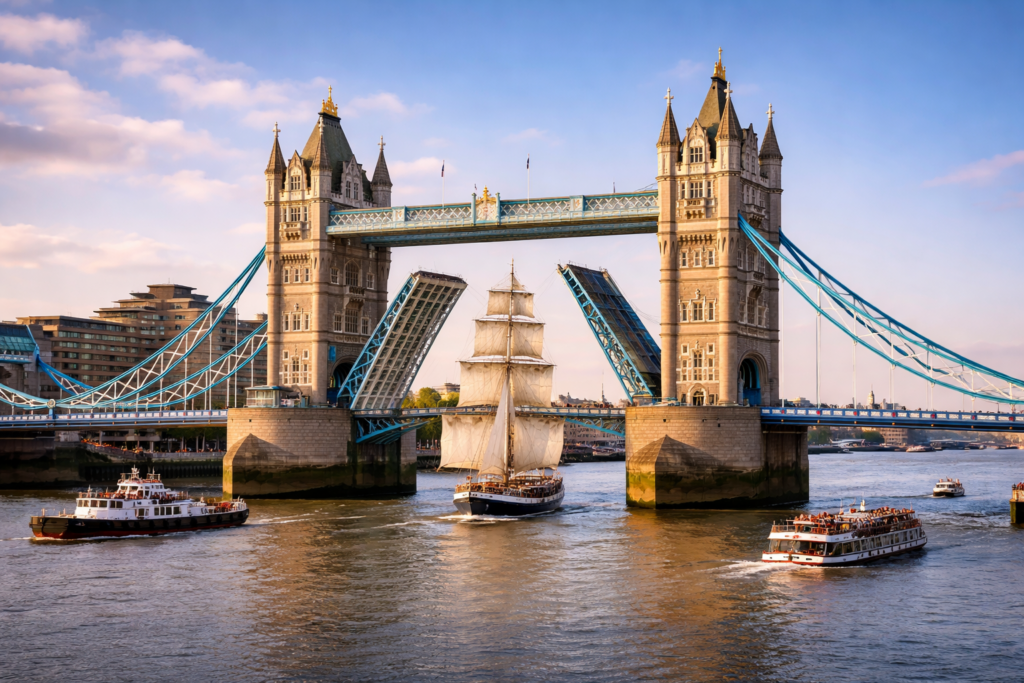
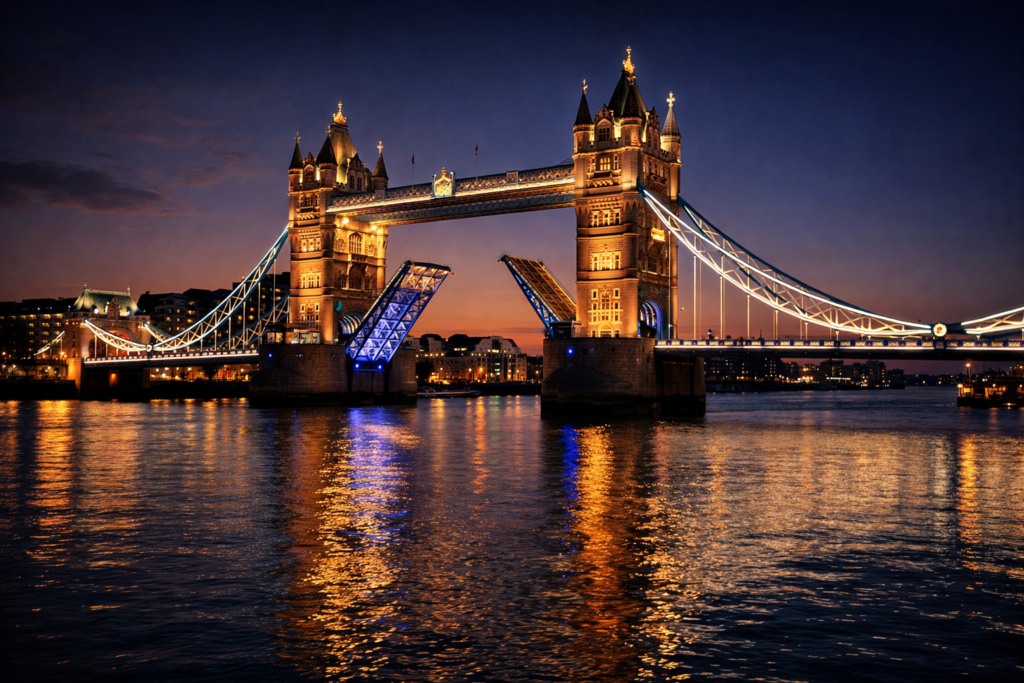
The central lifting sections, known as bascules, rise gracefully when ships need to pass, like a grand mechanical gate opening. Although the original steam system has since been replaced by modern electric and hydraulic mechanisms, the bridge retains its original spirit, standing as a symbol of industrial heritage.
The upper walkways now feature glass floors, allowing visitors to look down upon the Thames and the bustling city below. This immersive experience seamlessly blends historical architecture with modern design, transforming the bridge into a dynamic viewing space rather than merely a crossing.
III. Urban Memory and Cultural Symbolism
Tower Bridge is more than infrastructure—it is one of London’s most recognizable cultural symbols. Frequently featured in films, postcards, and literature, it plays a central role in shaping the global image of the city.
Whether shrouded in morning mist or illuminated at night, the bridge reveals different facets of London’s charm. During major events such as the London 2012 Olympics, Tower Bridge became a global focal point when it was adorned with the Olympic rings.
The opening of the bridge itself has become a ceremonial spectacle. Whenever the bascules rise, tourists and locals alike pause to watch. What was once purely functional now feels like a slow, dignified performance.
IV. A Living Legacy in the Modern City
Despite more than a century of history, Tower Bridge continues to play a vital role in London’s daily life. Thousands of vehicles and pedestrians cross it each day, making it both a commuter route and a major tourist attraction.
The surrounding area has evolved into a vibrant cultural and commercial zone, with museums, restaurants, and riverside walkways enriching the experience. The bridge itself has undergone numerous restorations to ensure both safety and the preservation of its historic character.
Its enduring success lies in its adaptability. From steam power to hydraulic systems, from a transport structure to a multidimensional cultural space, Tower Bridge has continually evolved while retaining its essence.
V. A Symbol Across Time
More than an engineering marvel, Tower Bridge stands as a symbol of human ingenuity. It represents creativity in the face of complex challenges and reflects the continuous evolution of urban life.
Here, past and future converge: traditional architectural forms carry modern technologies, and historical depth coexists with contemporary vitality. In this sense, Tower Bridge belongs not only to London, but to the world.
As night falls and lights illuminate its structure, the bridge transforms into a luminous work of art across the river—a silent storyteller narrating a tale of time, engineering, and human aspiration.
Related Posts