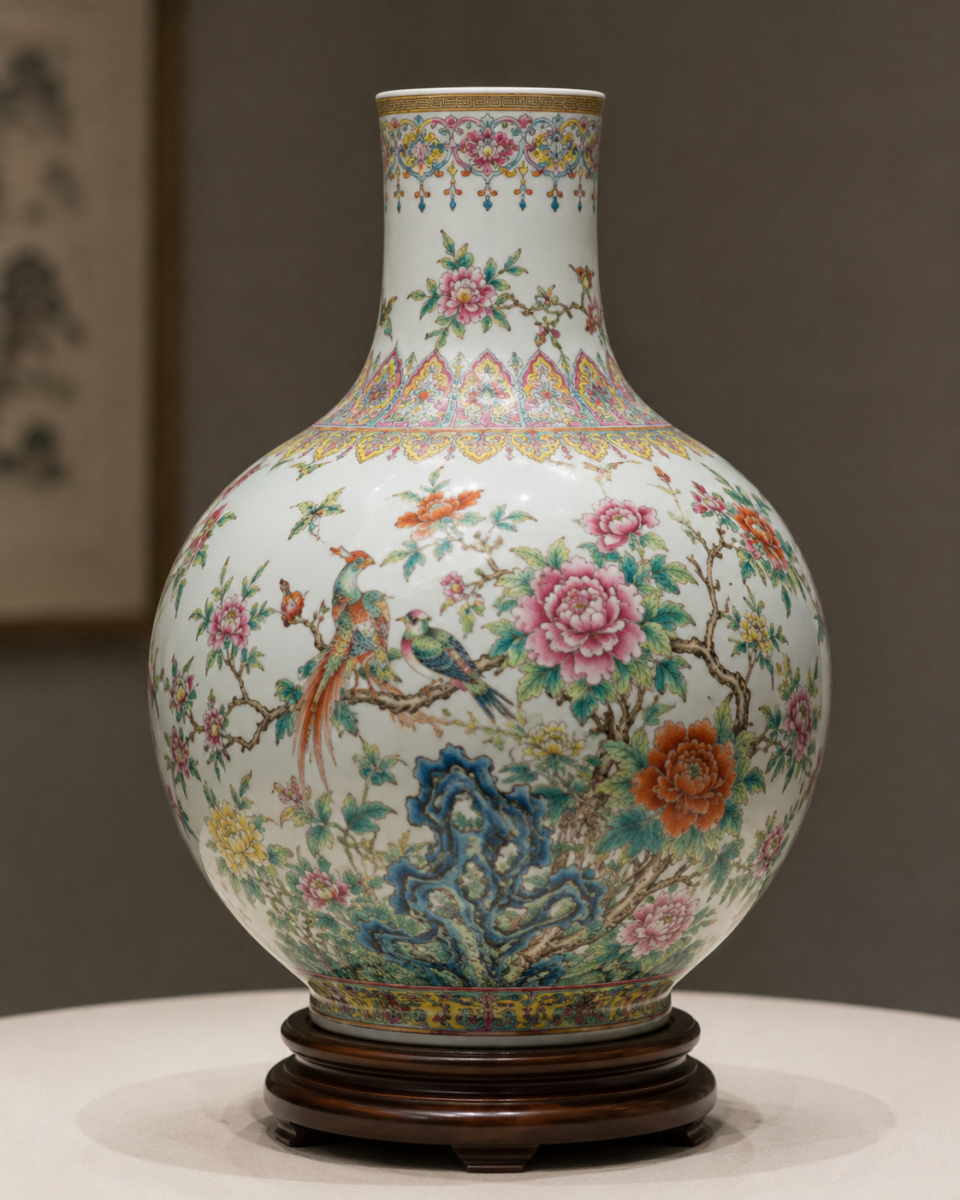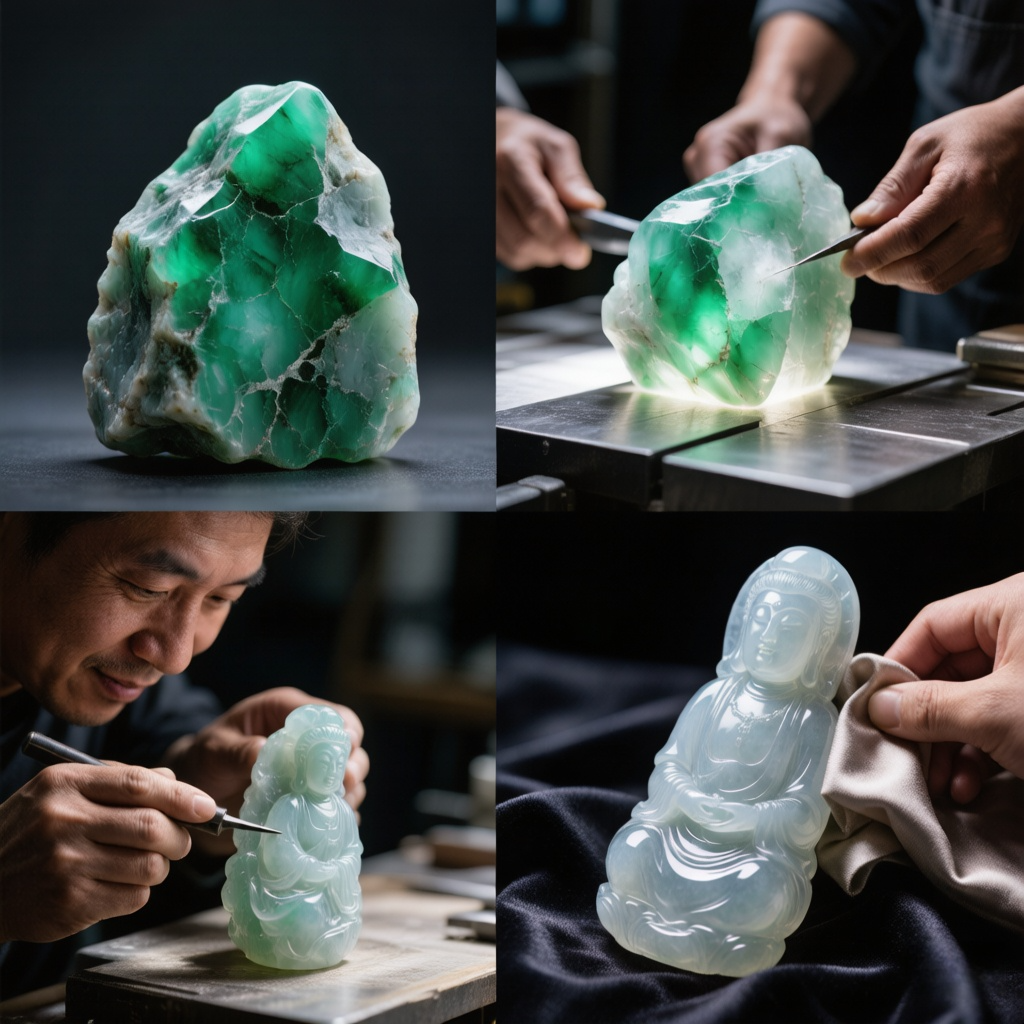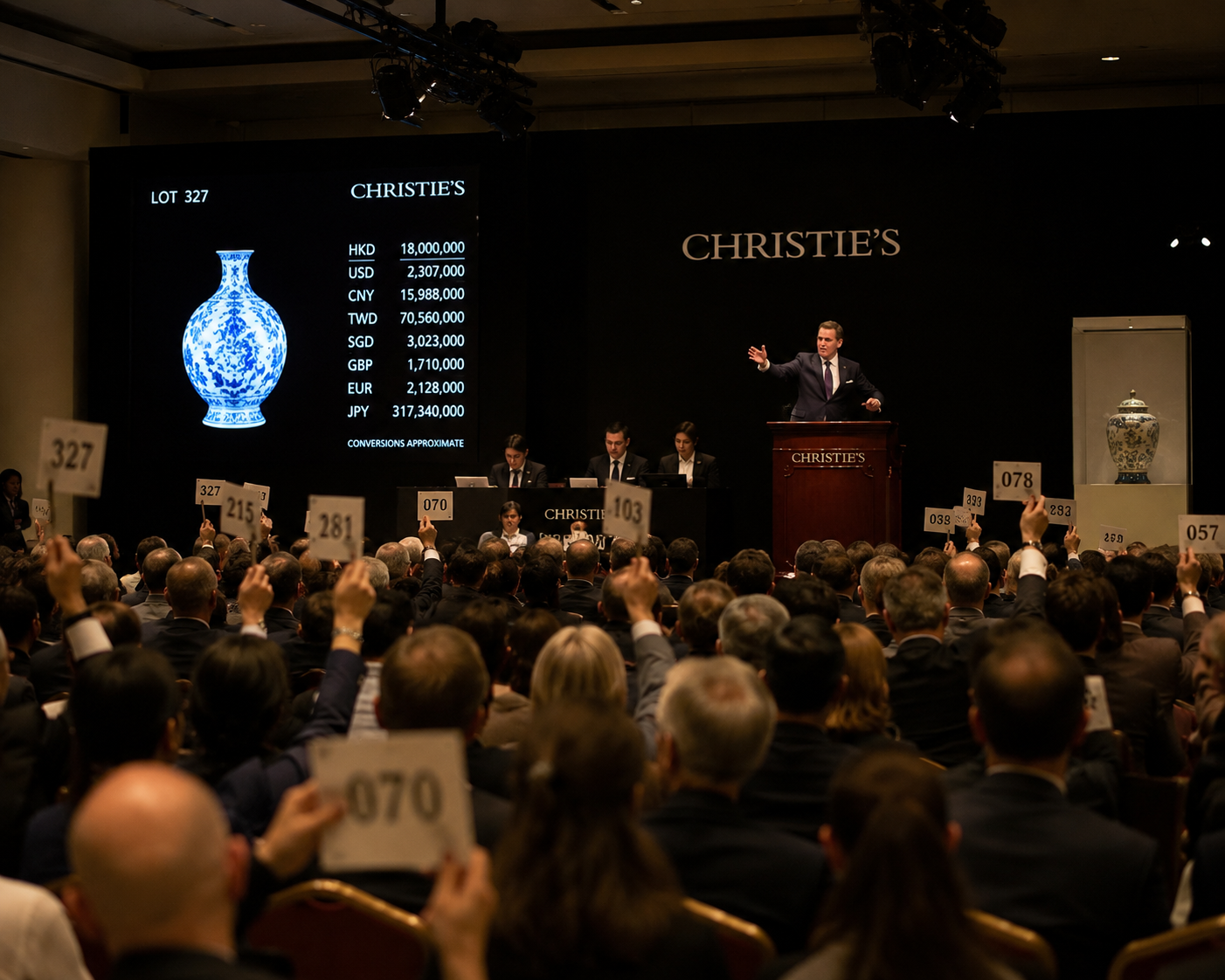
In recent years, as Chinese antique ceramics have continued to attract attention in the international…
The Difference Between Antique Jade and Modern Jade: 5 Key Points Every Collector Must Know
Introduction: Why Is Antique Jade Gaining More Attention?
In recent years, as Eastern antique art has gained increasing recognition in the global collectibles market, jade collecting has gradually shifted from focusing solely on material value to emphasizing cultural significance and historical value.
Particularly in antique markets across China, Japan, and Western countries, antique jade is no longer viewed merely as jewelry or decorative material—it is regarded as a cultural artifact carrying the aesthetics, craftsmanship, and historical traces of its era.
However, for many beginners entering jade collecting, one of the most common questions is:
What exactly is the difference between antique jade and modern jade?
Many people mistakenly believe that jade with an “old color” or a “dirty-looking surface” must be antique jade. Others assume that “the smoother and more lustrous it feels, the older it must be.”
In reality, authentic antique jade identification is far more complex than it appears.
Today’s market is filled with artificially aged jade, imitation archaic jade, and highly convincing reproductions capable of misleading inexperienced buyers.
This article explores five essential distinctions between antique jade and modern jade, helping collectors build a stronger foundation for evaluation.
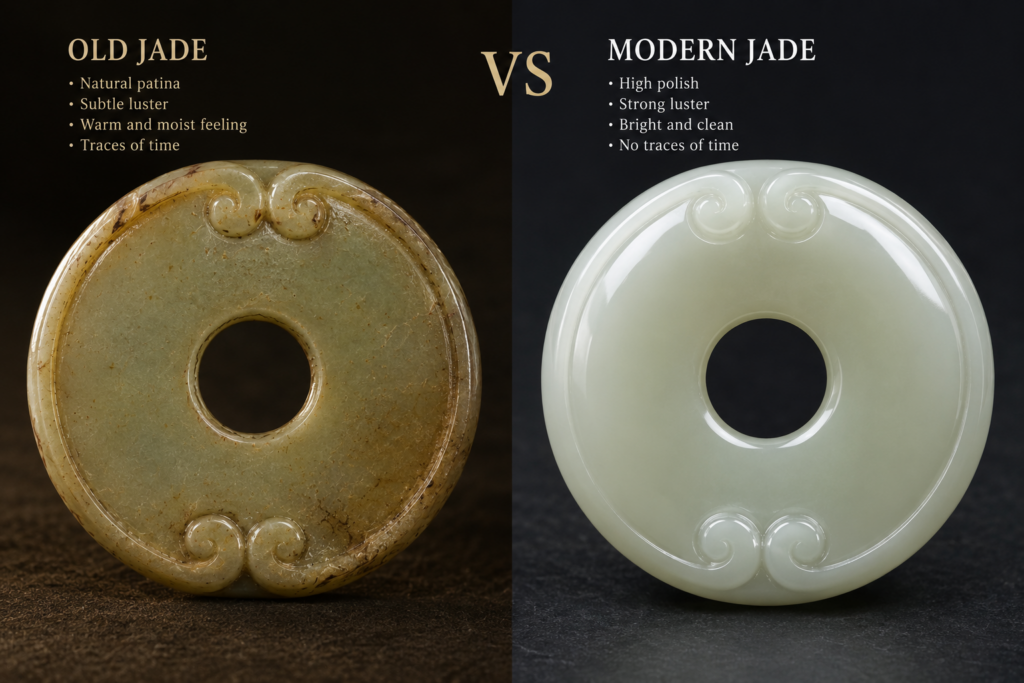
1. Surface Patina: The Most Important Trace of Time
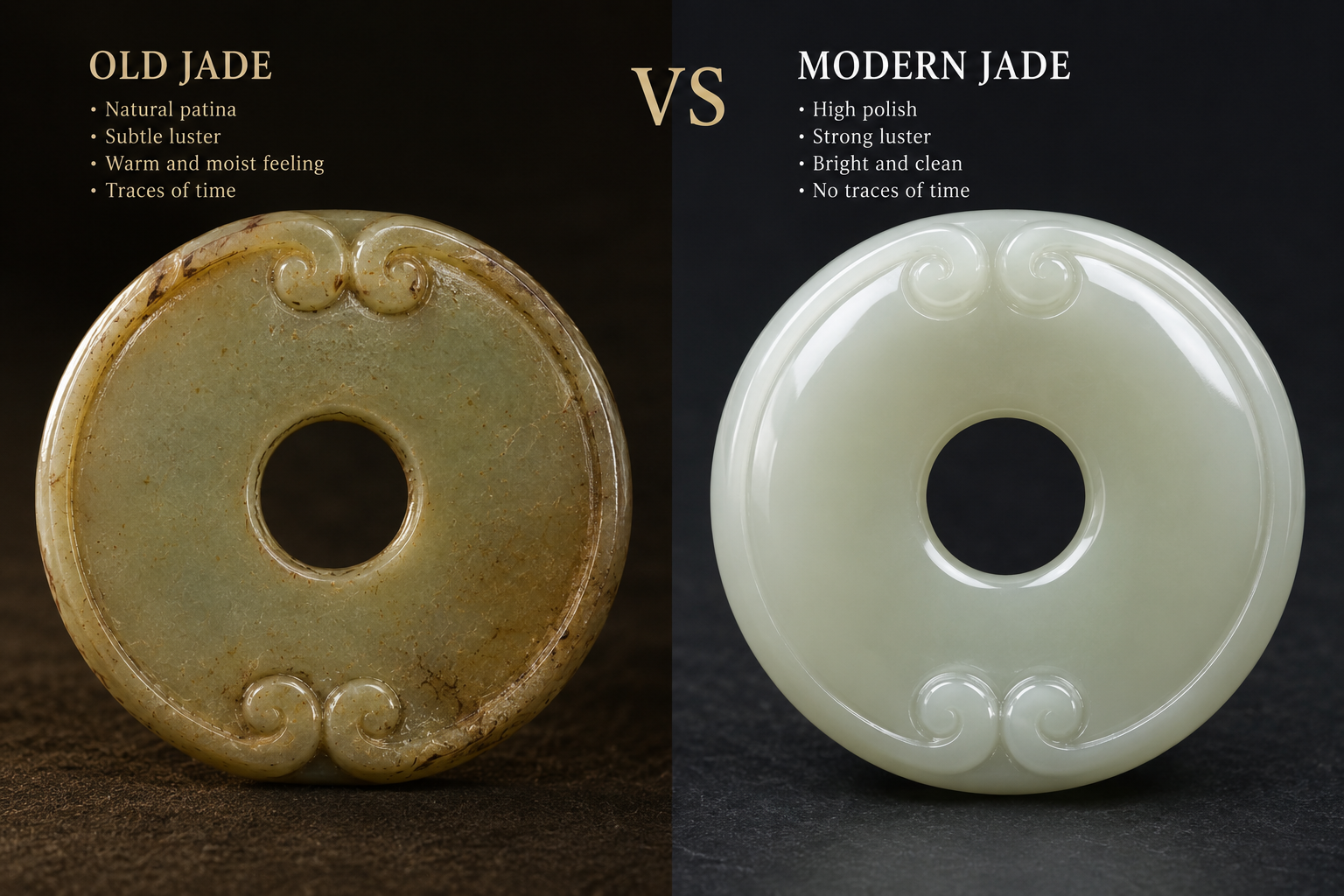
Patina is one of the most defining characteristics of antique jade.
Patina is not simply “shine” or “oiliness.” Instead, it refers to the naturally mellow surface texture formed over decades or centuries through handling, burial, oxidation, and environmental interaction.
Authentic antique jade patina typically shows:
Soft, gentle luster rather than sharp reflection
Internal warmth and oiliness from within the jade
Natural surface transitions
No artificial plastic-like gloss
By contrast, modern jade, even when highly polished, often appears overly bright and reflective, lacking the subtle restraint created by age.
Many imitation antique jades attempt to reproduce this “aged appearance” using acid treatment, waxing, smoke exposure, or artificial oxidation.
However, these artificial patinas usually display:
Surface-level gloss only
Unnatural coloring
Excessively uniform aging
Little depth or tonal layering
True antique jade patina is a mark of time that cannot be fully replicated.
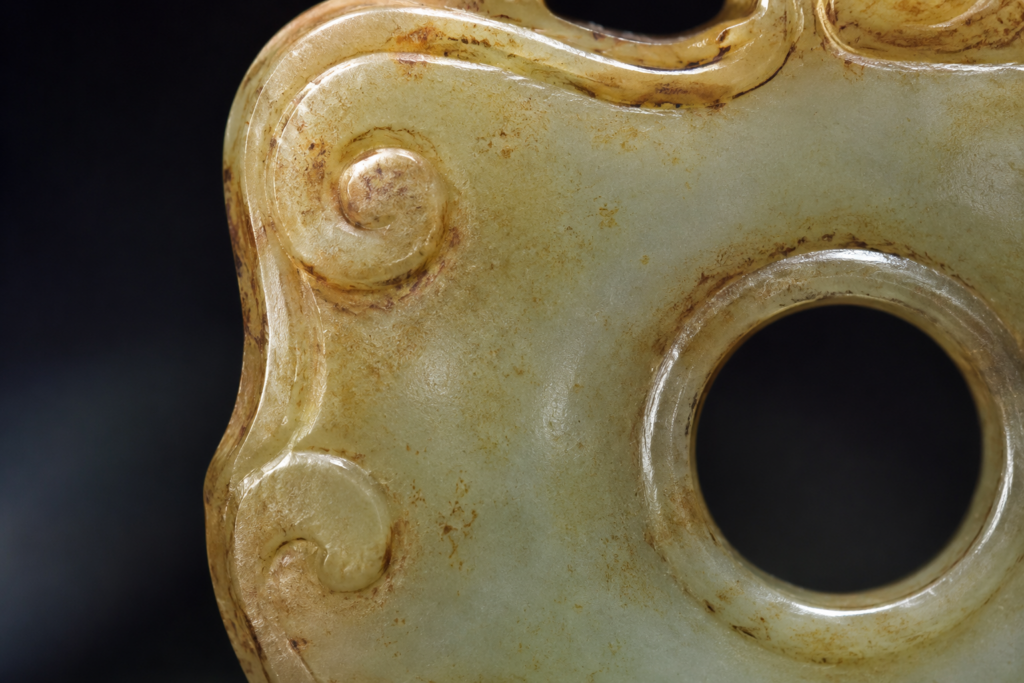
2. Tool Marks and Craftsmanship: Ancient Handwork vs. Modern Machinery
This is one of the most important aspects experienced collectors observe.
Because ancient jade-working tools were limited, antique jade often retains obvious hand-crafted characteristics, such as:
Lines that are not perfectly symmetrical
Slight pauses or irregularities in turning points
Natural variations in engraving depth
Drill holes showing tapering or “trumpet-shaped” openings
Especially in ancient jade (pre-Han and Han-period pieces), many decorative carvings reveal clear traces of traditional rotary grinding techniques.
Modern jade, however, is typically processed using:
Electric carving tools
Laser engraving
CNC machinery
High-speed polishing systems
As a result, the lines often appear:
Excessively precise
Sharp-edged
Highly symmetrical
Lacking hand-crafted warmth and character
For seasoned jade collectors, craftsmanship alone can often reveal differences in era.
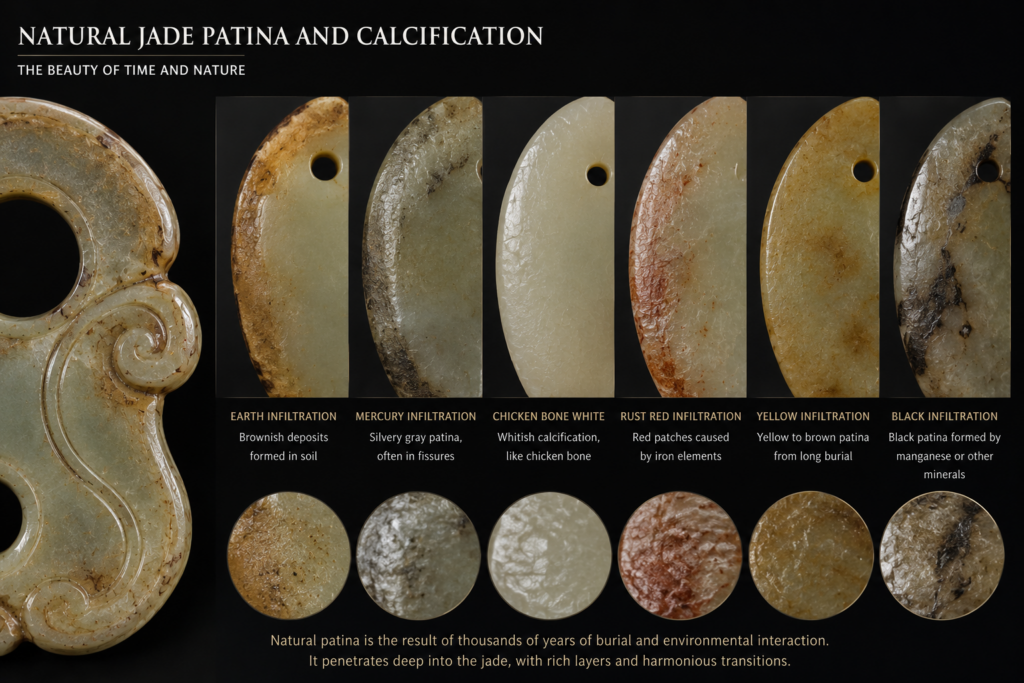
3. Infiltration Colors : Natural Mineral Staining vs. Artificial Aging
Infiltration color, or qin se, refers to color changes formed when jade interacts over long periods with soil, minerals, moisture, and burial environments.
Common natural antique jade staining includes:
Earth staining
Mercury-like gray staining
“Chicken bone white” calcification
Reddish “blood stain” tones
Yellow staining
Dark or black mineral infiltration
Naturally formed staining typically shows:
Depth and penetration into the jade body
Layered tonal variation
Organic color transitions
Integration with the jade’s texture
Modern imitation antique jade often uses methods such as:
Chemical dyeing
High-temperature burning
Acid corrosion
Artificial soaking treatments
These often result in:
Surface-only coloration
Rigid or unnatural distribution
Obvious boundaries between stained and unstained areas
Lack of gradual blending
Collectors should remember:
A stronger color does not necessarily mean greater age.
In fact, many newly made archaic-style jades display more dramatic coloration than genuine antique jade.
High-quality authentic antique jade usually presents restrained, natural, and balanced tones.
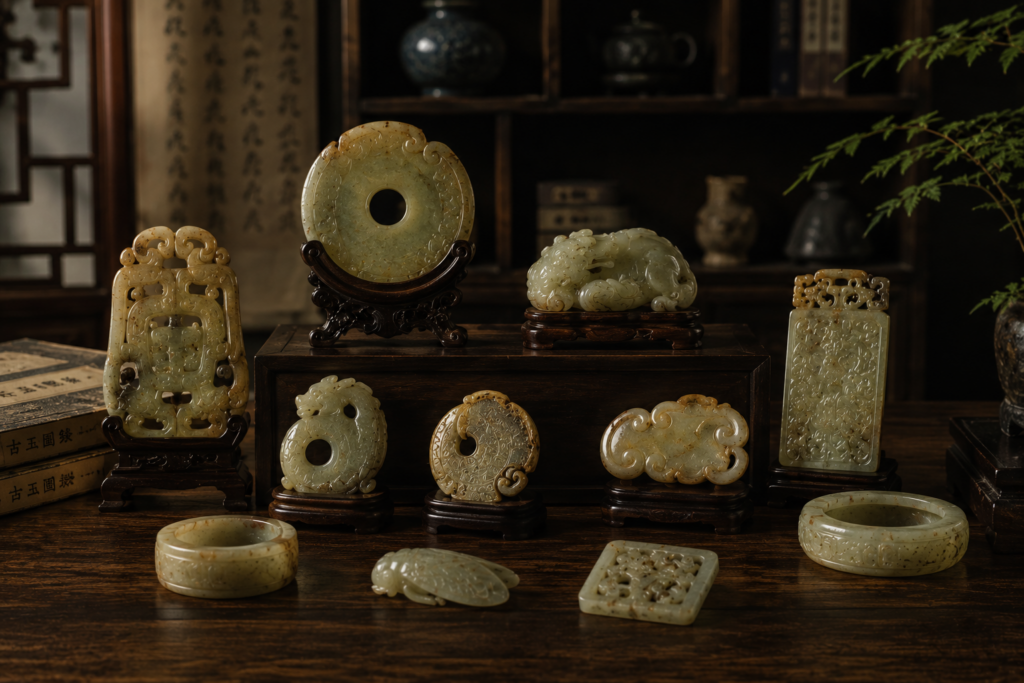
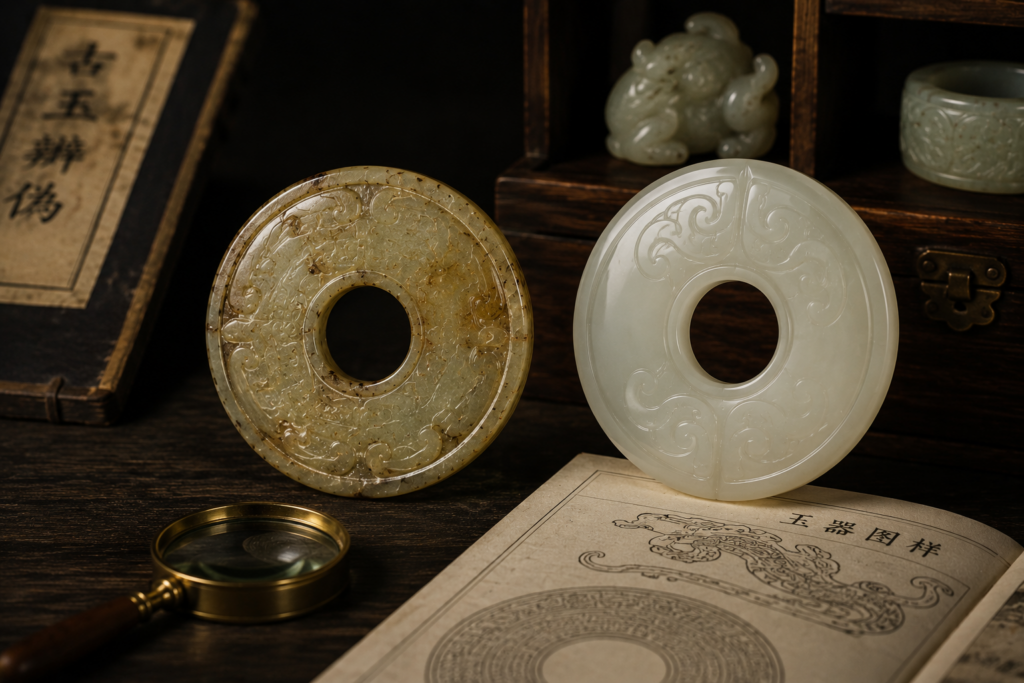
4. Mature Texture and Visual Character: Time Changes Appearance
Many collectors describe a similar impression when first encountering authentic antique jade:
“It is not as bright as modern jade, but it is deeply captivating.”
This is often called mature visual character or aged texture.
After decades, centuries, or even millennia of oxidation and natural aging, antique jade develops a unique appearance:
Subtle, restrained luster
Calm and stable jade body
Structurally settled texture
Rich visual depth
Old Hetian jade, in particular, often displays a soft, mellow richness.
Modern jade, although often whiter and highly polished, may appear:
Rigid
Harshly bright
Overly fresh or “raw”
Lacking historical depth
This explains why experienced collectors often value antique jade more than simply pursuing high whiteness or polish.
Because the true sophistication of jade lies not only in material quality, but also in the visual character shaped by time.
5. Cultural and Collectible Value: Antique Jade Preserves History
Modern jade largely belongs to the category of jewelry and decorative consumption.
Antique jade, however, is fundamentally part of historical art and cultural relic collecting.
A genuine antique jade object often carries:
Dynastic craftsmanship
Ritual significance
Religious meaning
Traces of historical use
Provenance and collecting history
For example:
Han dynasty jade bi discs represent ritual civilization
Tang dynasty jade works reflect the aesthetics of imperial prosperity
Ming and Qing jade pendants emphasize refined scholar taste
Therefore, the value of antique jade comes not only from the jade material itself, but from the historical information it preserves.
This is why certain ancient jades—despite not being made from top-grade material—can still achieve remarkable prices at international auctions.
To collect antique jade is, in many ways, to collect time and civilization.
Conclusion: Understanding Antique Jade Requires Time and Experience
In jade collecting, authenticity is only the beginning.
What truly matters is whether a piece possesses:
Historical atmosphere
Natural preservation
Cultural information
Artistic value
There is no absolute hierarchy between antique jade and modern jade.
Modern jade reflects the beauty of contemporary craftsmanship.
Antique jade embodies the beauty of time.
But for collectors, learning to distinguish between the two is one of the most essential steps in entering the world of jade.
Because what is truly worth collecting over the long term is not simply the jade itself—
It is the culture, craftsmanship, and passage of time preserved within it.
Related Posts