In the constellation of the Dutch Golden Age, Rembrandt Harmenszoon van Rijn is undoubtedly the…
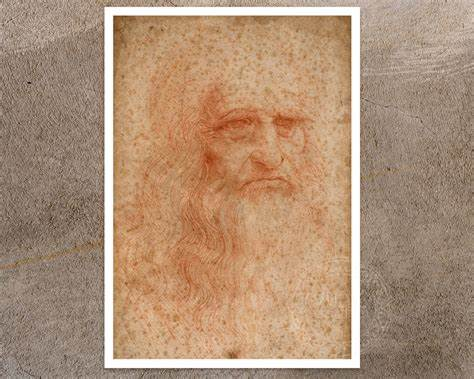
Vitruvian Man: The Secrets of the Human Body, the Universe, and Geometry
A Transcendent Image by Leonardo da Vinci
In the history of Western art, few images belong simultaneously to both art and science as much as Vitruvian Man. At first glance, it appears to be a simple drawing of the human body. Yet within it lies one of the most important ideas of the Renaissance: the human being as a microcosm of the universe.
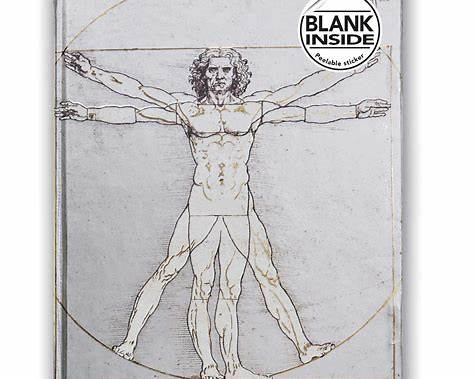
Created around 1490 by the Renaissance master Leonardo da Vinci, the drawing is a study of the human body rendered on paper using metalpoint, ink, and wash. In the image, a nude male figure is placed simultaneously inside a circle and a square, with the limbs extended in two overlapping positions. Today, it is considered one of the most iconic images in the history of human civilization.
This drawing is far more than an artist’s spontaneous inspiration. It represents a profound investigation into proportion, mathematics, and the order of the cosmos.
I. Inspiration from Ancient Rome
The name “Vitruvian Man” comes from the ancient Roman architect Vitruvius.
In his famous treatise De Architectura (The Ten Books on Architecture), he proposed a remarkable idea:
the human body itself is the perfect model of proportion.
Vitruvius observed that:
-
A person’s height is equal to the span of their outstretched arms.
-
With the navel as the center, a circle can be drawn around the body.
-
The human figure can be simultaneously inscribed within both a circle and a square.
In classical philosophy, these two geometric forms carried symbolic meanings:
-
The Circle — divinity, the cosmos, eternity
-
The Square — the earth, reality, order
However, Leonardo da Vinci did not simply copy this ancient theory. Through anatomical studies and careful measurement of the human body, he sought to test and refine these proportions. Leonardo examined numerous human structures and recorded more precise mathematical relationships within the drawing.
For this reason, Vitruvian Man is not only a tribute to ancient knowledge, but also a new scientific experiment—one that bridges art, mathematics, and the philosophy of the Renaissance.
II. The Geometric Relationship Between the Human Body and the Universe
If you observe the image closely, you will notice that it is not merely an artwork—it resembles a carefully constructed mathematical diagram.
In Vitruvian Man, the figure appears in two different positions:
-
T-shaped pose: the arms extend horizontally, forming the proportions of a square.
-
X-shaped pose: the arms and legs spread outward, allowing the body to touch the circumference of a circle.
These two poses are layered onto the same body, enabling the human figure to simultaneously satisfy two geometric structures.
An even subtler detail lies in the placement of the centers:
-
The center of the circle is located at the navel.
-
The center of the square lies at the genital area.
In other words, the circle and the square do not perfectly overlap; they are slightly offset. This subtle adjustment solved a problem that had challenged many earlier artists—how to make the human body fit convincingly into both geometric forms at the same time.
On the sheet of paper, Leonardo da Vinci left behind faint measurement marks and traces from a compass, revealing that the drawing was created through precise calculation and observation, rather than as a casual sketch.
In a sense, Vitruvian Man functions as a scientific model of human proportion, where art, mathematics, and anatomical study merge into a single image.
III. Humanism of the Renaissance
To understand the significance of Vitruvian Man, we must return to the era in which it was created—the Renaissance.
During the Middle Ages, European thought generally held that God was the center of the universe, while human beings were considered small and insignificant.
But Renaissance thinkers introduced a radically new idea:
human beings themselves are part of the cosmic order.
From this perspective, they believed that:
-
By studying the human body, one could better understand nature.
-
By studying proportion, one could better understand the structure of the universe.
In this sense, Vitruvian Man became a powerful symbol of Renaissance humanism.
In the drawing, the human body is placed between the circle and the square, suggesting that humanity stands at the intersection of two realms:
-
Heaven — the cosmos and the divine
-
Earth — the physical world and human reality
Seen in this light, the drawing is not merely an anatomical study.
It is also a philosophical declaration:
The human being is the measure of the universe.
This idea reflects the intellectual spirit of the Renaissance and the curiosity of its greatest figure, Leonardo da Vinci, who sought to unite art, science, and philosophy in a single vision of the world.
IV. The Fusion of Science and Art
For Leonardo da Vinci, art and science were never separate disciplines.
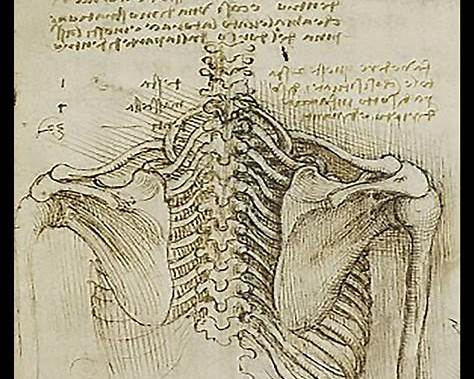
In his notebooks, subjects such as painting, anatomy, mechanics, and architecture often appear side by side. He dissected human bodies to study the structure of muscles, while also designing flying machines and imagining plans for ideal cities.
Vitruvian Man stands as a concentrated expression of this interdisciplinary vision.
Within this single drawing, several fields come together:
Art
The lines of the human body are both elegant and precise.
Mathematics
The geometric structure of the circle and square is carefully calculated.
Medicine
The relationships between muscles, bones, and proportions are observed with anatomical accuracy.
Philosophy
The image explores the relationship between humanity and the universe.
For this reason, Vitruvian Man is often regarded as one of the most perfect symbols of the intellectual spirit of the Renaissance—a moment in history when art, science, and philosophy were united in the search for knowledge.
V. A Masterpiece Rarely Seen in Person
Although Vitruvian Man is one of the most famous images in the world, very few people have actually seen the original drawing.
The reason is simple—
it is a work on paper.
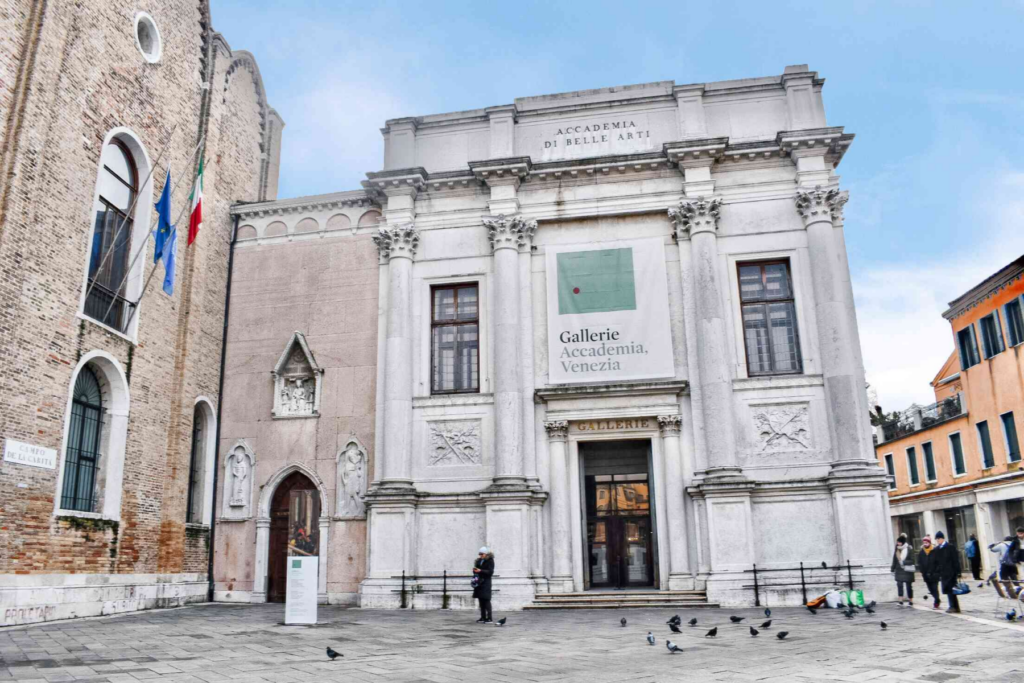
Paper is extremely sensitive to light, so the drawing is kept in controlled darkness for most of the time in order to preserve it. Today, the original is housed at the Gallerie dell’Accademia.
Only on rare occasions, during major exhibitions, is the work displayed to the public.
In 2019, marking the 500th anniversary of the death of Leonardo da Vinci, the drawing was exceptionally loaned to the Louvre Museum, drawing global attention from art lovers and scholars.
VI. A Symbol That Has Endured for Five Centuries
Today, the influence of Vitruvian Man extends far beyond the realm of art.
The image has been widely used in fields such as:
-
medical textbooks
-
scientific research
-
architectural theory
-
studies of human proportion
-
visual identities of technology and corporate brands
In many contexts, it symbolizes:
reason, science, and human potential.
Even in modern studies of computer vision and biomechanics, researchers sometimes reference the proportional relationships found in Vitruvian Man when analyzing human posture and movement.
A simple drawing created around 1490 continues to influence scientific thought more than five centuries later.
Conclusion: Humanity as the Measure of the Universe
The greatness of Vitruvian Man lies not only in the precision of its drawing.
What makes it truly profound is the question it raises:
What is the place of human beings within the universe?
The answer suggested by Leonardo da Vinci is both humble and expansive.
Human beings are neither the masters of the universe nor mere spectators of it.
Instead, we are a part of the cosmic order itself.
When the human body is placed between the circle and the square, it symbolically belongs to two realms at once:
-
the heavens, representing the cosmos
-
the earth, representing the physical world
Perhaps this is why such a seemingly simple drawing continues to move people more than five centuries later.
Because it reminds us of a powerful idea:
To understand the human body may also be to understand the world.
Related Posts