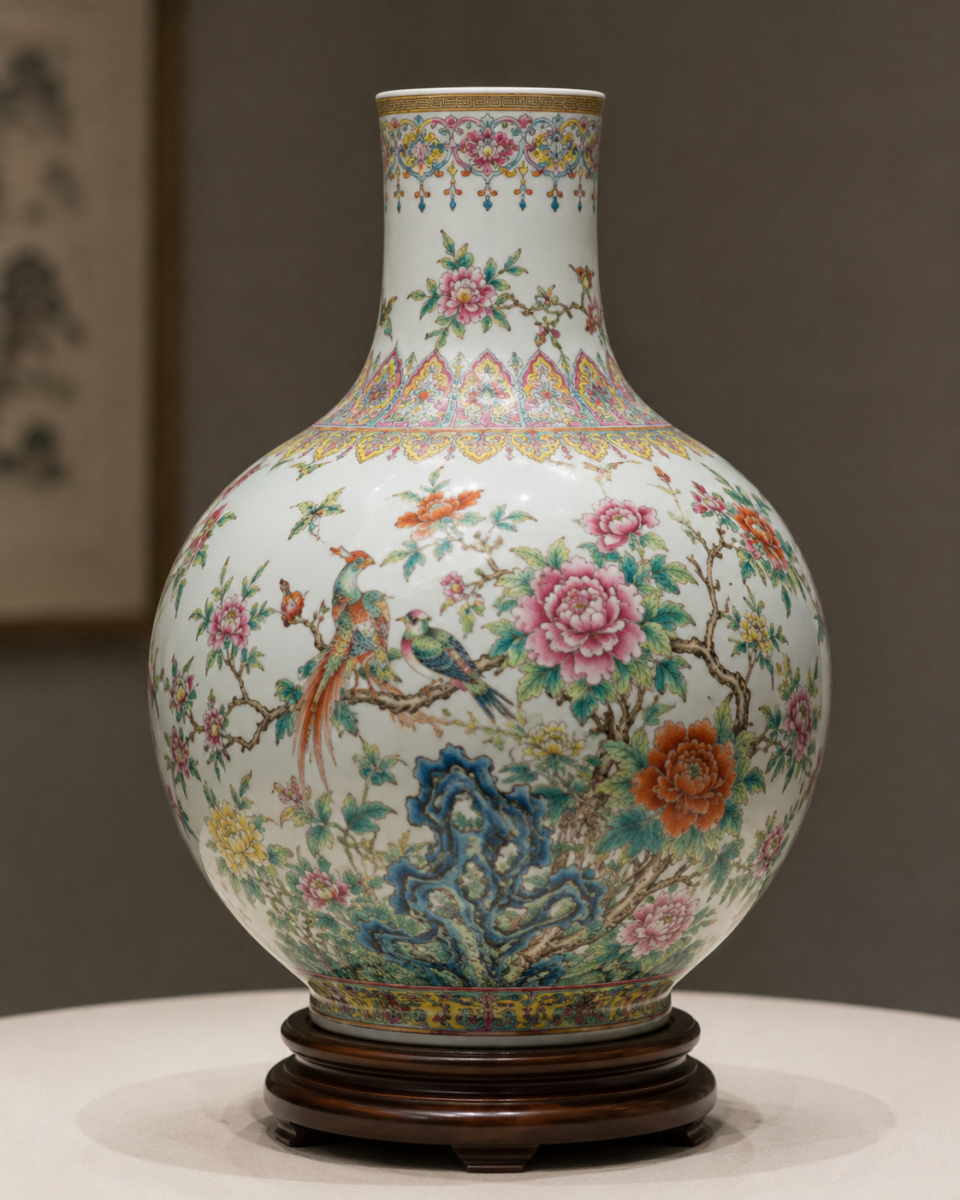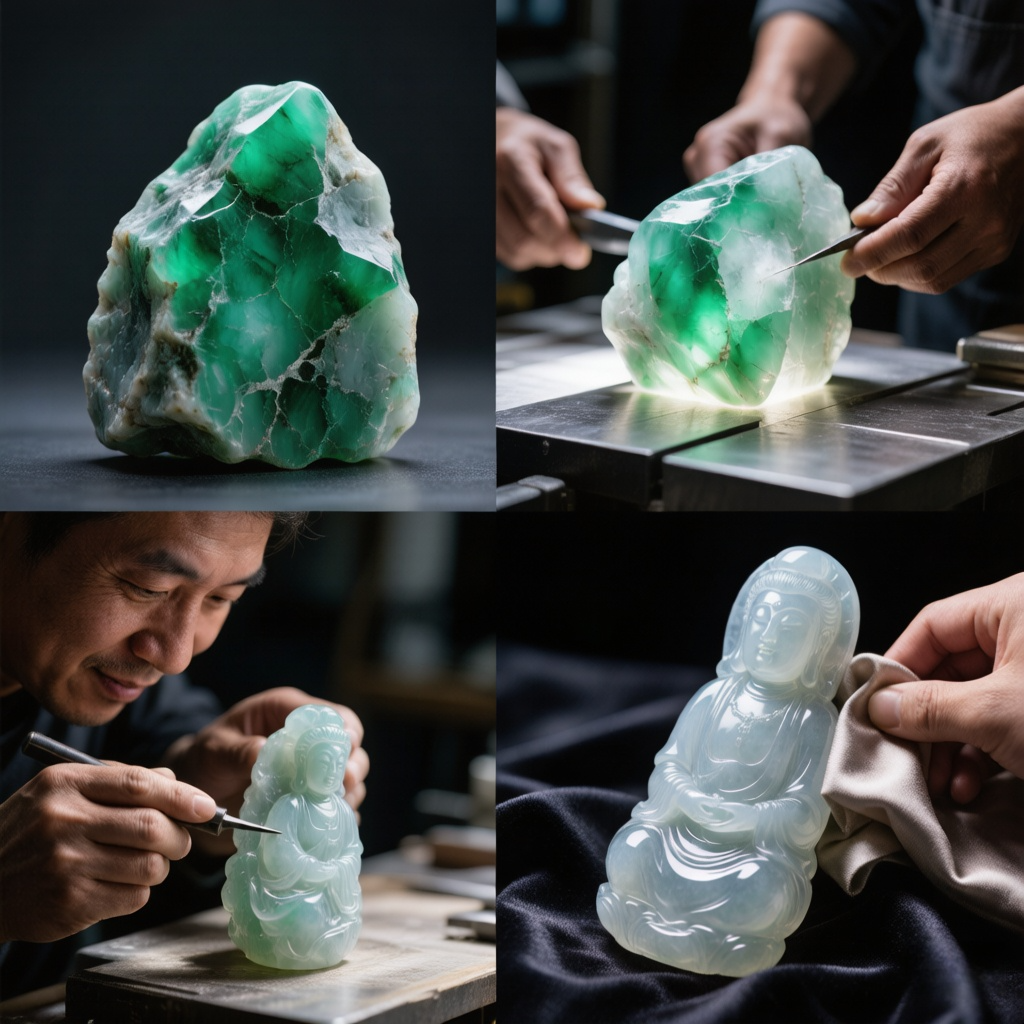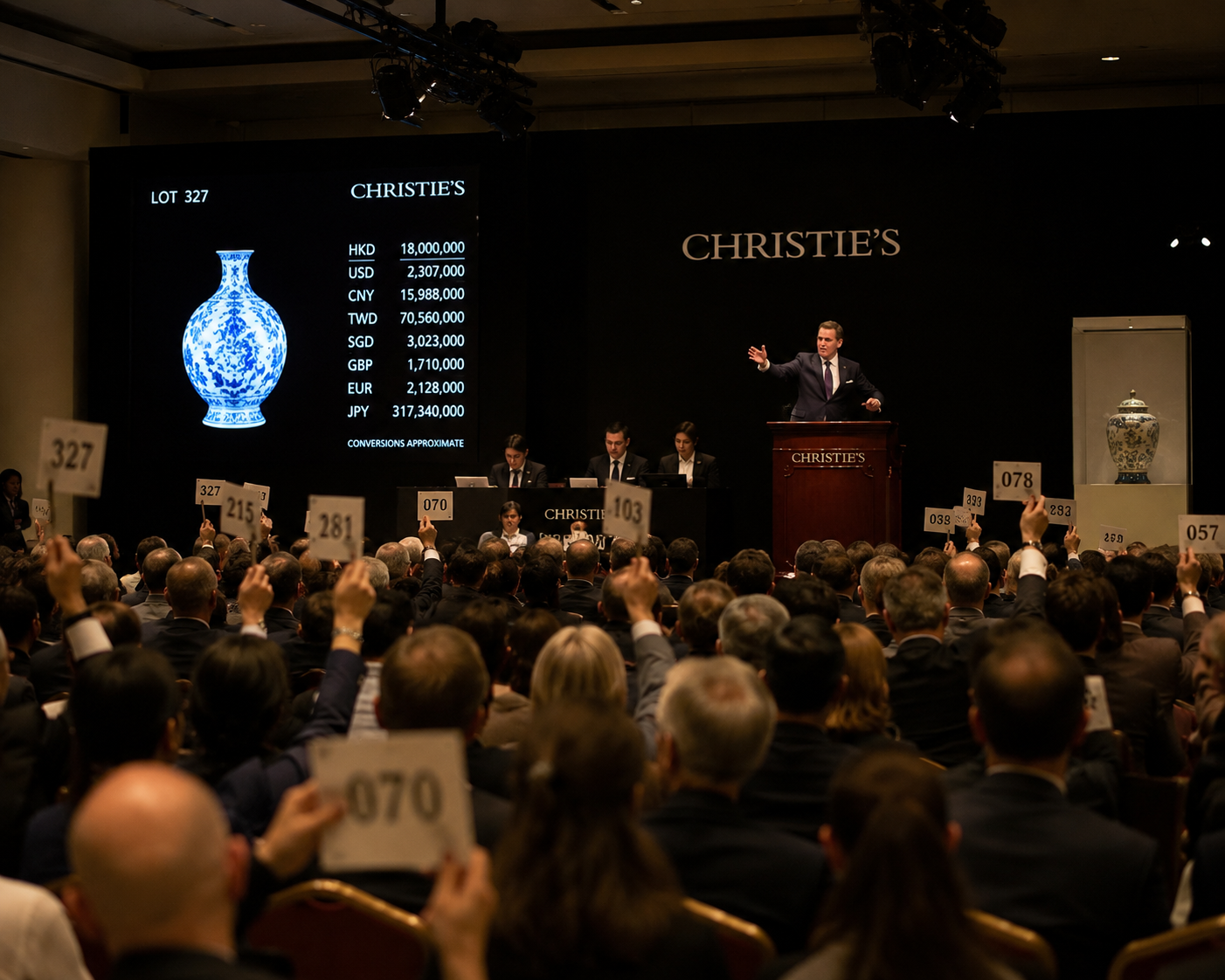
In recent years, as Chinese antique ceramics have continued to attract attention in the international…
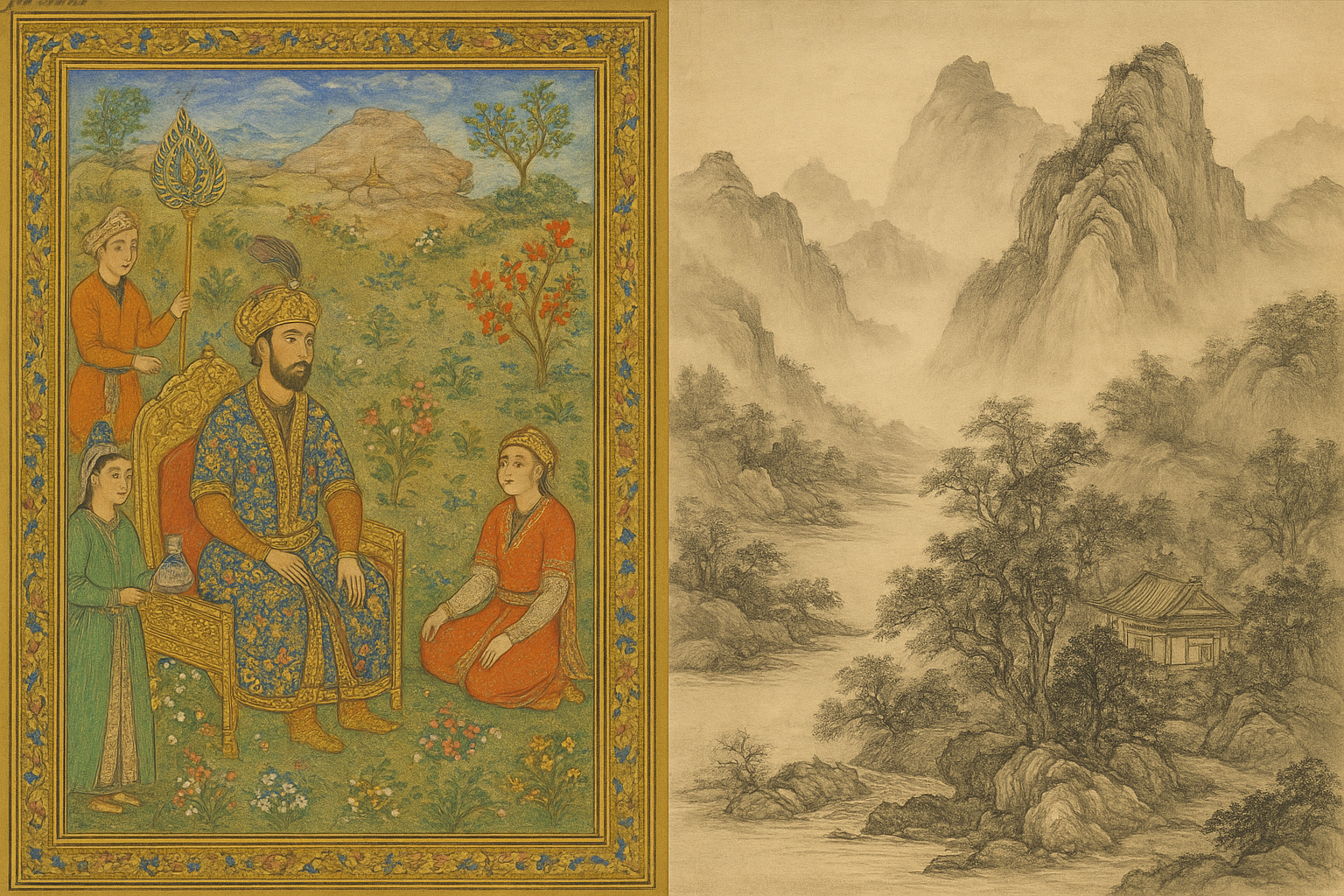
“Treasures of the East: A Dialogue of Art between the Middle East and Asia”
Across the vast Eurasian continent,
the ancient Silk Road was more than a trade route—it was the lifeline of civilizations. Along its winding paths flowed not only spices, gems, and silk, but also ideas, beliefs, and art. Today, as we revisit the artistic legacies of the Middle East and Asia, we do not see two separate worlds, but rather a dialogue spanning millennia—a conversation of color, form, and spirit.
I. From Desert to Palace: The Light and Shadow of Arab Art
What captivates most in Middle Eastern art is its geometric order and spiritual resonance shaped through light and shadow.
Islamic art, eschewing figurative depictions of the divine, constructs a transcendent sense of order through intricate geometric patterns and arabesques.
The domes of mosques, the mosaics of blue tiles, the golden calligraphy adorning the Qur’an—all proclaim a single truth: beauty is the path to the divine.
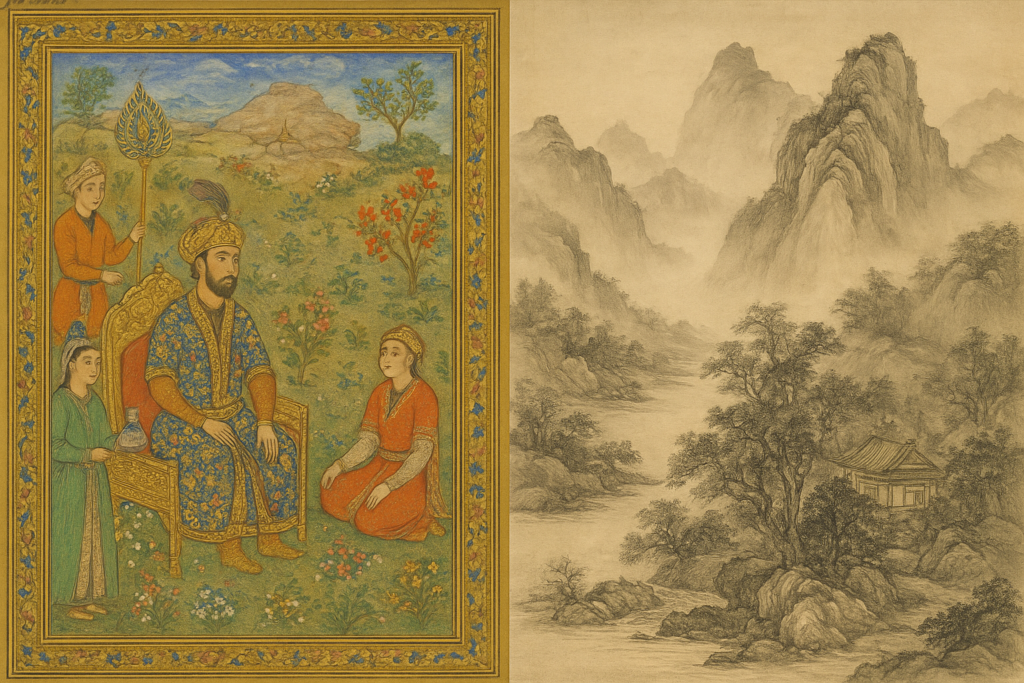
From the delicacy of Persian miniatures to the elegance of Ottoman ceramics, every layer of color and flow of line reflects a pursuit of the infinite—a fusion of light and faith, a quiet blossoming of poetry in stillness.
II. The Eastern Response: From Tang Elegance to Ukiyo-e
At the other end of Asia, art responded to Middle Eastern aesthetics in its own unique way.
In the glittering splendor of Tang-era Chang’an, glassware from Sasanian Persia shimmered beside Chinese silk; in the temples of Nara, Japan, glazed ornaments and fragrant resins from Central Asia still bear witness to ancient exchanges.
Through the texture of silk and the glaze of ceramics, the Eastern understanding of beauty continually expanded and evolved.
The geometric rationality of the Middle East and the poetic naturalism of East Asia—seemingly opposed—mirror one another in the deeper realm of art.
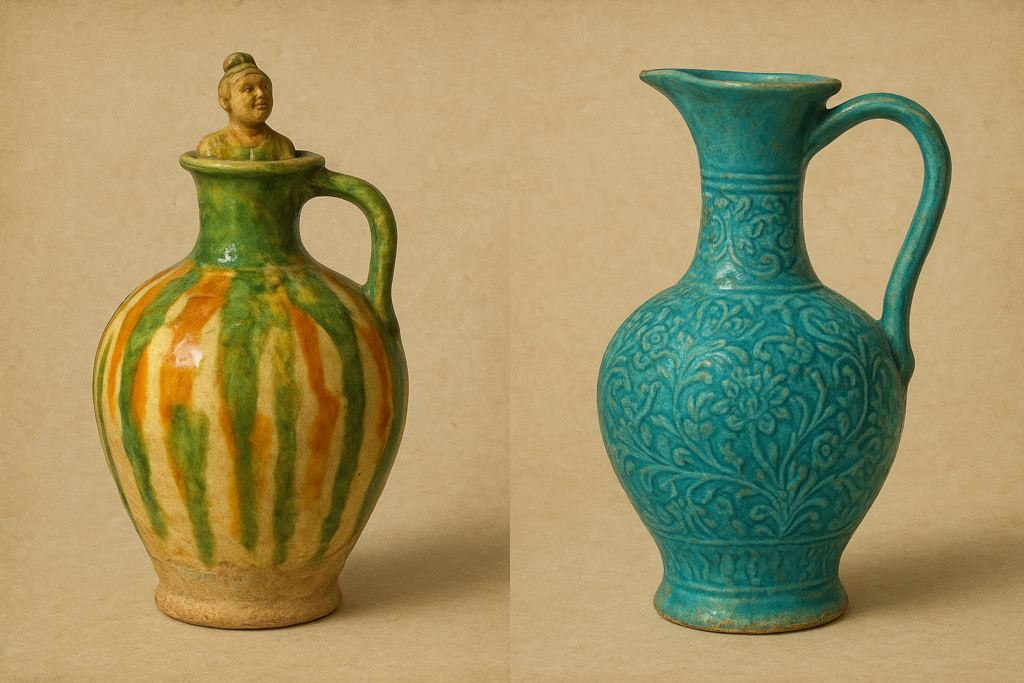
The blue and green glazes of Tang sancai ceramics, for instance, were inspired by Persian techniques; the serene lines of Song-dynasty porcelain reflect, in part, the Islamic world’s devotion to proportion and balance.
By the modern era, Japan’s ukiyo-e, India’s miniature painting, and China’s landscape art each offered distinct ways of responding to the world’s gaze.
In the rhythm of lines, the spaces of silence, and the flowing interplay of color, the “Eastern spirit” found itself redefined once more.
III. The Golden Road: The Interweaving of Craft and Faith
Along this artistic journey, jewelry and artifacts stand as the most tangible witnesses.
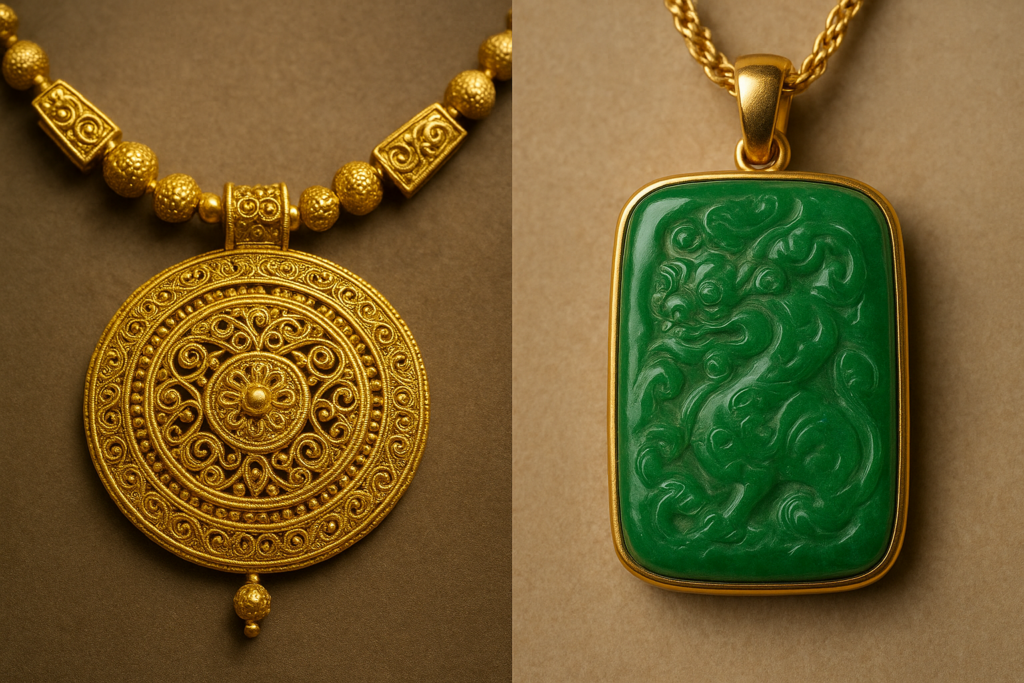
From the filigree artistry of the Abbasid Caliphate to the enamel and cloisonné techniques perfected in Ming and Qing China, craftsmanship became the meeting ground of civilizations.
The blue glazes of Iran and the cobalt hues of Chinese porcelain, through the exchanges of the Mongol Empire, intertwined to create one of the most enchanting chapters in 14th-century art history—when the techniques and aesthetics of East and West coexisted upon a single object.
Whether it is the golden ornaments of Isfahan or the jade carvings of Suzhou, each bears humanity’s shared longing for eternity.
The patterns, curves, golden threads, and gemstones are not merely symbols of wealth—they are crystallizations of faith.
IV. The Continuation of Art: Reconnecting in the Contemporary Era
Today, a new “Silk Road” is reborn—through art exhibitions, international collections, and the digital revival of culture.
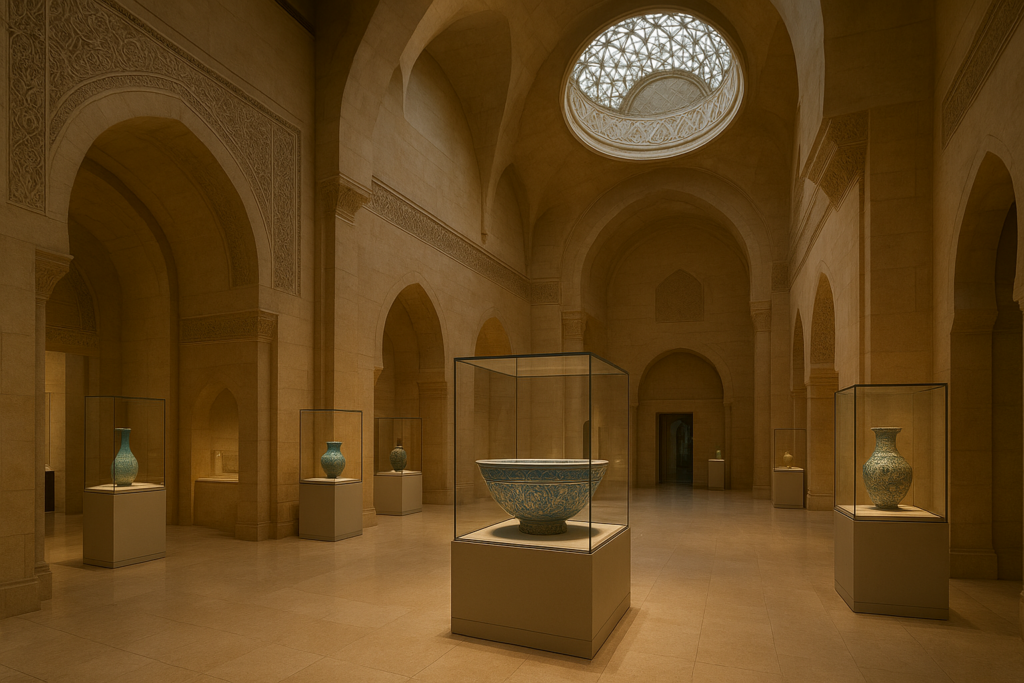
From the Louvre Abu Dhabi to the Shanghai Museum, from the Museum of Islamic Art in Doha to the Tokyo National Museum, we witness ever more frequent encounters between Middle Eastern and Asian art—serving not only as retrospection of history but as symbols of cultural renewal.
Contemporary artists, too, are rewriting this dialogue.
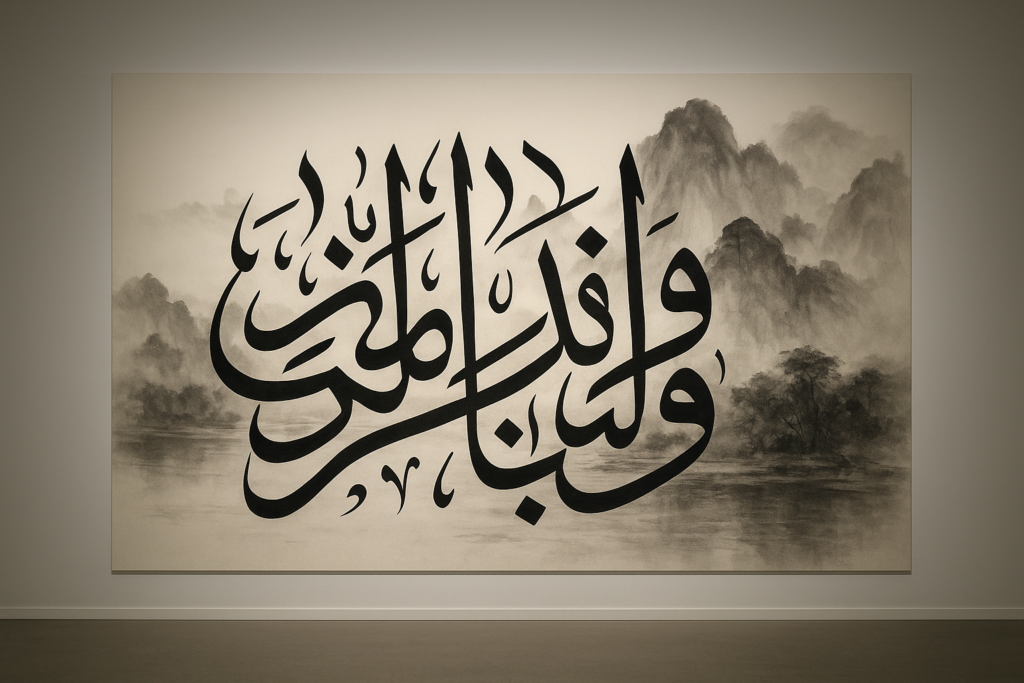
Chinese ink painters weave the flowing lines of Arabic calligraphy into brush and ink; Iranian artists reconstruct installations from fragments of Tang ceramics.
Within galleries where light and shadow intertwine, ancient forms and modern expressions overlap, giving rise to a new “Eastern imagination.”
V. Epilogue: The Echo of Civilizations
Art is the gentlest of bridges.
Between the Middle East and Asia, what is crossed are not borders, but the boundaries of time and faith.
From the golden sands of Persia to the misty green landscapes of Jiangnan, humanity has painted, upon different lands, the same vision—to seek eternal beauty within the limits of life.
As we stand today in the heart of the gallery, gazing upon a ceramic bowl, a brocade, or a piece of goldwork from a thousand years ago, we may faintly hear a whisper across time—
a dialogue between civilizations,
a treasure of the East,
and a shared memory of humankind.
Related Posts