
In the history of European art, few artists have had a life as dramatic as…
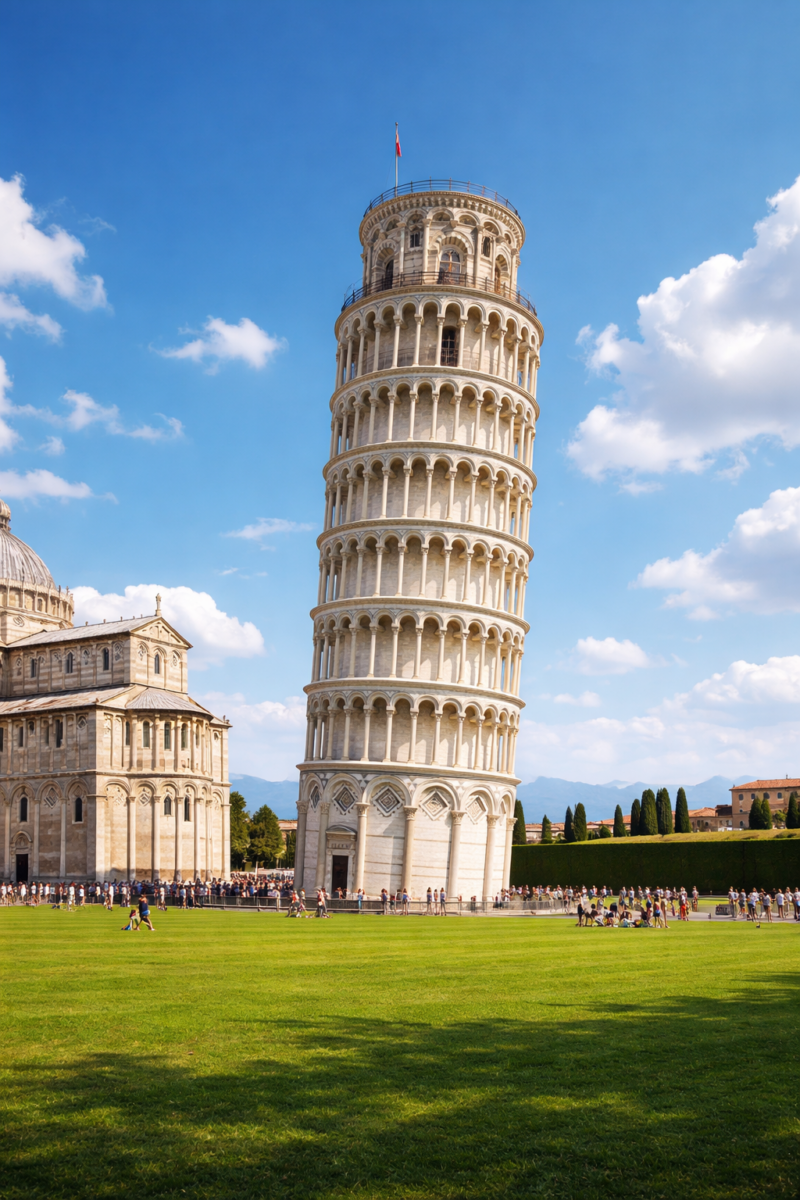
The Leaning Tower of Pisa: A Miracle of Time and Tilt
On the Tuscan plain of Italy stands a structure that has become almost synonymous with leaning—the Leaning Tower of Pisa. More than an architectural marvel, it is a symbol woven from history, culture, and human ingenuity. Each year, countless visitors from around the world gather here to witness the enduring charm of this “forever-leaning” tower and to feel the traces of time flowing slowly between its stones.
I. Through the River of History: From Construction to Inclination
The history of the Leaning Tower of Pisa dates back to the 12th century. Construction began in 1173, originally intended as the bell tower for the Pisa Cathedral, serving a religious function. However, when the tower reached its third level, it began to tilt gradually due to the soft soil beneath its foundation and an underestimation of geological conditions during planning.
The tilt did not immediately cause panic. Construction continued intermittently over nearly 200 years. During this time, engineers attempted various methods to control the inclination, including adjusting the upper levels to compensate for the lean. This slow and cautious process ultimately turned the tower into a reflection of medieval engineering wisdom.
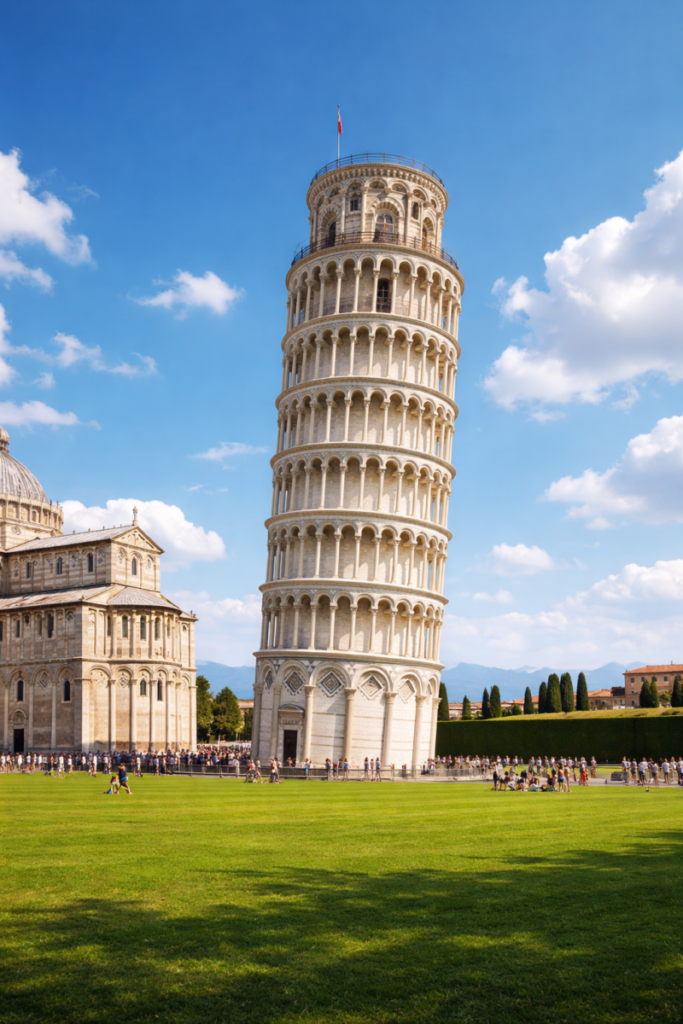
Today, standing approximately 56 meters tall, the tower presents the distinctive posture we know—a graceful asymmetry that maintains structural stability while creating dramatic visual tension. Its story reminds us that even outcomes that deviate from original plans can become miracles that endure for centuries.
II. A Masterpiece of Architectural Art
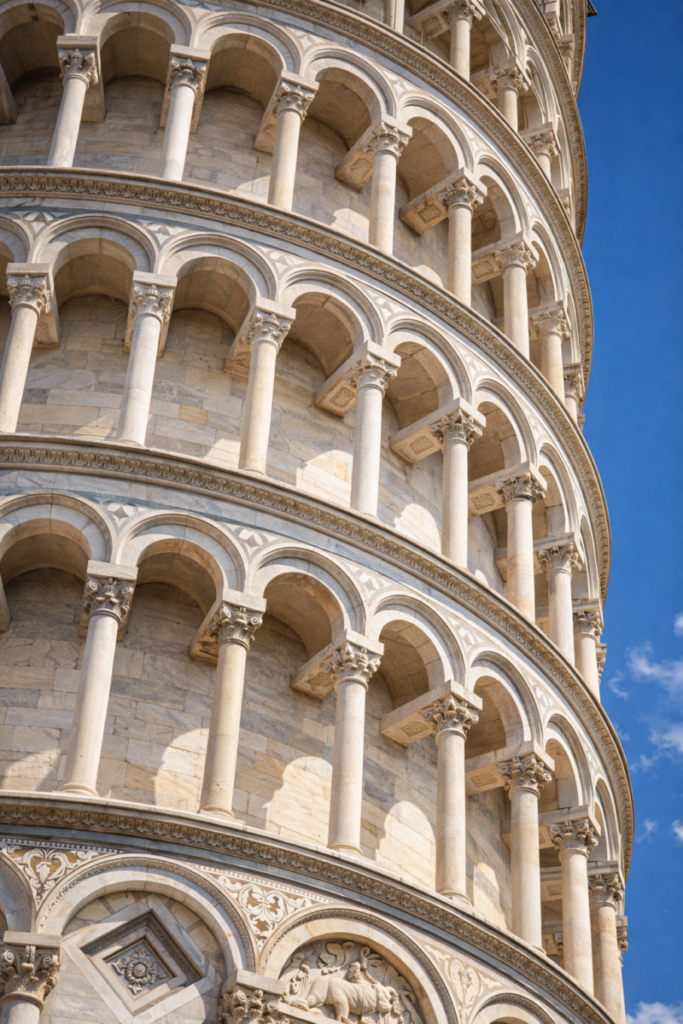
The Leaning Tower of Pisa is renowned not only for its tilt but also for its architectural elegance. Constructed from white marble, it exemplifies Romanesque style, featuring graceful arches, refined colonnades, and intricate decorative details. Each level reflects the remarkable craftsmanship of medieval artisans.
The tower consists of eight levels, including the base arcade and seven tiers open to visitors. Evenly spaced arches form harmonious patterns, and sunlight streaming through them casts enchanting shadows across the marble surfaces. At the top lies the bell chamber, once home to seven bells, each with its own distinct tone.
Remarkably, despite its tilt, the design incorporates principles of visual and structural balance. The upper levels were subtly adjusted northward to create aesthetic harmony, and the internal structure was engineered to withstand both gravity and wind forces. This careful equilibrium between functionality and beauty is a key reason the tower remains a classic study in architectural history.
III. A Cultural Icon and Scientific Inspiration
Beyond its architectural significance, the Leaning Tower of Pisa is a global cultural symbol. It represents human resilience and creativity in the face of natural challenges, as well as the beauty found in imperfection. Its unique character has made it a favorite backdrop for photographs, artworks, films, and advertisements worldwide.
The tower also holds a place in scientific history. According to legend, the renowned physicist Galileo Galilei conducted experiments on free fall from the tower, demonstrating that objects of different weights descend at the same rate. Whether entirely factual or not, the story symbolizes the spirit of inquiry and innovation that defines scientific progress.
When visitors gaze up at the tower today, they see not only a historic monument but also a tribute to intellectual exploration.
IV. Tourism and Modern Preservation
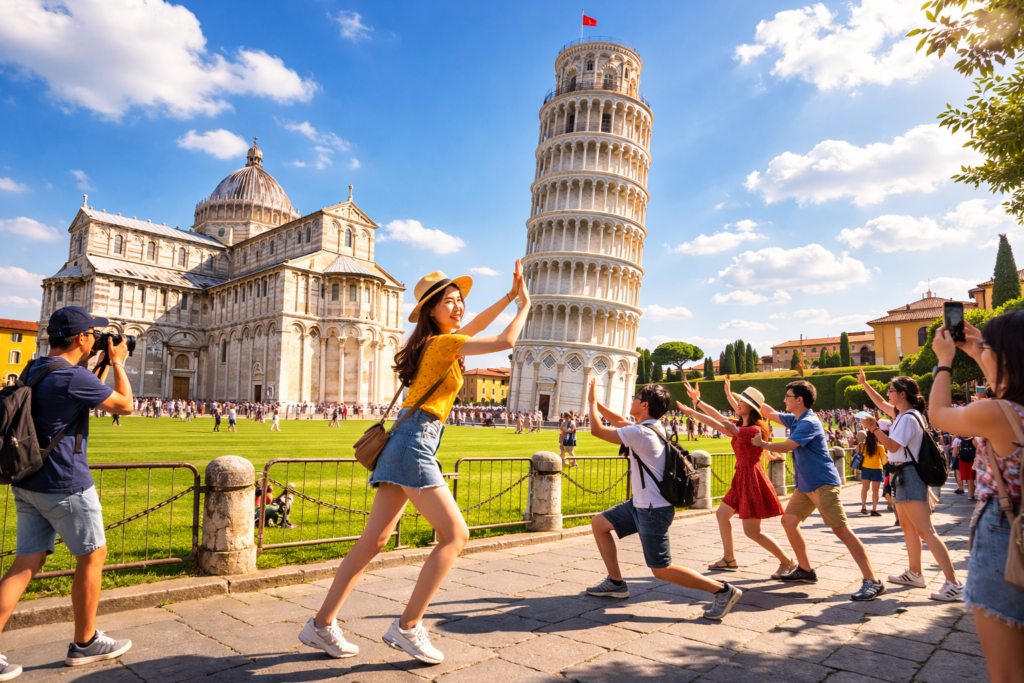
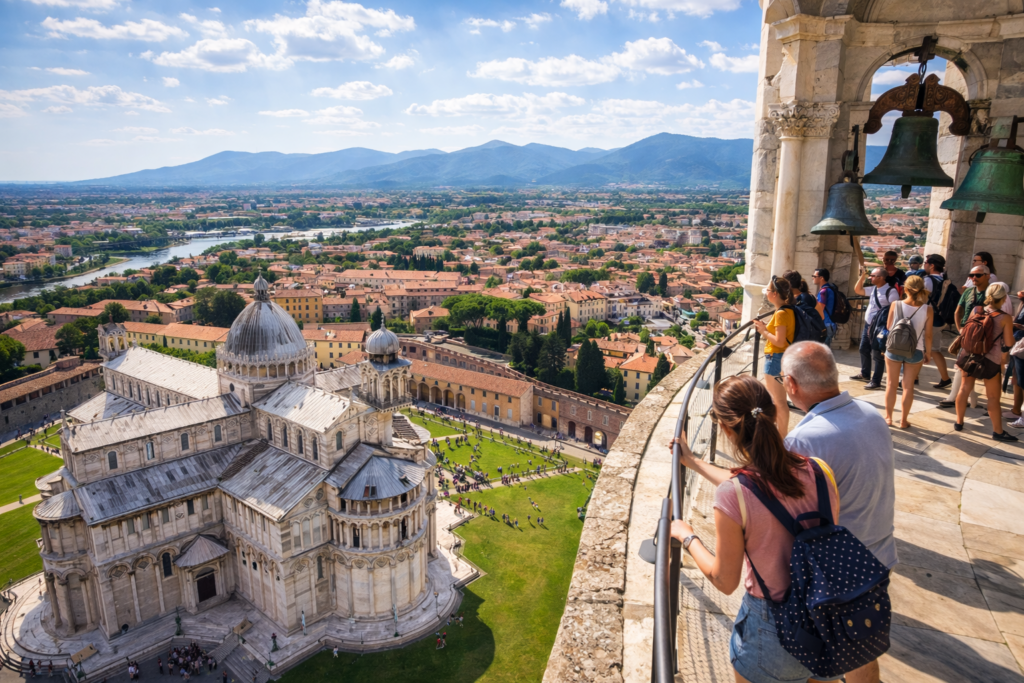
As one of Italy’s most celebrated landmarks, the Leaning Tower of Pisa attracts millions of visitors annually. Tourists often pose in playful “holding up the tower” stances, a tradition that has become part of Pisa’s cultural identity. Climbing the spiral staircase to the top offers sweeping views of the city and the surrounding countryside, where medieval heritage blends seamlessly with modern life.
Yet the tower’s long-standing tilt and the impact of heavy tourism posed structural concerns. In the late 20th century, an international team of engineers undertook extensive stabilization efforts. By reinforcing the foundation, carefully reducing the tilt, and installing support measures, they successfully secured the structure within safe limits. Today, the tower stands not only as a monument of history but also as a model of heritage conservation and engineering achievement.
Even a brief visit leaves a lasting impression: every marble block, every arch, and every winding step tells a story spanning centuries.
V. The Enduring Charm and Lessons of the Tower
The appeal of the Leaning Tower of Pisa lies not merely in its angle of inclination, but in the history, artistry, and scientific legacy it embodies. It reminds us that perfection is not the only form of beauty—flaws and unexpected outcomes can also create wonders. Through the accumulation of history and the brilliance of human craftsmanship, a structure of stone transcends its material form to become a symbol of culture and emotion.
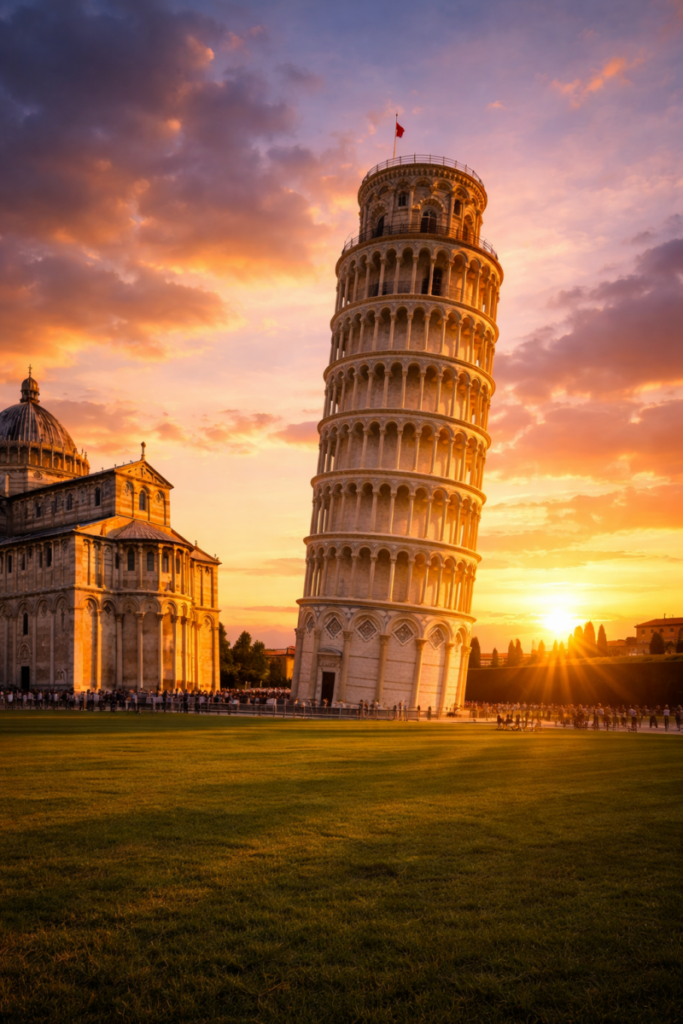
As the setting sun casts golden light across its leaning silhouette, the interplay of shadow and structure inspires quiet reverence. Visitors pause not only for photographs, but to reflect on the architectural ideals, artistic sensibilities, and courage of past generations.
The Leaning Tower of Pisa—this miracle of time and tilt—continues to stand watch over the Italian plain, leaving an indelible mark on every traveler’s memory. It is more than a tower; it is a testament to human wisdom, culture, and aesthetic vision—an enduring wonder where history and modernity meet.
Related Posts