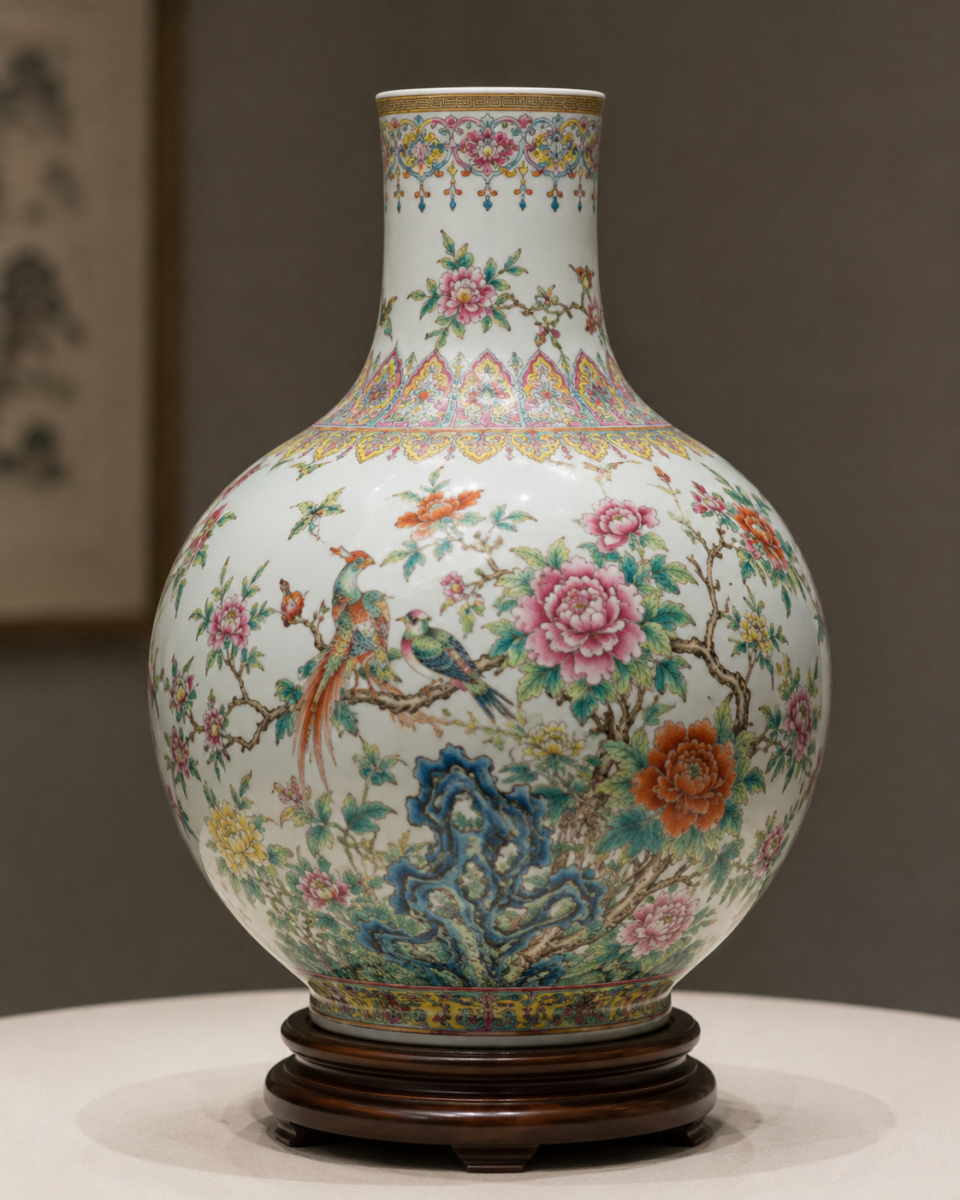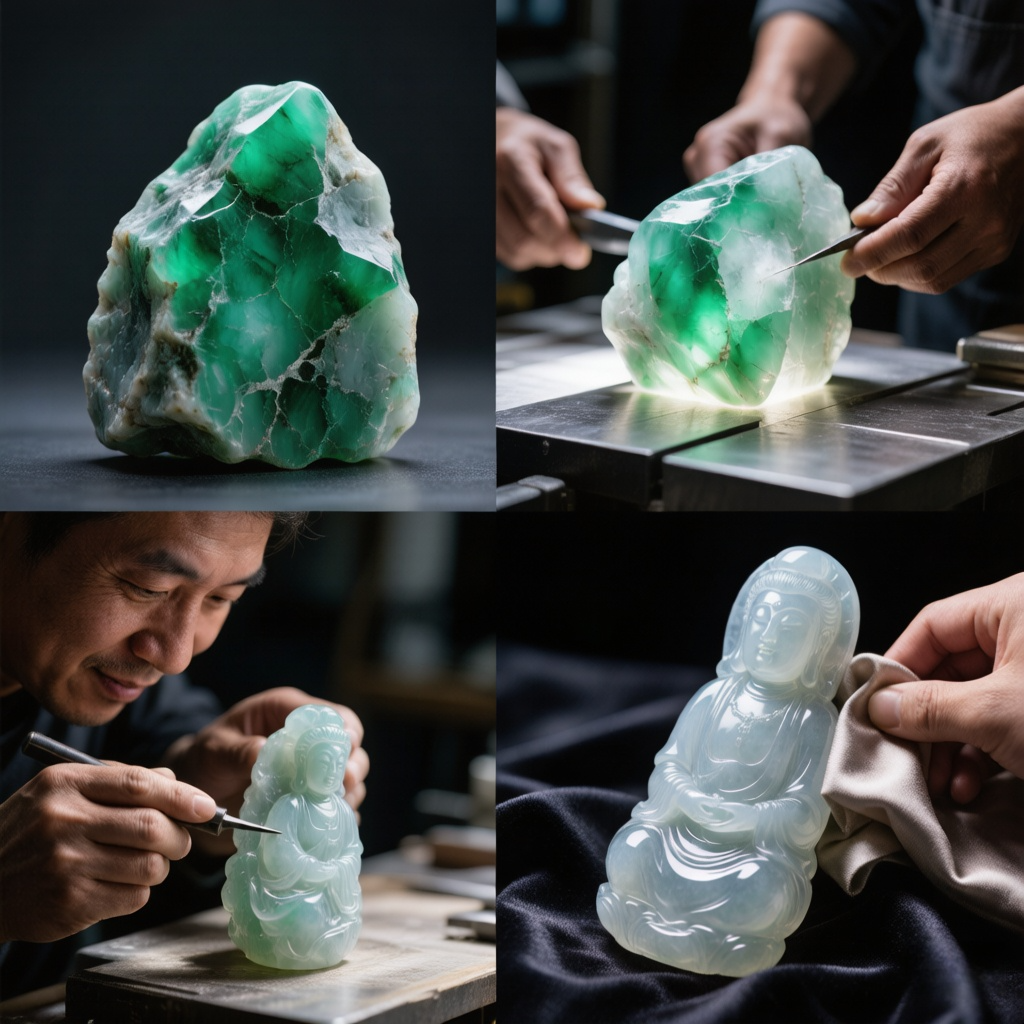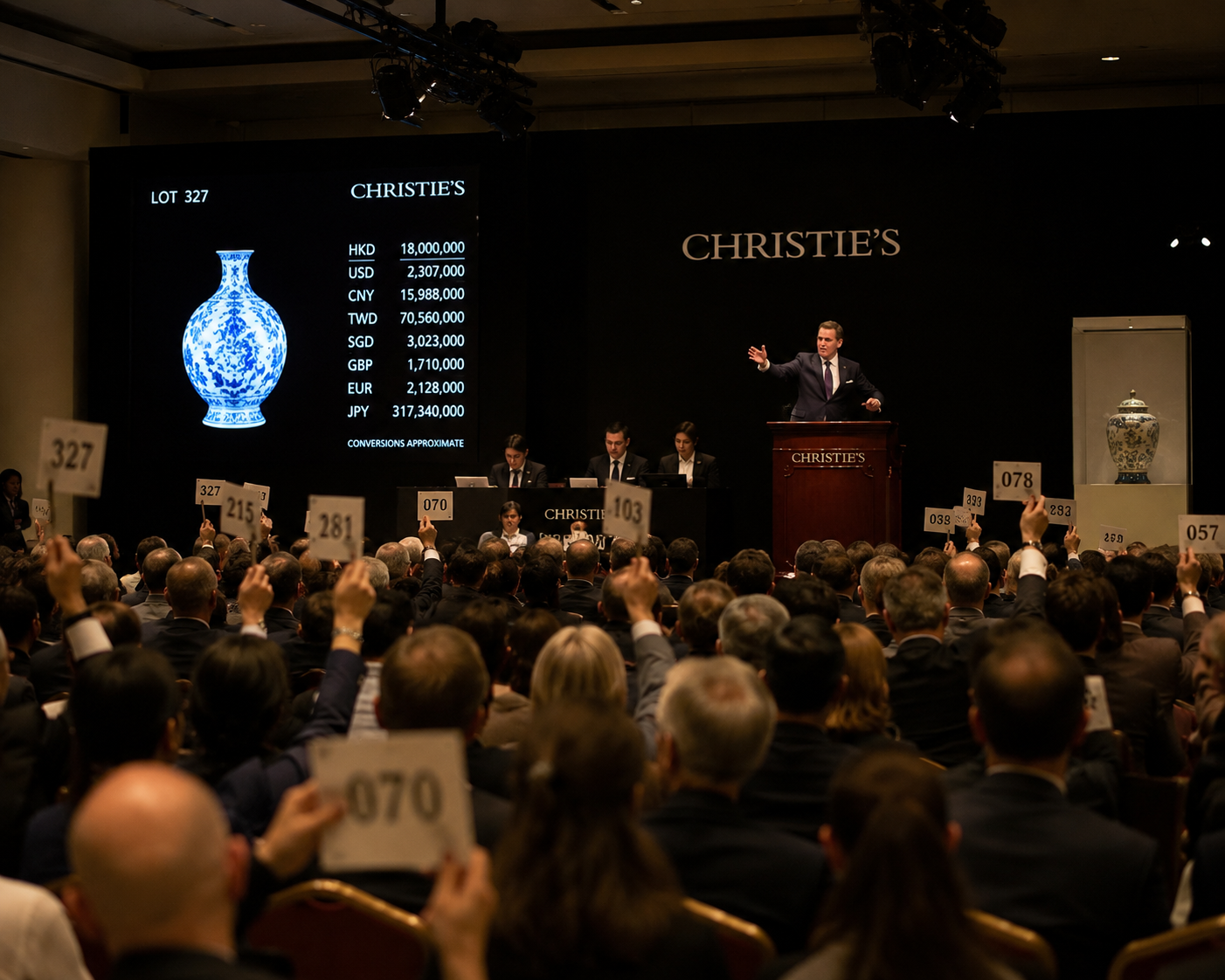
In recent years, as Chinese antique ceramics have continued to attract attention in the international…
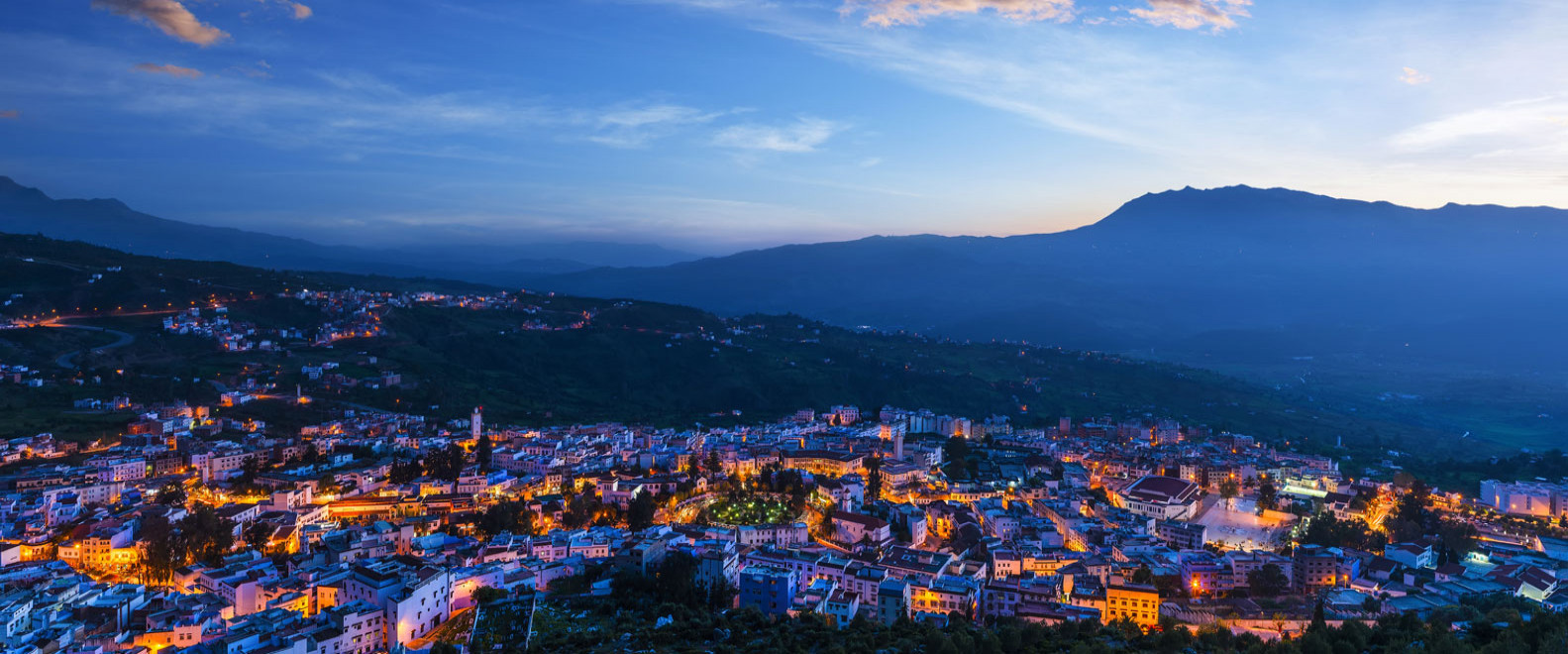
The Blue City: The Chromatic Poetics and Architectural Order of Chefchaouen
Nestled within the folds of the Rif Mountains in northern Morocco lies a city that seems as if it were poured directly from a painter’s palette—Chefchaouen. Known as the “Blue City,” it owes this name not to the sea, but to blue itself, which has become its most striking, enduring, and symbolically charged urban language. As you walk through its streets, you soon realize that color here is not a superficial ornament applied to architecture, but a design system deeply embedded in space, belief, climate, and everyday life.
I. The Origin of Blue: Where Faith, Memory, and Climate Converge
There are several explanations for why Chefchaouen is awash in blue. The most widely cited traces back to Jewish tradition, in which blue symbolizes the sky and divinity, reminding people of reverence for God. In the early 20th century, Jewish immigrants brought this practice of painting walls blue to the town, and over time it became part of the collective memory.
A more pragmatic explanation is rooted in environmental adaptation: blue pigment reflects sunlight, reduces perceived heat, and helps repel insects. In the hot climate of North Africa, color is not an aesthetic luxury but a form of environmental intelligence. Gradually, blue ceased to be merely a religious or functional choice and evolved into the very identity of Chefchaouen.
II. Layers of Color: Not One Blue, but Many
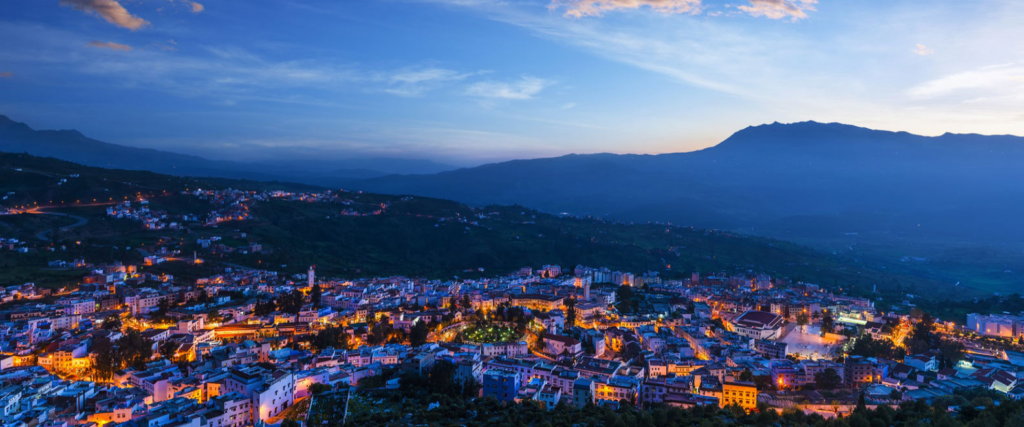
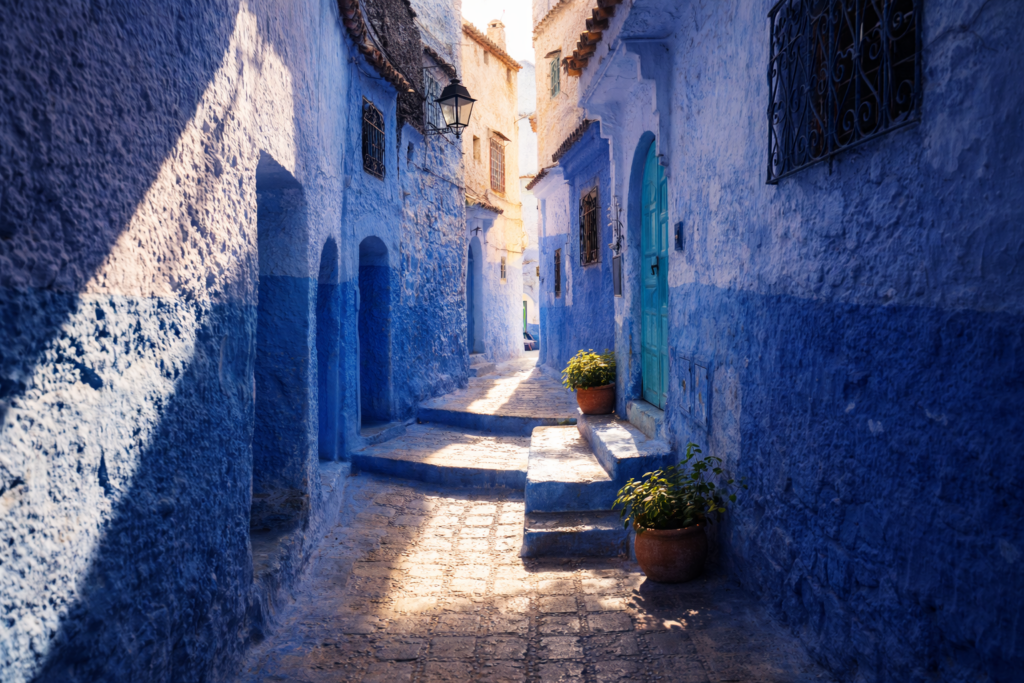
To truly walk through Chefchaouen is to discover that its “blue” is anything but uniform. Cobalt blue, sky blue, indigo, powder blue, gray-blue—each neighborhood, each era, each household mixes its own shade, creating a remarkably rich chromatic spectrum.
Rather than causing visual chaos, these variations establish a subtle sense of order. Related hues transition naturally through narrow alleyways, shifting in saturation with the changing light: cool in the morning, vivid at noon, and gentle at dusk. Here, color behaves like a “breathing material,” completing the architectural expression together with time.
III. Architectural Scale: A Human-Centered Spatial Order
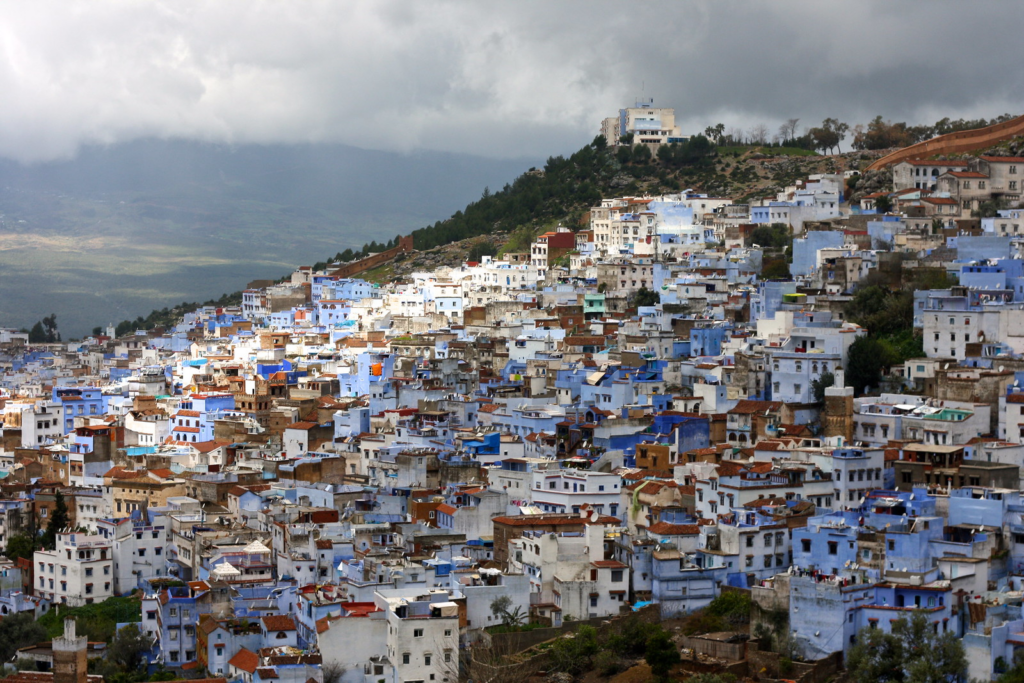
Chefchaouen’s architecture is modest rather than monumental. White walls, blue doors, low-rise dwellings, and narrow streets define a typical Islamic mountain town. This scale is no coincidence—it is a response to topography, defense, and climate.
Narrow streets limit direct sunlight and reduce heat; stepped pathways follow the mountain slope, avoiding large-scale land alteration; thick walls and small window openings preserve privacy while improving thermal insulation. Together with the blue-painted surfaces, these principles turn the entire city into an efficient passive architectural system.
IV. The Dialogue Between Color and Architecture: How Blue Shapes Space
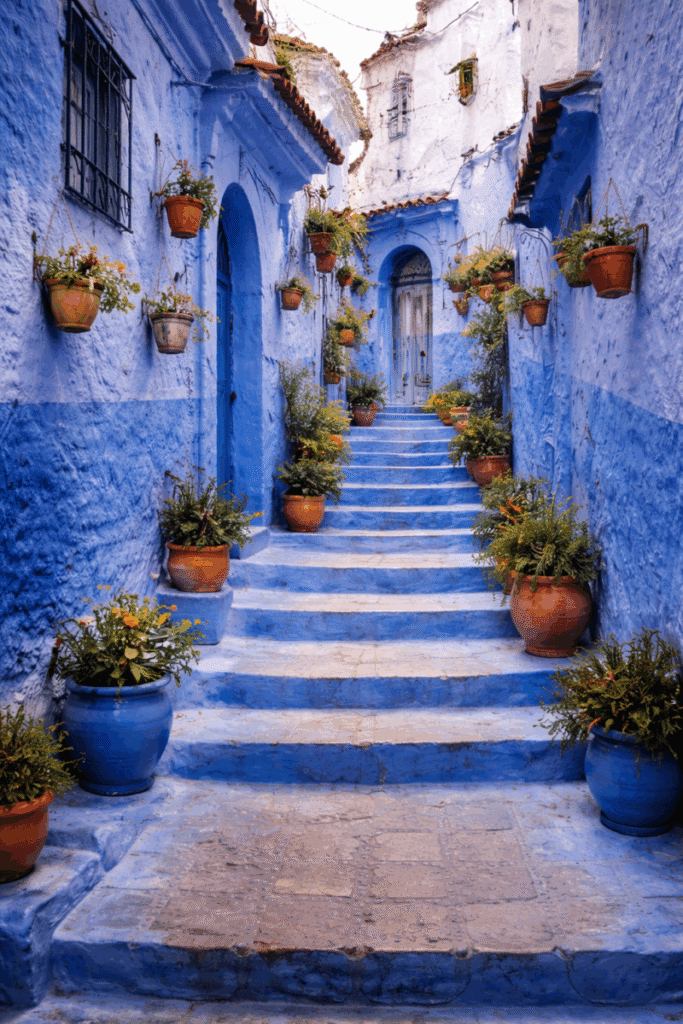
In Chefchaouen, blue is not a neutral backdrop but an active force shaping spatial experience. It softens boundaries between buildings, visually blending walls, steps, and doorframes, making the streets feel continuous and fluid.
At the same time, blue amplifies detail. The grain of wooden doors, the shadows cast by wrought-iron window grilles, and the warm accents of pottery and flowers all stand out more vividly against the blue background. This strategy—low-saturation base tones paired with localized high contrast—is a spatial design approach of great contemporary value.
V. Design Aesthetics in Everyday Life
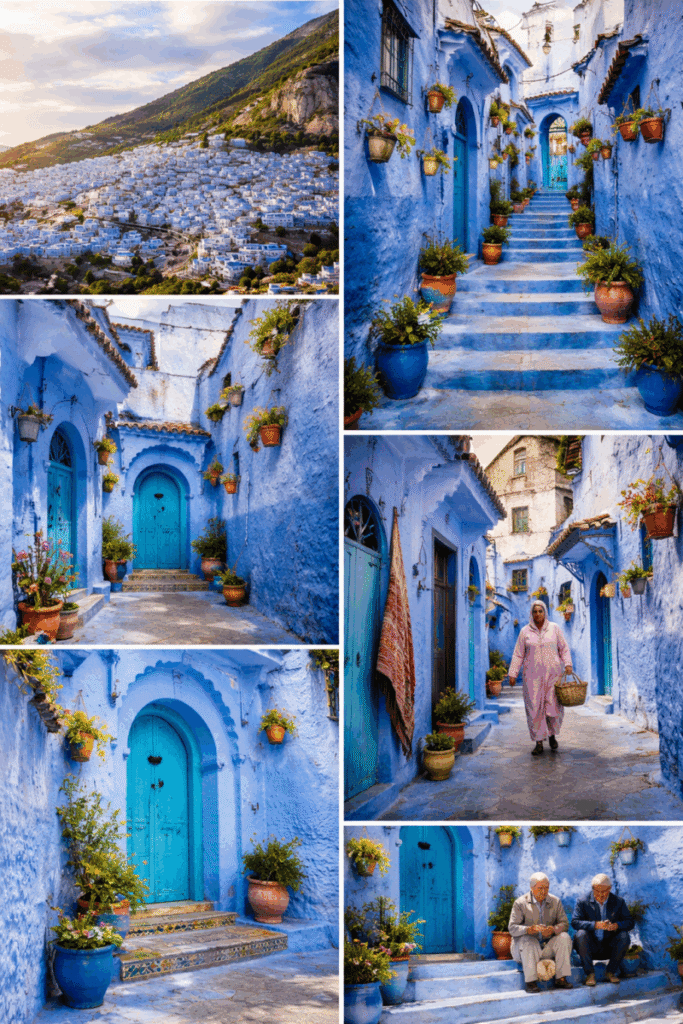
The beauty of Chefchaouen is not staged for visitors. Drying laundry, casually placed wicker chairs, cats resting by doorways, and weathered walls all merge effortlessly into the overall chromatic system. This lack of over-design produces, paradoxically, a strong sense of visual coherence.
Notably, residents regularly repaint their walls, yet without striving for strict uniformity. Each repainting is both a continuation and a subtle adjustment of tradition. This philosophy of continuous renewal—rather than one-time completion—keeps the city alive, preventing it from becoming a frozen postcard.
VI. Lessons for Contemporary Design
In an era of increasingly homogenized cities, Chefchaouen offers a powerful lesson:
the most enduring design does not rely on complex forms, but on the deep coordination of color, material, climate, and culture.
Here, blue is not a branding device but a collective choice; buildings are not isolated objects but components of a larger order. As a result, the city possesses a clear and lasting character.
Conclusion: A City Gently Embraced by Color
The blue of Chefchaouen is understated and unpretentious, yet unforgettable. It humbles architecture, calms space, and allows time to leave gentle traces on its walls.
When color transcends visual stimulation and becomes part of a way of life, a city gains a true soul. And that, above all, is the most moving quality of the Blue City.
Related Posts