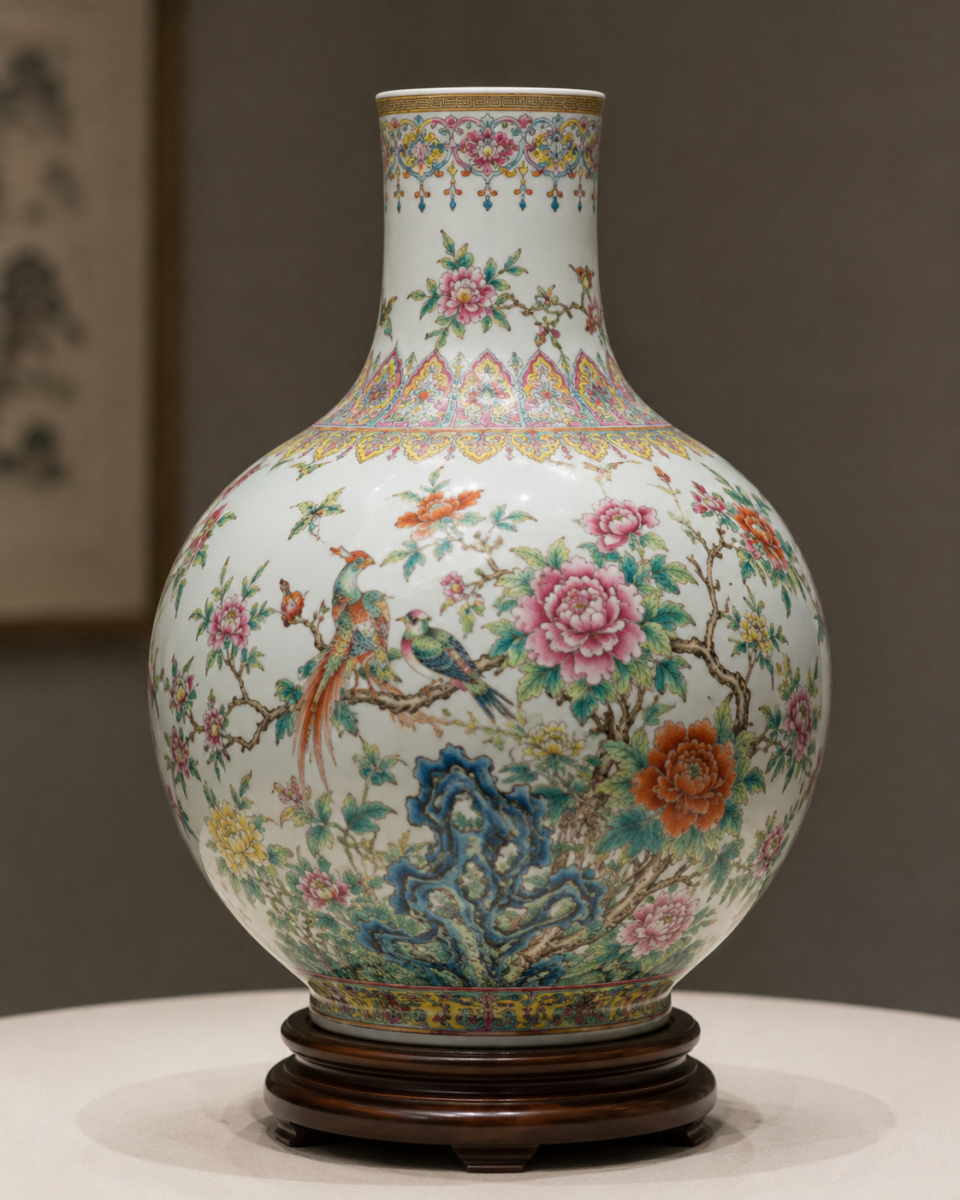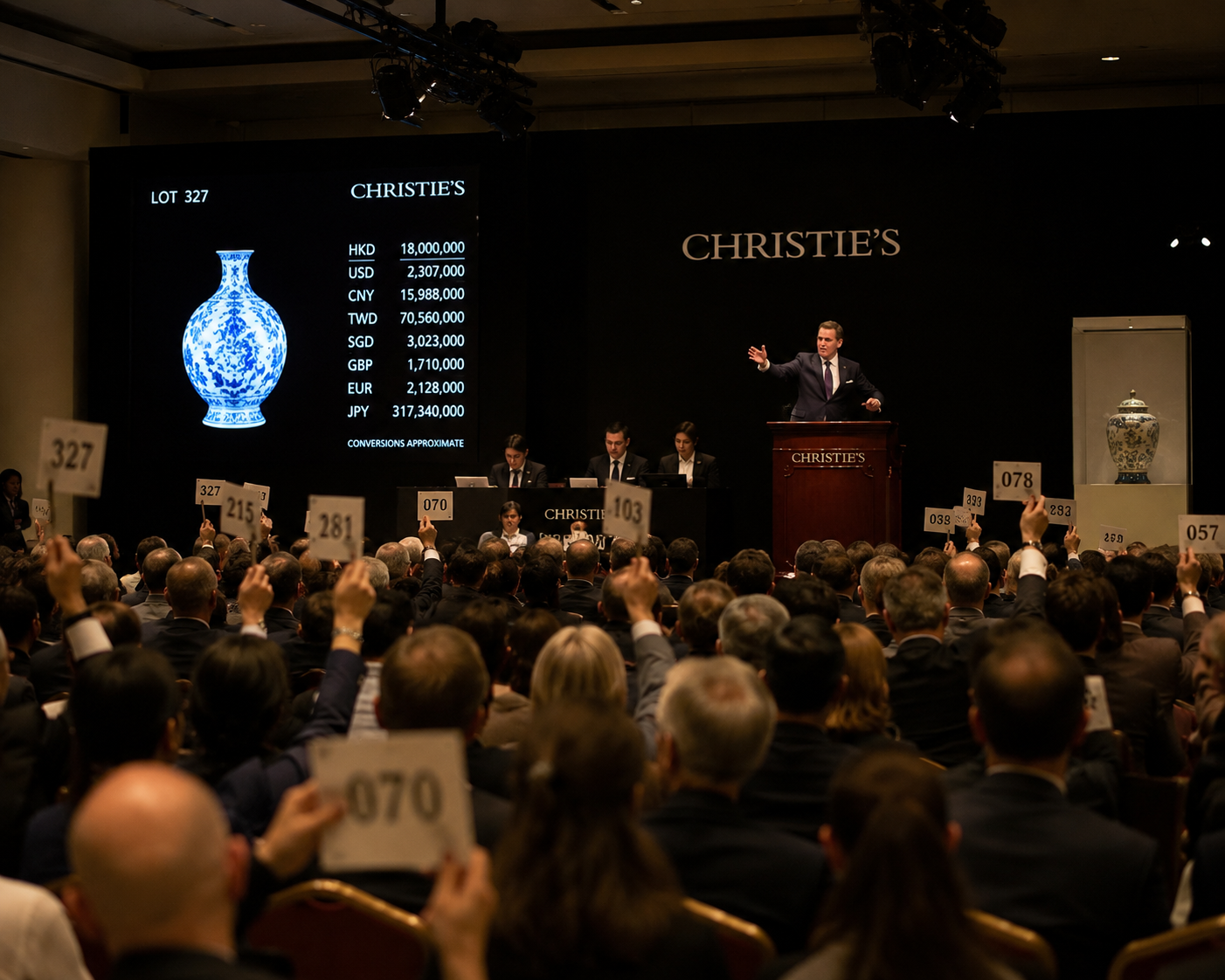
In recent years, as Chinese antique ceramics have continued to attract attention in the international…
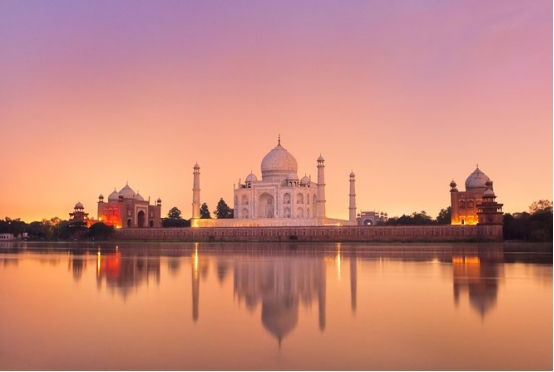
Taj Mahal: A White Epic Interwoven with Empire, Love, and Civilization
In the history of world architecture, few buildings embody the intertwined meanings of power, love, religion, aesthetics, and cultural exchange as profoundly as the Taj Mahal. It is not only the crowning achievement of the Mughal Empire, but also an important marker of a turning point in South Asian civilization—a symbol of deep fusion between Islamic and Indian cultures, and a crystallization of historical memory and human emotional resonance.
The Taj Mahal is far more than a mausoleum.
It is a narrative of imperial rise and fall, an experiment in cross-cultural fusion, a symbol of love, and a proclamation of power.
I. A Mausoleum Reflecting the Golden Age of the Mughal Empire
In the 17th century, under the rule of Shah Jahan, the Mughal Empire reached its zenith. As the grandson of Akbar the Great and son of Jahangir, Shah Jahan inherited a vast, well-organized, and prosperous empire whose resources could sustain colossal architectural projects.
At its core, the construction of the Taj Mahal was an imperial display:
1. A showcase of wealth and technological prowess
Craftsmen came from Persia, Central Asia, and Turkey.
Marble was transported long distances from northern India.
Pietra dura gemstone inlay reached artistic perfection.
Massive labor and engineering organization reflected the empire’s administrative capacity.
It was a symbol of state power, much like the Egyptian pyramids or the Palace of Versailles—a declaration to subjects and the world that this was a thriving and powerful civilization.
2. A demonstration of cultural confidence
Mughal elites were deeply versed in Persian culture and took pride in their artistic tastes. The Taj Mahal brought the idealized aesthetics of Persia into India, forming a refined Islamicized symbol of royal authority.
Thus the Taj Mahal is neither a simple expression of personal emotion nor merely a religious structure. It is a product of political, cultural, and aesthetic forces acting together.
II. A Model of Fusion: Islamic, Indian, and Persian Traditions
The cultural significance of the Taj Mahal lies in its identity as a cross-civilizational creation, not the product of a single tradition.
1. Multicultural fusion in architectural style
Islamic influences: domes, arches, minarets, Quranic inscriptions, geometric patterns
Persian concepts: symmetry, axial planning, paradisiacal garden layout
Indian elements: lotus motifs, symbolic ornamentation, exquisite marble carving
The garden design draws from the Persian chahar bagh—the four-part garden symbolizing paradise in the Qur’an. Meanwhile, the dome reflects Central Asian and Persian mosque traditions.
2. A reflection of a historically cosmopolitan empire
The Mughal Empire itself was a synthesis of foreign rulers and indigenous traditions. Descended from Central Asian conquerors, the Mughal rulers governed one of the most diverse regions of the world.
The Taj Mahal thus mirrors the empire’s own nature:
The elegance of Islam
The romantic aesthetics of Persia
The fine craftsmanship of India
In the Taj Mahal, these three reach a harmonious balance.
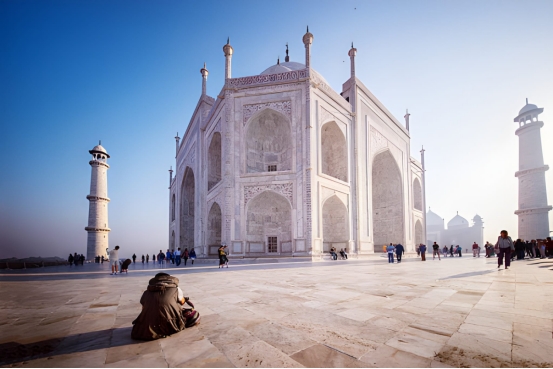
III. Symbolic Language in Stone: Power, Faith, Eternity
The Taj Mahal is celebrated not just for its beauty, but for its rich symbolic meaning.
1. White marble as a language of power
White represents purity, but in the Mughal period it also signified elite status.
In a tradition dominated by red sandstone architecture, the all-white Taj Mahal stands out boldly:
Exclusive royal materials
Sacredness associated with tombs
A distinctive visual symbol of authority
The building uses its very materials to express transcendence.
2. Symmetry as a metaphor for cosmic order
The Taj Mahal’s relentless pursuit of symmetry is not merely aesthetic—it reflects a worldview:
God created a perfectly ordered universe
Symmetry symbolizes paradise
Human architecture mirrors divine harmony
This symmetry extends from the overall layout to wall patterns, calligraphy height, and gemstone placement.
3. Dome and minarets: hints of faith and eternity
The soaring dome symbolizes the ascent of the soul; the minarets, stability and devotion.
The overall message of the Taj Mahal is:
“Death is not an end. Love and faith grant eternity.”
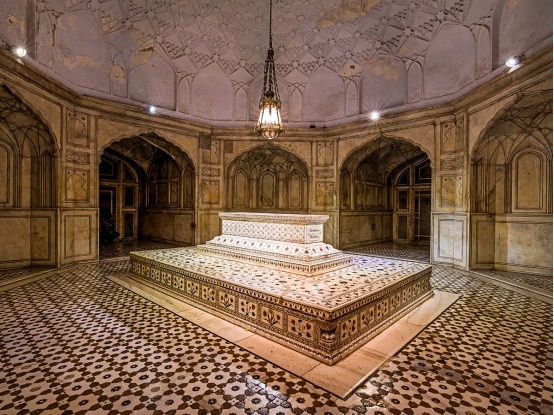
IV. Shah Jahan and Mumtaz: A Love Story Shaped by Politics
The Taj Mahal is often romanticized as “the world’s greatest monument to love,” but history tells a more complex story.
1. Mumtaz was not the only wife—but she was politically significant
Shah Jahan had three wives; Mumtaz held a unique place not only because of affection, but also due to her political capability. She:
Participated in court decisions
Managed royal finances
Avoided factional conflicts
Enjoyed widespread popular respect
Their rare “partnership-style marriage” made her death both an emotional blow and a political disruption.
2. The Taj Mahal as both love symbol and tool of royal authority
Building such a monument expressed personal grief, but also reinforced the sacred aura of the monarchy.
It signaled:
“Royal power transcends time—powerful enough even to build eternity for love.”
3. The “miracle of love” narrative is partly a later construction
During British colonial rule, scholars repackaged the Taj Mahal as a romantic symbol to appeal to Western tastes for the exotic East.
Thus today’s love myth is shaped by:
Imperial politics
Religious symbolism
Colonial reinterpretation
Modern commercial storytelling
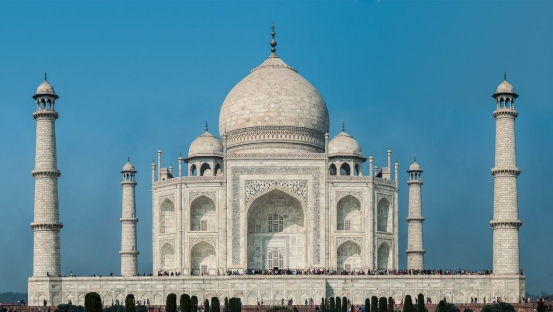
V. The Cultural Legacy of the Taj Mahal: Value Beyond Time
The Taj Mahal’s significance extends into the modern world.
1. A pinnacle of human architectural beauty
Its proportions, light, symmetry, and material create a universally felt aesthetic experience.
2. A successful example of cultural synthesis
In an era of global tensions, the Taj Mahal stands as proof that cultures can enrich one another and create beauty together.
3. A witness to the rise and fall of empires
Shah Jahan spent his later years imprisoned by his own son. The monument of imperial glory itself has weathered centuries of political change.
It reminds us:
Human-created beauty can outlast the empires that built it.
4. An eternal metaphor for human emotion
Whether love, grief, aspiration, or faith, people project their feelings onto the Taj Mahal.
It transforms death from an ending into an entry into eternity.
Conclusion: The Taj Mahal’s Greatness Lies in Its Infinite Interpretations
The Taj Mahal is not a structure that admits a single definition.
It is love and power;
a religious symbol and an artistic masterpiece;
Indian and universal;
a relic of history and a living part of contemporary culture.
More than three centuries later, its white marble still glows in the sun, and its meanings continue to evolve.
Everyone who stands before the Taj Mahal sees a reflection of their own heart.
Its greatness lies not in the meanings it holds, but in the infinite meanings it allows.
Related Posts