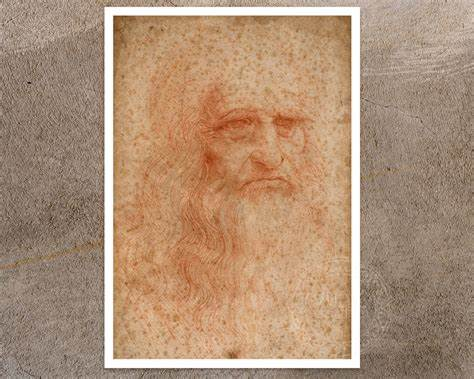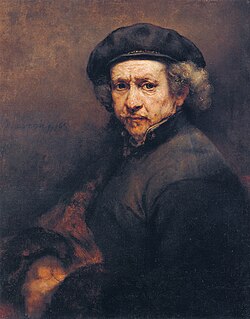
A Transcendent Image by Leonardo da Vinci In the history of Western art, few images…
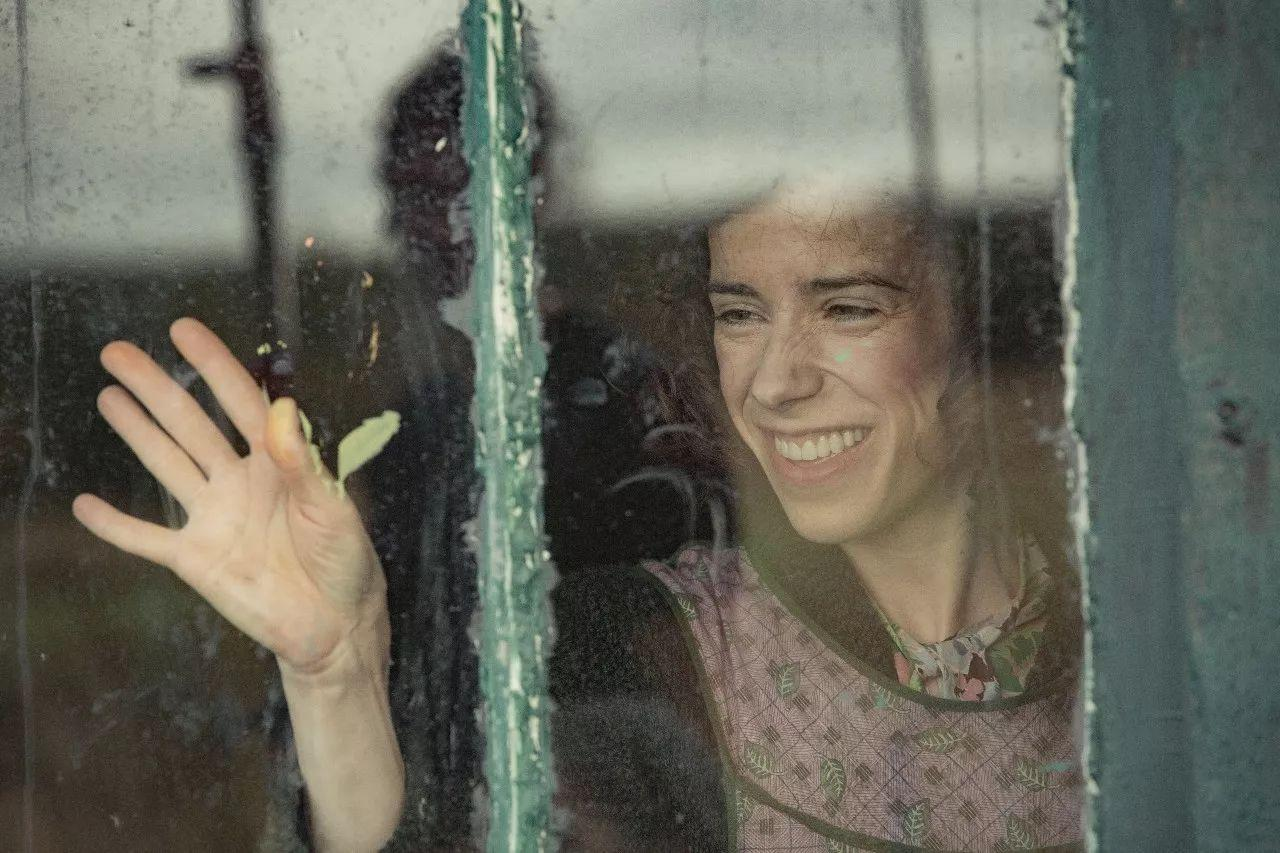
Maud’s Manuscript of Life
The sea breeze of Nova Scotia blows through the small house of less than 16 square meters in Marshall. Bluebirds on the walls seem poised to take flight, butterflies alight on the flowers on the wooden door, and daffodils bloom year-round through the windowpanes—this is not a fairytale wonderland, but a life manuscript written by folk artist Maud Lewis over 32 years amidst poverty and illness. Her pen was her twisted fingers, her paint her passion for life, and those brightly colored paintings are the most beautiful testament to her struggle against fate.

Maud’s life began with a warm foundation. The scent of leather wafted from her father’s saddlery shop, and her mother taught her to hand-paint Christmas cards and play the piano. These small, nuanced artistic awakenings were like seeds planted deep within her heart. But fate’s storms came unexpectedly. After her parents’ early death, she was fostered by her conservative aunt. Her deformed body became the target of children’s ridicule, her newborn daughter was secretly taken away, and even her brother lost contact after the war. Rheumatoid arthritis caused her shoulders to slouch, her fingers to twist, and her gait to falter. At 37, in an era when girls typically married at sixteen or seventeen, she was still a forgotten “burden.” But this incomplete draft of her life did not deter her from writing. On a snowy morning in 1938, Maud proactively “applied” for a job as a live-in nanny for fisherman Everett, knocking on the door that would change her life. This 44-year-old illiterate fisherman, eccentric and stingy, whose hut had no electricity, no modern furniture, and relied entirely on candles and oil lamps for lighting, became Maud’s artistic sanctuary. Initially, Everett yelled, “In this house, I come first, the dog second, and you third,” but when he saw her painting the walls with flowers, he quietly saved his fish-selling money to buy paint. He once complained that she couldn’t do housework, but eventually took over all the chores, allowing her to sit by the window and paint in peace. This marriage, which was not favored, became the most touching chapter in the manuscript of their lives—like two worn-out socks discarded by God, they warmed each other in the cold winter, supporting each other for 32 years, until Maud’s dying words were certain: “You loved me.”

Art is the core of Maud’s life sketches. Without professional training or expensive art supplies, she used discarded wooden planks, walls, and windows as canvases, employing the simplest lines and the brightest colors to depict the beauty she saw. She painted the waves of the harbor, the old cows on the ridges of fields, the kittens by the windows, and even painted autumn trees in the snow, allowing the seasons to reunite in her paintings. Those works, described by the art world as “a world without shadows,” are technically immature yet brimming with vitality. President Nixon wrote to her requesting a purchase, and the World’s Fair extended an invitation, but she always maintained her purity: her paintings sold for only a few dollars, she never considered herself an artist, refused to raise prices, and rejected utilitarian social engagements. For her, painting was not a means of making a living, but a way to communicate with the world—”everything in life has been framed into a painting,” she filtered out suffering, leaving only warmth and tranquility.
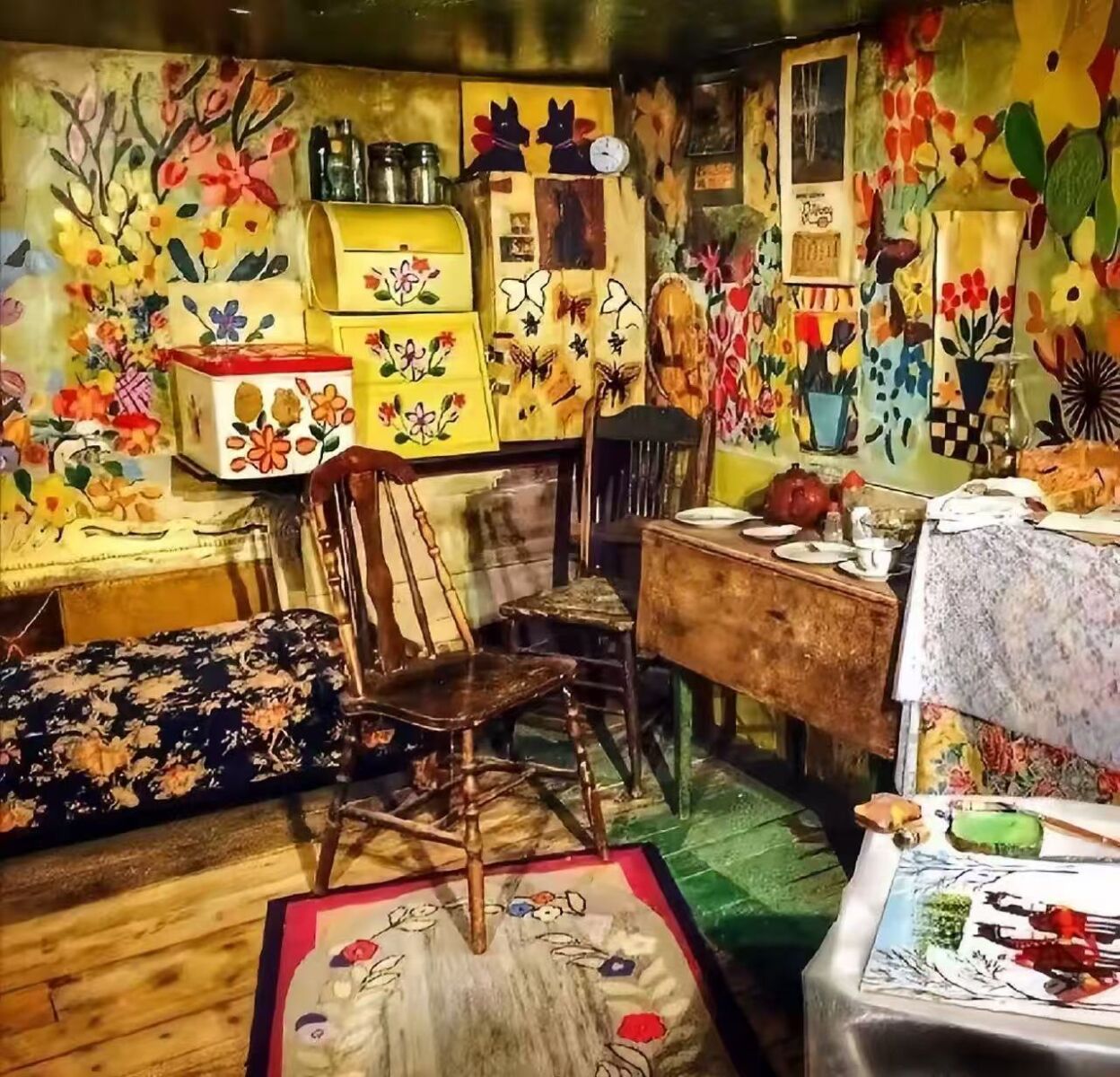
This small, un-electricized house witnessed the most touching story of mutual redemption. Everett, illiterate, would proudly promote his wife’s bird paintings to customers; he was notoriously stingy, yet he silently cared for Maud when she was seriously ill; he knew nothing of art, yet he treasured every one of her paintings. Maud softened his hardness with her paintbrush, signing his name on the paintings, and dissolving his eccentricities with her understanding. Their love wasn’t expressed in sweet words, but hidden in the paint Everett brought home late at night, in the tall fisherman figure in Maud’s paintings, and in their 32 years of unwavering companionship. In 1970, Maud passed away from pneumonia, leaving behind a house full of paintings as a gift; nine years later, 86-year-old Everett, protecting his family’s valuables, fell victim to a thief’s weapon, following her in death.
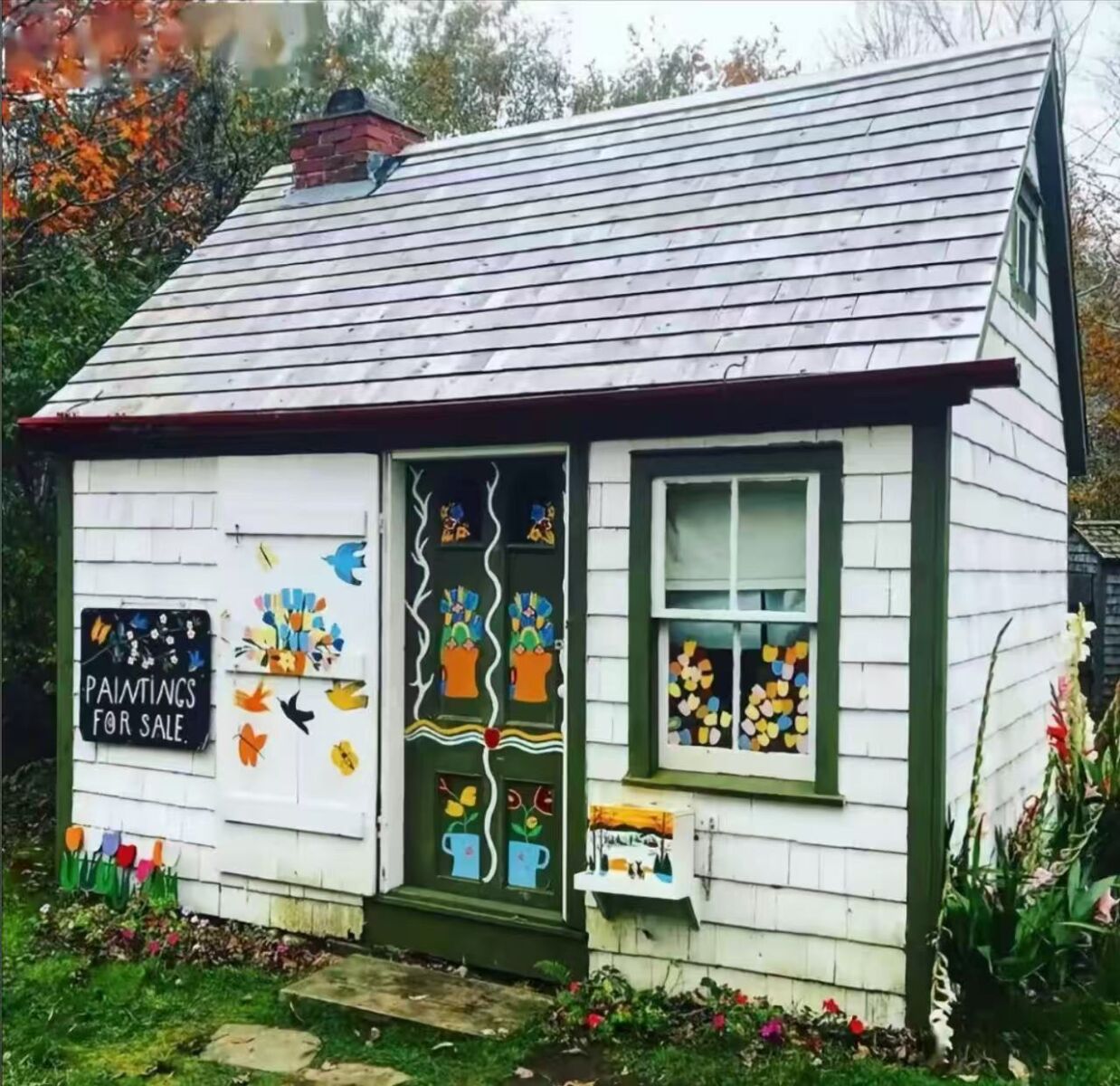
Today, that small house has been moved to a museum, but the paintings on the walls remain vibrant. Maud’s works have long since fetched a record-breaking 2.35 million RMB at auction, and her story has been made into a film with a 9.1 rating on Douban. But these posthumous accolades perhaps cannot compare to the pure joy she experienced while creating. With her deformed body, she wrote the most complete life story; with her impoverished existence, she nurtured the richest spirit; with her humble demeanor, she lived with the strongest dignity.
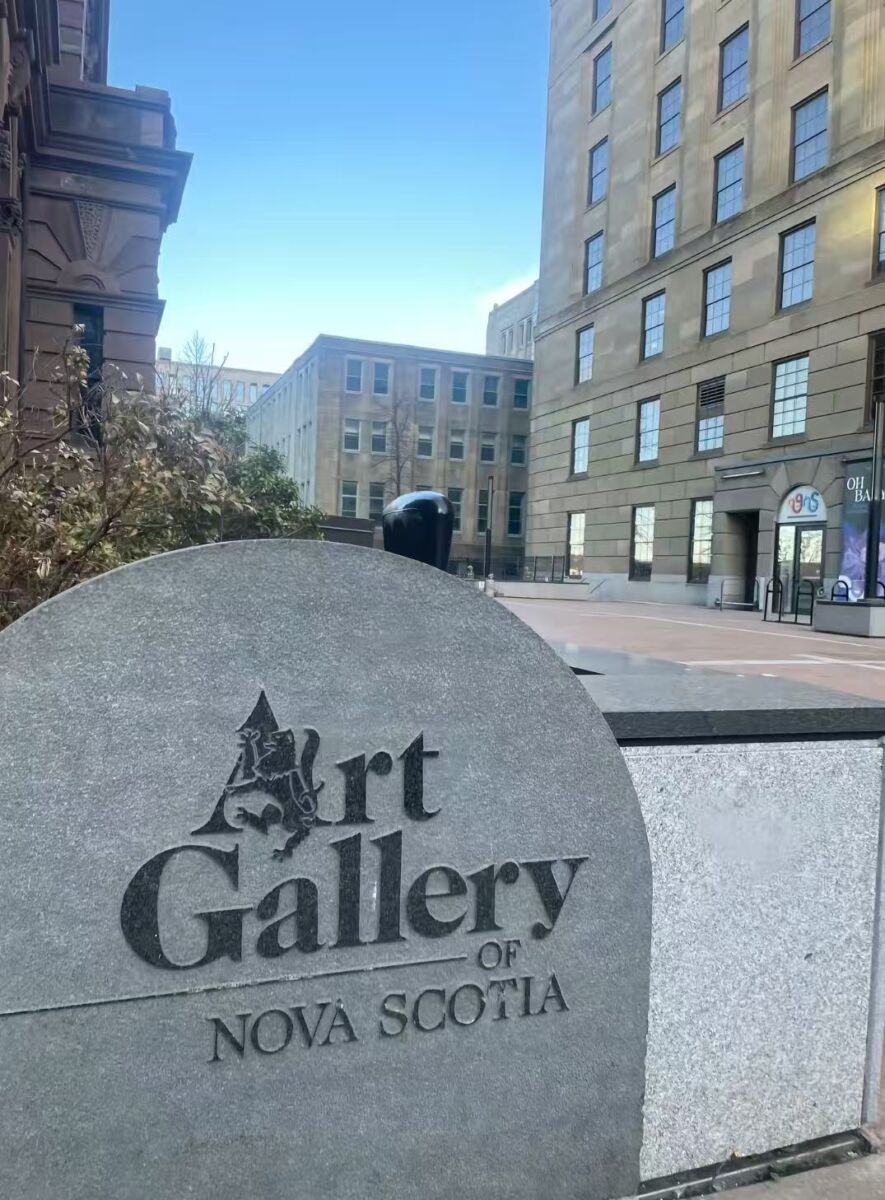
Maud’s life manuscript, devoid of ornate language, proves with resilience and passion that what fate gives you is not important; what matters is the mindset with which you write it. Those seemingly incomplete strokes will eventually settle into the most moving power over time, just like the ever-blooming flowers in her paintings, telling us that even if life is full of thorns, hope can still bloom from them.
Related Posts