On the Tuscan plain of Italy stands a structure that has become almost synonymous with…
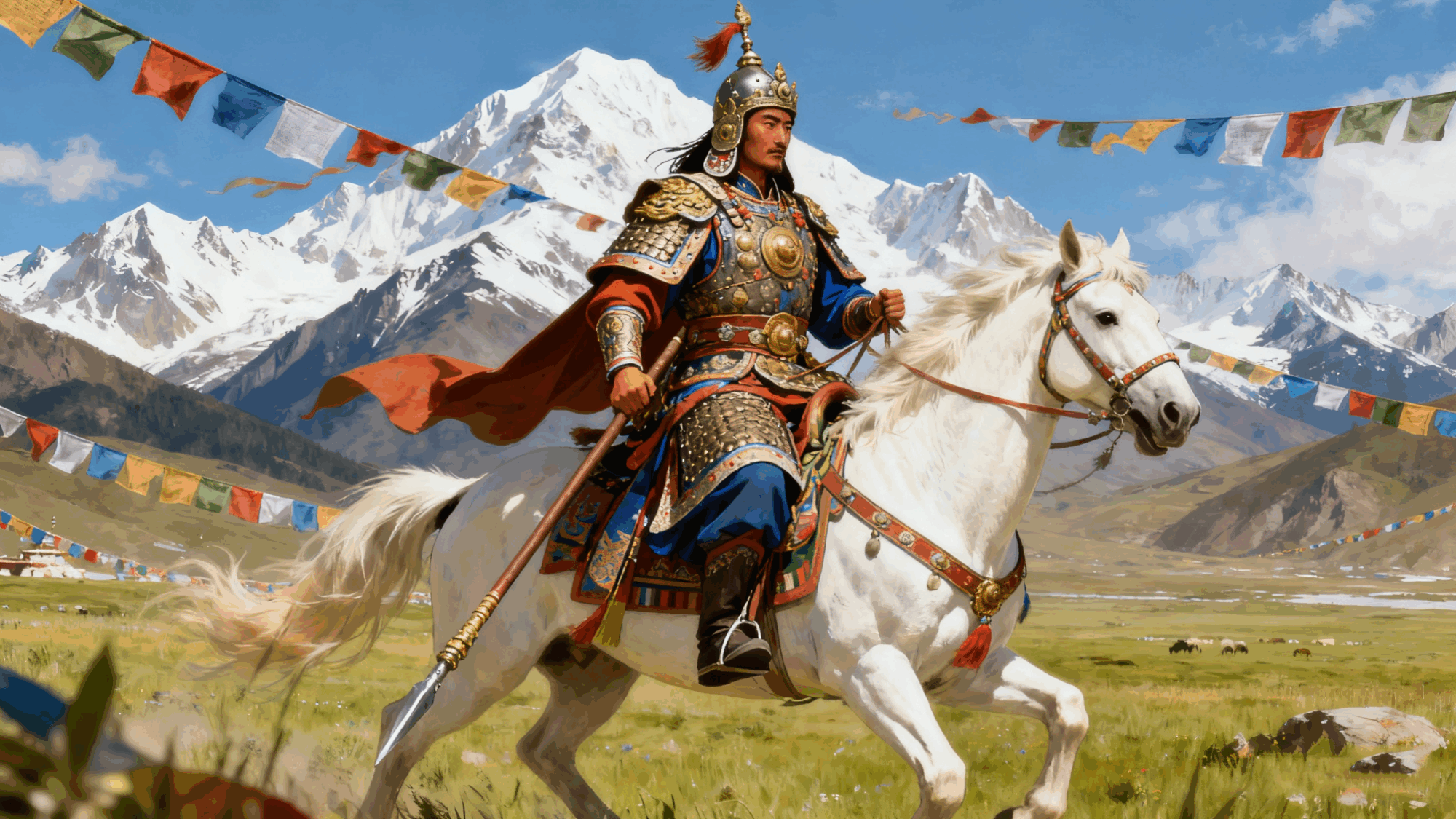
King Gesar: An Immortal Legend of the Snowy Plateau
The image of King Gesar in Tibetan Thangka paintings is majestic and imposing, radiating divine brilliance.
On the vast land of the Qinghai-Tibet Plateau, the legend of King Gesar stands tall like the continuous snow-capped mountains, enduring for millennia. This longest epic poem in the world is not only a literary work but also an encyclopedia recording the ancient Tibetan society, religion, and military affairs.
Birth: A Divine Child Descends to Earth
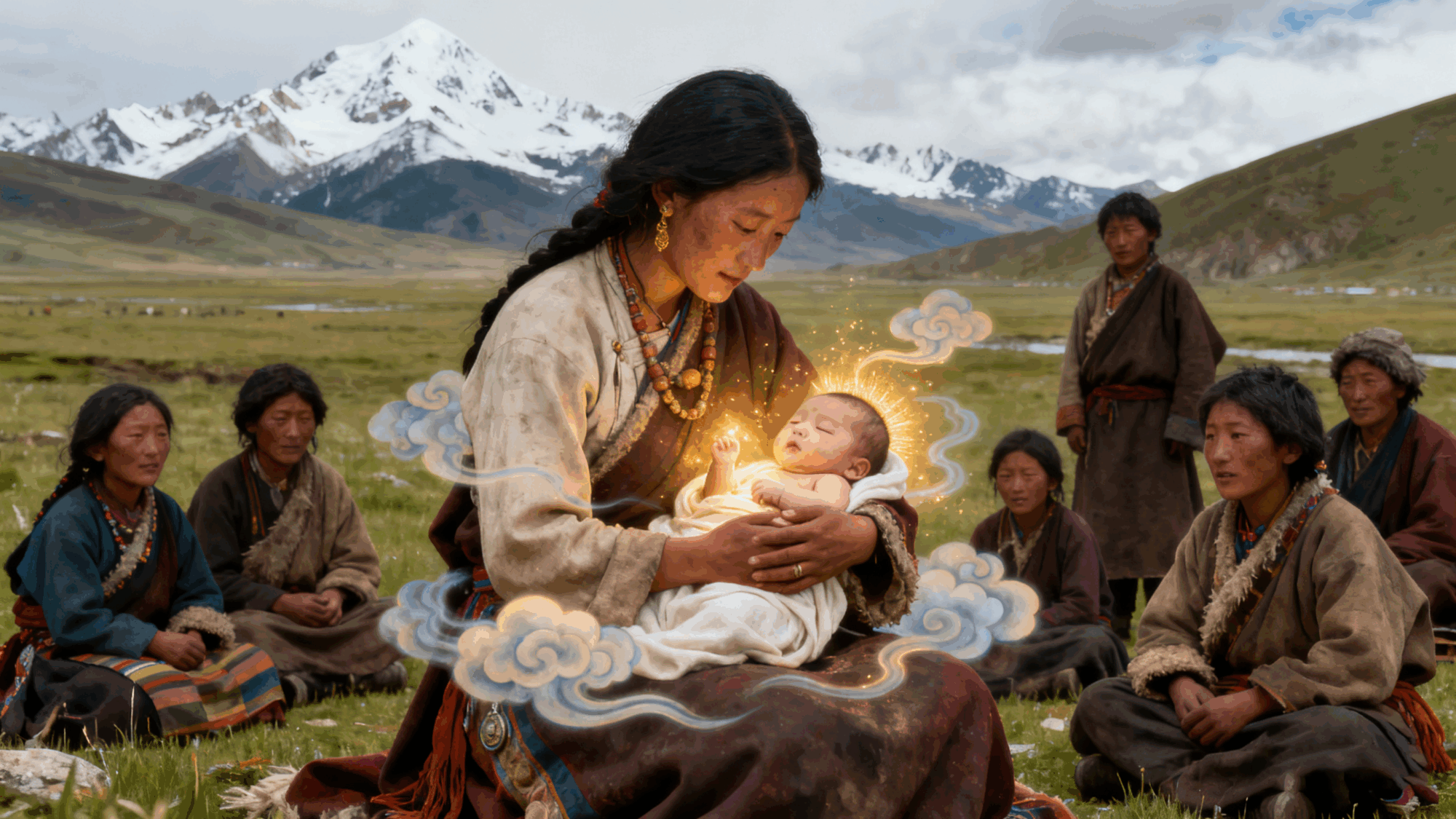
King Gesar was originally the son of the White Brahma King, who was reincarnated into the human world to subdue demons and save all living beings. Around the 11th century AD, he was born into a poor family on the Dege Ashu grassland, his childhood name being “Jue Ru.” This seemingly ordinary child displayed various miraculous signs from birth.
A Childhood of Hardship
Jue Ru suffered persecution from his uncle Chao Tong from a young age, and was forced to wander with his mother. This experience shaped his resilient character. In harsh conditions, he not only survived but also secretly protected the tribe’s cattle and sheep, demonstrating extraordinary abilities and a compassionate heart.
A Horse Race to Become King
At the age of 13, the Ling Kingdom held a grand horse race, the winner of which would become king and marry the beautiful Zhu Mu. Despite his uncle’s numerous obstacles, Jue Ru won the race with wisdom and courage, officially ascending the throne as King Gesar, beginning his legendary reign.
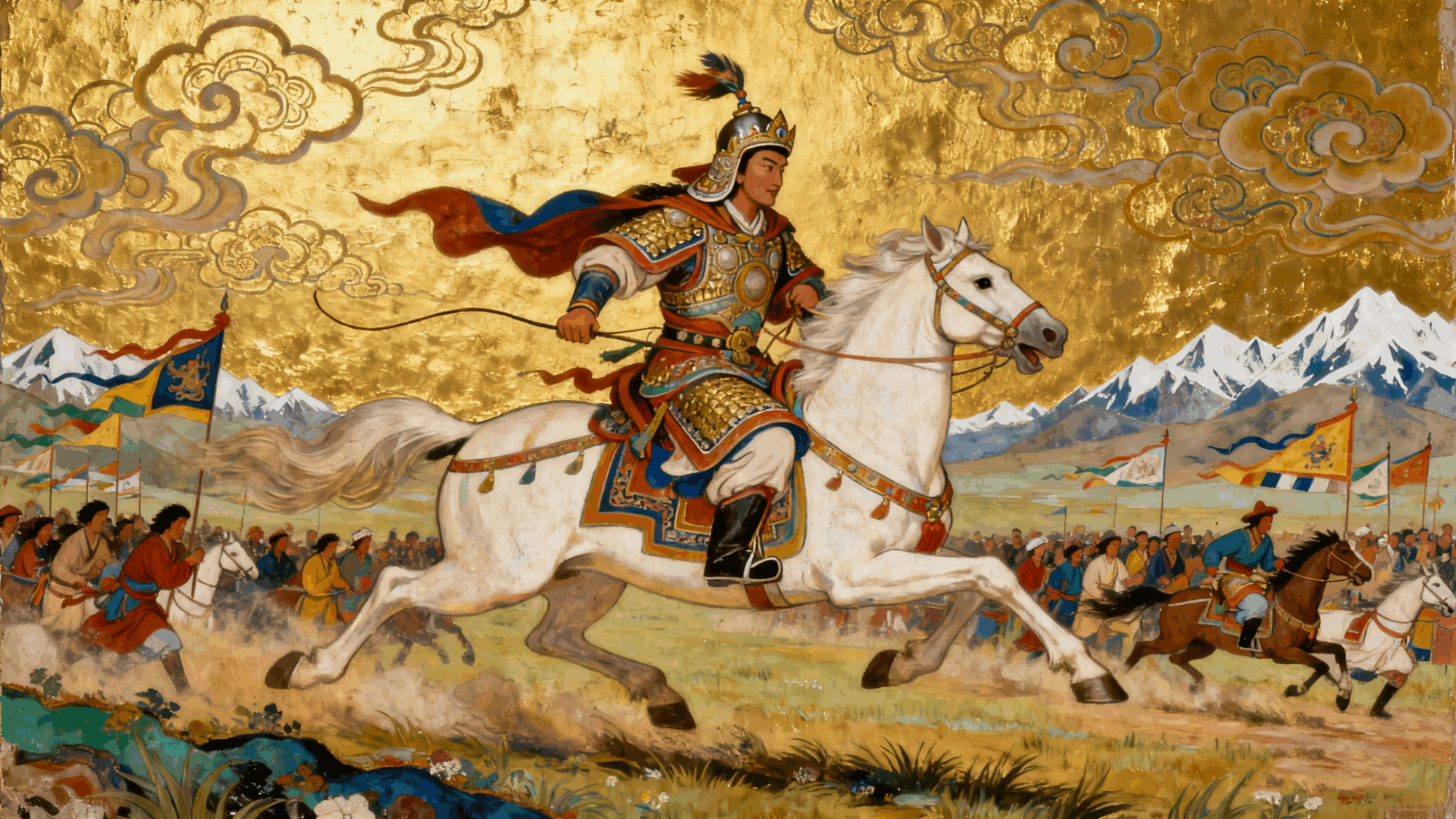
Tibetan murals depicting horse racing and the crowning of kings are full of dynamism and drama.
Conquest: The Journey of Subduing Demons
King Gesar waged war across the land, conquering eighteen major tribal alliances, including the Demon Kingdom, the Hor Kingdom, and the Jiang Kingdom. Each conquest was a triumph of good over evil.
Subduing Demons in the North
King Ruzan of the Demon Kingdom ravaged the people. Gesar, disguised as a handsome youth, infiltrated the Demon Palace and, with the help of Queen Mesa, ultimately vanquished this evil menace. This battle showcased Gesar’s wisdom and courage.
The Battle of Horling
King Hor of the White Tent invaded the Ling Kingdom while Gesar was in seclusion, abducting Queen Jomo. Upon his return, Gesar disguised himself as a beggar and infiltrated the Hor Palace, overcoming numerous dangers to rescue Jomo and uphold the dignity of the Ling Kingdom.
Governance: Creating a Golden Age
Gesar was not only a war god but also an outstanding ruler. During his reign, the Ling Kingdom reached its zenith, and its people lived in peace and prosperity.
Legislation for National Security: Gesar formulated the famous “Six Laws of Ling,” covering military, civil, and moral aspects. These laws embodied the principles of fairness and justice and became an important source of later Tibetan customary law.
Promoting Buddhism: As an incarnation of Guru Rinpoche (Padmasambhava), Gesar vigorously promoted Buddhism, establishing monasteries and translating Buddhist scriptures. Even during his campaigns, he did not forget to educate sentient beings with Buddhist teachings, enabling Buddhism to spread widely throughout Tibet.
I am text block. Click edit button to change this text. Lorem ipsum dolor sit amet, consectetur adipiscing elit. Ut elit tellus, luctus nec ullamcorper mattis, pulvinar dapibus leo.
Cultural Heritage: An Epic Passed Down Through Generations
The Miracle of Oral Tradition
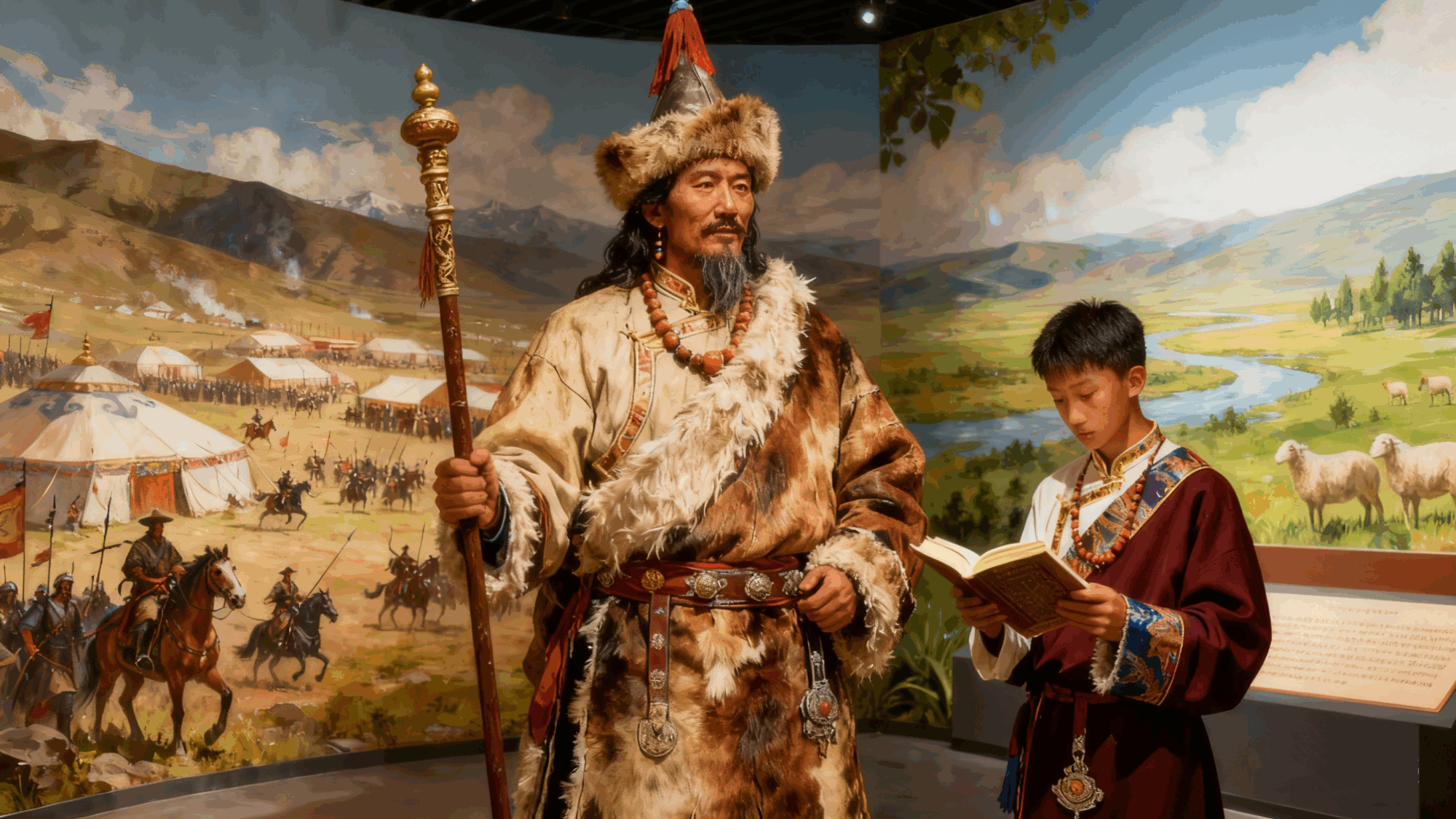
The most astonishing aspect of the Epic of King Gesar is its living transmission. Even today, numerous “Zhongken” (storytellers) can recite this monumental work of millions of lines, many of whom acquired this ability through divine inspiration.
Diverse Artistic Expressions
The epic is vividly depicted in various art forms, including Thangka paintings, murals, Tibetan opera, and sculptures. The Gesar Lion and Dragon Palace in Golog Prefecture, Qinghai, and the Gesar Memorial Hall in Dege, Sichuan, have become important cultural sites.
Divinely inspired storytellers recite the epic, entering a state of self-forgetfulness.
Echoes of History and Reality
The Interweaving of Reality and Legend
Although the story of King Gesar is full of mythological elements, historians believe his prototype may have been a tribal chief from the Amdo region in the 11th century. The social systems, warfare methods, and customs depicted in the epic realistically reflect the era.
Contemporary Value
The legend of King Gesar remains of significant value in contemporary society. The qualities he represents—integrity, courage, wisdom, and benevolence—are important components of the excellent traditional culture of the Chinese nation. The ecological awareness and harmonious coexistence concepts contained in the epic still offer inspiration for modern society.
Conclusion: An Eternal Hymn to Heroes
Standing before the Gesar King Memorial Hall on the Ashu Grassland, the sound of hooves from a thousand years ago seems to still echo in my ears. This demigod-like hero, with his legendary life, wrote a magnificent chapter in Tibetan culture.
The Gesar Epic is not only a treasure of Tibetan culture but also a shared spiritual wealth of all humanity. It tells us that no matter how times change, the pursuit of justice, the upholding of kindness, and the care for all living beings will always be the most brilliant light of humanity. This heroic epic, flowing in the veins of the snowy plateau, will surely continue to be sung in the new era, inspiring people to move forward.
Related Posts