A Transcendent Image by Leonardo da Vinci In the history of Western art, few images…
Hidden Treasures in Artifacts: Exploring the Timeless Charm of Wedgwood Jade Stoneware
I. Origin: An Encounter Between a Genius and an Era
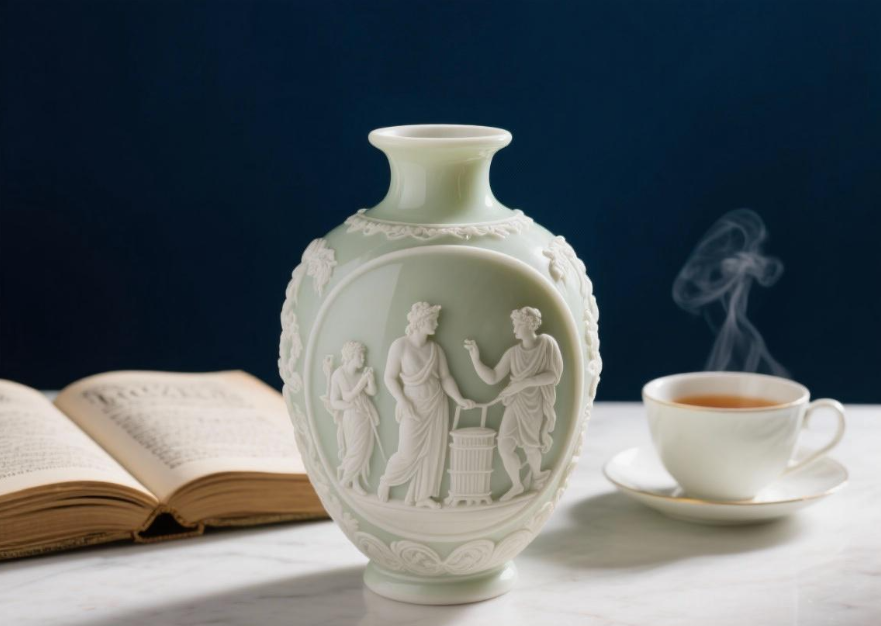
The birth of jasper stoneware is inseparable from its founder, Joshua Wedgwood. This genius, hailed as the “Father of English Ceramics,” keenly captured the aesthetic trends of the time in the mid-to-late 18th century. At that time, the archaeological discoveries of Pompeii and Herculaneum sparked a fervent Neoclassical movement throughout Europe. People were filled with boundless yearning for the art of ancient Greece and Rome.
Joshua was determined to incorporate this classical beauty into everyday utensils. After thousands of experiments, he finally succeeded in developing jasper stoneware in 1774. This material is extremely unique: it is an unglazed stoneware, with a fine and hard texture, like stone; it possesses a uniform color, the most classic and renowned being the deep “Wedgwood Blue.”
II. The Beauty of Craftsmanship: How to Create a “Relief Gemstone”
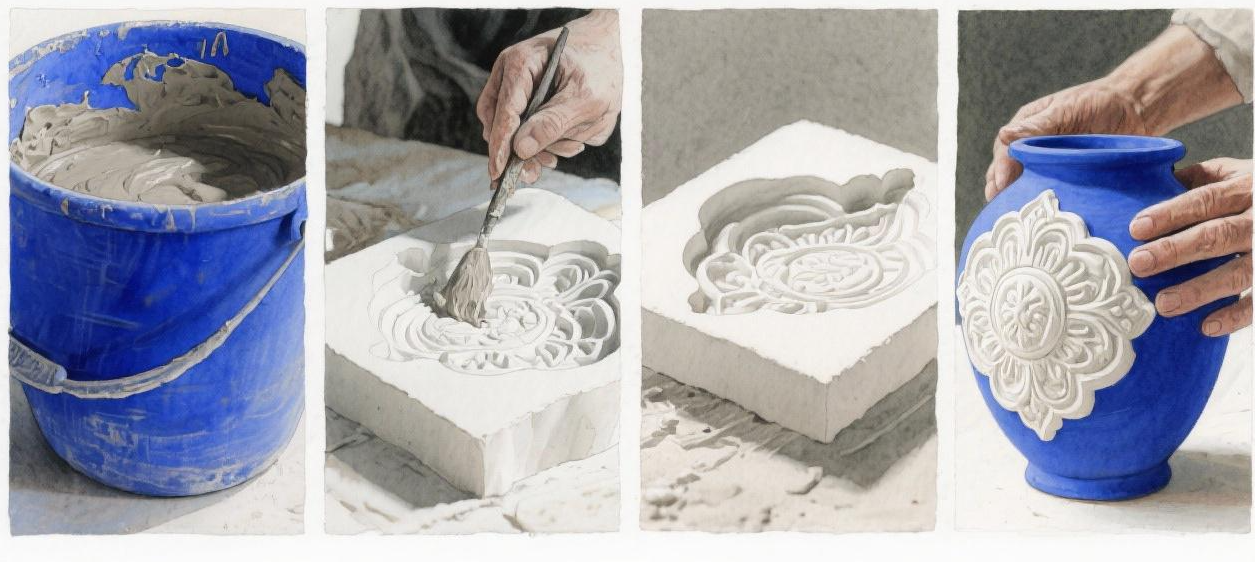
The core charm of jade stoneware lies in its unique “relief” effect. This is not post-carving, but rather the use of an extremely delicate “appliqué” technique.
1. Shaping the Main Body: First, the main body of the vase, jewelry box, or cup and saucer is sculpted from blue jade clay.
2. Relief Creation: Craftsmen design and carve plaster molds beforehand. These patterns are usually derived from classical mythology, fables, or elegant plant motifs. Then, white jade clay is poured into the molds to create individual white relief pieces.
3. Careful Attachment: While the main body is not completely dry, craftsmen use a special clay as an “adhesive” to precisely attach each delicate white relief piece to the blue main body by hand. This process requires extremely high patience and skill; even the slightest deviation will ruin the entire piece.
4. High-Temperature Firing: Finally, the object is fired at high temperature in a kiln. After firing, the blue and white colors blend perfectly, the white relief appearing to grow naturally from the blue background, creating a strong three-dimensional effect and a smooth, jade-like feel.
This striking color contrast and classical theme make each piece of jade stoneware resemble an enlarged ancient Greek or Roman relief gemstone, brimming with sculptural beauty.
III. Why Collect? The Enduring Value
Collecting Wedgwood jade stoneware is an aesthetic dialogue across time.
A fusion of history and art: It is not merely exquisite decorative art, but also tangible evidence of the 18th-century British Neoclassical movement. Owning it is like owning a small piece of art history.
The pinnacle of craftsmanship: In today’s mechanized production, each classic piece of jade stoneware still relies heavily on the handcraftsmanship of artisans, especially the intricate appliqué techniques, which imbues it with unique artistic value.
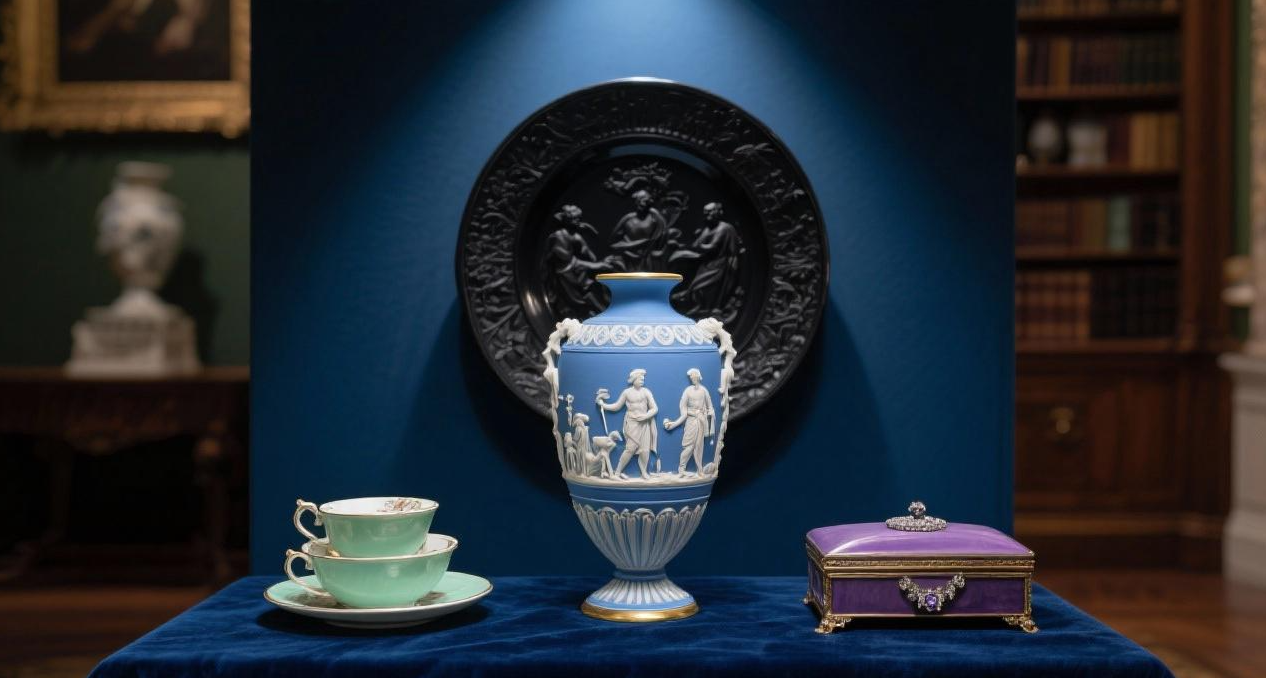
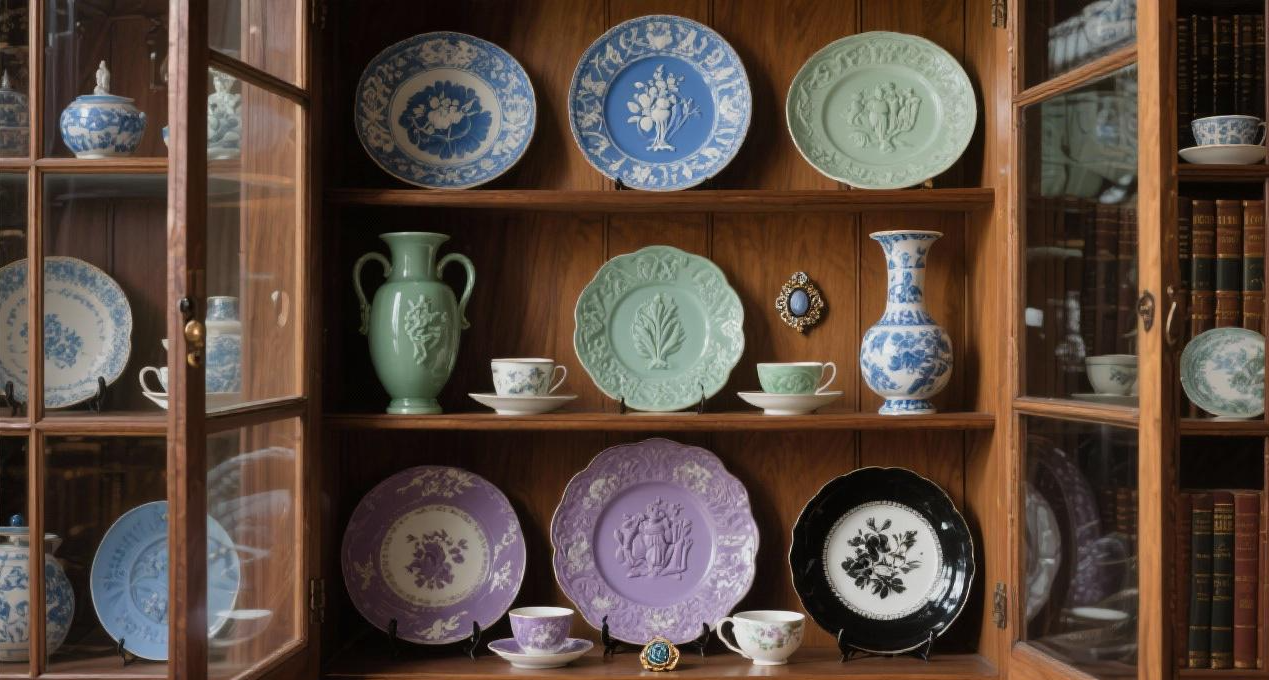
Diverse collecting dimensions: Collectors can approach it from different angles. By color: In addition to classic blue, there are light green, pale yellow, lilac, and even black, with certain limited edition colors being particularly precious. By theme: There are mythological series, celebrity portrait series, and botanical series, among others. By shape: From large decorative vessels to practical tea sets, and to exquisite jewelry (such as brooches and pendants), there is something for everyone, catering to all tastes.
Iconic Status: Wedgwood is the official porcelain supplier to the British Royal Family, and its brand itself is a guarantee of quality and taste.
IV. Collection and Maintenance Tips
Identifying Authenticity: Genuine pieces have clear, flowing relief lines with sharp edges; the white areas are pure and warm to the touch; and the base has a clear and deep “Wedgwood” mark.
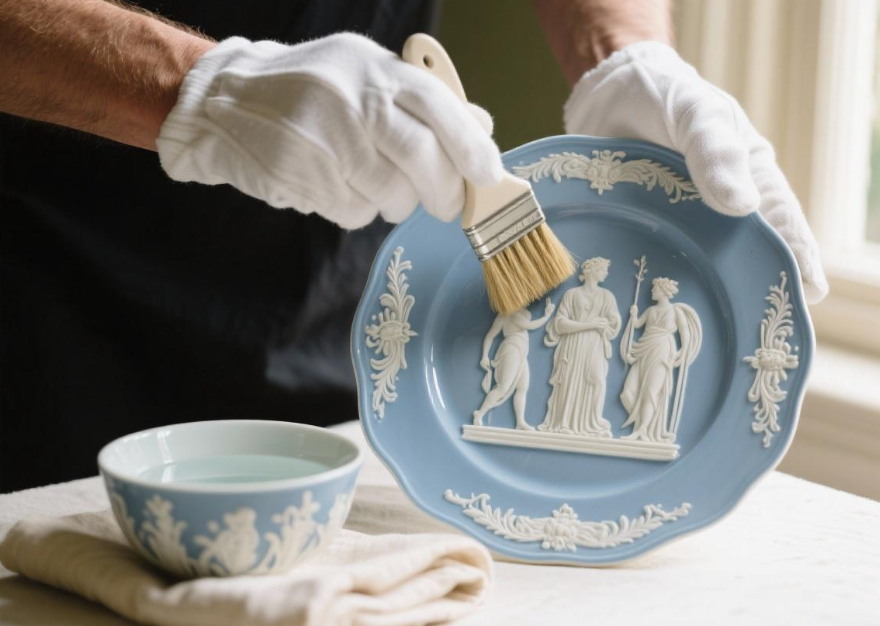
Cleaning Carefully: Wedgwood stoneware is susceptible to damage from impacts, especially the raised relief areas. Simply use a soft, dry cloth or brush to gently remove dust. Never use any chemical cleaners or soak the piece.
Avoid Temperature Changes: Although durable, avoid drastic temperature changes to prevent cracking.
Display: Place it in a stable display case, avoiding direct sunlight to prevent fading.
In today’s fast-paced world, Wedgwood stoneware, with its serene colors, classic charm, and timeless elegance, preserves a tranquil artistic space for us. It is not merely a British collectible, but a symbol of a lifestyle aesthetic. The next time you encounter it in an antique shop or museum, take a moment to appreciate the elegance and craftsmanship that transcends more than two centuries.
Related Posts