In recent years, as Chinese antique ceramics have continued to attract attention in the international…
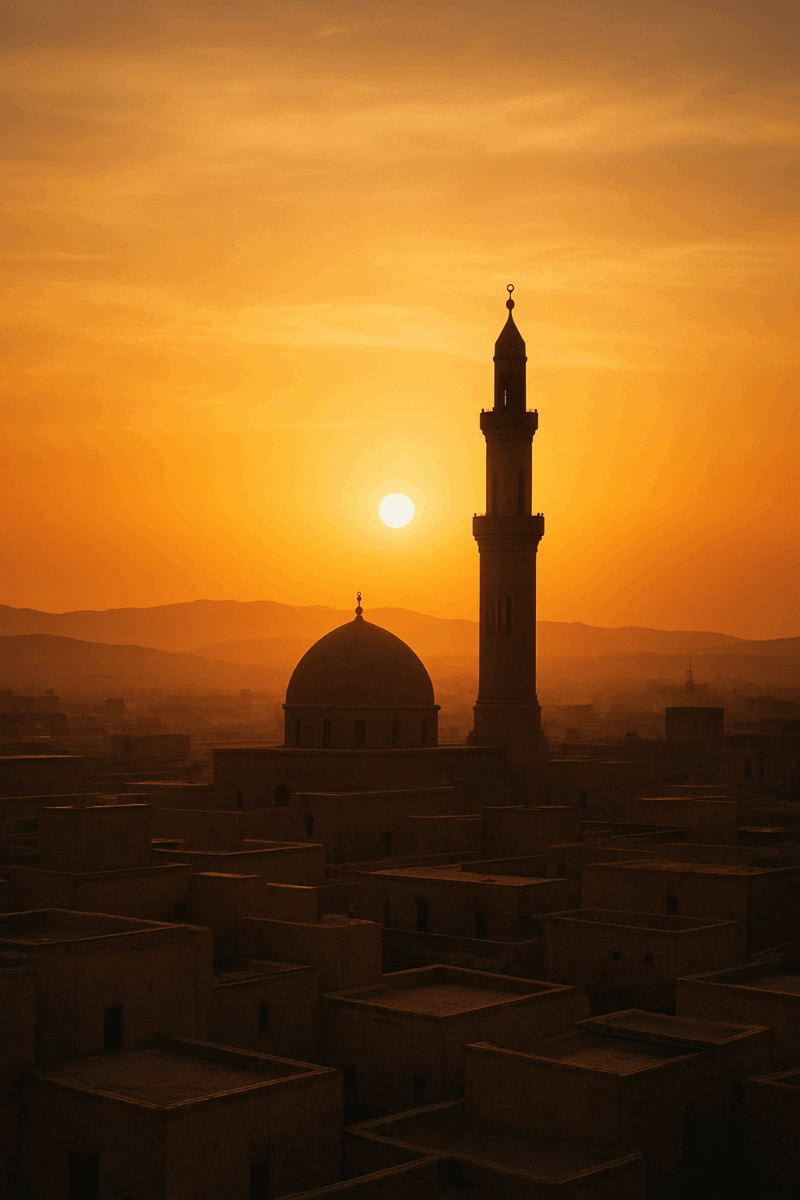
“Geometry, Light, and the Soul of Desert Civilizations”
When we speak of the architectural aesthetics of the Middle East and North Africa, it is easy to be captivated by the surface—blazing sunlight, golden deserts, turquoise tiles, and intricate patterns. Yet the true allure of this civilization has never been mere visual splendor; it lies in what hides beneath: a profound system of logic about order, faith, nature, and the universe.
This land is harsh—scorching heat, arid winds, drifting sands—yet it gave rise to some of the most intellectually sophisticated architectural languages in human history. While Europe was still navigating the limits of stone fortifications, the Islamic world was already writing its own grand aesthetics through mathematics, geometry, and the choreography of light and shadow.
Here, architecture is not ornamental excess—it is the engraved soul of a civilization.
1. Geometry: The Bridge Between Mathematics and Faith
In Islamic civilization, geometry is not merely a decorative system—it is a way of understanding the order of the universe.
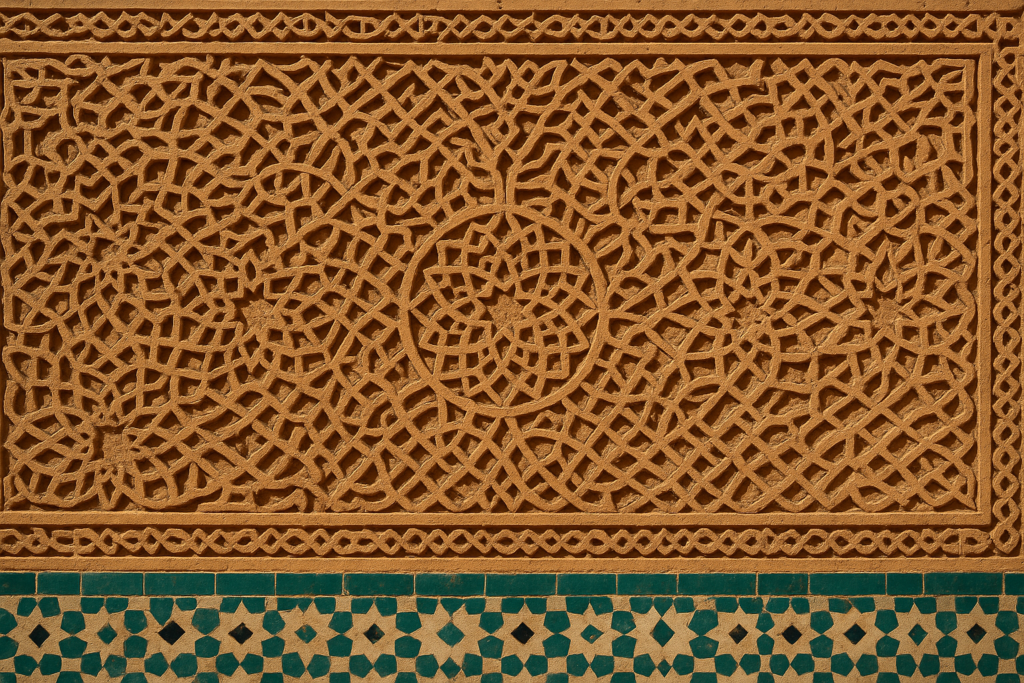
On the walls of the Alhambra, one finds endlessly repeating octagrams, interlacing arabesque knots, and perfectly measured symmetries. Each motif seems to whisper the same message: within chaos lies order; no matter how complex the world may appear, mathematics can reorganize it into clarity.
Why, then, are these geometric patterns so essential?
Because within a cultural framework that prohibits figural representations of the divine, depicting God through human or animal forms is not allowed. The Islamic world therefore embraced a path that is more abstract and more philosophical—
using geometry to symbolize the infinite and the complete nature of God.
A point is the beginning of all things;
A line is extension;
The circle symbolizes time and the cosmos;
Polygons form an expanding web of order derived from a single unit.
When architects create these patterns, they are reenacting the very process of cosmic creation. Geometry becomes a sacred language—each line, each curve is both logic and faith intertwined.
2. Light and Shadow: The Desert’s Second Skin for Architecture
If geometry represents rationality, then light and shadow form the most poetic and romantic dimension of this civilization.
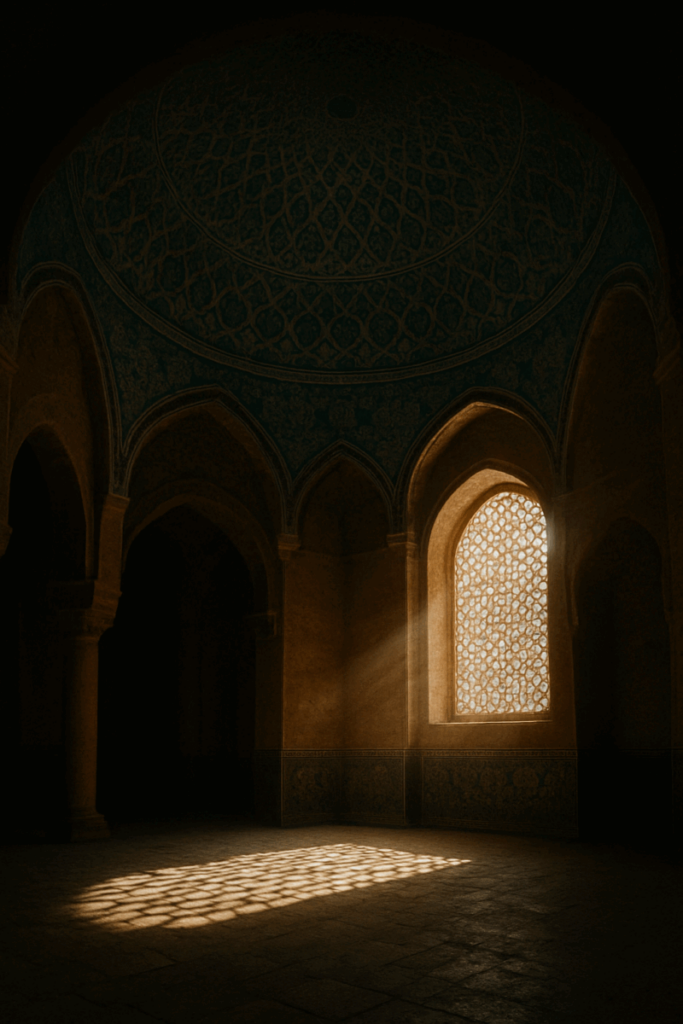
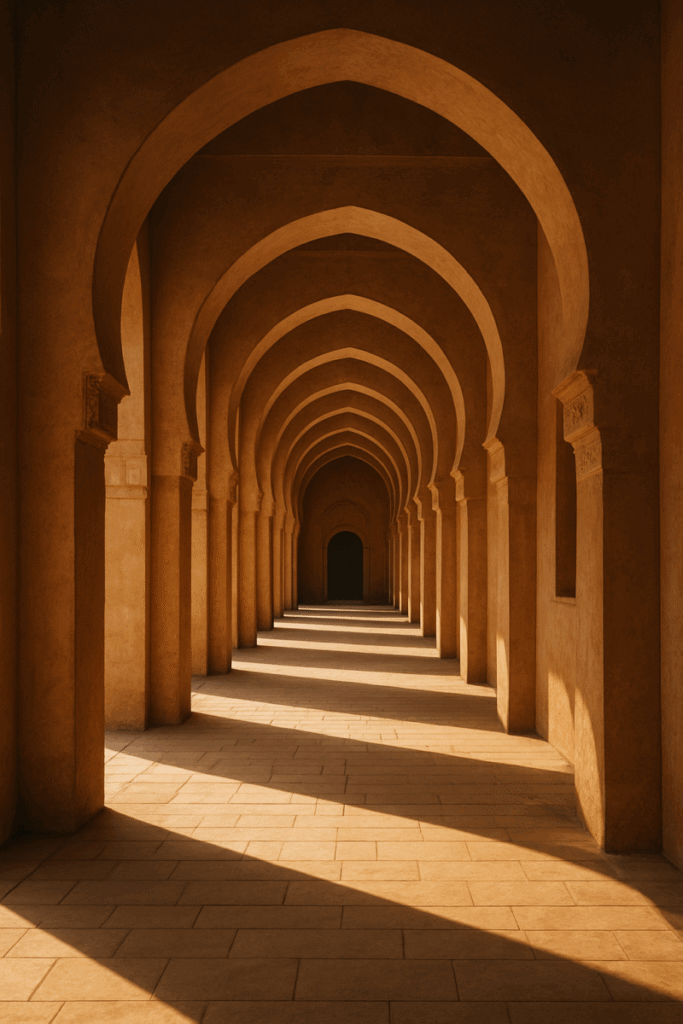
In the scorching desert, sunlight is overwhelmingly intense. Architects learned to master shade, filtering, and reflection—using the movement of light to shape emotional and spiritual experience. The domes of mosques, the high windows of minarets, and the deep shadows cast by arcaded corridors all convey the same belief: light is not a backdrop; it is an active participant in architecture.
In the mosques of Isfahan, Iran, when sunlight passes through intricate lattice windows and scatters into golden fragments on the floor, you understand why Islamic architecture is often called “the art of light.”
In the desert, light and shadow are the most precious and unpredictable materials.
They can soften harsh spaces or make stone appear as deep and fluid as the ocean.
They can lighten the mass of a building or deepen its spiritual presence.
The beauty of Middle Eastern architecture is never static—it shifts with every angle of the sun, revealing a flowing sense of time.
This approach surpasses even the grandest Gothic cathedrals of the West:
here, light is not an accessory but a core structural element, woven into the architecture’s very soul.
3. The Desert: The Mother of an Architectural Language
Without the desert, this architectural aesthetic would not exist.
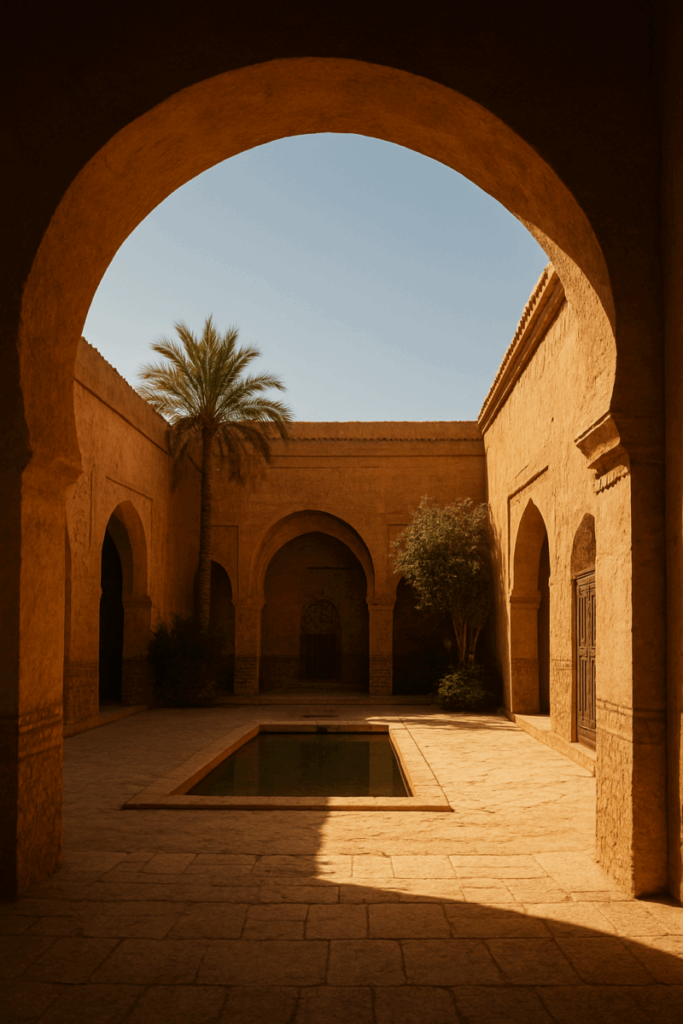
The scorching, arid climate shaped the Islamic world’s tradition of inward-facing architecture. Courtyards became the heart of daily life, thick walls shielded inhabitants from the relentless heat, and arches dispersed structural pressure while creating cooler, shaded spaces.
Earth tones, golden sand, glazed blue bricks, white stone—
the materials were not luxurious, but they were endowed with meaning far beyond their physical form.
The courtyard becomes a metaphor for an oasis;
the pool symbolizes the preciousness of life;
the arch is a gateway into a world of shade;
the dome gathers the blue of the sky and brings it indoors.
Here, architecture is not about conquering nature,
but negotiating with it.
Every detail begins as a response to survival,
yet ultimately transforms into a refined aesthetic tradition.
4. The Spiritual World: Divinity and Poetry Within Abstraction
The enchantment of Islamic architecture lies in its ability to calm the mind without relying on narrative.
When you step into a mosque—the echo of space, the fading of footsteps, the filtered light—naturally slows your breath.
This spiritual experience does not depend on statues or paintings;
it is created by space itself.
Arabic calligraphy flows across the walls like the sound of prayer;
geometric patterns resemble infinite mathematical riddles;
light and shadow become poetry with warmth and intention.
These buildings never raise their voice, yet silently express a truth:
“The world has order. The heart turns inward. God is present within.”
This worldview—Eastern, abstract, inward-facing—stands in striking contrast to the Western architectural logic that tends to be outward, figurative, and commemorative.
5. Conclusion: In Geometry, Light, and Desert, We Touch the Pulse of a Civilization
The architecture of the Middle East and North Africa stands as one of the most unique and irreplaceable chapters in the history of world architecture. It teaches us that:
Geometry is not merely a pattern,
but a way of contemplating the universe.
Light and shadow are not just visual effects,
but a method of living in harmony with nature.
The desert is not simply a backdrop,
but the cradle of an entire civilization.
And architecture is not only a physical space,
but a projection of the soul and of faith.
When we gaze at the intricate patterns of the Alhambra,
when we walk beneath the blue-tiled domes of Iranian mosques,
when we see sunlight falling across ancient arches and earthen walls,
we realize—
These structures are not stone.
They are the crystallization of time, mathematics, belief, and human ingenuity.
Born of the desert,
they illuminate the world.
Related Posts