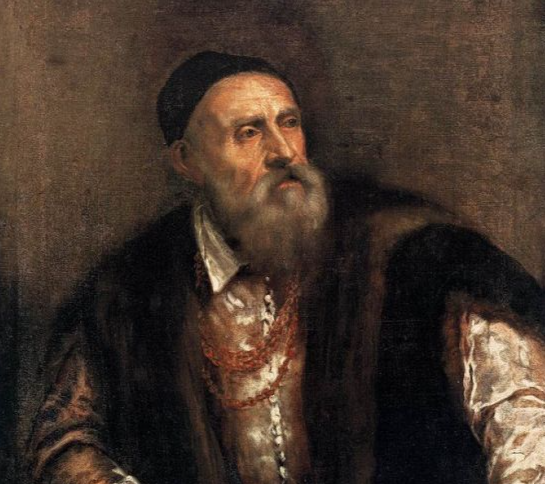
Have you ever wondered what change occurred in the world when the first sculpture was…

Hearing color beyond form
The Acoustics of Color: Another Possibility of Perception In the traditional narrative of vision, imagery is often seen as the foundation of art: it defines contours, provides recognition, and allows viewers to find meaning in the shadows of reality. However, true perception is not so linear. Beyond the surface of the image, we discover another world—a world without precise boundaries or fixed goals, only a constantly flowing energy and breath. In this world, color is no longer an “object to be viewed,” but more like a “sound to be heard.” Color has never been still. Before the formation of human visual language, it existed in the world in a vibrating manner: the reddish hue of sunrise, the cyan in damp air, the golden hue of light and shadow… These colors are not the “color codes” we later understood, but like audio, they have their own frequency, rhythm, and depth—they reach us in a wave-like manner, making vision an almost auditory experience.
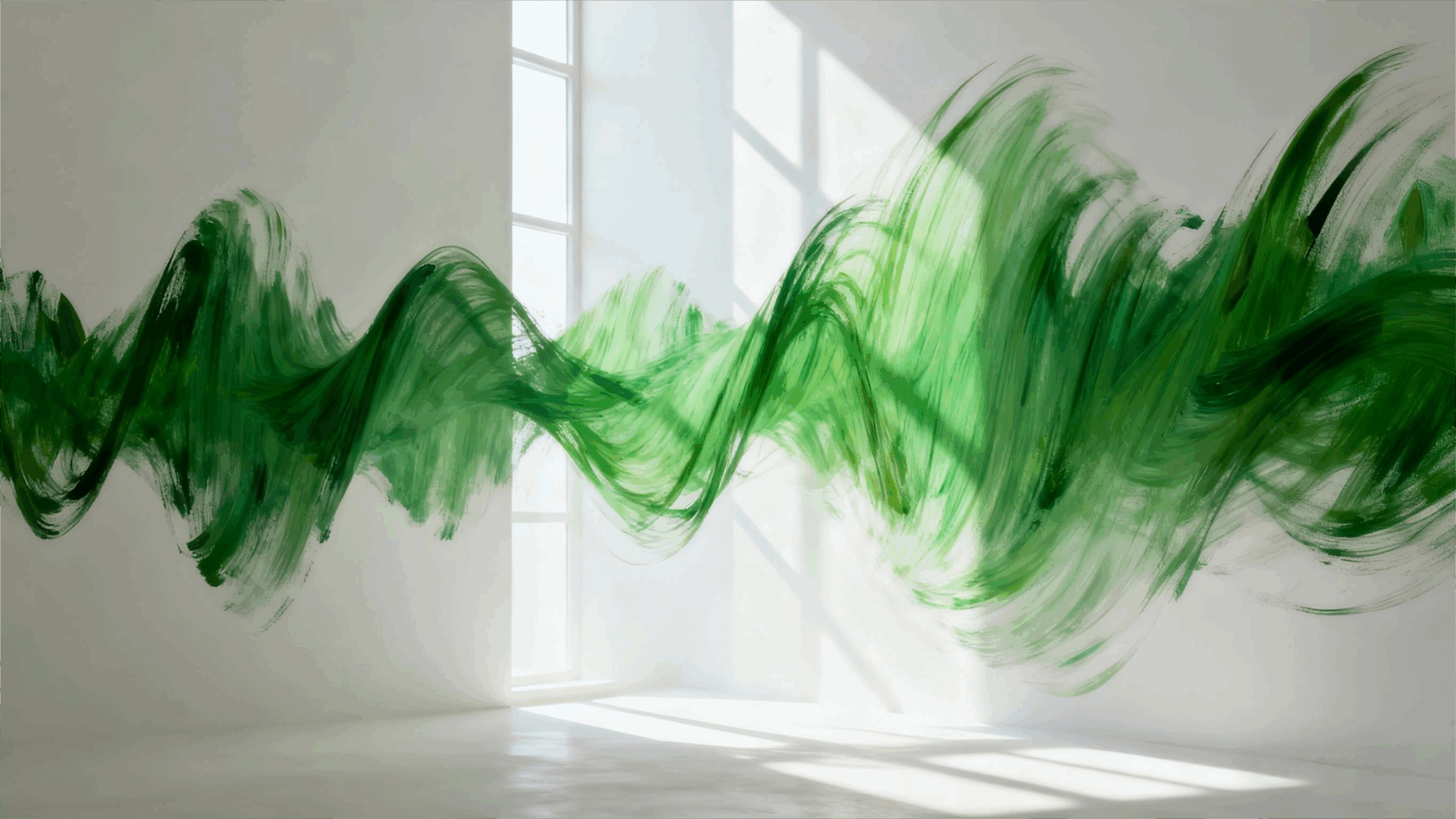
When the image fades, color begins to speak.
Art history is replete with reminders that images are not the only gateway to the world. After the image departs, color approaches us with a profound grammar. It doesn’t narrate events, yet it activates memories; it doesn’t depict objects, yet it constructs space; it doesn’t pursue realism, yet it truly touches the soul.
You’ll find that when the image is stripped away, the voice of color becomes exceptionally clear:
Red is like a distant drumbeat, carrying an unspeakable power;
Blue settles deep within the canvas, like a low-frequency resonance at the bottom of the ocean;
Green trembles gently, its sound soft yet persistent, like wind rustling through leaves;
Black is not silence, but an infinitely compressed noise;
White is silent, yet it contains all possibilities.
These voices overlap, cancel each other out, and cycle endlessly, like a musical score without words, slowly spreading in the viewer’s heart.
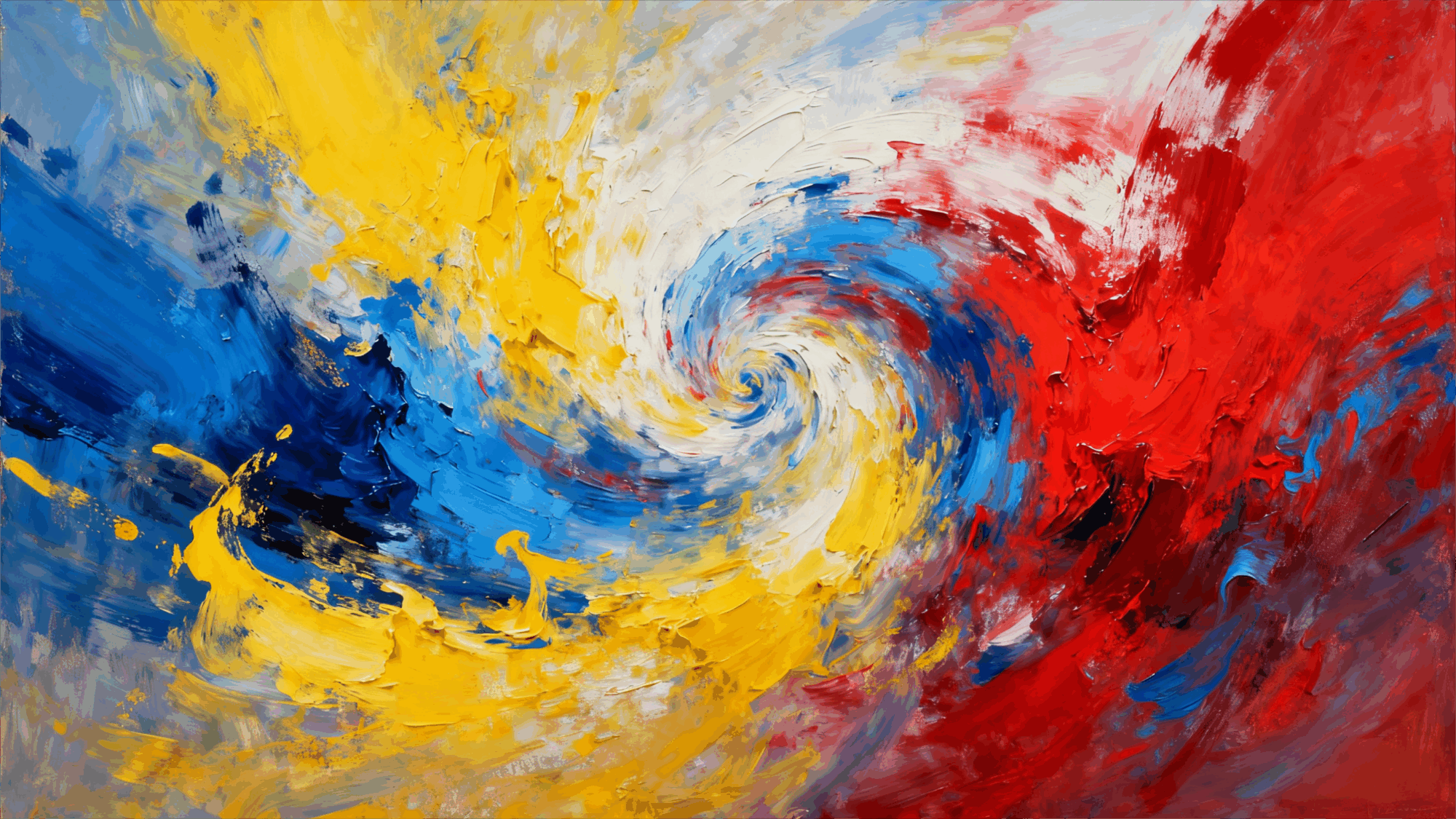
Listening to color is rediscovering yourself.
Hearing color beyond its imagery means that viewing is no longer an outward act, but an inward journey. The vibrations of color directly touch emotions, gently awakening memories buried deep within time—perhaps an afternoon with sunlight streaming through a window, perhaps a long-lost seaside sky, perhaps the weight of an inexplicable yet undeniably present emotion.
Color becomes the medium in this moment, allowing the viewer to confront themselves again:
Why am I drawn to this shade of red?
Why does blue bring me peace?
Why do those vibrant patches of color feel familiar to me?
These are not questions about the “work” itself, but questions about the “self.”
The meaning of art lies precisely in using the sound of color to allow us to rediscover the secret threads of our own emotions.
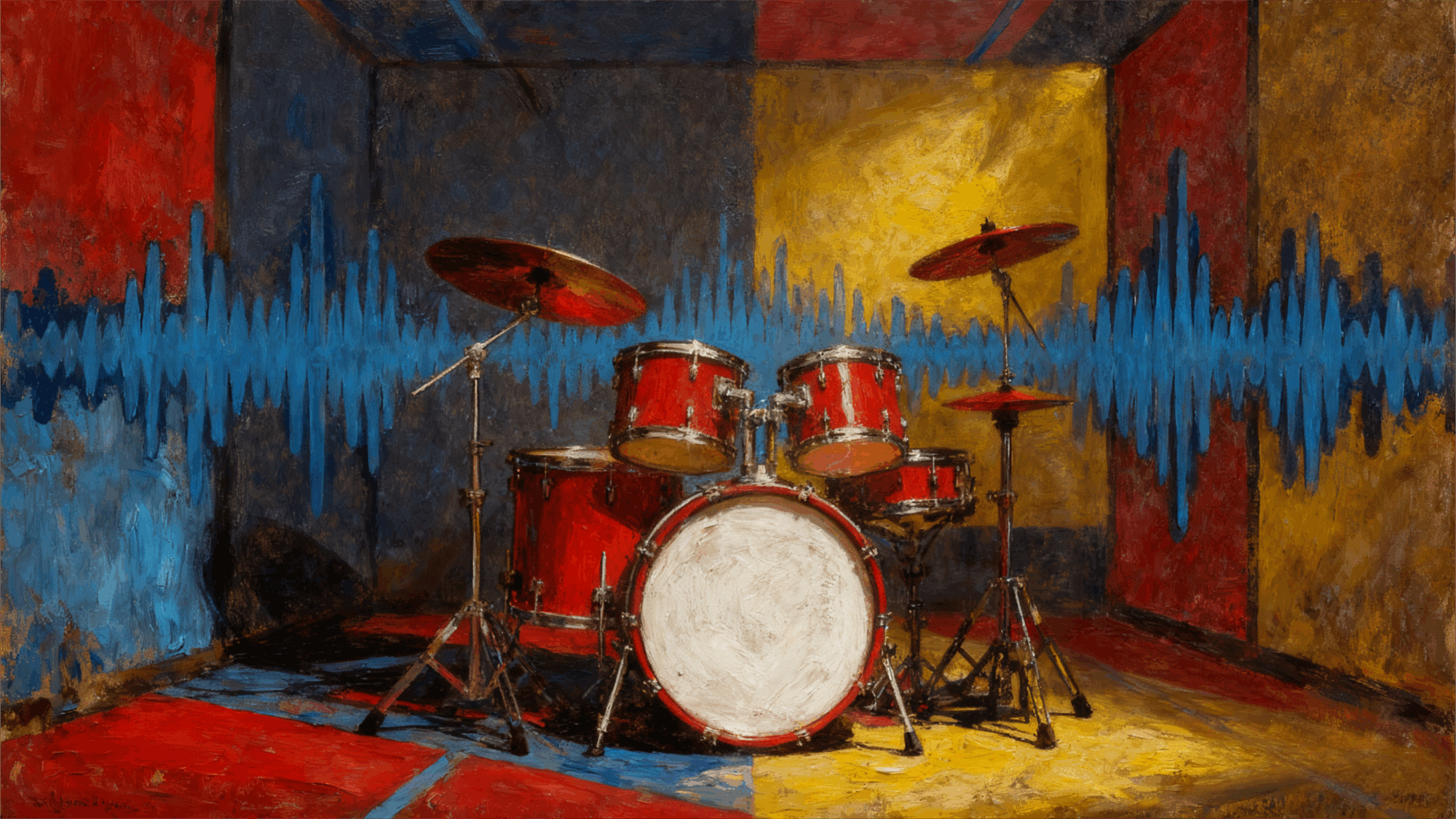
The space of color is not two-dimensional, but a multi-dimensional, flowing field.
In the world beyond the image, the canvas is no longer a flat surface. The tension, conflict, fusion, and extension between colors—these all constitute a multi-dimensional energy field. Each color has its own direction, each brushstroke its own speed, and each layer its own density.
When the viewer gazes at the painting, they are not looking at a “finished work,” but participating in a process in progress:
Color expands, and you approach;
Light pushes and pulls, and you understand;
Space breathes, and you are drawn in;
The work is being generated, and you are one of the variables within it.
This experience is akin to music: you cannot grasp a precise point, but the overall atmosphere surrounds, propels, and brings you to a critical point of emotion.
IV. When we “hear color,” we are leaving language behind.
Language is often insensitive to abstract experiences. It seeks definition, while color refuses to be defined; it demands clear boundaries, while color always blurs them. The moment we hear color, language naturally recedes, making way for a more direct, more primal perception.
Thus, the “sound” of color becomes clearer:
It’s like breath flowing in the air,
like a dream about to be spoken,
like a memory without a beginning,
like an emotion that exists before it lands.
At this moment, the viewer doesn’t receive a meaning that can be repeated, but a reality that can only be experienced.
V. The Roots of Art: Letting Us Hear Another Dimension of the World
Hearing color beyond image is not only a reconstruction of our way of seeing, but also a reinterpretation of the world.
We are accustomed to naming the world after visible images, but the complexity of the world far exceeds vision itself. The sound of color reminds us: The world is multidimensional, and so are people; there is more than one way to perceive.
The role of art lies precisely in this—it allows us to hear the voices masked by the noise of life,
it allows us to see the truths that exist beyond images,
it allows us to reconnect with the world in a softer, deeper, and more essential way.
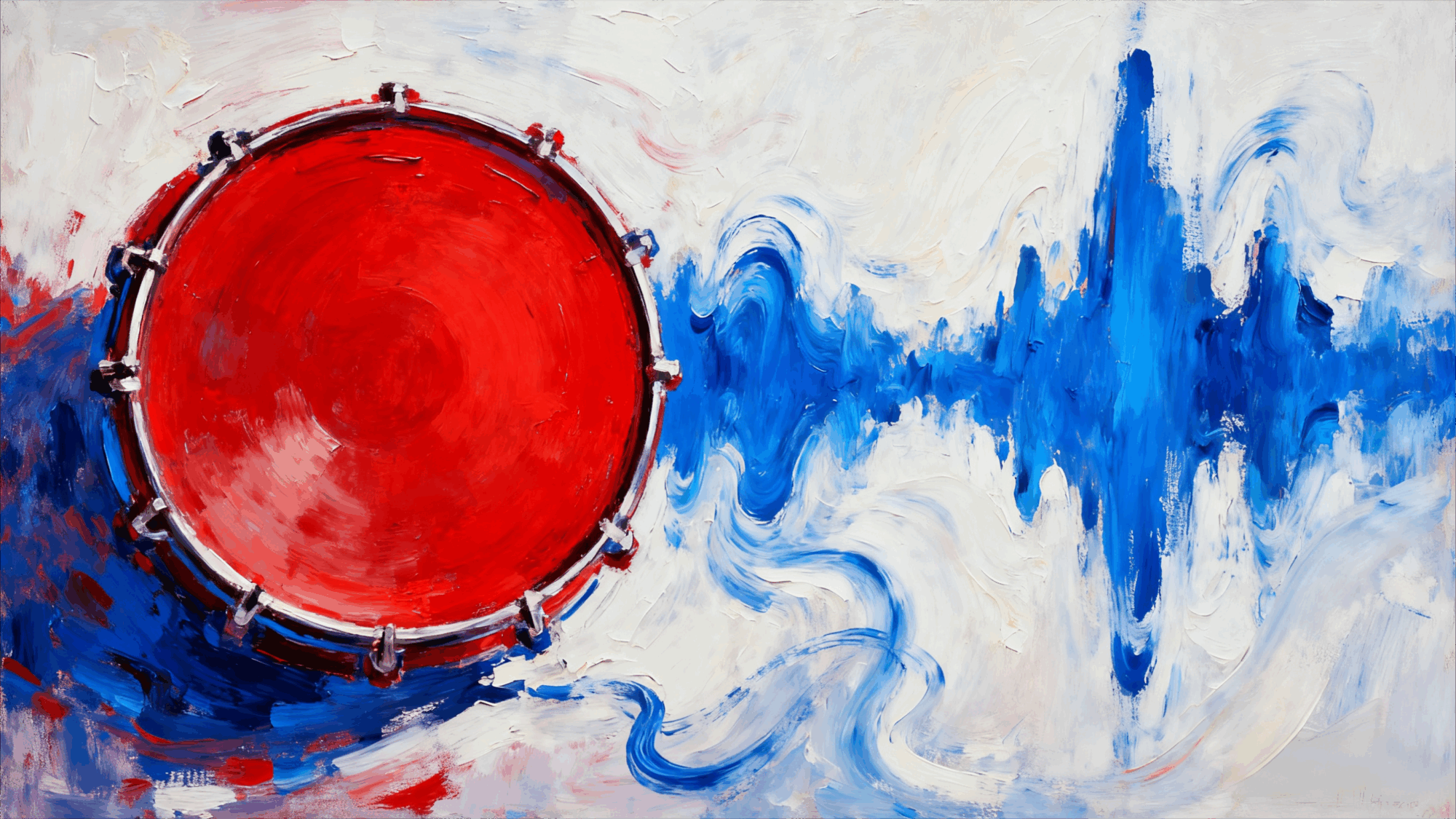
Beyond imagery, color embraces us with its own language.
When we truly hear color, we are no longer “viewers of the work,” but “those touched by the work.”
Imagery is the surface, color is the essence.
Imagery is the narrative, color is the soul.
Imagery allows us to see the world,
color allows us to feel the world.
And beyond imagery—
we finally hear color,
hear ourselves,
and hear the soft, hidden resonance that has always existed deep within the world.
Related Posts