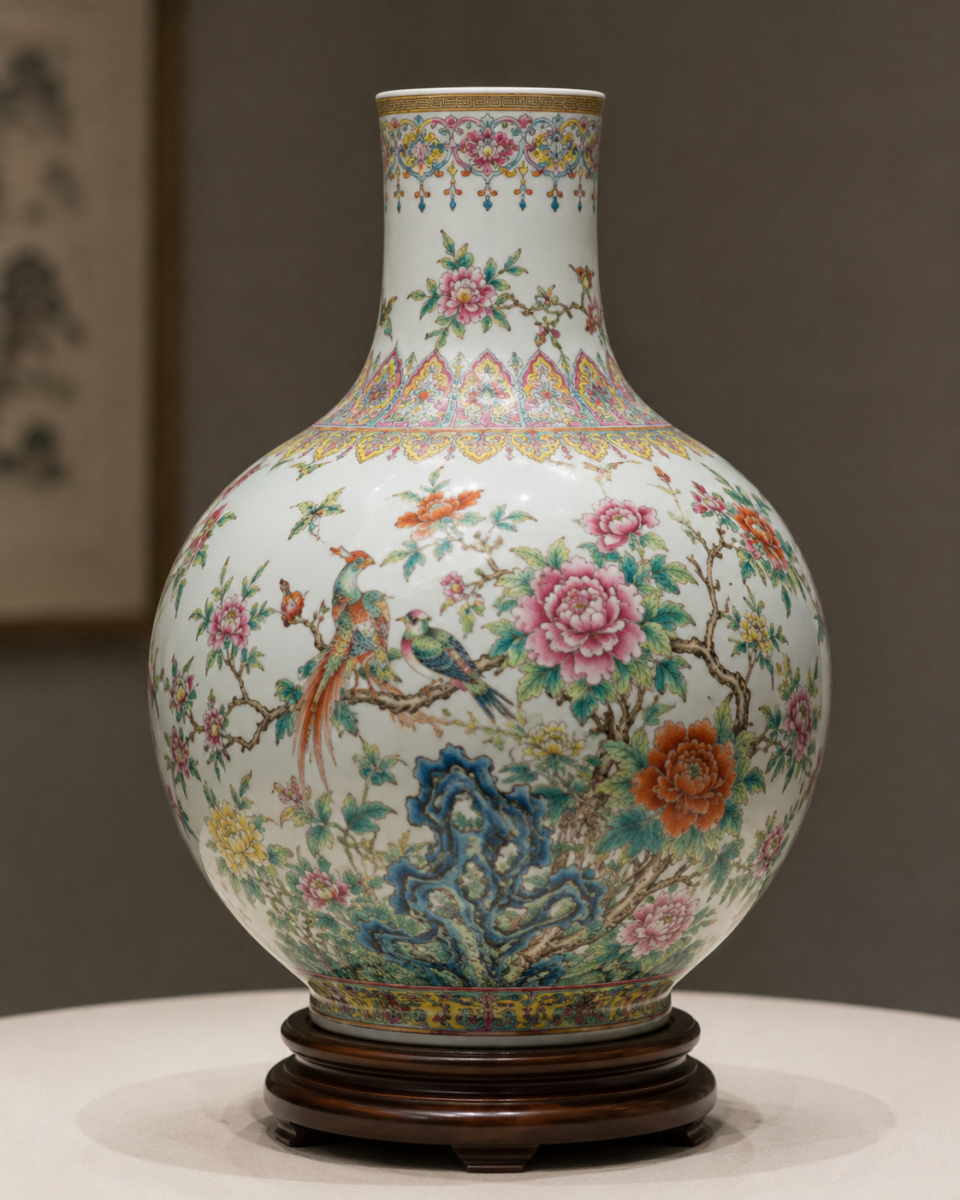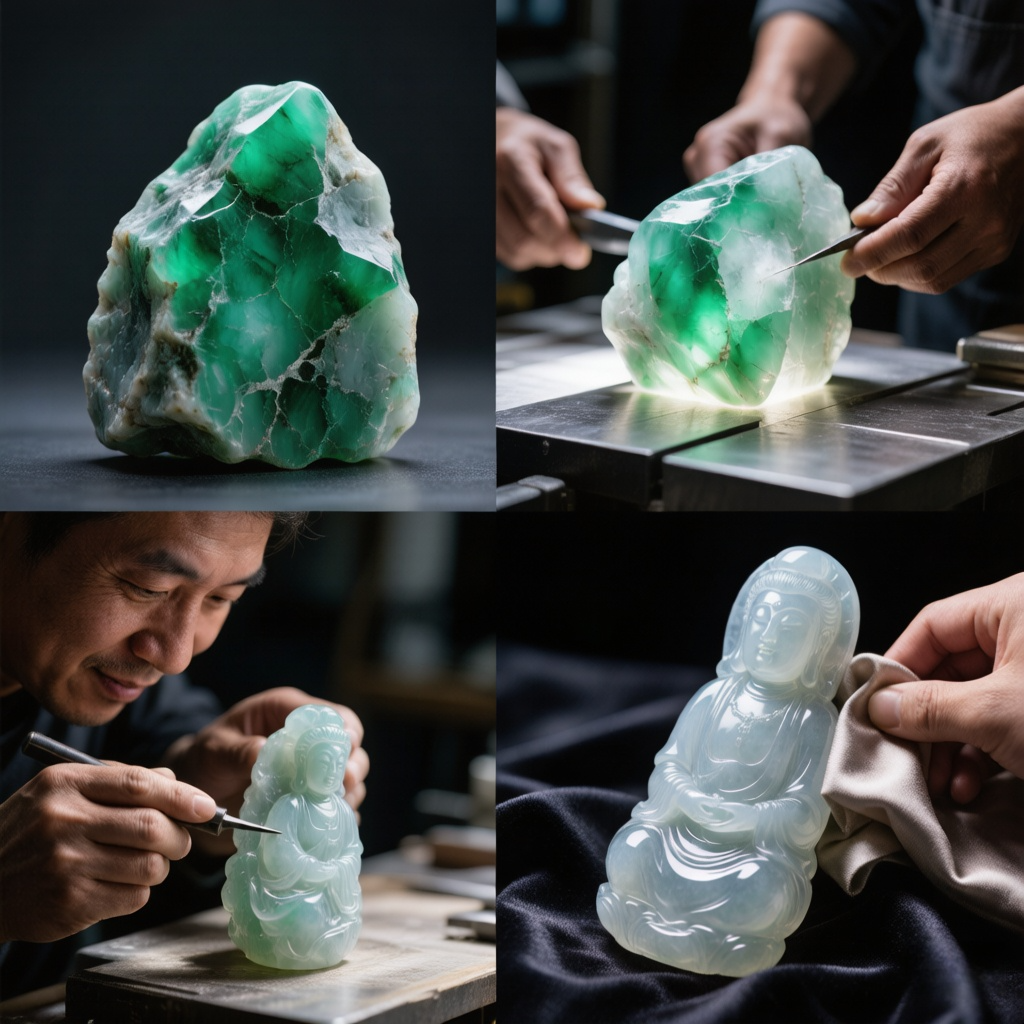
In recent years, as Chinese antique ceramics have continued to attract attention in the international…
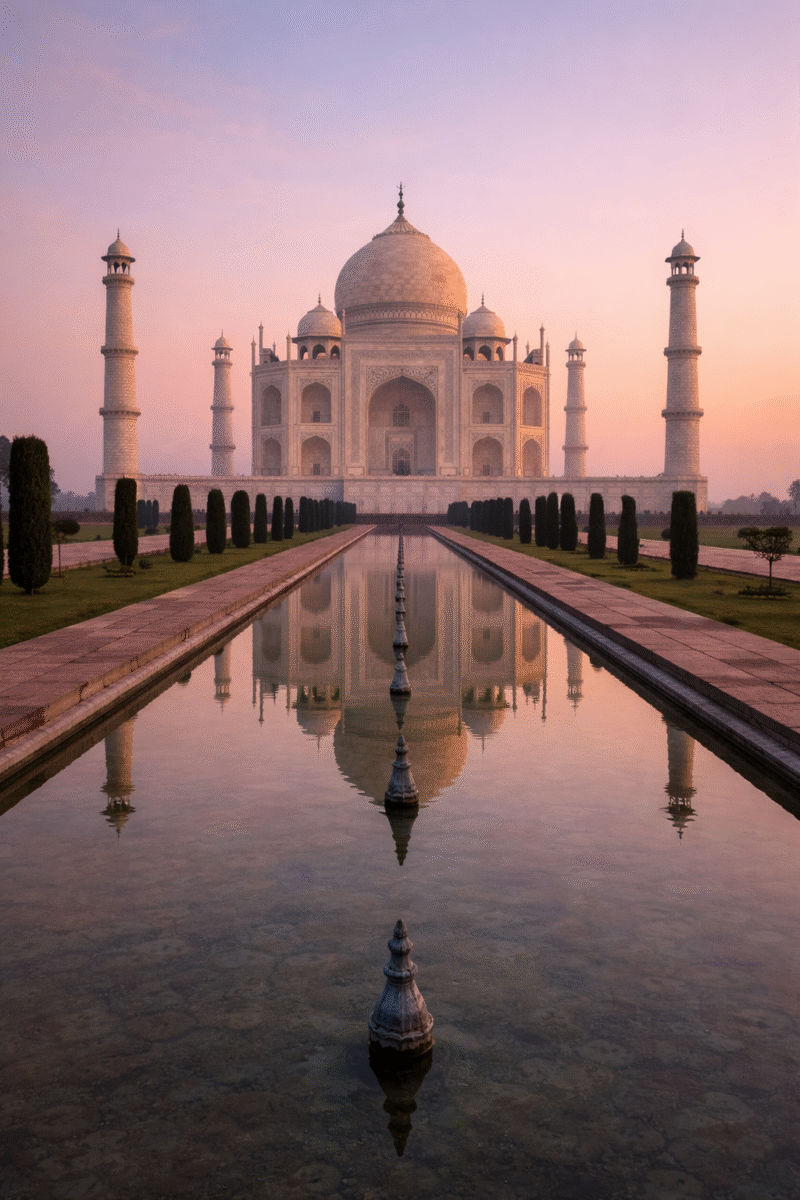
The Taj Mahal (India): A Monument to Love and Eternity
In the history of world architecture, few buildings have been so explicitly endowed with emotion as the Taj Mahal—love, loss, and eternity.
It is not merely a mausoleum, but rather a private memory sealed in stone, one that continues to speak to the world centuries later.
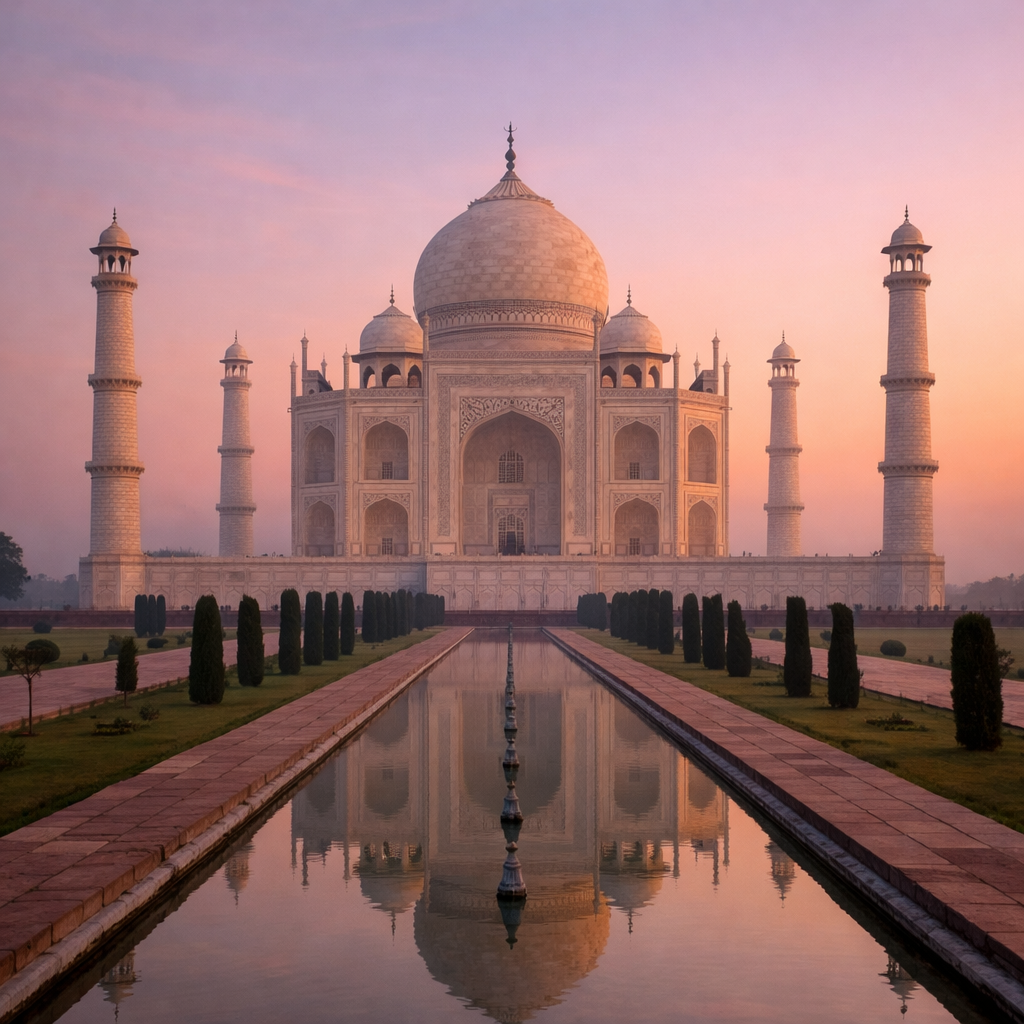
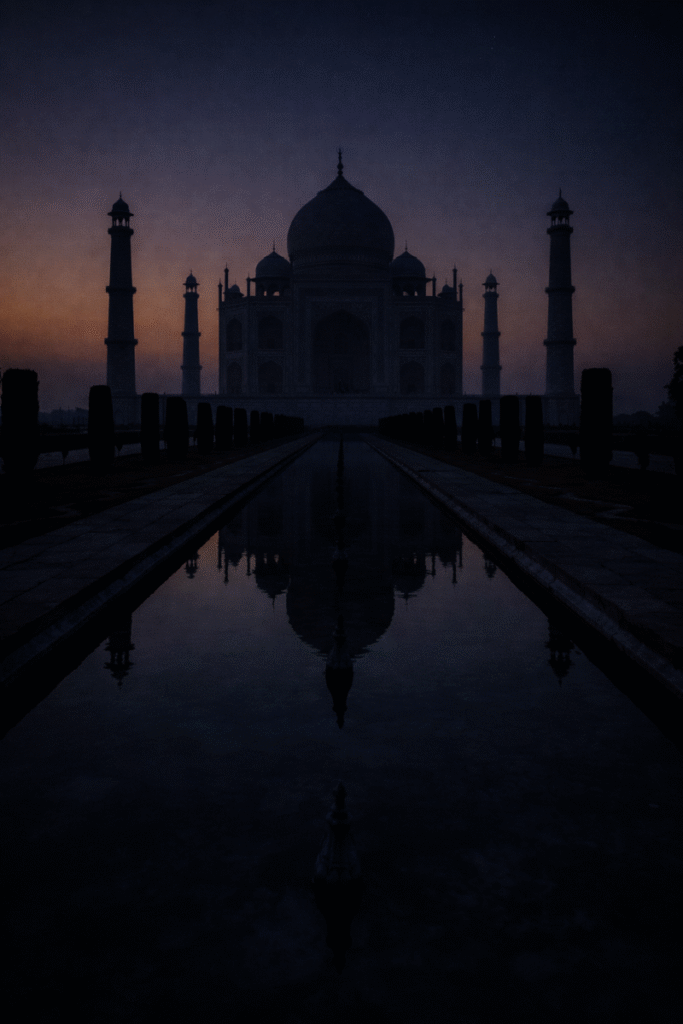
Located in Agra in northern India, the Taj Mahal stands on the banks of the Yamuna River. Its white marble glows softly in the morning light and is tinged with gentle shades of pink at dusk.
A Monument Born of Loss
The construction of the Taj Mahal began not from legend, but from an emotion that was deeply human and painfully real.
In the 17th century, Mumtaz Mahal—the most beloved wife of the Mughal emperor Shah Jahan—died during childbirth. Her death was not an epic tragedy, but one of those irreversible moments that occur all too often in life.
It is said that, in his grief, Shah Jahan resolved to build for her a mausoleum unlike any that had come before. It was not intended to display power, nor to commemorate war, but simply to remember one person.
Such a motivation is exceedingly rare in imperial architecture.
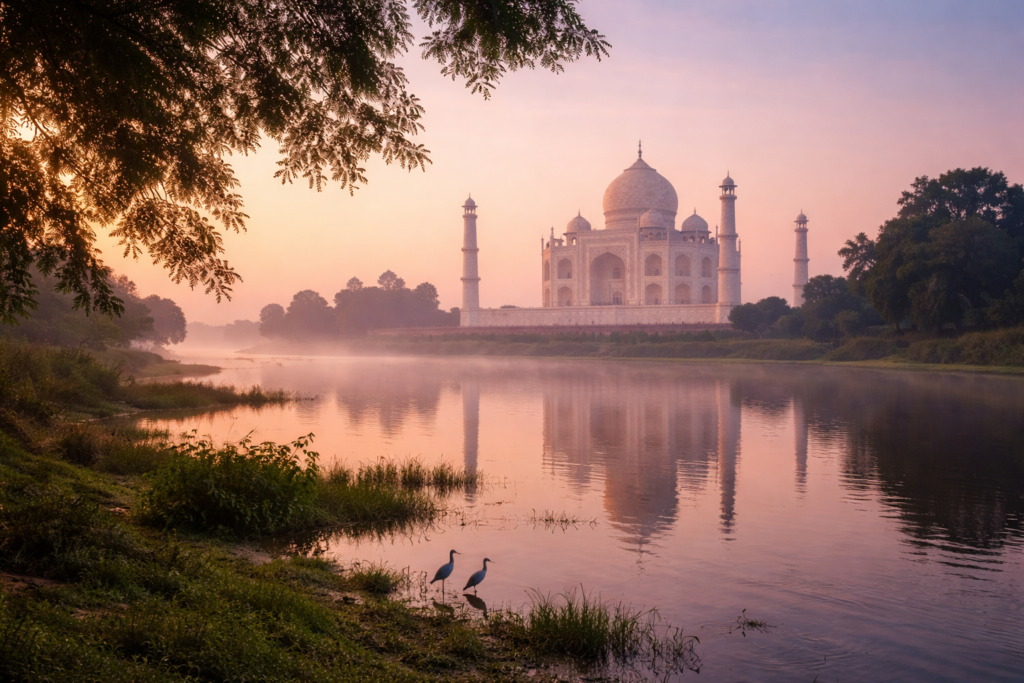
Order and Restraint in White Marble
The beauty of the Taj Mahal does not arise from complexity, but from an extreme sense of order.
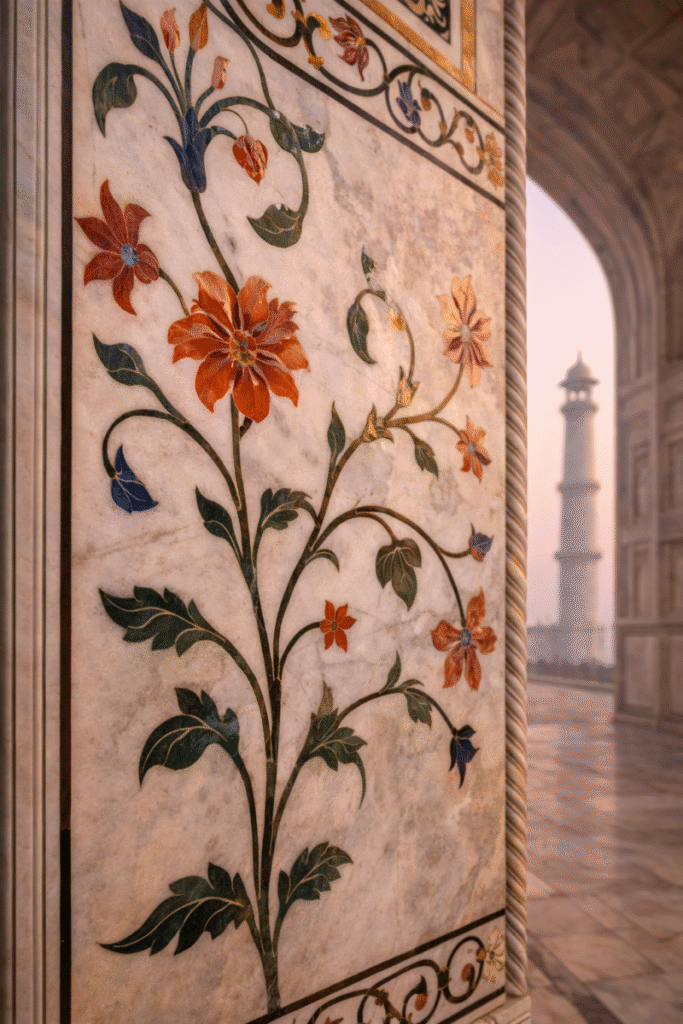
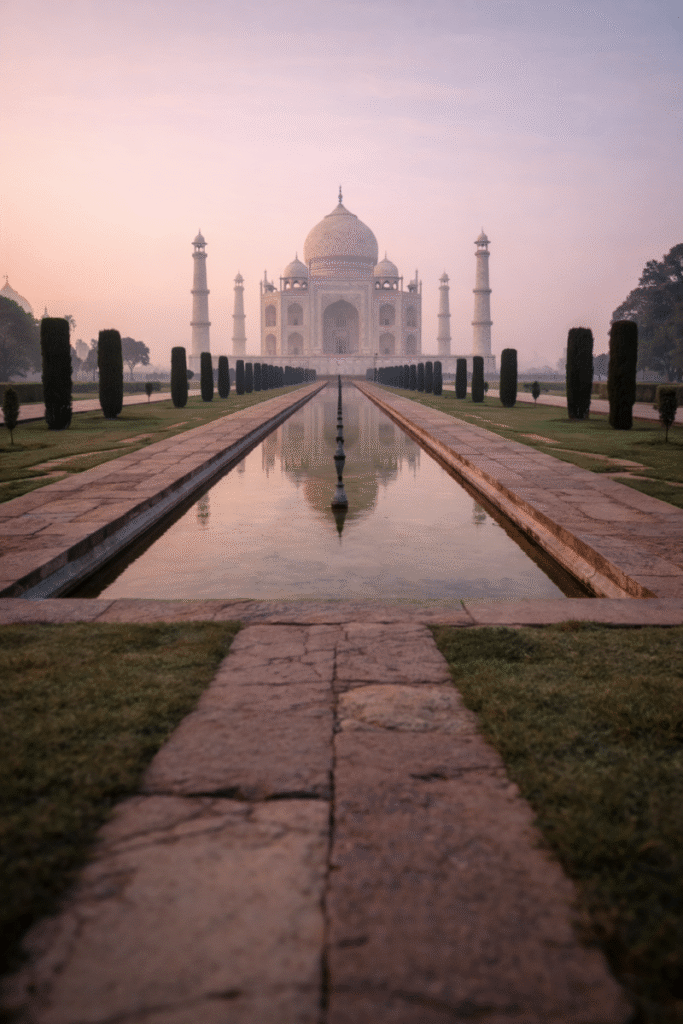
The entire complex follows a rigorously symmetrical axial plan: the central dome, the four minarets, the gardens, reflecting pools, and arcades—almost nothing exists without purpose or balance. The white marble surfaces are inlaid with semi-precious stone motifs that appear pure and understated from afar, yet reveal extraordinary refinement up close. This decoration is not meant to impress through excess, but to reflect patience, discipline, and the investment of time.
In the Islamic architectural tradition, symmetry represents cosmic order. Here, it also carries an emotional meaning: transforming the chaos of grief into a stable, enduring structure—one that gives sorrow a form capable of lasting forever.
The Convergence of Power, Art, and Private Emotion
Of course, the Taj Mahal is not entirely detached from politics and power.
It mobilized the empire’s finest craftsmen, materials, and resources, standing as a concentrated expression of the Mughal Empire’s artistic and technical mastery.
Yet this is precisely what makes it so extraordinary—
within an empire renowned for conquest and expansion, such a monumental structure was created in the service of love.
It reminds us that even the most powerful rulers cannot escape loss, and that architecture becomes one of the ways humanity attempts to resist time itself.
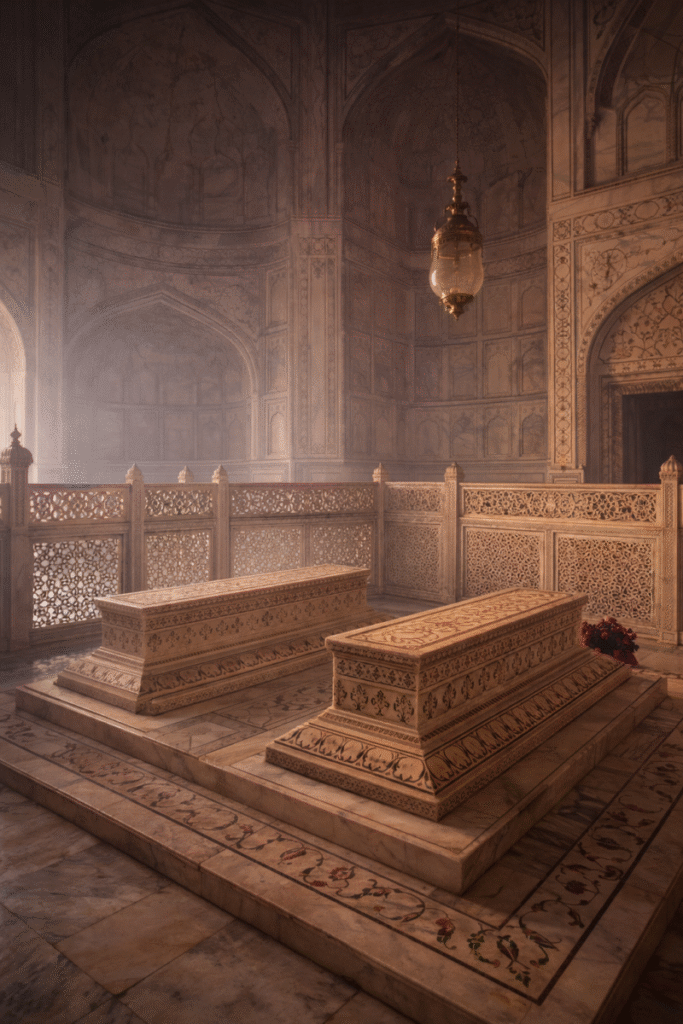
Why the Taj Mahal Still Matters Today
Today, the Taj Mahal is a World Heritage site, a global landmark, and an enduring image reproduced across countless photographs.
Yet its true significance lies in far more than its beauty or fame.
It reminds us that:
architecture is not merely a combination of technique and material, but can also be a vessel for emotion;
commemoration does not have to arise from victory—it can emerge from vulnerability;
and what we call “eternity” is often born from the moments humans find most unbearable.
As time slowly weathers the white marble, the core meaning—love and memory—remains strikingly intact.
The Taj Mahal does not proclaim its message loudly.
It simply stands in silence, allowing everyone who approaches to realize—
some emotions are worthy of being remembered by the entire world.
Related Posts