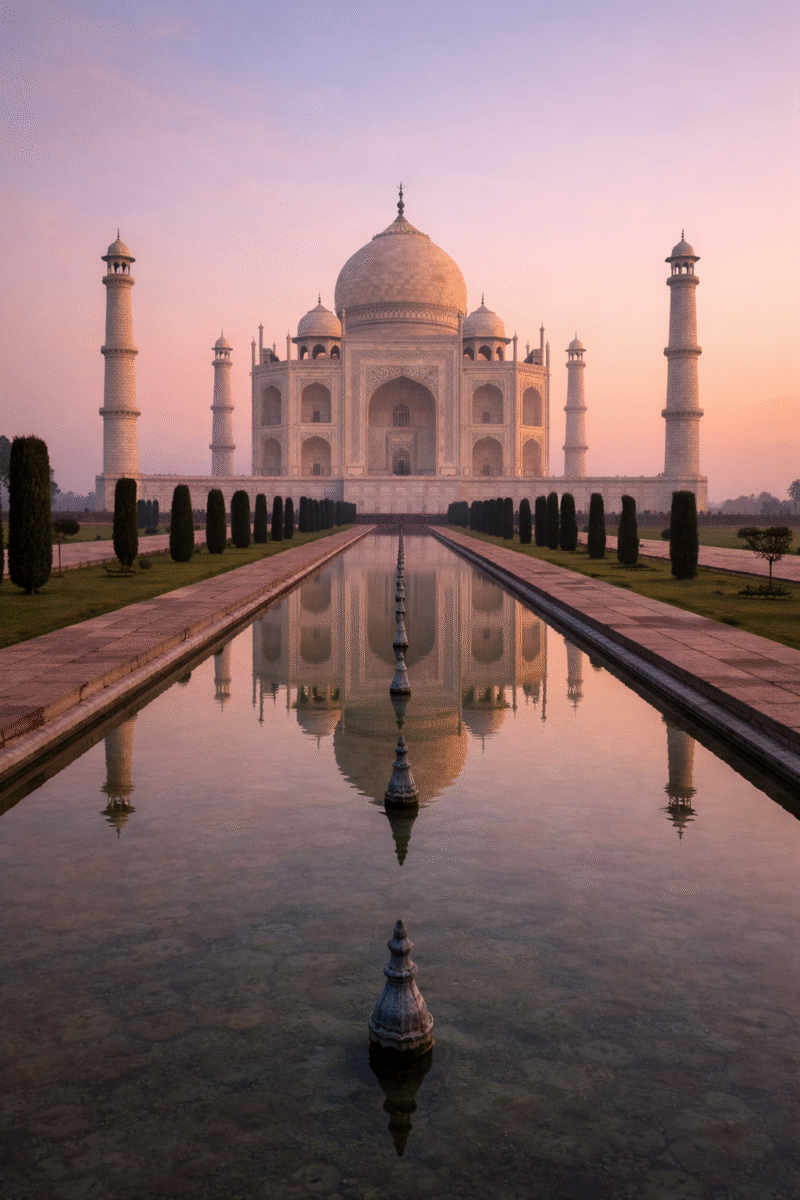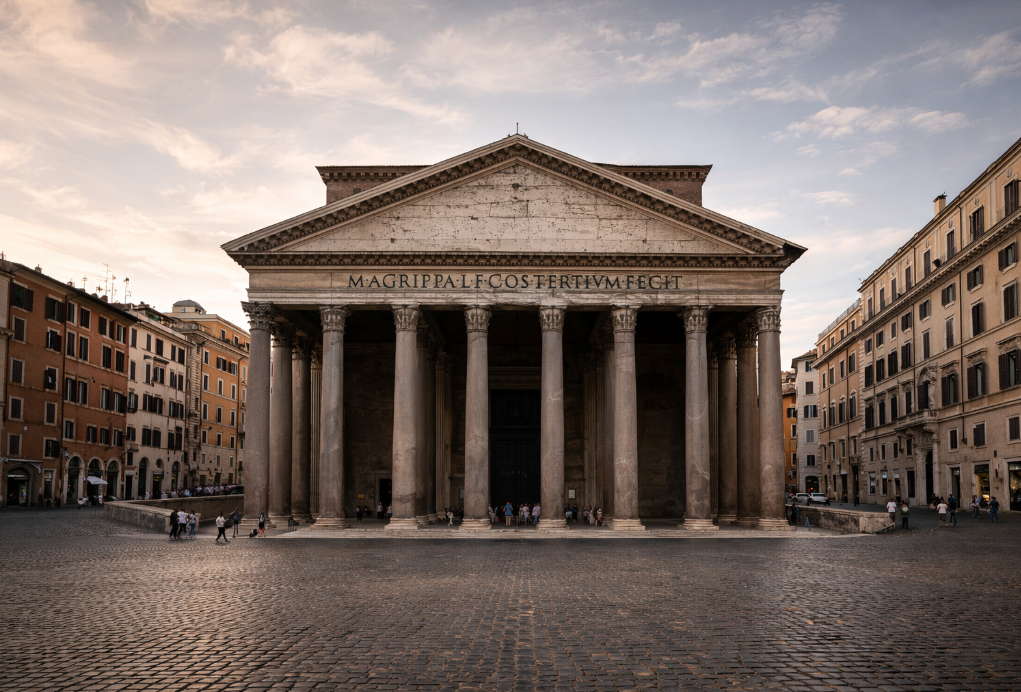
In the history of world architecture, few buildings have been so explicitly endowed with emotion…
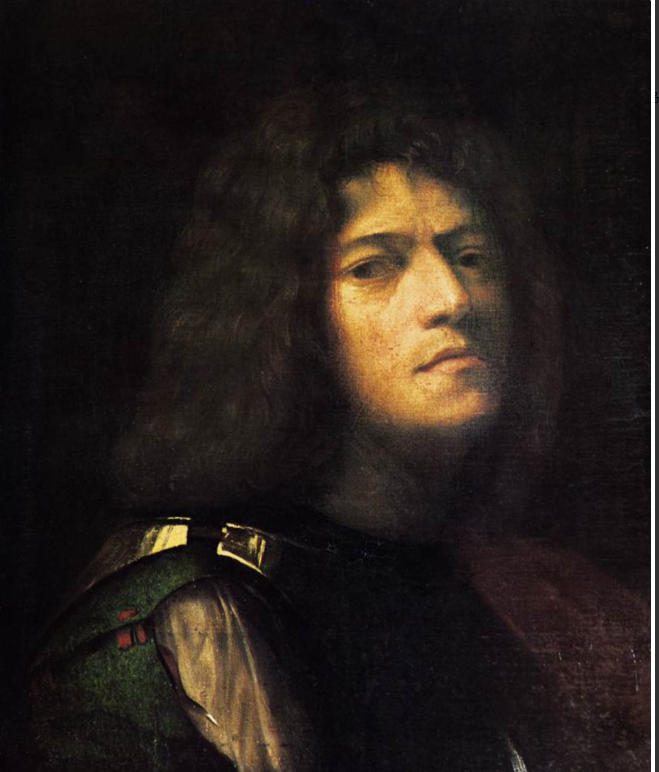
Giorgione: The Enigmatic Genius of the Venetian School
In Venice during the Renaissance, there was a painter whose life was as fleeting as a shooting star, yet shone with unparalleled brilliance—Giorgione. His life lasted only a little over thirty years, yet he left an indelible mark on art history. This enigmatic genius, with his unique poetic brushstrokes, ushered in a new era for the Venetian school of painting.
A Short but Brilliant Artistic Career
Giorgione was born between 1477 and 1478 and died in 1510. Although his life was short, he created numerous astonishing works. A student of Giovanni Bellini, he quickly surpassed his teacher, developing his own unique artistic style. His works are renowned for their soft colors, hazy light and shadow, and poetic atmosphere, liberating the Venetian school from traditional religious themes and giving painting new life.
Analysis of Representative Works
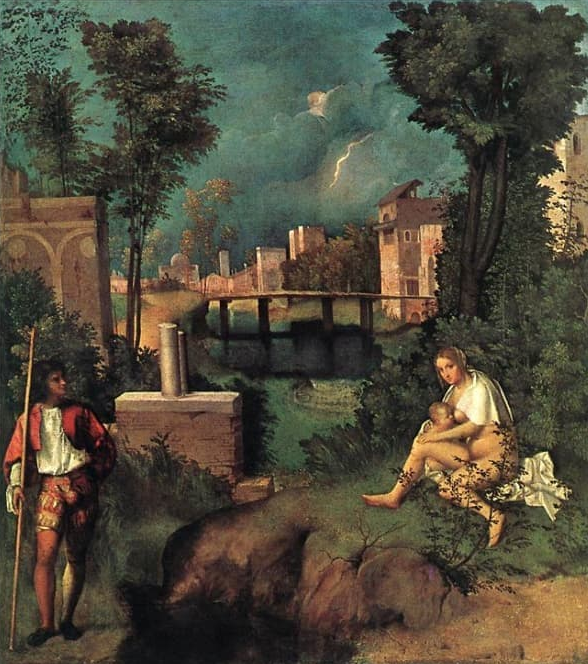
“The Tempest” is one of Giorgione’s most famous works and also one of the most enigmatic paintings in art history. The painting depicts a tranquil rural scene: a woman breastfeeding on the left, a soldier standing on the right, and an approaching storm in the distance. Breaking free from the constraints of traditional narrative painting, it lacks a clear religious or mythological theme, focusing instead on creating atmosphere. The soft colors and delicate handling of light and shadow create a dreamlike, poetic atmosphere, conveying both the calm and unease before the storm.
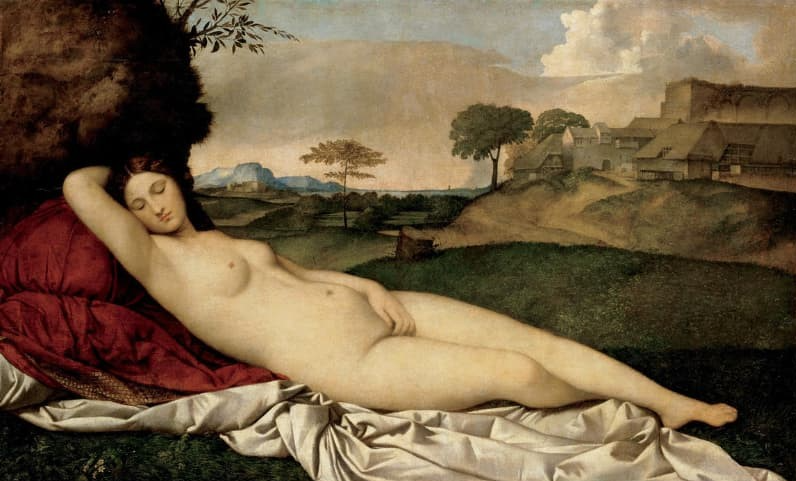
“Sleeping Venus” is another masterpiece by Giorgione and the first reclining nude goddess figure in Western art history. In the painting, Venus sleeps peacefully amidst a natural landscape, her body curves gracefully, her skin delicately textured, perfectly blending with the pastoral scenery in the background. This painting pioneered the classic motif of the “reclining Venus,” profoundly influencing later artists. Masters such as Titian, Velázquez, and Goya all drew inspiration from it in their works.
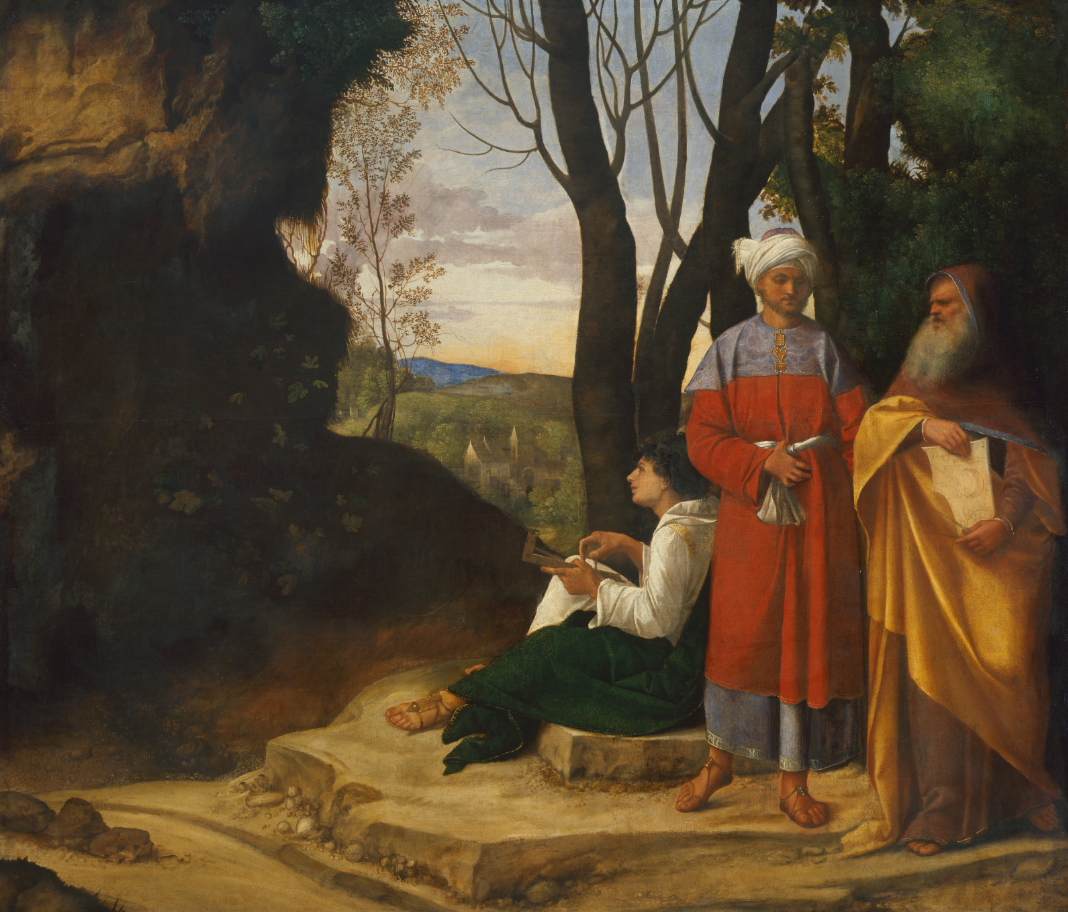
“The Three Philosophers” showcases Giorgione’s profound understanding of human psychology. The three philosophers, each with a distinct posture and pensive expression, seem to be exploring the mysteries of the universe. The handling of light in the painting is exquisite; the afterglow of the setting sun bathes the figures, creating a mysterious and profound atmosphere. This work reflects Giorgione’s exploration of the inner world of his subjects, transcending mere physical depiction.
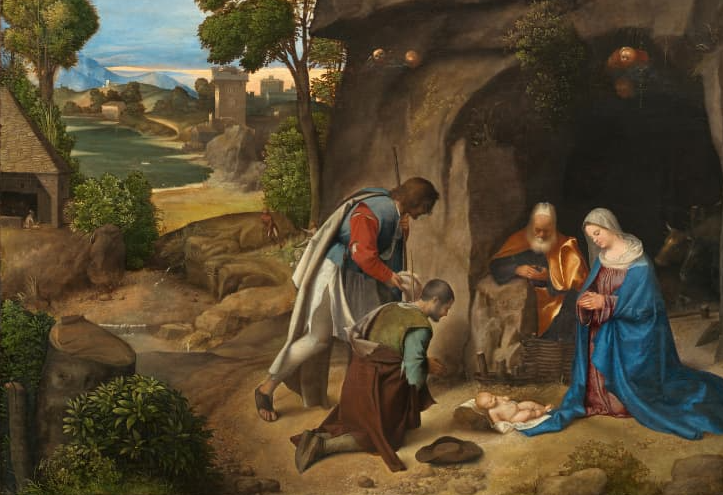
Although *The Adoration of the Shepherds* is a religious work, Giorgione gave it a completely new interpretation. The shepherds in the painting are simple and natural, and the light of the Christ Child illuminates the entire scene, creating a warm and sacred atmosphere. The soft color transitions and delicate light and shadow effects imbue this religious painting with human warmth.
Artistic Characteristics and Influence
Giorgione’s artistic style is distinctly personal. He skillfully used sfumato, allowing colors and light to transition naturally, creating a hazy and poetic effect. His works often lack a clear narrative, focusing instead on creating atmosphere and conveying emotion. This concept of “poetic painting” had a profound influence on the later Venetian school.
Titian, Giorgione’s junior, was deeply influenced by him, pushing the use of color in Venetian painting to new heights. Giorgione’s work also influenced masters such as Correggio and Rembrandt, and his artistic ideas even continued into the Impressionist period.
A Life of Art Enigma
Giorgione’s life was shrouded in mystery. Little is known about his life, and the authenticity of many of his works remains controversial. His untimely death, reportedly from the plague, adds to his mystique. Yet, it is precisely this mystery that makes his works so captivating.
Giorgione, with his short life, left an indelible mark on art history. His paintings are not merely a visual feast, but a dialogue with the soul. In those hazy shadows, in those poetic atmospheres, we seem to hear the whispers of this genius painter and feel his unwavering pursuit of beauty.
Even today, Giorgione’s works continue to exude a captivating charm, drawing countless art lovers to pause and admire them. He is like a wisp of morning mist in the water city of Venice—brief yet eternal, hazy yet profound, forever etched in the annals of art history.
Related Posts