Before the mysterious smile of the Mona Lisa in the Louvre, and beneath the profound…
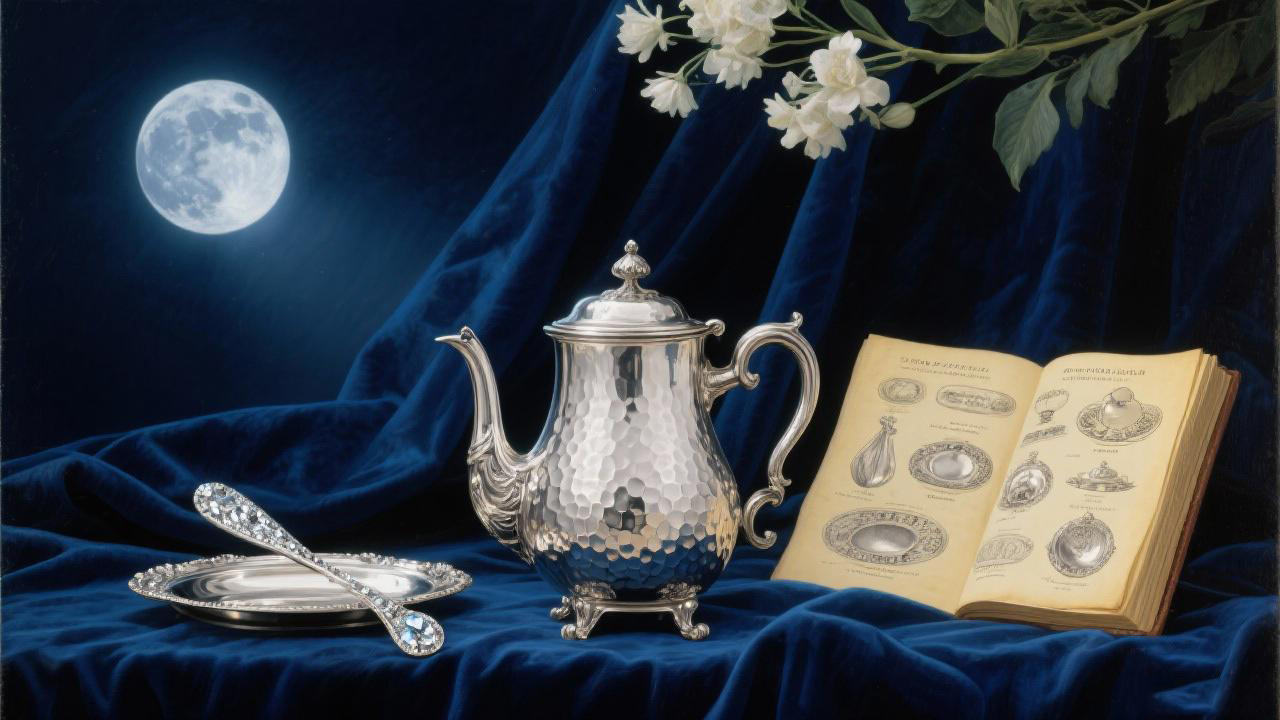
Frozen Moonlight: Exploring the “Silent Light” on Georgian Silverware in England
Among the many categories of British collectibles, there is one type that, unlike the dazzling brilliance of bone china or the flamboyant style of oil paintings, preserves the soul of Britain’s most glorious era in a different way—that is, Georgian silverware (1714-1837). This is not merely a display of wealth, but a “silver mirror” reflecting the dramatic social changes, the pinnacle of craftsmanship, and the unique aesthetic creed of Britain.
I. The Source of Silver’s Splendor: The Rise of a Class and the Ambition of a City
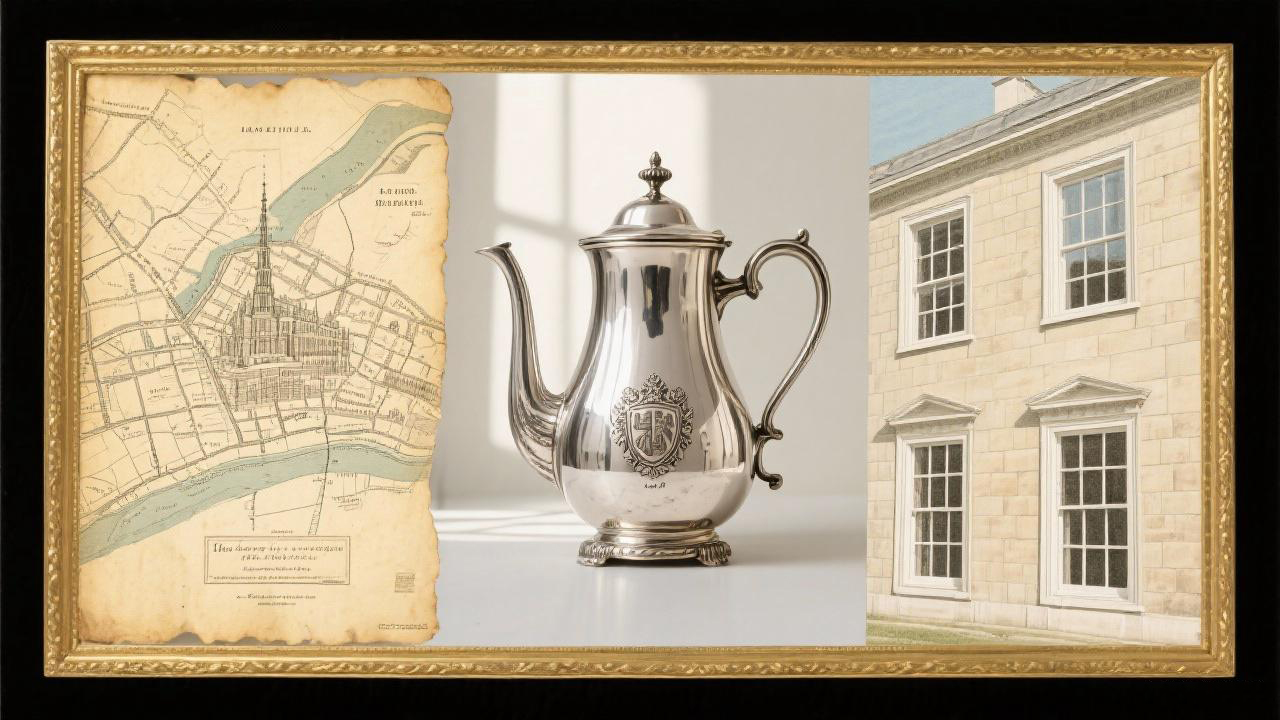
The golden age of silver collecting is inextricably linked to the rise of a new class: emerging merchants, bankers, and colonial traders. They needed a new medium that distinguished itself from the hereditary gold of the nobility, while simultaneously showcasing their wealth and taste. Silver, with its moderate value, excellent ductility, and ability to create a magnificent effect comparable to gold, became the ideal choice.
London, as the global center of silver trade and processing, established the British Standard sterling silver (95.8% purity) in 1700, softer and with a warmer luster than the traditional Sterling silver (92.5%). Every piece of silverware crafted by London’s master artisans was marked with several hallmarks: a lion and beast (Sterling Standard), an image of the goddess Britannia (Britannia Standard), a date code, the city’s emblem, and the artisan’s mark. This small “silverware ID card” became the core basis for authentication and collection in later generations, and also allowed each piece to carry precise time and location coordinates.
II. The Soul of Craftsmanship: From Hammering to “Silent Night’s Light”
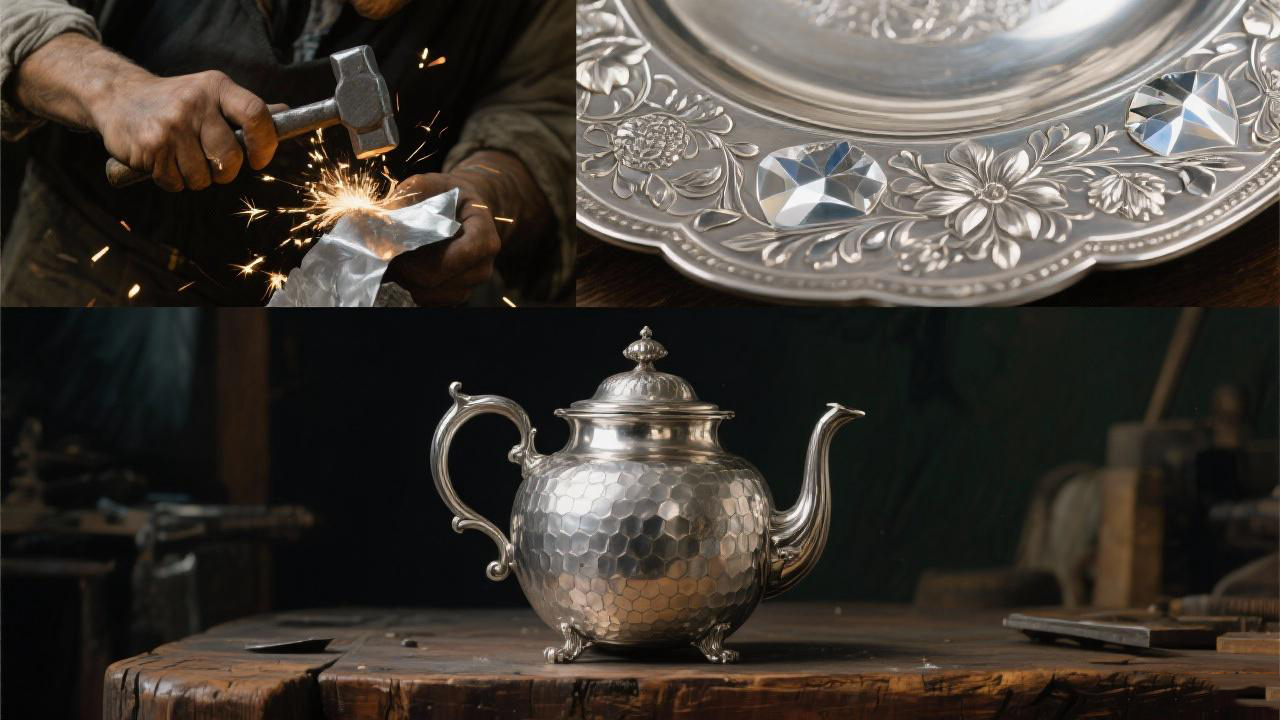
The beauty of Georgian silverware stems from its revolutionary philosophy of craftsmanship. It abandoned the excessive gilding and inlay of the Baroque style, turning instead to the expressive power of the material itself.
Hammered Disc Texture: Craftsmen used hammers of different shapes to create fine, scale-like or wave-like textures on the surface of the silver. This is not merely decoration; it allows light to diffuse across the surface, producing a warm, moonlit, and serene inner luster, known to connoisseurs as “Silent Night’s Light.” It avoids the dazzling brilliance of a mirror, subtly conveying nobility through the interplay of light and shadow.
Bright Cut: On the edge of the vessel, craftsmen hand-cut a series of tiny geometric planes with chisels. When light passes over these planes, they burst forth with a dazzling brilliance, like diamonds, creating a dramatic contrast with the matte hammered disc texture. This technique requires an extremely steady hand and exceptional geometric calculation skills.
Exquisite balance: From enormous punch bowls to tiny salt cups, Georgian silverware displays unparalleled mechanical balance and visual harmony. The curve of the spout had to ensure a leak-proof seal, and the curve of the handle had to fit the shape of the hand—a perfect unity of mathematics, mechanics, and aesthetics.
I am text block. Click edit button to change this text. Lorem ipsum dolor sit amet, consectetur adipiscing elit. Ut elit tellus, luctus nec ullamcorper mattis, pulvinar dapibus leo.
III. A Mirror of the Times: The Social Revolution in Tea, Coffee, and Salons
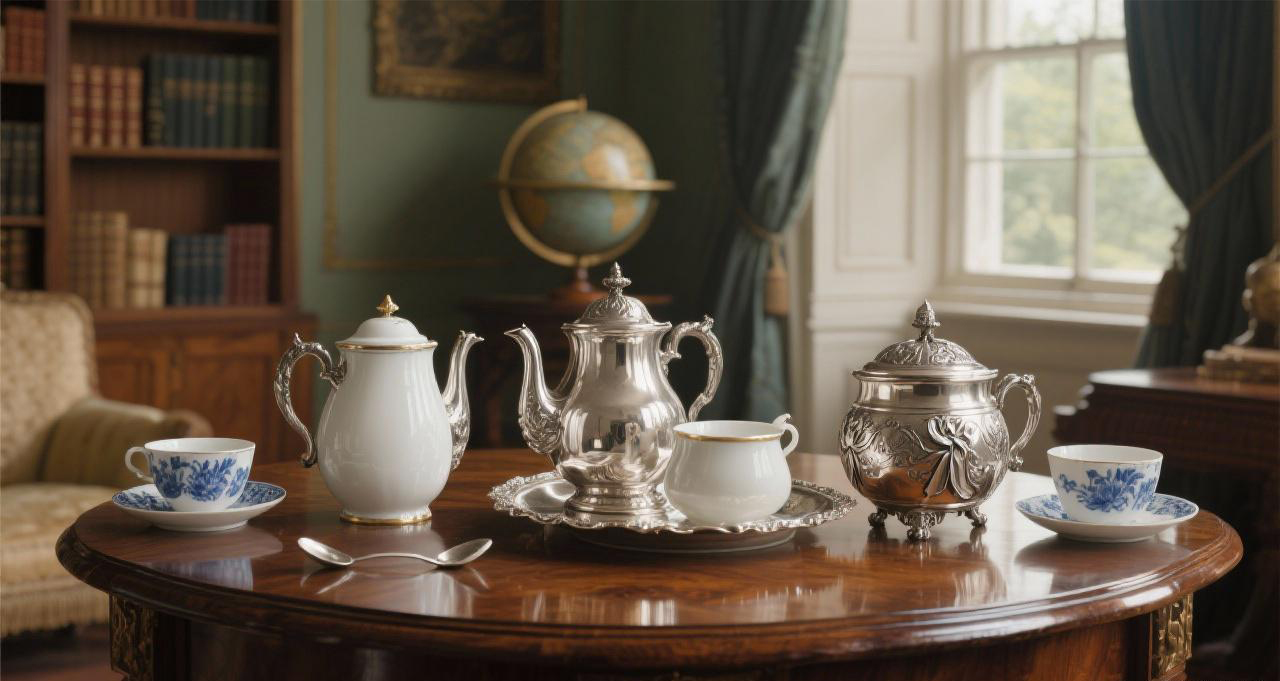
Collecting Georgian silverware is essentially collecting a set of “codes of social etiquette.” The explosion of silverware coincided with the popularity of two globalized commodities: tea and coffee.
A complete silver tea set was a reflection of a family’s status and the lady of the house’s upbringing. In afternoon tea ceremonies, the shimmering light reflected from the silver teapot and the soft clinking of the silver spoons were carefully crafted “social accompaniment.” The “punch bowls,” used exclusively by gentlemen after dinner, were enormous in size and lavishly decorated, bearing witness to club culture and political alliances.
The decorative patterns on silverware gradually evolved from the early heavy scrollwork to Neoclassical Greek key patterns, ribbon dangling, and allegorical reliefs, echoing the whole of Europe’s pursuit of rationality, democracy, and classical civilization. Thus, a piece of silverware, beginning at the dining table, silently records the profound changes in British social thought and lifestyle from the Enlightenment to the eve of the Industrial Revolution.
IV. The Way of Collecting: Rationality and Poetry Beneath the Radiance
For collectors, Georgian silverware represents a fusion of rationality and poetry.
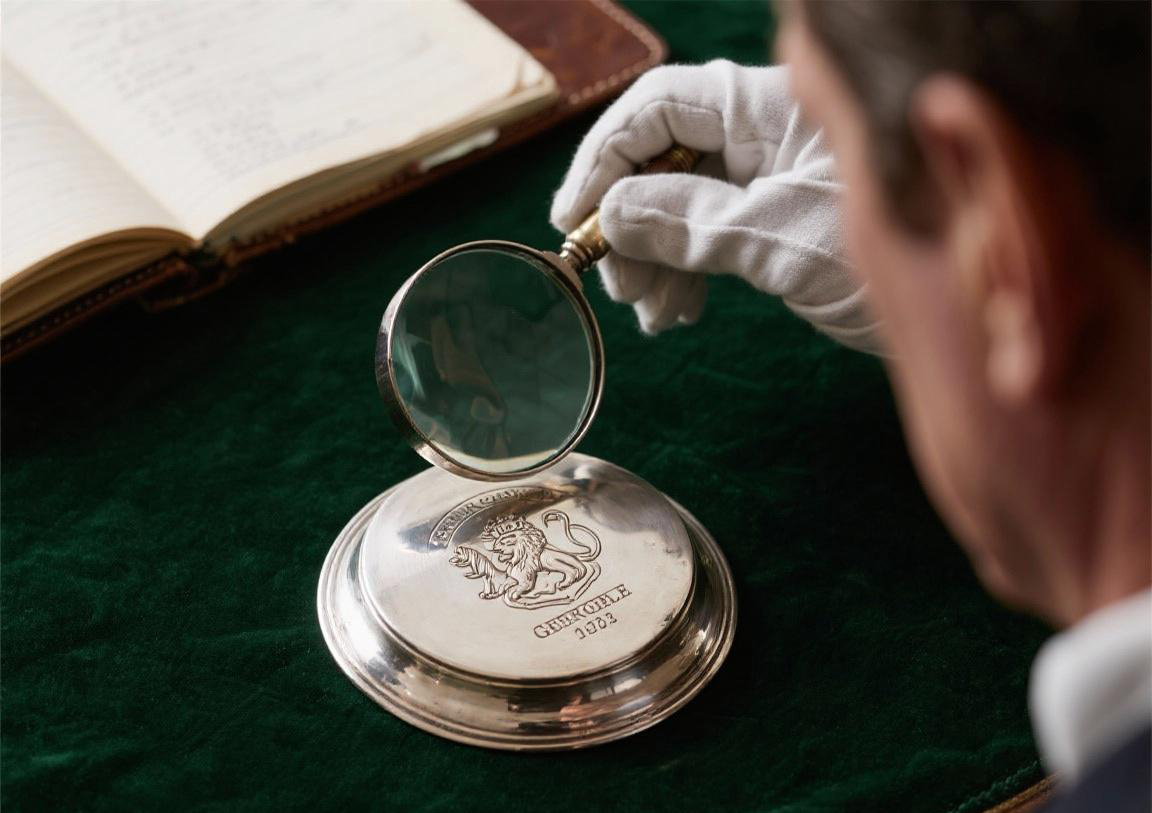
The core is the hallmarks: The first step in collecting genuine pieces is learning to “decode” the hallmarks on the underside. These hallmarks tell you the year of origin, place of origin, patron (craftsman), and even purity. A comprehensive guide to British silver hallmarks is an essential reference book.
The Value Triangle: Rarity (shape, age), condition (completeness, wear), and provenance (renowned craftsman, noble coat of arms) collectively determine value. An early piece in excellent condition, crafted by a master (such as Paul de Lamery), is a hallmark of a collector’s item.
Maintenance Philosophy: Avoid excessive polishing! The precious “original luster” and warm patina are medals bestowed by time. Daily maintenance simply requires gentle wiping with a special silver polishing cloth and storage in a cool, dry cabinet away from light. A suitable layer of oxidation is, in fact, an honest testament to its history.
Today, collecting a piece of Georgian silverware transcends the material realm. When your fingertips brush against the warm handle of a vessel, polished by countless hands over three centuries, you touch the tangible warmth of history. It is “frozen moonlight,” forged from cold metal by human hands, patience, and mathematical reason on the eve of the steam engine’s roar. That tranquil, confident, understated yet powerful luster is perhaps the most elegant metallic testament to the spirit of Great Britain’s “Golden Age.”
In it, we see not only wealth, but also a nation’s profound and unwavering yearning for order, reason, and enduring beauty as it ascended to the pinnacle of world power.
Related Posts