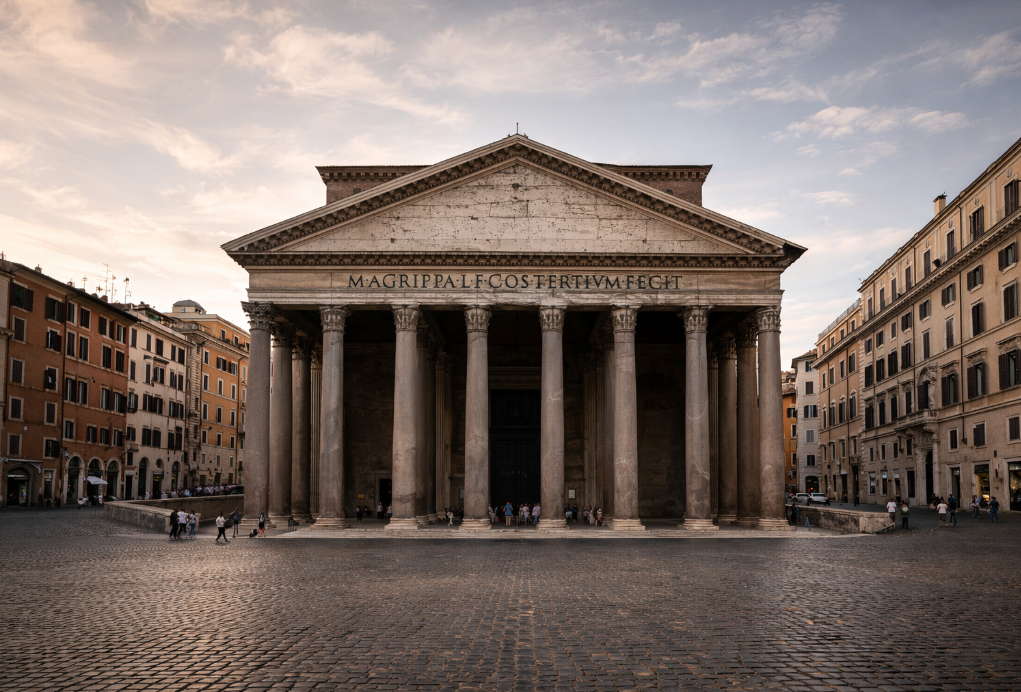
In the history of world architecture, few buildings have been so explicitly endowed with emotion…
Albrecht Dürer: A Master of the Northern Renaissance
On the streets of Nuremberg, Germany, a young boy is engraving lines on a copper plate with a silver needle. This boy is Albrecht Dürer (1471-1528), later hailed as the “first man of the Northern Renaissance.” This German master artist left an indelible mark on European art history with his exquisite printmaking techniques, profound religious paintings, and groundbreaking self-portraits.
A masterpiece of printmaking art
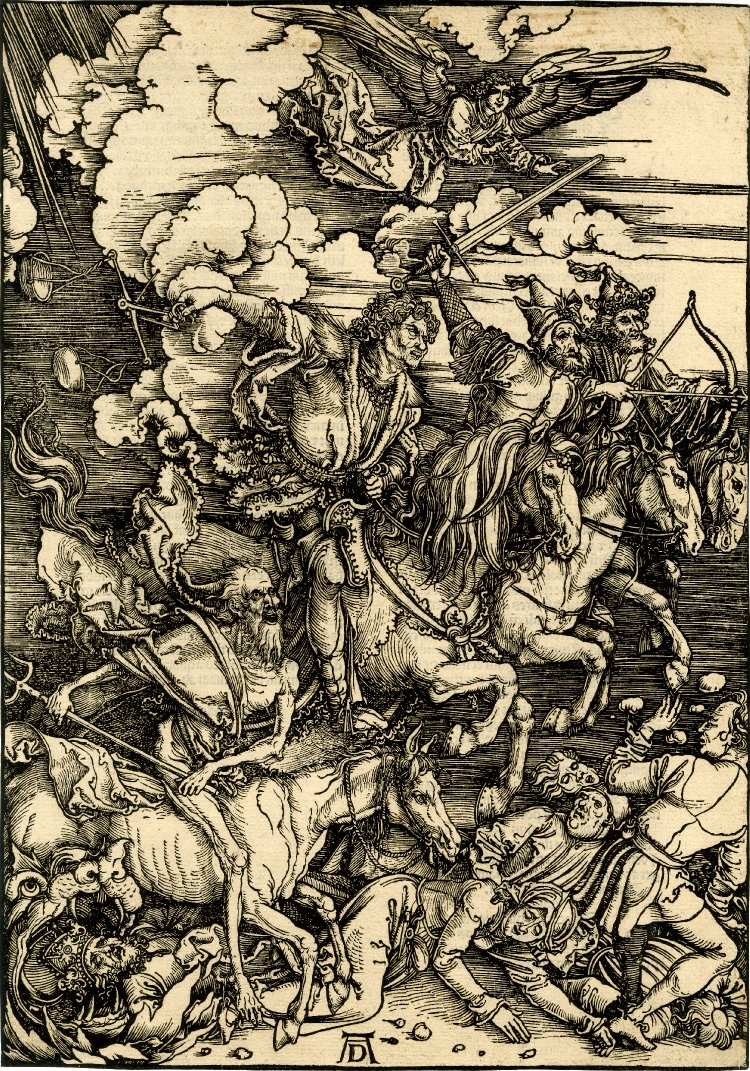
Dürer’s most astonishing achievement lies in elevating printmaking to unprecedented heights. His woodcut print, *The Four Horsemen of the Apocalypse*, is a milestone in art history. Based on the Book of Revelation, this work depicts four horsemen—symbols of war, famine, plague, and death—sweeping across the land. Dürer’s astonishing ability to depict detail renders the horsemen’s armor, the horses’ muscles, and the figures’ expressions with remarkable realism. The dynamic lines and strong contrasts of light and shadow create a powerful, apocalyptic effect. This work not only showcases Dürer’s exquisite skill but also reflects his profound understanding of religious themes.
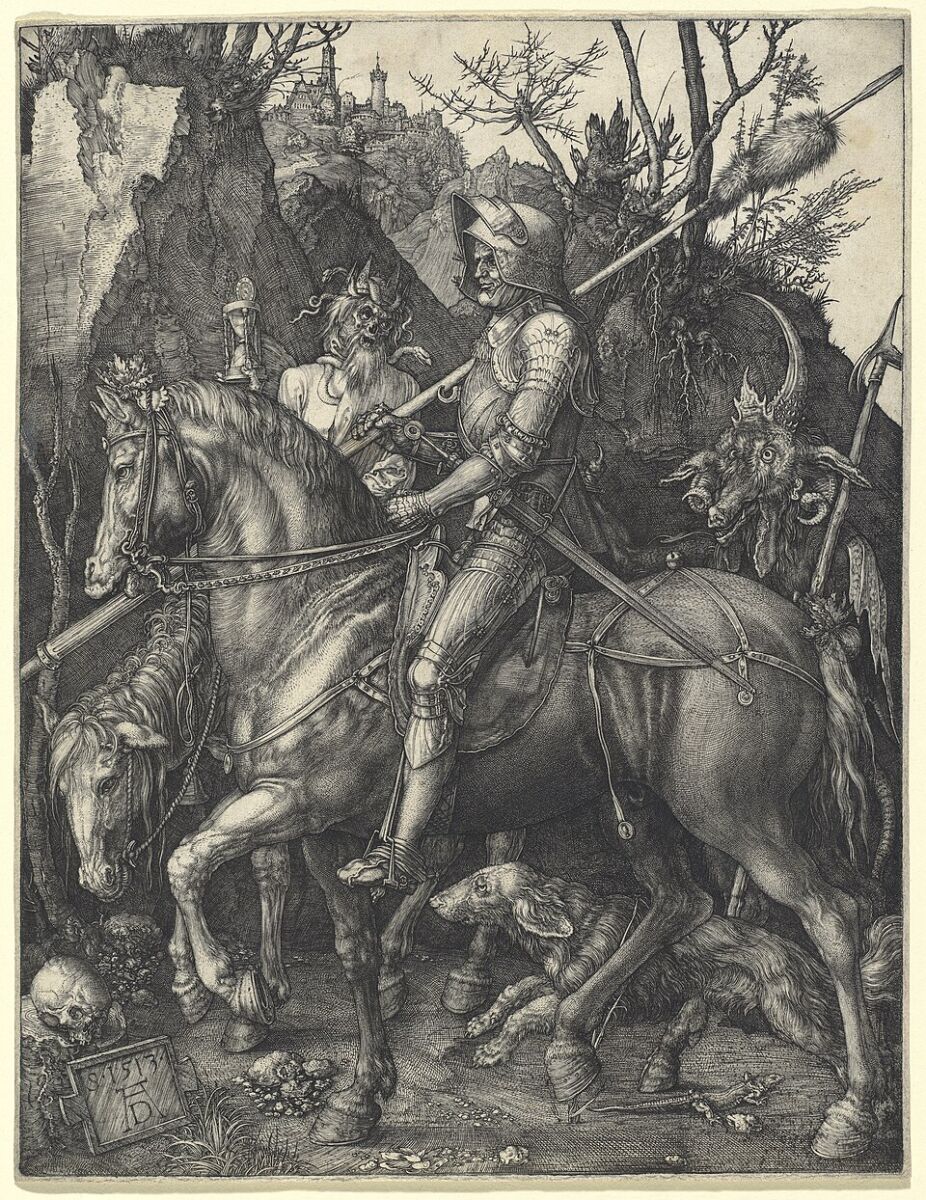
(Knight, Death and the Devil) is another masterpiece of Dürer’s prints. The knight, accompanied by Death and the Devil, resolutely marches forward, symbolizing the steadfastness and courage of Christians on their path of faith. Dürer’s meticulous attention to detail is breathtaking—the reflections on the knight’s armor, the horse’s mane, the texture of the rocks are all depicted with exquisite care. This work embodies Dürer’s artistic pursuit of a perfect fusion of Northern Gothic tradition and the spirit of the Italian Renaissance.
Religious Sentiment in Oil Painting
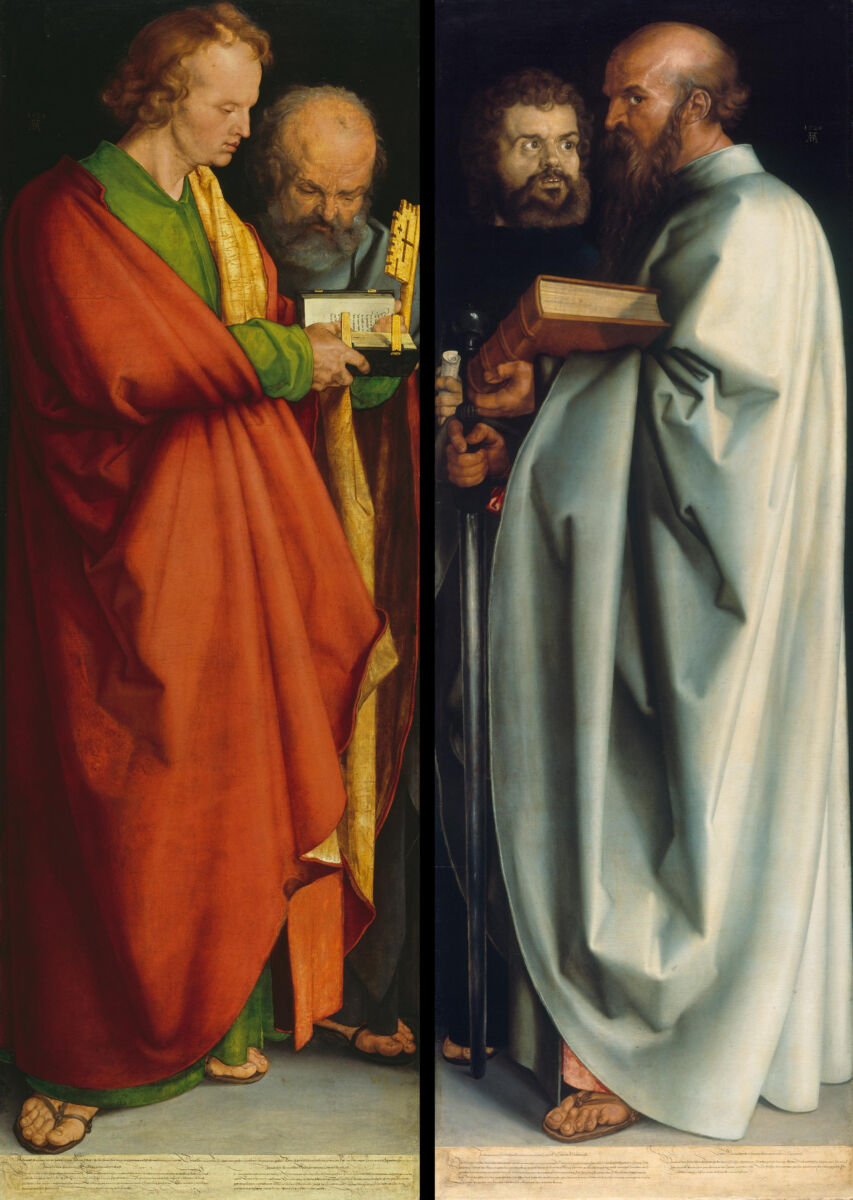
Dürer’s oil paintings also possess a powerful, moving quality. “The Four Apostles,” a masterpiece from his later years, depicts the four apostles: St. John, St. Peter, St. Mark, and St. Paul. The figures in the painting are solemn and resolute, reflecting Dürer’s profound reflections on the Reformation. Through delicate brushstrokes and rich colors, he masterfully portrays the inner world of his subjects. This work is not only a masterpiece of religious art but also a culmination of Dürer’s artistic career.
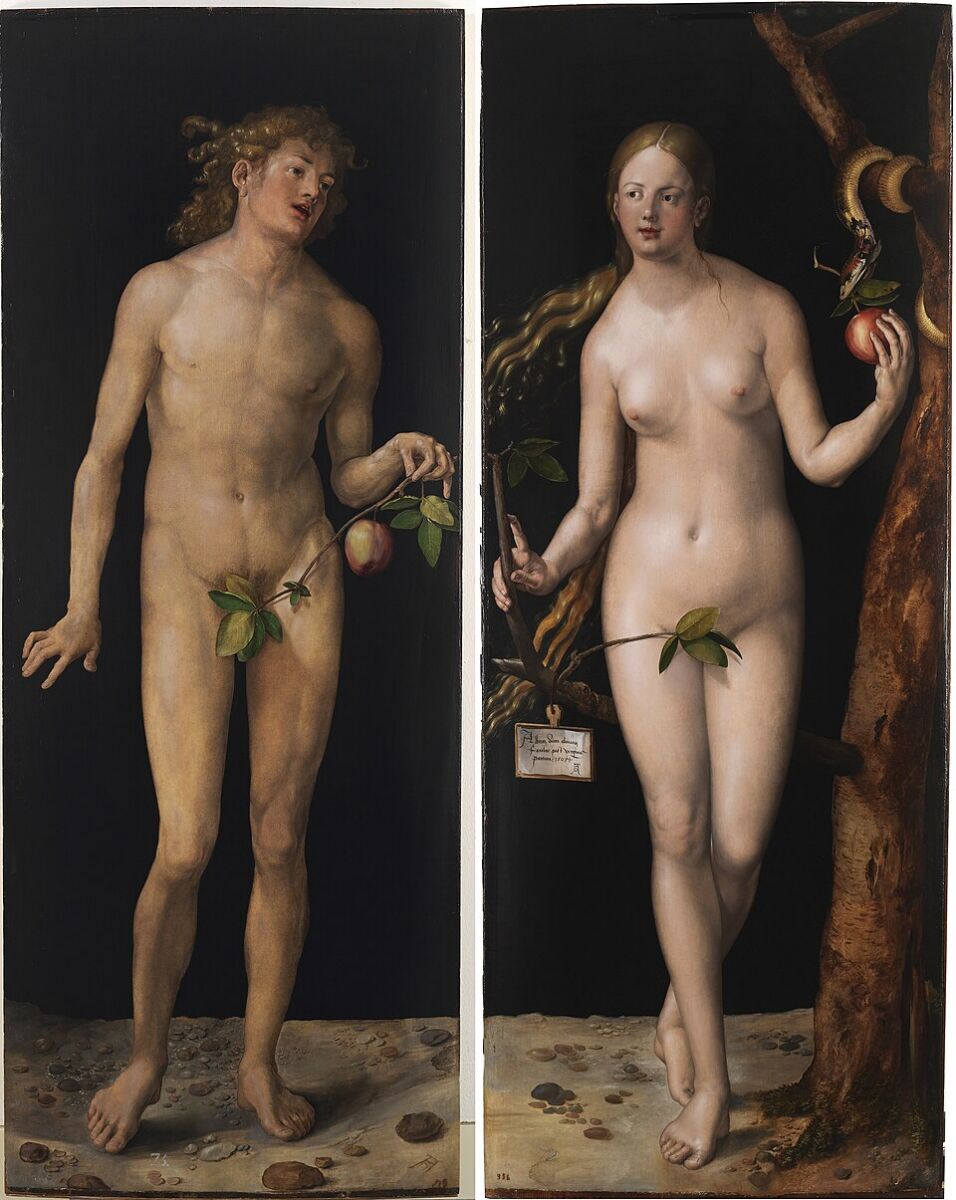
(Adam and Eve) is Dürer’s exploration of classical human beauty. Drawing inspiration from the Italian Renaissance study of human proportions, he sculpted Adam and Eve with perfect elegance. In the painting, a serpent coils around a tree, Eve reaches for the forbidden fruit, while Adam hesitates, creating a scene full of dramatic tension. Dürer’s handling of light and shadow is exquisite; the texture of the figures’ skin and the veins of the leaves are rendered with lifelike realism.
The Pioneering Significance of Self-Portraits
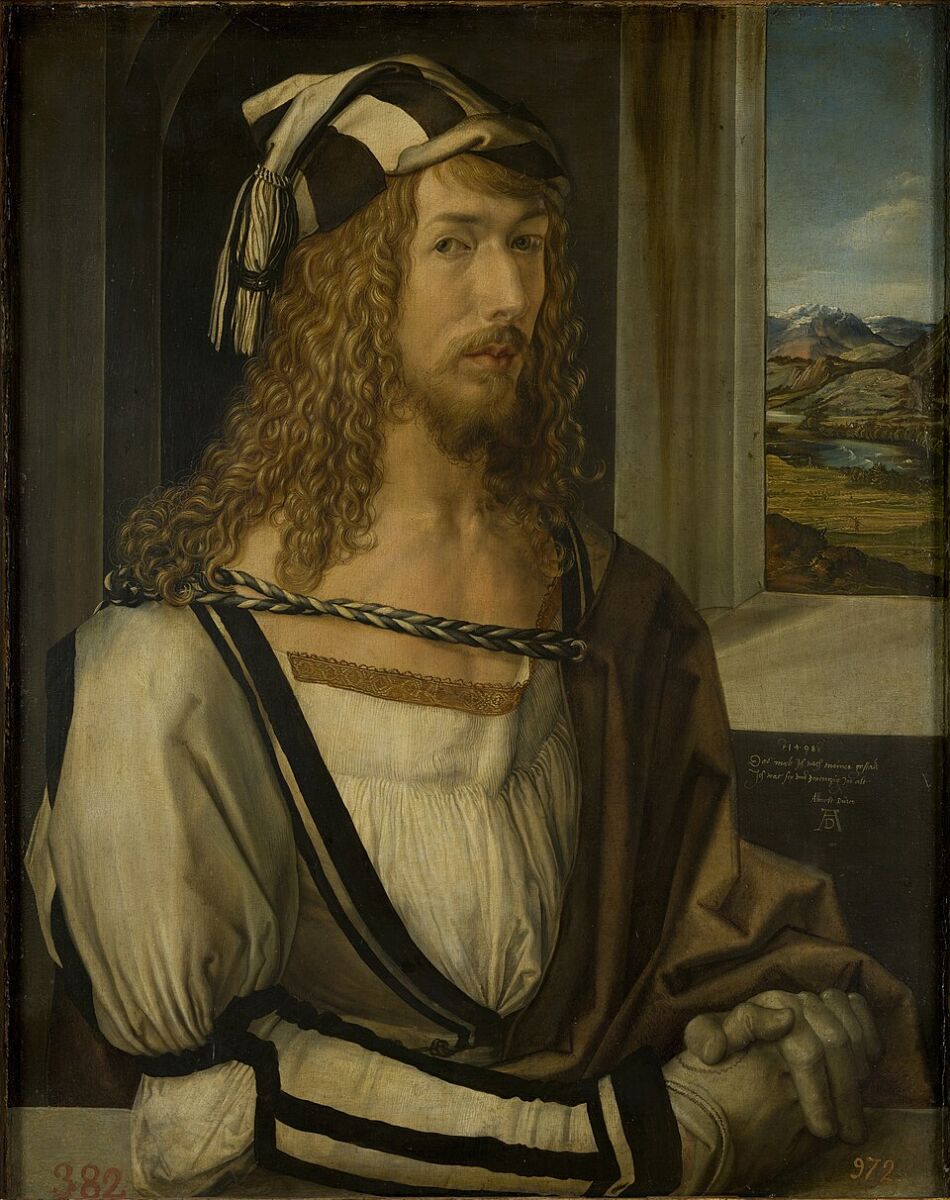
Albrecht Dürer was one of the earliest painters in art history to create self-portraits, and his self-portraits were of epoch-making significance. In his 1498 self-portrait with thistle, Dürer depicted himself as an elegant gentleman, his eyes revealing confidence and wisdom. This work broke with the traditional medieval view of artists as mere craftsmen, elevating them to a status equal to that of scholars and nobles.
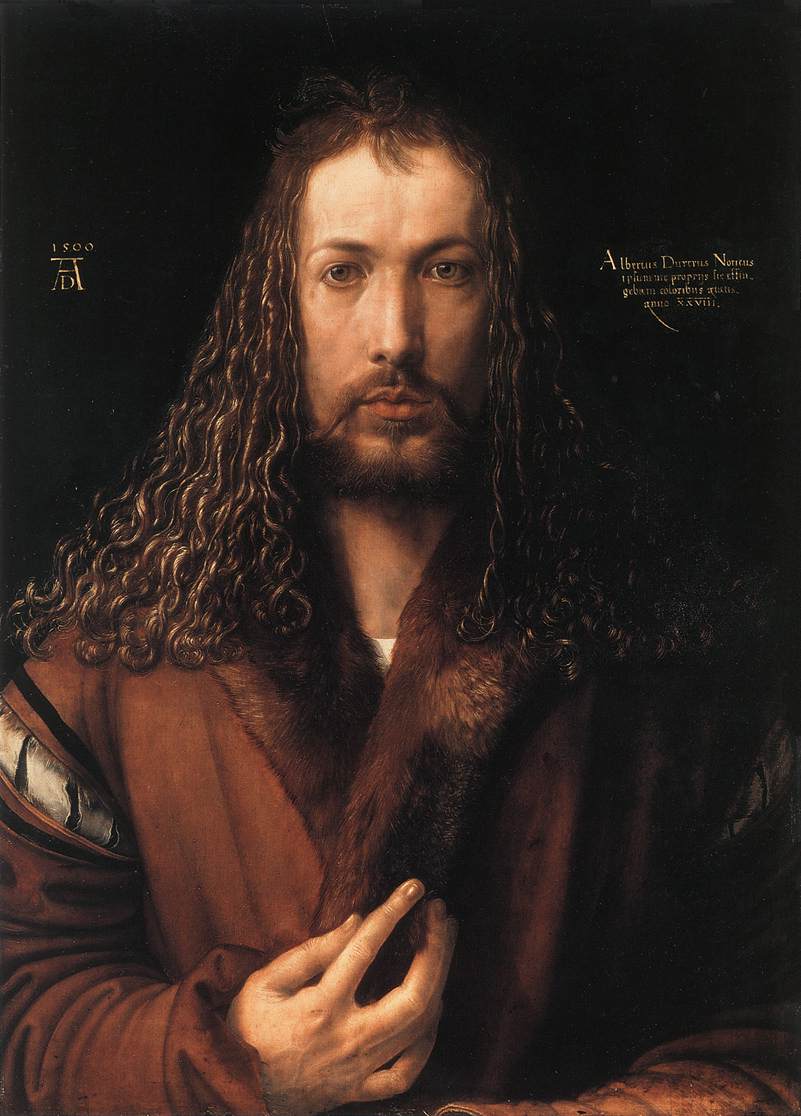
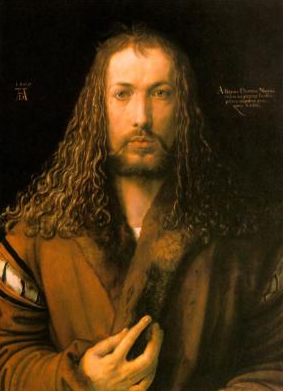
Dürer’s *Self-Portrait at Twenty-Eight*, created in 1500, is particularly breathtaking. He employed the composition of a frontal Christ portrait, portraying himself as a sacred figure. In the painting, he wears a magnificent fur coat, his long hair flowing over his shoulders, his gaze fixed directly on the viewer, as if proclaiming the artist’s sacred mission. This self-portrait is not merely a display of artistic skill, but also Dürer’s declaration of his status as an artist.
Artistic Achievements and Historical Status
Dürer’s artistic achievements are multifaceted. He was not only an outstanding painter, but also a distinguished printmaker, watercolorist, and art theorist. His works, such as *On Measurement* and *Four Books on Human Proportions*, have had a profound influence on later artists. He brought the humanistic spirit of the Italian Renaissance to the North, integrating scientific perspective and anatomical knowledge into his artistic creations, ushering in a new era for the Northern Renaissance.
Dürer’s works transcend religion and secularity, idealism and reality, tradition and innovation. His art possesses both the rigor and depth of the German Gothic tradition and the elegance and rationality of the Italian Renaissance. Through his works, he liberated art from its mere religious service, granting artists an independent status and dignity.
To this day, Dürer’s works continue to exude timeless charm. His printmaking skills, oil painting achievements, the groundbreaking significance of his self-portraits, and his keen observation of nature all make him an irreplaceable master in art history. In Dürer’s birthplace in Nuremberg, we can almost see the figure of that young boy engraving copper plates by candlelight—one of the most moving images in art history.
Related Posts