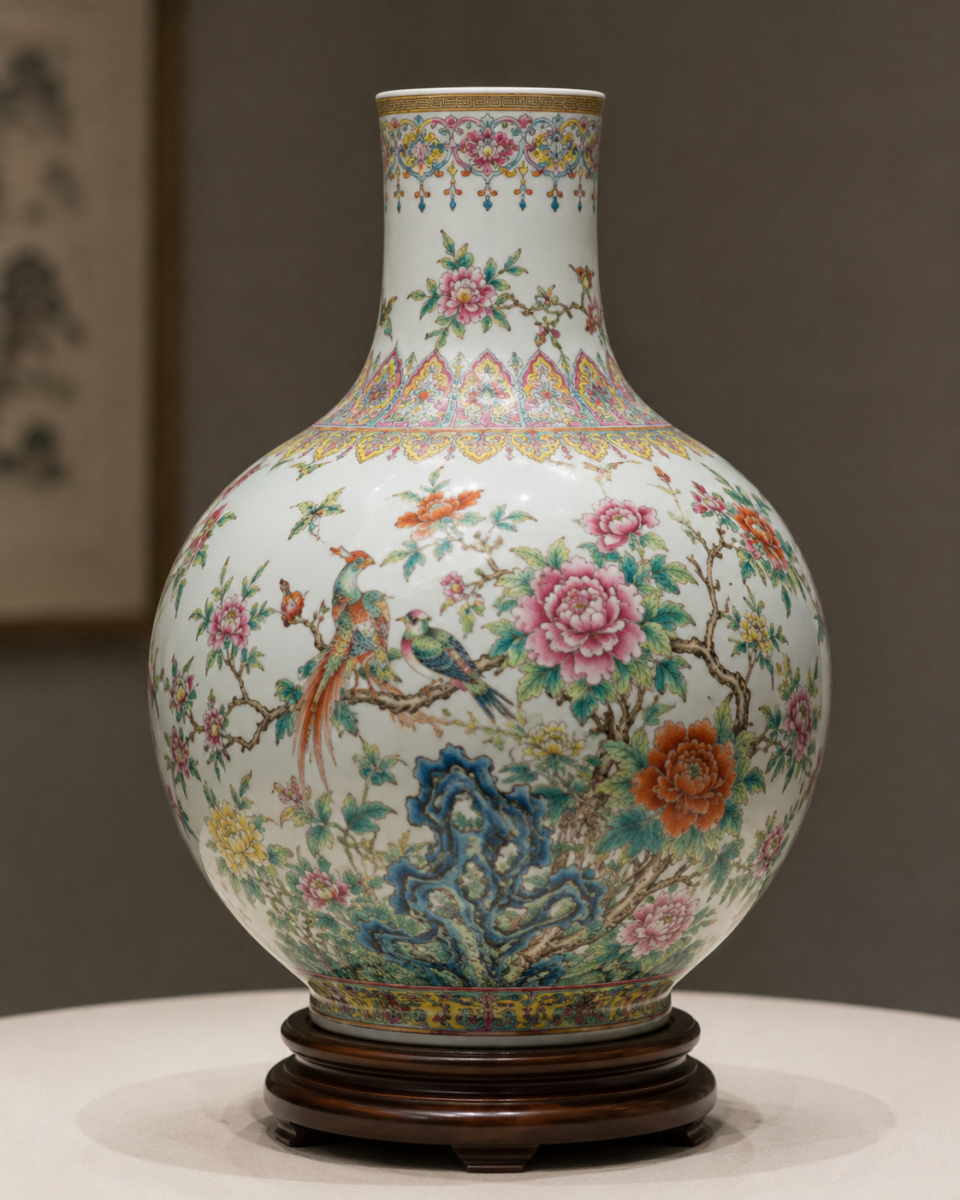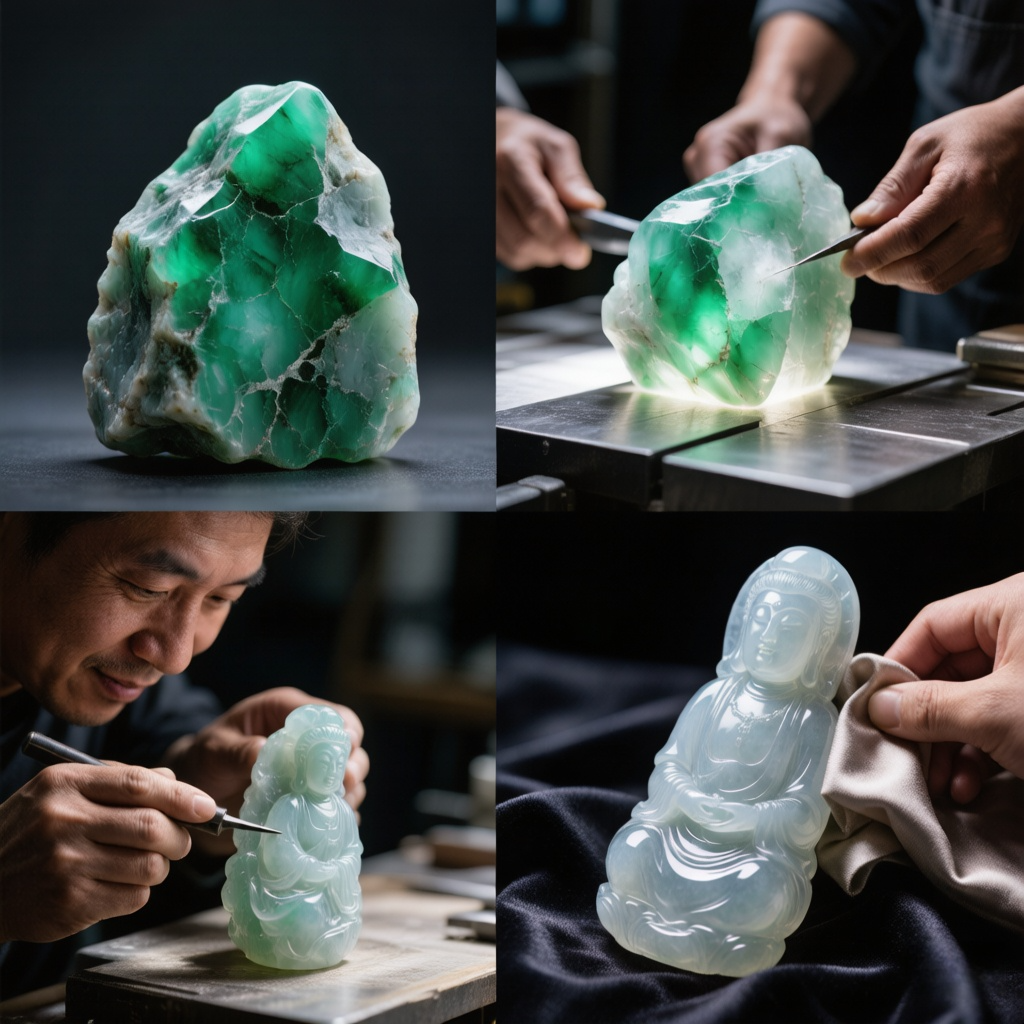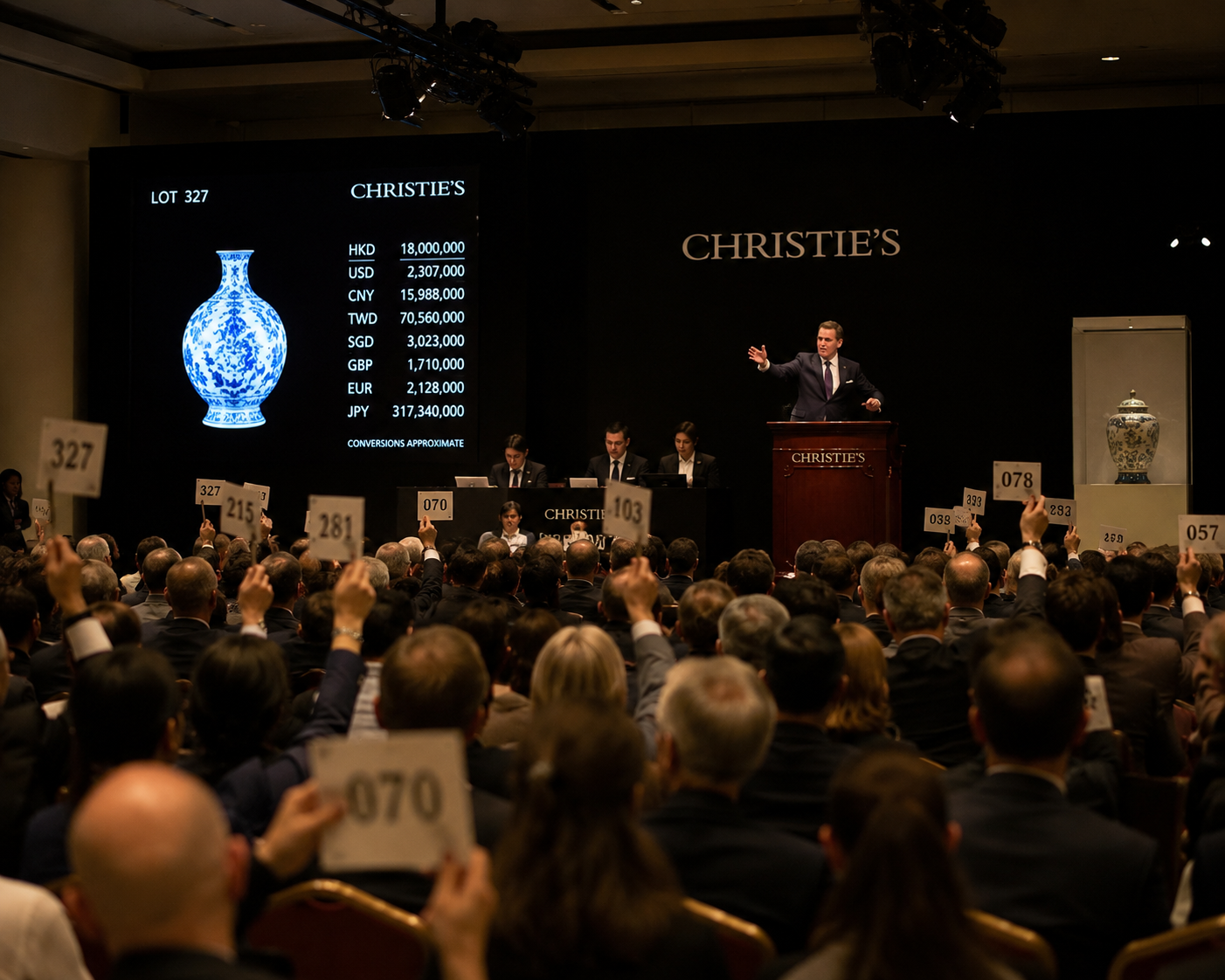
In recent years, as Chinese antique ceramics have continued to attract attention in the international…
Jan van Eyck’s breakthrough painting: the beginning of the oil painting revolution and the Northern Renaissance
Jan van Eyck (c. 1390–1441) is widely regarded as one of the most important founders of the Northern Renaissance. While he did not “invent” oil painting, he propelled its techniques to unprecedented heights, achieving a qualitative leap in realism, detail, and spiritual expression. This article will explore his artistic achievements and historical significance, focusing on his most representative and famous works.
I. The Ghent Altarpiece: A Masterpiece That Changed the History of Western Painting
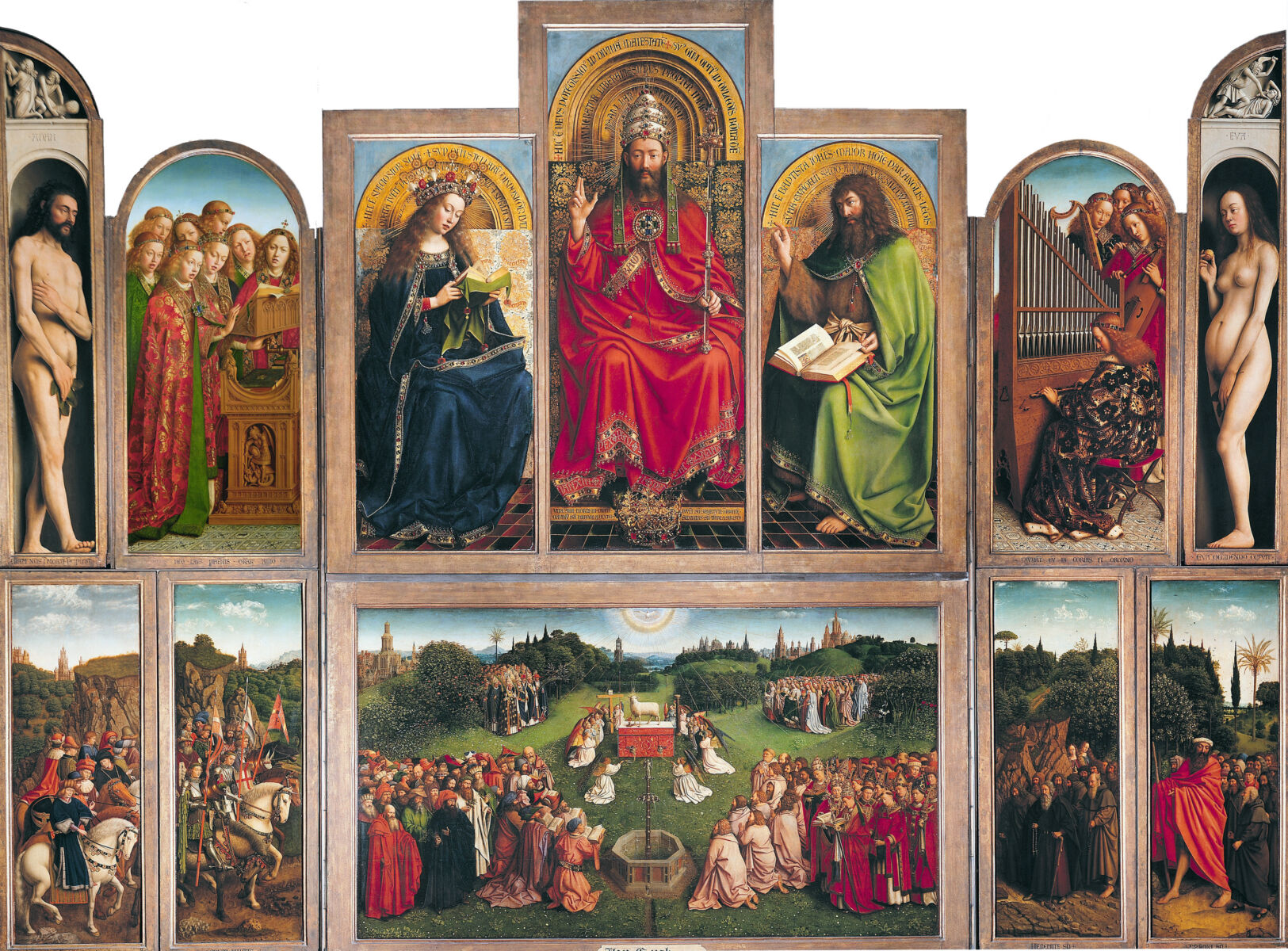
The Ghent Altarpiece (1432) is undoubtedly Jan van Eyck’s most landmark work. This multi-panel painting, a collaboration with his brother Hubert van Eyck, is considered a starting point for the Northern Renaissance.
The central scene, the “Adoration of the Mystic Lamb,” depicts the fusion of religious narrative and the real world with extremely fine brushstrokes. Figures, plants, gems, fabrics, and light are all rendered with near-microscopic clarity, showcasing the depth and transparency achievable through layers of oil paint.
More importantly, this work established a completely new concept in painting: the sacred is not unattainable, but exists in every detail of the real world. This is the core of the Northern Renaissance spirit.
II. The Arnolfini Portrait: The Pinnacle of Realism
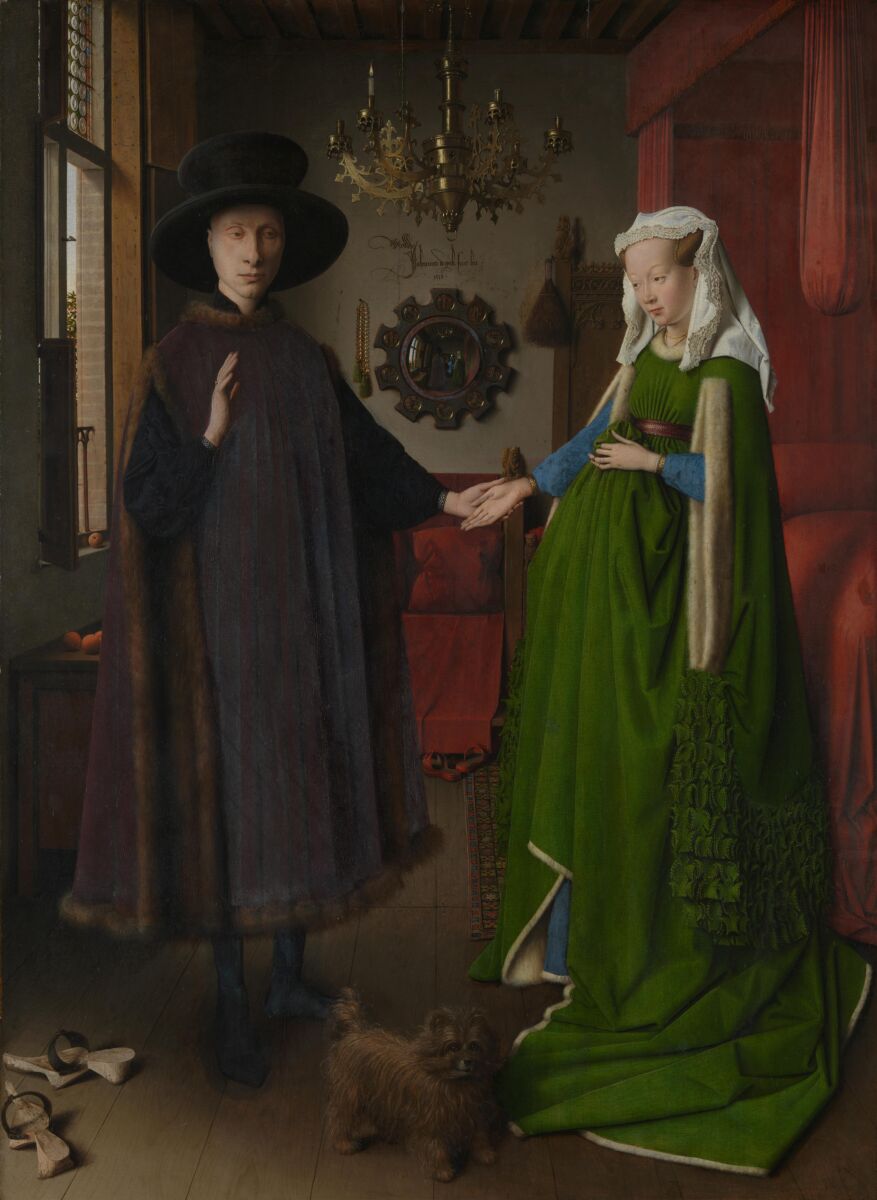
If the Ghent Altarpiece established Jan van Eyck’s historical status, then the Arnolfini Portrait (1434) cemented his status as a symbol of realist portraiture.
The painting appears to depict the daily life of a wealthy merchant couple, but every detail is imbued with symbolism:
The reflection in the mirror reveals the painter himself.
The chandelier symbolizes divine witness.
The small dog represents loyalty.
The single burning candle hints at the divine presence.
The most striking aspect of this work is its precise control over space, materials, and light. The mirrored reflections, the texture of fur, and the sheen of the wooden floor almost create the illusion of “stepping into the painting.”
III. An Innovator in Portraiture: The Human Spirit “Seen”
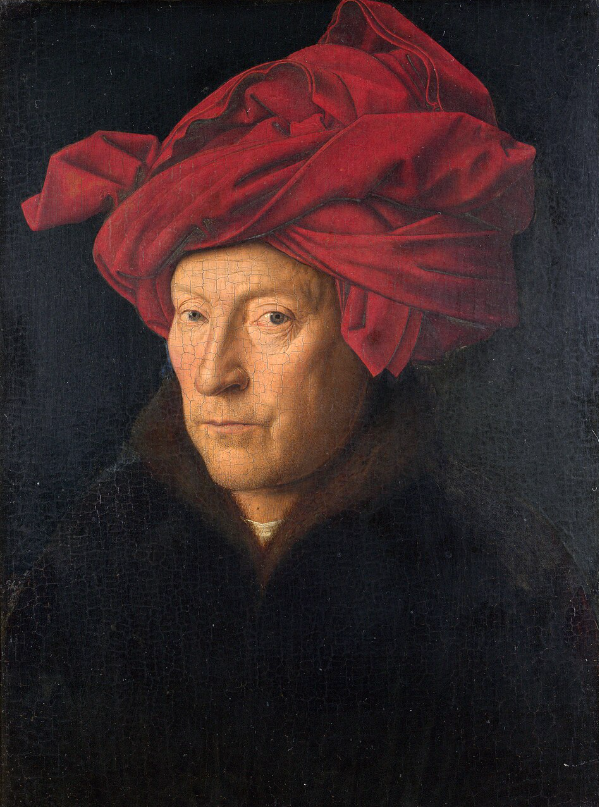
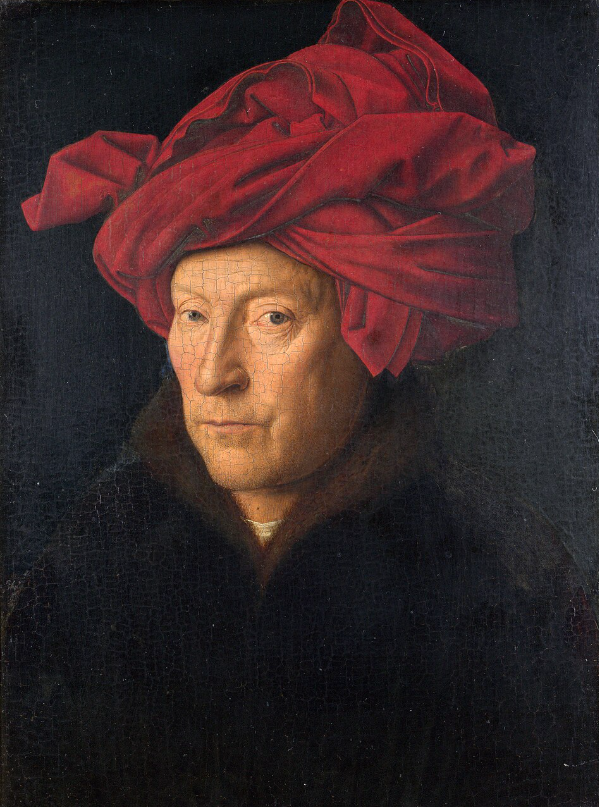
Jan van Eyck’s contribution to portraiture goes far beyond mere physical resemblance. Many of his portraits, such as the “Man in the Red Turban” (also known as a possible self-portrait), were the first to allow viewers to perceive the psychological depth of the subject.
The figure was no longer merely a symbol of social status, but a real individual with emotions, thoughts, and personality. This focus on “human existence itself” resonated across regions with the humanism of the Italian Renaissance during the same period.
IV. The Revolutionary Significance of Oil Painting Techniques
Jan van Eyck’s greatest contribution to oil painting lies in his systematic exploration of pigments and media:
Glazing
Precise control of drying time
Using transparency to create a sense of light penetration
This technique transformed painting from “flat blocks of color” to “the structure of light and color,” directly influencing the European painting tradition for centuries to come, benefiting artists from the Netherlandish school to the Baroque.
V. Historical Status and Influence
Jan van Eyck’s masterpieces are not only works of art history but also symbols of the spirit of an era. He enabled painting to truly possess the ability to “record reality, express spirit, and freeze time” for the first time.
For this reason, he is often called:
“The painter who made the world see reality for the first time.”
Conclusion
Looking back at Jan van Eyck’s acclaimed paintings today, we see not only superb technique, but also a reverence and contemplation of the real world. His work reminds us that truly great art often begins with the utmost respect for detail.
Related Posts