
In the history of Spanish art, no painter embodies the title of "painter's painter" more…
The Voice of Time: Big Ben and the Symbol of London’s Urban Memory
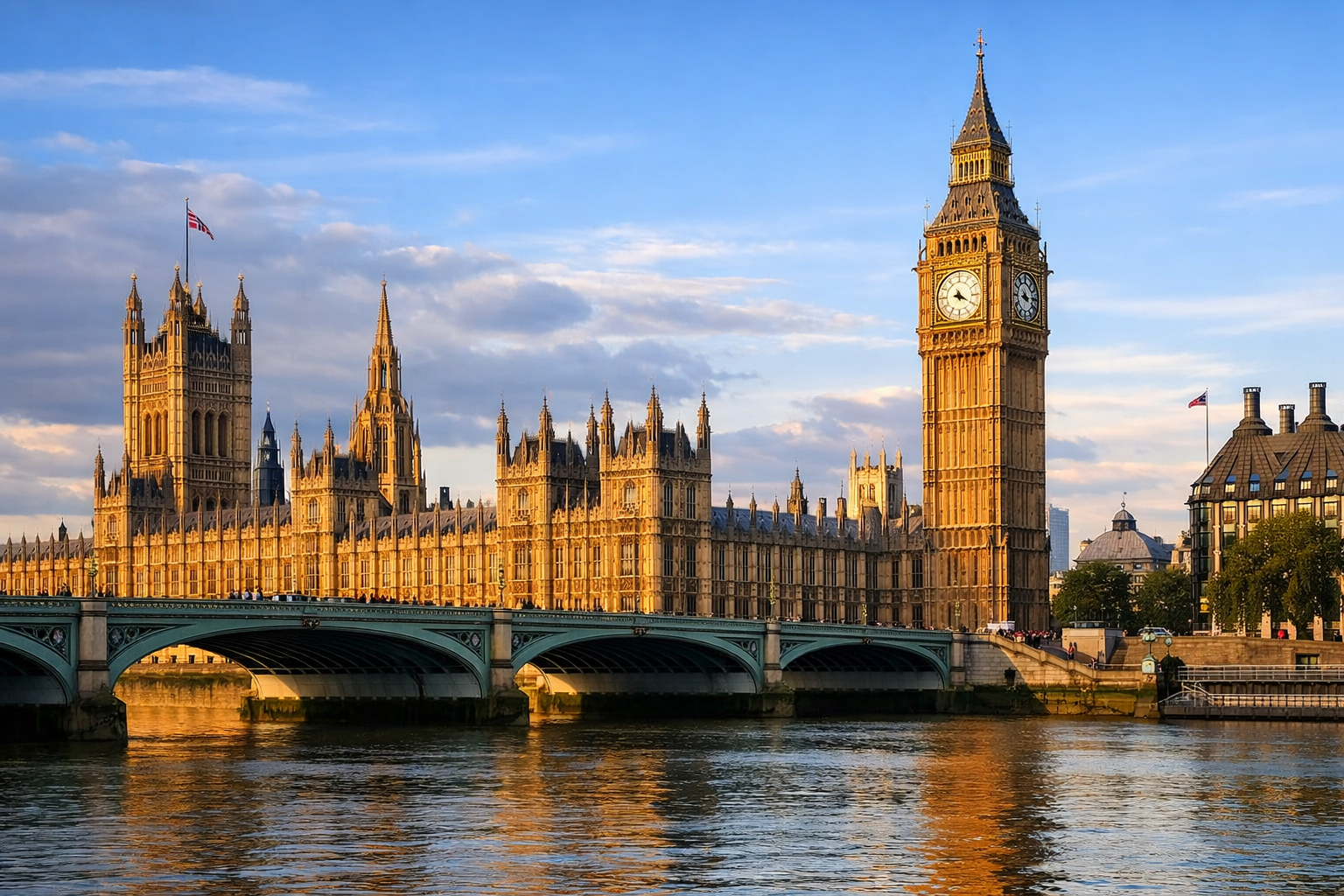
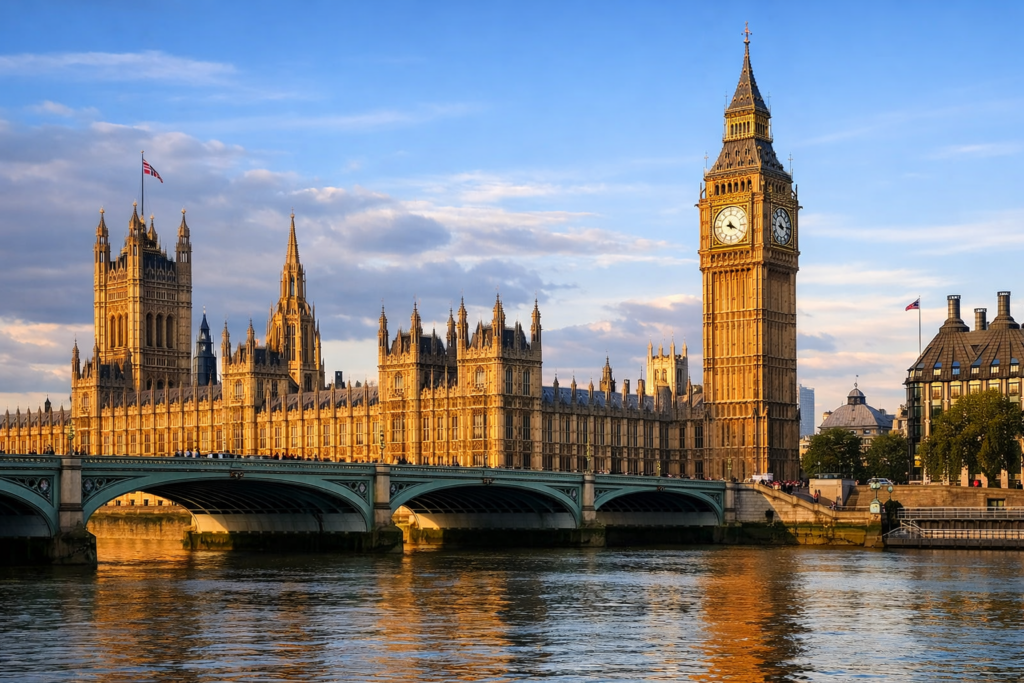
On the banks of the River Thames in London, the capital of the United Kingdom, a solemn and elegant clock tower stands quietly. Its chimes travel across the city skyline, echoing between history and the present. What people commonly call “Big Ben” is actually not just the great bell itself—it often refers to the entire clock tower. Today, the tower’s official name is Elizabeth Tower, while the bell itself is called Big Ben.
This clock tower is part of the British parliamentary complex known as the Palace of Westminster, and together with Westminster Abbey and the River Thames, it forms one of London’s most iconic cityscapes.
Among the many landmarks around the world, Big Ben is neither the tallest nor the largest. Yet it possesses a unique charm—where time, history, and the spirit of the city converge—making it one of the most symbolic buildings in Britain.
I. A Creation of the Victorian Era
The history of Big Ben dates back to the mid-19th century. In 1834, a devastating fire nearly destroyed the original Houses of Parliament. The British government subsequently decided to rebuild the parliamentary complex and design a magnificent clock tower within the new structure to serve both as a timekeeper and a symbol of national authority.
The new Houses of Parliament were designed by architect Charles Barry, while the Gothic decorative details of the clock tower were largely completed by another architect, Augustus Pugin. After years of construction, the tower was officially completed and began operation in 1859.
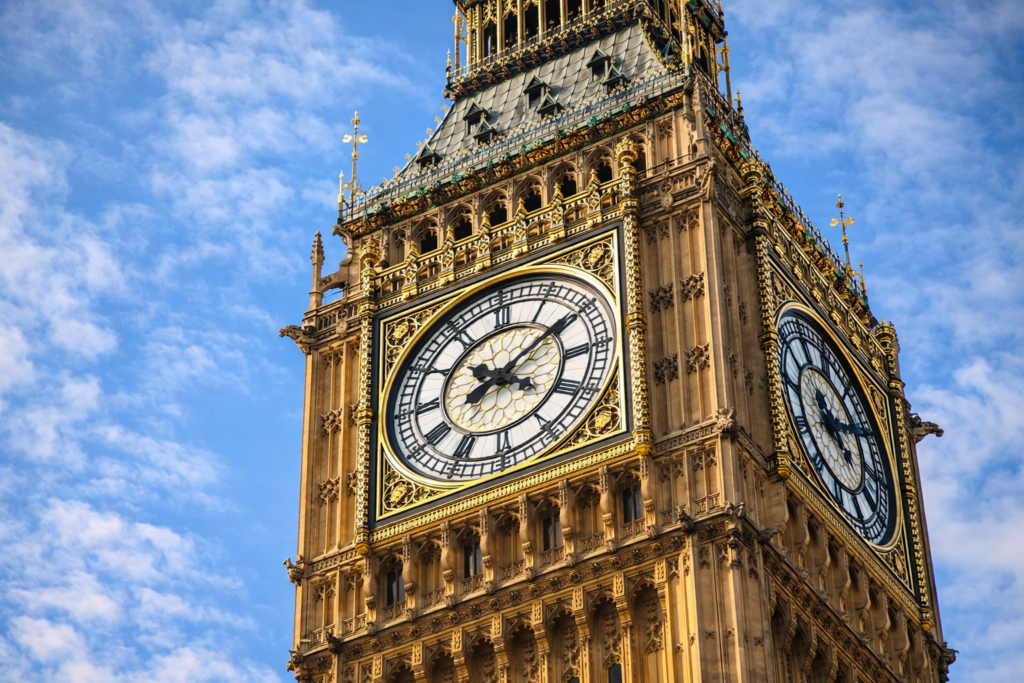
Standing about 96 meters tall, the tower features refined Victorian Gothic decoration: spires, carved stone windows, slender columns, and intricate lines. These elements give the building both a sense of solemnity and artistic elegance. Each of the tower’s four sides displays a massive clock face about 7 meters in diameter, appearing from afar like white discs suspended in the sky.
At the heart of the tower is its most striking feature—the great bell weighing about 13.5 tons, known as Big Ben. Whenever the hour arrives, its deep and resonant chime echoes across London.
II. Guardian of Time
What makes Big Ben truly admirable is not only its grand architecture but also its remarkably precise timekeeping system.
The clock’s mechanical system was designed by engineer Edmund Beckett Denison, who used a gravity escapement mechanism that was extremely advanced for its time. This design allowed the clock to maintain remarkable accuracy even during long-term operation.
Even today, Big Ben still operates through a traditional mechanical system. To fine-tune the time, maintenance workers place or remove old British coins on the pendulum. By slightly altering the weight of the pendulum, they adjust the clock’s timing accuracy. This ingenious and historic method allows the century-old mechanism to continue recording time with impressive precision.
For Londoners, Big Ben is not merely a timekeeping device—it feels more like the “heartbeat” of the city. On foggy mornings or rainy nights, the sound of the bell seems to remind people that time continues to move and the city continues to live.
III. Standing Firm Through War
During the Second World War, London endured prolonged bombing campaigns. Many buildings were destroyed, yet Big Ben continued to stand firmly at the center of the city.
Even in the most intense periods of war, its chimes continued to ring on schedule. This was more than simply marking the hour—it became a symbol of stability and resilience for British society. Through radio broadcasts, the sound of the bell was transmitted across the country, offering encouragement and hope.
Many historians believe that Big Ben’s steadfast presence during the war elevated it from a remarkable building into a symbol of national spirit.

IV. A Cultural Icon of Modern London
As time passed, Big Ben gradually became one of the most recognizable cultural symbols of the United Kingdom. Whether in films, news broadcasts, or tourism promotions, Big Ben almost always appears alongside the image of London.
When people think of London, they often imagine a familiar scene:
the River Thames flowing gently, red double-decker buses passing through the streets, and in the distance the quiet silhouette of the clock tower while its chimes echo above the city.
Every New Year’s Eve, the chimes of Big Ben mark the beginning of the year for Britain. When the midnight bells ring, crowds cheer in the streets, welcoming the arrival of a new year.
V. Restoration and Heritage
Due to decades of weather exposure and mechanical aging, Big Ben underwent a major restoration project from 2017 to 2022. The restoration not only refreshed the tower’s exterior but also carried out extensive maintenance on its internal mechanical systems.
During the restoration process, many exquisite Victorian decorative details were rediscovered, including intricate golden patterns and historical inscriptions. These discoveries helped people better appreciate the craftsmanship and aesthetic values of 19th-century artisans.
After the restoration was completed, Big Ben resumed its regular chimes. Once again, the sound of the bell echoed across London, reconnecting the city’s past with its present.
Conclusion: A Symbol of Time and the City
Among the world’s famous buildings, Big Ben may not be the largest or the most structurally complex. Yet it possesses a unique power—the power of time.
For more than a century, it has witnessed the age of empire, two world wars, social transformation, and the evolution of a modern city. Its chimes record not only the passing of hours but also the unfolding of history.
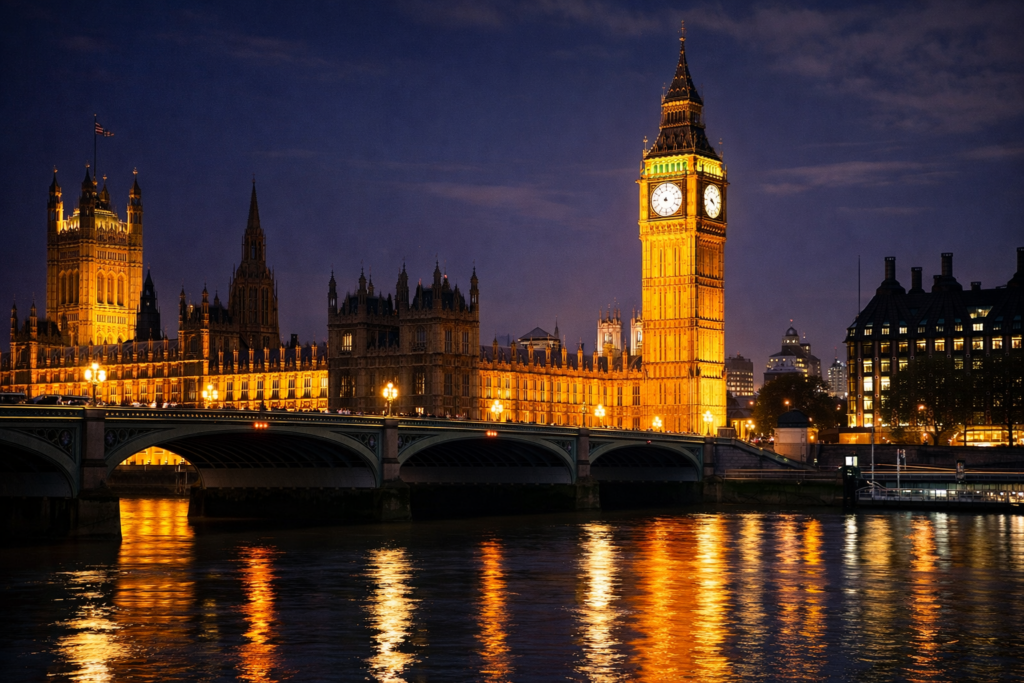
When night falls and London’s lights reflect upon the Thames, Big Ben stands quietly in the skyline. It reminds people that no matter how the world changes, time continues forward—and history will continue to be written in this city.
Related Posts