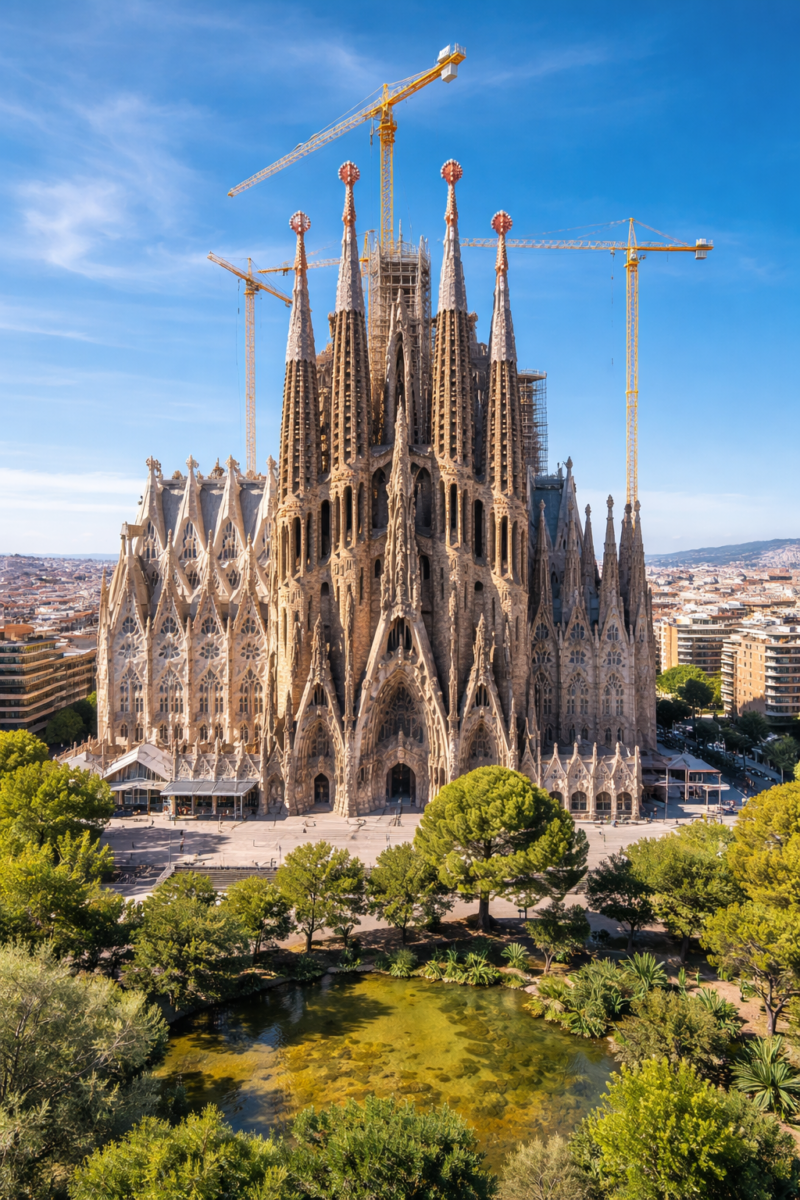
In the heart of Barcelona, Spain’s Catalonia region, stands a church that belongs neither entirely…
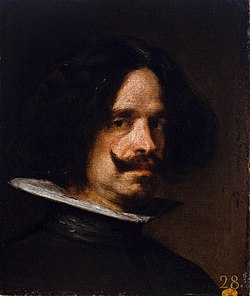
Velázquez: A Realist in the Royal Mirror
In the history of Spanish art, no painter embodies the title of “painter’s painter” more profoundly than Diego Rodríguez de Silva y Velázquez. From the streets of Seville to the courts of Madrid, his life is both a coming-of-age story and a visual chronicle of Spain’s Golden Age.
Apprenticeship in Seville (1599-1623)
Born on June 6, 1599, in Seville, Spain, into a Portuguese noble family, Velázquez, despite his family’s desire for a respectable legal career, displayed remarkable artistic talent at the age of 12, entering the studio of the local painter Francisco Herrera. A year later, he switched his studies to the more lenient painter Francisco Pacheco—a decision that changed his life.
A Dual Inspiration: Under Pacheco’s tutelage, Velázquez not only mastered exquisite painting techniques, but more importantly, his teacher was at the cultural center of Seville at the time, a frequent gathering place for poets, scholars, and humanists. It was here that Velázquez was exposed to the theories of the Italian Renaissance and humanist thought. In 1618, he married his teacher’s daughter, Juana Pacheco, completing his transition from apprentice to independent artist.
His “Bodegón” (kitchen paintings or still life scenes) series from his Seville period showcases Velázquez’s early artistic pursuits: works such as “Old Woman Frying Eggs” and “The Water Seller of Seville” depict ordinary life with astonishing realism. The strong contrasts of light and shadow are deeply influenced by Caravaggio’s style, yet already reveal his unique concern for the dignity of ordinary people.
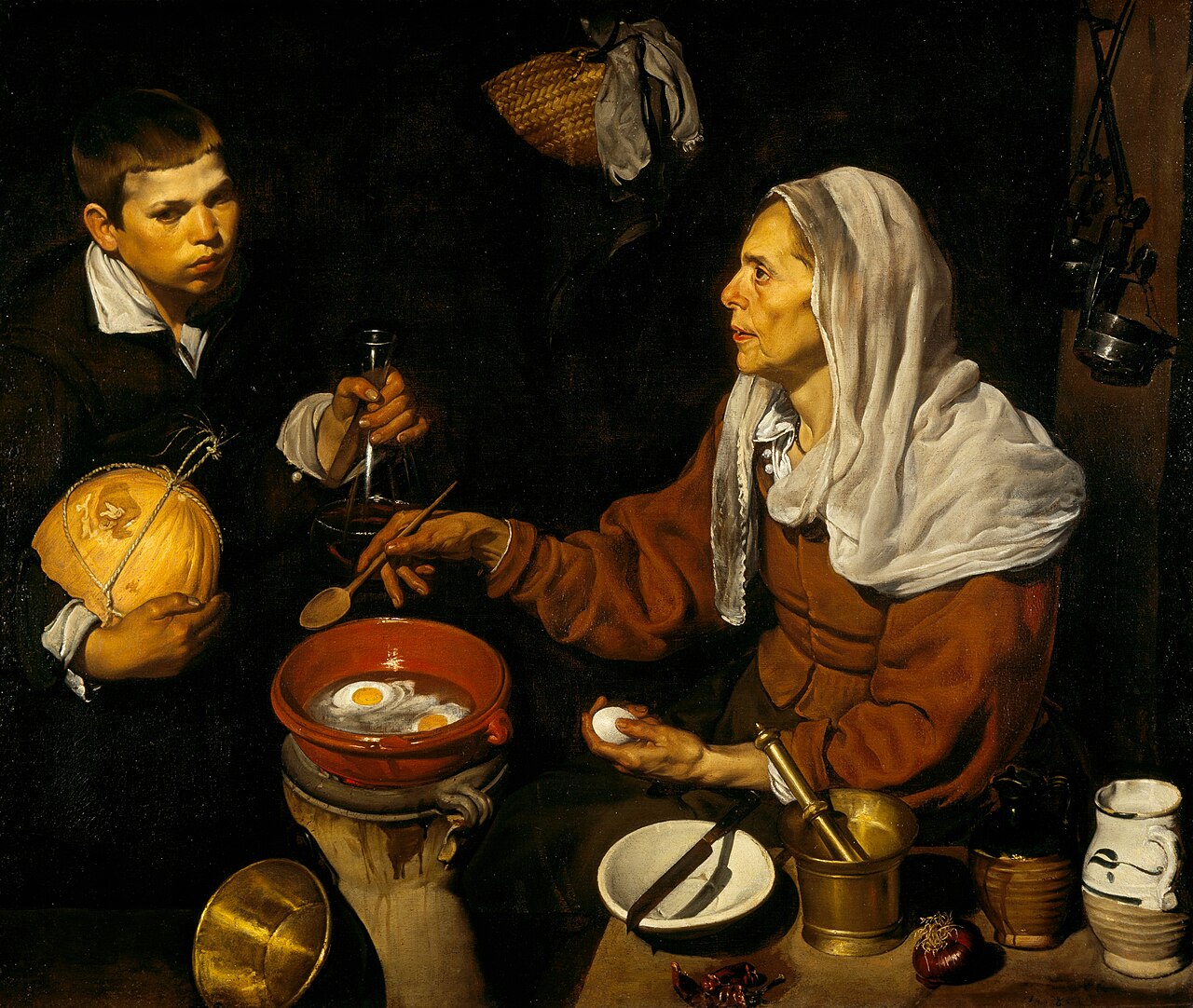
The Old Woman Frying Eggs (1618), a representative work from the Seville period, showcases Velázquez’s early mastery of light and texture.
Entering the Madrid Court (1623-1629)
In 1622, Velázquez first traveled to Madrid, attempting to obtain a royal appointment but without success. However, his work attracted attention. The following year, on the recommendation of Prime Minister Count Olivares (also from Seville), he returned to Madrid and painted a portrait of the young King Philip IV.
The Decisive Moment: A legend began when the 24-year-old Velázquez painted the portrait of the 19-year-old king. Upon seeing the work, Philip IV declared, “From now on, only Velázquez can paint my portrait.” He was immediately appointed court painter, with an annual salary of 20 ducats and the right to receive additional commissions. From then on, he became the king’s closest painter and friend—a relationship that would last for nearly 40 years.
In his early court works, *The Triumph of Bacchus* (also known as *The Drunkards*) combines mythological themes with the imagery of Spanish peasants, showcasing his continued realist tendencies in court art. This work foreshadows the core concept of Velázquez’s art: the equality of the sacred and the mundane.
Italian Journey and Stylistic Maturation (1629-1631, 1649-1651)
In 1629, with royal patronage, Velázquez embarked on his first trip to Italy. In Venice, he studied Titian’s colors; in Rome, he learned Raphael’s composition and Michelangelo’s modeling. This experience gradually led him to move away from the strong chiaroscuro of his early work, towards more subtle transitions in light and color.
A Leap Forward After Returning: Upon returning to Madrid in 1631, Velázquez’s style underwent a significant transformation. *The Surrender of Breda*, his first large-scale history painting, depicts the scene of the Spanish army accepting the surrender of the Dutch fortress. Unlike traditional triumphal arches, his work portrays the dignity and restraint of both sides, with the soft silver-gray tones in the background foreshadowing the later Impressionist exploration of aerial perspective.
In the following decade, he created numerous royal portraits, including *Equestrian Portrait of Philip IV* and *Equestrian Portrait of Prince Baltasar Carlos*. However, his most striking works are those portraits of court jesters and dwarfs—*Sebastian de Mora* and *Don Juan de Austria*—in which Velázquez infuses equal, or even deeper, human dignity into these marginalized souls.
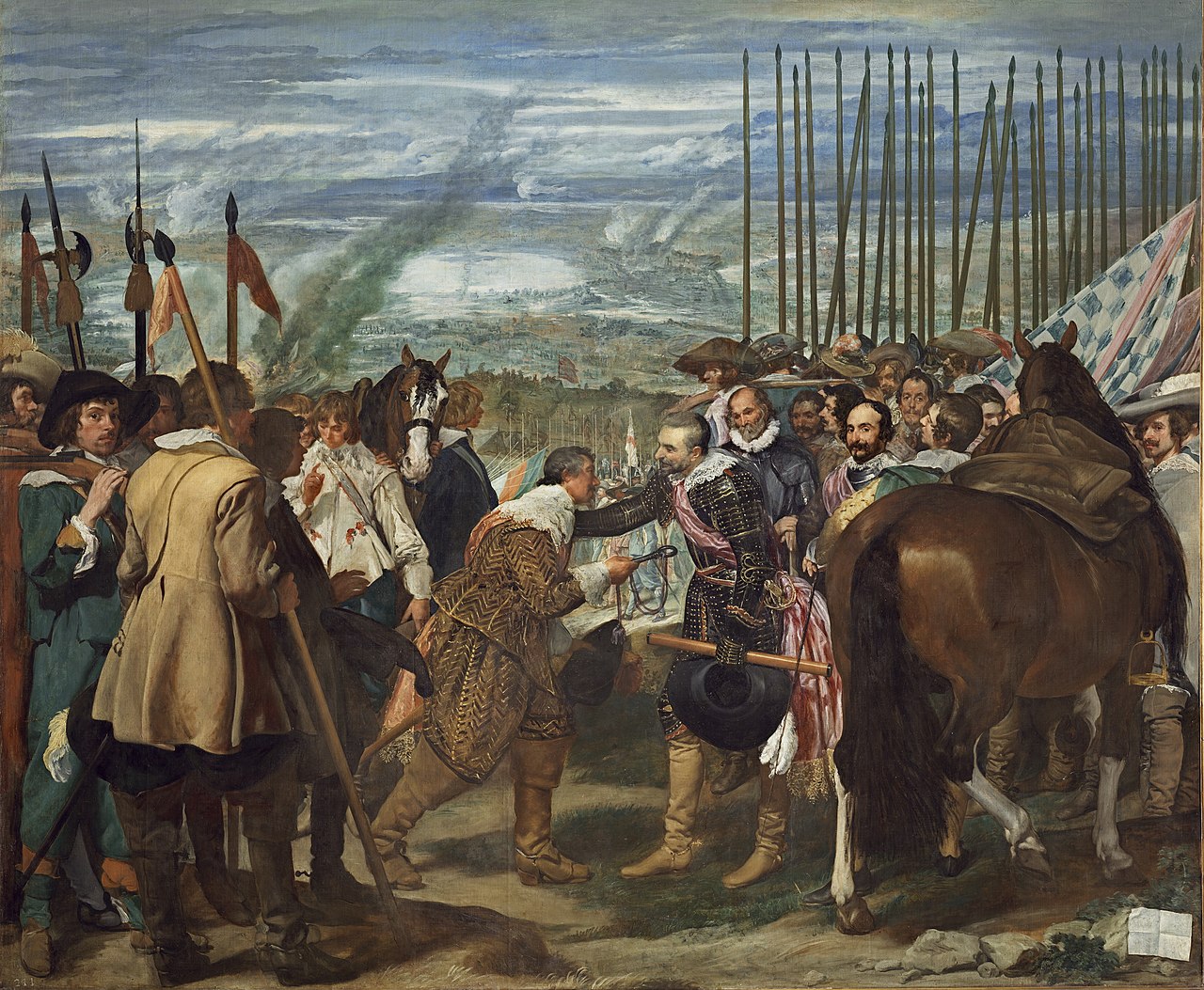
The Surrender of Bréda (1634-1635), Velázquez’s masterpiece on historical subject matter, showcases a universal humanitarian spirit that transcends nationalism.
A pinnacle work: *Las Meninas* (1656)
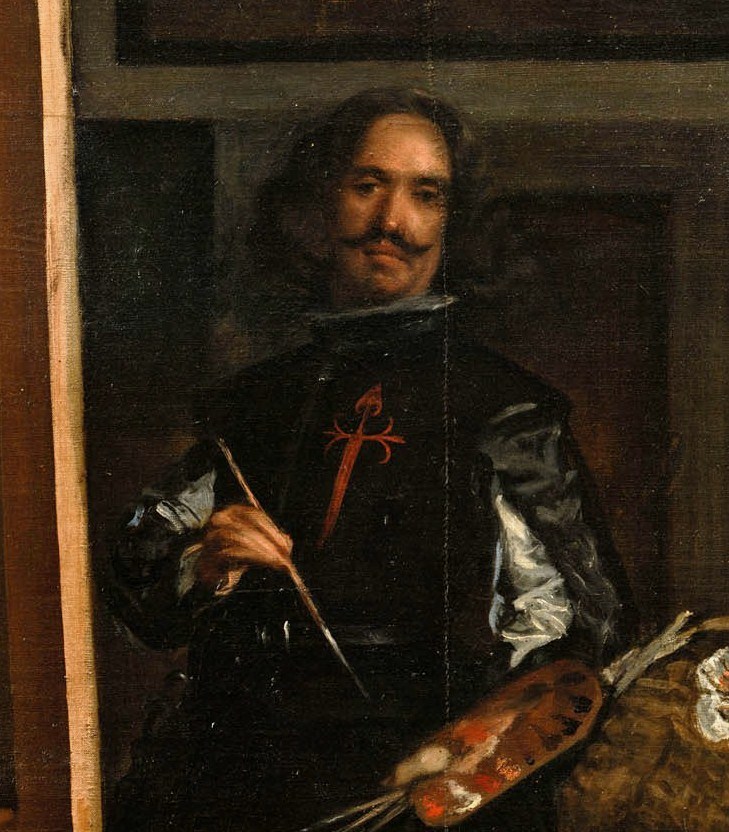
Created in 1656, *Las Meninas* is not only Velázquez’s masterpiece but also one of the most complex and self-reflective paintings in Western art history. On the surface, it depicts Princess Margaret accompanied by her maids, dwarfs, dogs, and guards. However, the reflections of the king and queen in the mirror, the servants looking out the door, and especially the painter himself at the easel, construct a multi-layered visual puzzle.
Artistic self-reference: This painting explores the philosophical question of “who is looking at whom?” The viewer is placed in the position of the king and queen, looking at the princess and also at the painter who is watching (and depicting) all of this. This is painting’s reflection on painting itself, the artist’s metacognition of the act of creation itself. Foucault, in *The Order of Things*, calls it “a representative of classical representation,” marking the beginning of modern epistemology. Technically, *Las Meninas* showcases Velázquez’s peak period: the heavy texture of the foreground carpet, the sheen of the princess’s skirt, the light and atmospheric perspective of the background portico—all are rendered with seemingly casual yet deeply thoughtful brushstrokes. Manet later remarked, “Velázquez is the best of all painters; he paints air.”
Later Glory and Death (1658-1660)
In 1658, after years of effort, Velázquez finally obtained his coveted Knight of the Order of Santiago—an unprecedented honor for a painter, as painting was still considered a craft rather than a free art at the time. He had to prove he had no Moorish or Jewish ancestry and that he had never sold his works for a living (all his creations served the King).
In 1660, while preparing for the wedding of King Louis XIV of France and Princess Maria Theresa of Spain, Velázquez fell ill from overwork and died in Madrid on August 6th, buried in the Church of San Juan. Just eight days later, his wife Juana followed him.
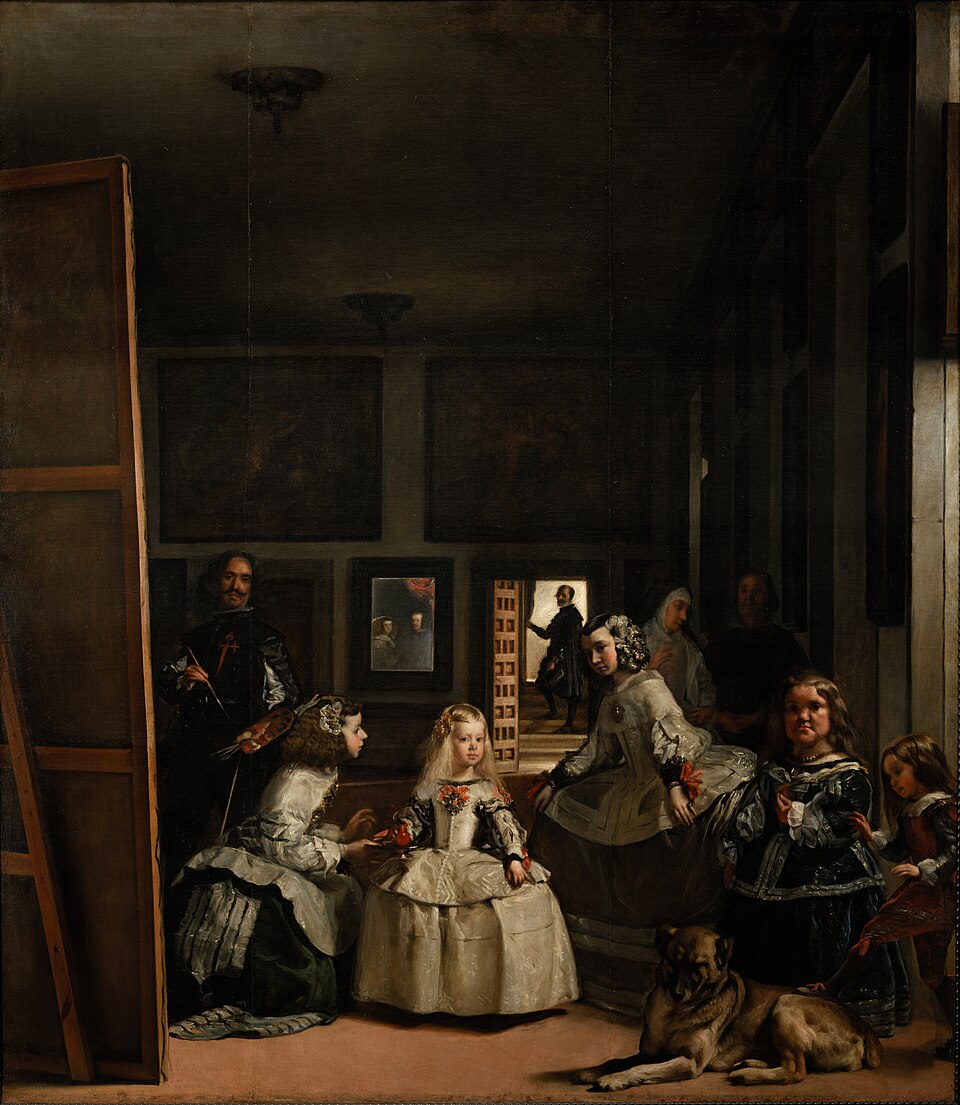
*Las Meninas* (1656), one of the most philosophically profound works in Western art history, constructs a complex visual relationship between viewer, viewed, and creator.
Legacy: From Court to Eternity
After his death, Velázquez was forgotten until the 19th century when he was rediscovered. Manet, after visiting the Prado Museum in 1865, exclaimed, “Velázquez is the greatest of all painters!” His influence permeates the entire modern art world: Impressionists studied his light and brushstrokes, Picasso created 58 variations of *Las Meninas*, and Bacon drew inspiration from his portrait of Pope Innocent X.
Revolutionary Vision: Velázquez’s greatness lies in his transcendence of the limitations of a court painter. Within the framework of serving the royal family, he developed a portraiture method that was both respectful of the subject and realistic. His portrayal of Philip IV possesses both royal majesty and the melancholy and vulnerability of an ordinary person. His depiction of light and air—called “ambiente” in Spanish—foreshadowed plein air painting two centuries later.
Against the backdrop of the waning Spanish Golden Age, Velázquez’s paintings became a form of resistance: using visual reality to confront the embellishment of power, and observing all souls with an equal humanity. He proved that the most “courtly” art could also be the most “real” art, and the most restricted creation could be the freest expression.
Conclusion
From the streets of Seville to the courts of Madrid, from *The Water Sellers of Seville* to *Las Meninas*, Velázquez completed a unique artistic journey. He did not pursue idealized beauty or religious ecstasy like his contemporaries, but found another kind of sublimity in the observation of reality. On his canvases, kings and jesters share the same light, mythology and the marketplace breathe the same air. This thorough visual democracy makes Velázquez not only a recorder of his time, but also a dialoguer with all ages—in the dim light of the Prado Museum, his figures remain lifelike, as if they might step off the canvas at any moment to share with us the eternal secrets of humanity, power, and art.
Related Posts